
Uneven skin tone can feel discouraging because it often shows up slowly. One day you notice a small dark spot. Then you see a patch that looks a little deeper than the rest of your skin. Your complexion may look dull, less radiant, or not as smooth and even as it used to.
Sometimes it happens after sun exposure. Sometimes it follows a blemish. Sometimes it appears with age, hormones, irritation, dryness, or a routine that is not giving the skin enough protection.
The most important thing to understand is this: brightening support is not about changing who you are or changing your natural skin color. At Zendevie, the focus is on helping the skin look healthy, radiant, and more even in appearance while respecting every skin tone.
A good uneven tone routine should be gentle, consistent, and protected during the day. Learn how to support a more even-looking complexion without harsh products before adding stronger active steps.
It should not rely on harsh scrubbing, aggressive peeling, or unrealistic promises.
Uneven skin tone happens when some areas of the skin look darker, duller, rougher, or less radiant than others. It may show up as dark spot appearance, sun-related discoloration, post-blemish marks, dullness, age spot appearance, or uneven texture.
A brightening-support routine usually includes a gentle cleanser, tone-support toner, serum for a more even-looking complexion, moisturizer or night care, and daily SPF. SPF is essential because sun exposure can make visible discoloration look darker and more persistent.
Skincare can help support the appearance of a more even-looking complexion, but it should not promise to erase dark spots, treat melasma, cure hyperpigmentation, or permanently remove discoloration.
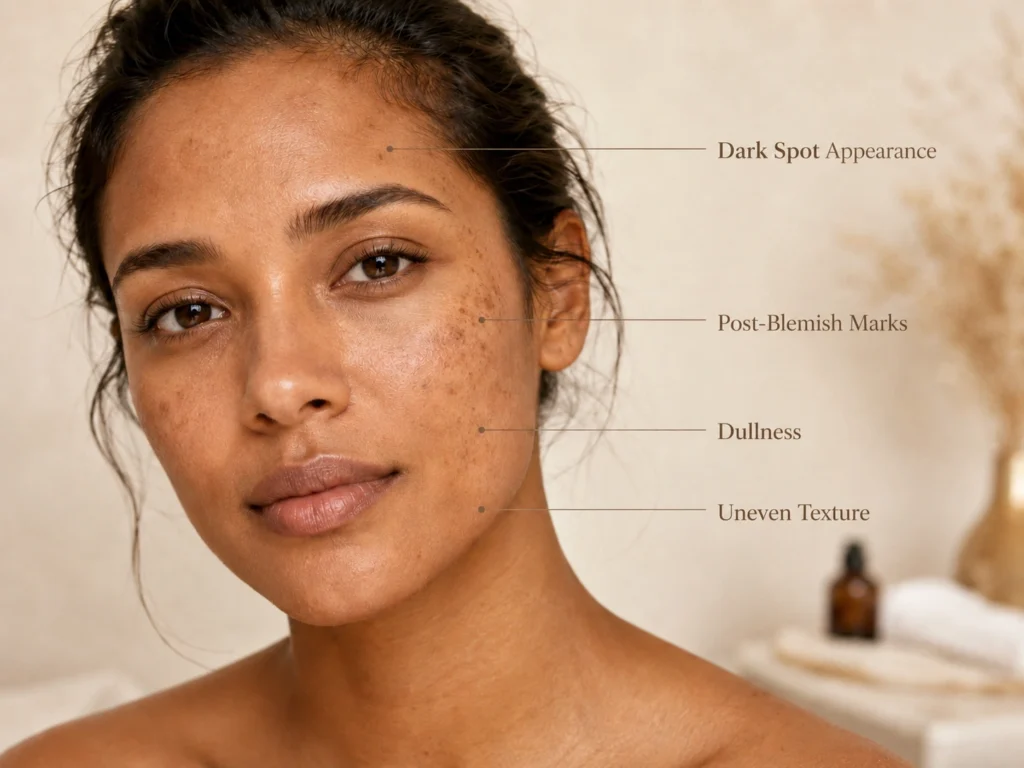
Uneven skin tone means the complexion does not look consistent across the face or body. Some areas may look darker. Some may look dull. Some may look rough or shadowed. The skin may not reflect light evenly.
It can appear on the face, hands, neck, décolleté, shoulders, or any area that has experienced sun exposure, irritation, blemishes, or dryness.
Common signs of uneven-looking tone include:
Uneven tone can look different on different skin tones. This is one reason consultation matters. A routine should respect the person’s natural complexion and focus on healthy-looking balance.
Uneven tone usually has more than one cause. Because uneven skin tone and hyperpigmentation are not always interchangeable, understanding the distinction can help you choose safer cosmetic guidance.
The skin may be responding to sun exposure, inflammation, dryness, aging appearance, or product irritation.
Sun exposure is one of the biggest reasons dark spots and uneven-looking tone become more noticeable. When the skin is exposed to UV light, it can produce more pigment as a protective response. Over time, this can make certain areas look darker or more uneven.
This is why sunscreen is not optional in a brightening routine. Without daytime protection, the skin may continue to look uneven even when you are using good skincare products.
After a blemish, some people notice a flat dark mark that stays behind. This is common, especially in deeper skin tones. It is not the same as an active breakout, but it can make the skin look uneven for weeks or months.
A gentle routine, patience, and SPF can help support the appearance of a more even-looking complexion over time.
Flat dark spots can appear on areas that receive a lot of sun exposure, such as the face, hands, arms, shoulders, and chest. These are often called age spots or sun spots in general education, but any new, changing, unusual, or concerning spot should be checked by a dermatologist.
Sometimes the skin tone looks uneven because the surface is dry or rough. When the skin is dehydrated or flaky, it does not reflect light smoothly. This can make the complexion look patchy or tired.
In this case, the skin may need hydration and comfort before stronger brightening products.
Skin that is irritated can look blotchy, red, darkened, or uneven. Over-exfoliation, harsh scrubs, fragrance sensitivity, and too many active products can all make the skin look less balanced.
If the skin feels sensitive, stinging, burning, or tight, the routine should slow down.
Some uneven tone patterns may be connected to hormonal changes or melasma-like discoloration. This should be handled carefully. Skincare content should not diagnose melasma. If discoloration is persistent, spreading, changing, or concerning, it is best to speak with a dermatologist.
These concerns often overlap, but they are not exactly the same.
Dullness means the skin looks flat, tired, or less radiant. Dark spots are visible areas that look deeper in color than the surrounding skin. Uneven tone is the broader category, where the complexion looks inconsistent overall.
A person can have dull skin without dark spots. A person can have dark spots but still have smooth texture. A person can have uneven tone because of both discoloration and dryness.
That is why the routine should match the real concern.
A good brightening-support routine uses ingredients thoughtfully. The goal is not to overload the skin. The goal is to support radiance, comfort, and consistency.
For a deeper ingredient guide, review the best ingredients for uneven skin tone before adding stronger active products.
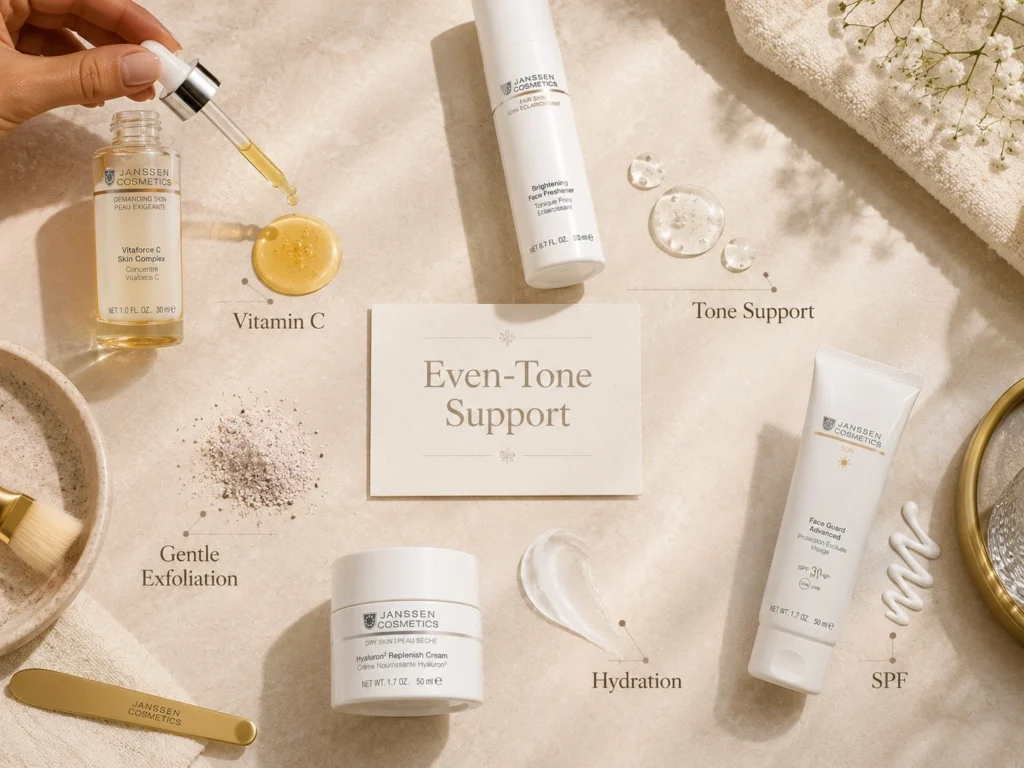
Vitamin C is commonly used in skincare to support a brighter, more radiant-looking complexion. It is also used for antioxidant support, which is helpful when skin is exposed to environmental stress.
Vitamin C can be a strong choice for dullness and uneven-looking tone, but sensitive skin may need a gentler approach.
Hexylresorcinol is used in some cosmetic brightening formulas to support a more even-looking complexion. In Janssen’s Fair Skin product family, it is one of the key ingredients used in tone-support products.
For customer-facing wording, it is best to explain this as brightening-support and even-tone support, not whitening.
Gentle exfoliation can help remove dull surface buildup so the skin looks smoother and fresher. Ingredients such as glycolic acid or citric acid may be used in some brightening-support formulas.
The important word is gentle. Over-exfoliating can irritate the skin and make uneven tone look worse, especially on sensitive or redness-prone skin.
Antioxidants help support skin exposed to environmental stress. They are often included in glow and brightening-support routines because they help the skin look fresher and more radiant.
Uneven tone routines should not only focus on brightening. Hydration matters. Ingredients like hyaluronic acid and moisture-supporting sugars can help the skin look smoother and more comfortable.
When the skin is hydrated, the complexion often looks healthier and more refined.
SPF is part of the routine, not an extra step. Brightening-support products work best when the skin is protected during the day. If SPF is skipped, dark spot appearance can look more noticeable and harder to manage.
A morning routine should focus on brightening support and protection.
Step 1: Cleanse gently
Start with a gentle cleanser that removes overnight oil, residue, and buildup without stripping the skin.
Step 2: Use a tone-support toner
A toner can prepare the skin for serum and cream. For uneven tone routines, this step can help the skin feel fresh and ready for the next product.
Step 3: Apply serum
A serum can support the appearance of a more even-looking complexion. This may include vitamin C, brightening-support ingredients, or targeted tone-support ingredients depending on the skin.
Step 4: Apply day cream
A day cream can support hydration, comfort, and tone care. Some day creams include SPF, but many people still need dedicated sunscreen depending on the product and exposure.
Step 5: Finish with SPF
Daily SPF is essential. For uneven tone, this step is one of the most important parts of the entire routine.
A simple morning structure:
Cleanser → Toner → Serum → Day Cream → SPF
For step-by-step order, follow a brightening skincare routine for uneven tone that keeps cleanser, toner, serum, day cream, and SPF in the right sequence.
For detailed product order and active-spacing guidance, review how to layer skincare products for uneven skin tone.
An evening routine should support consistency, moisture, and gentle tone care.
Remove makeup, sunscreen, oil, and daily buildup gently. Avoid scrubbing dark spots or uneven areas.
A toner helps complete cleansing and prepares the skin for night care.
Some routines may include a targeted dark spot appearance product. This should be matched to the person’s skin and used consistently.
Night cream can support the skin while it rests. The goal is to help the skin feel smooth, hydrated, and comfortable.
A simple evening structure:
Cleanser → Toner → Targeted Support if appropriate → Night Cream

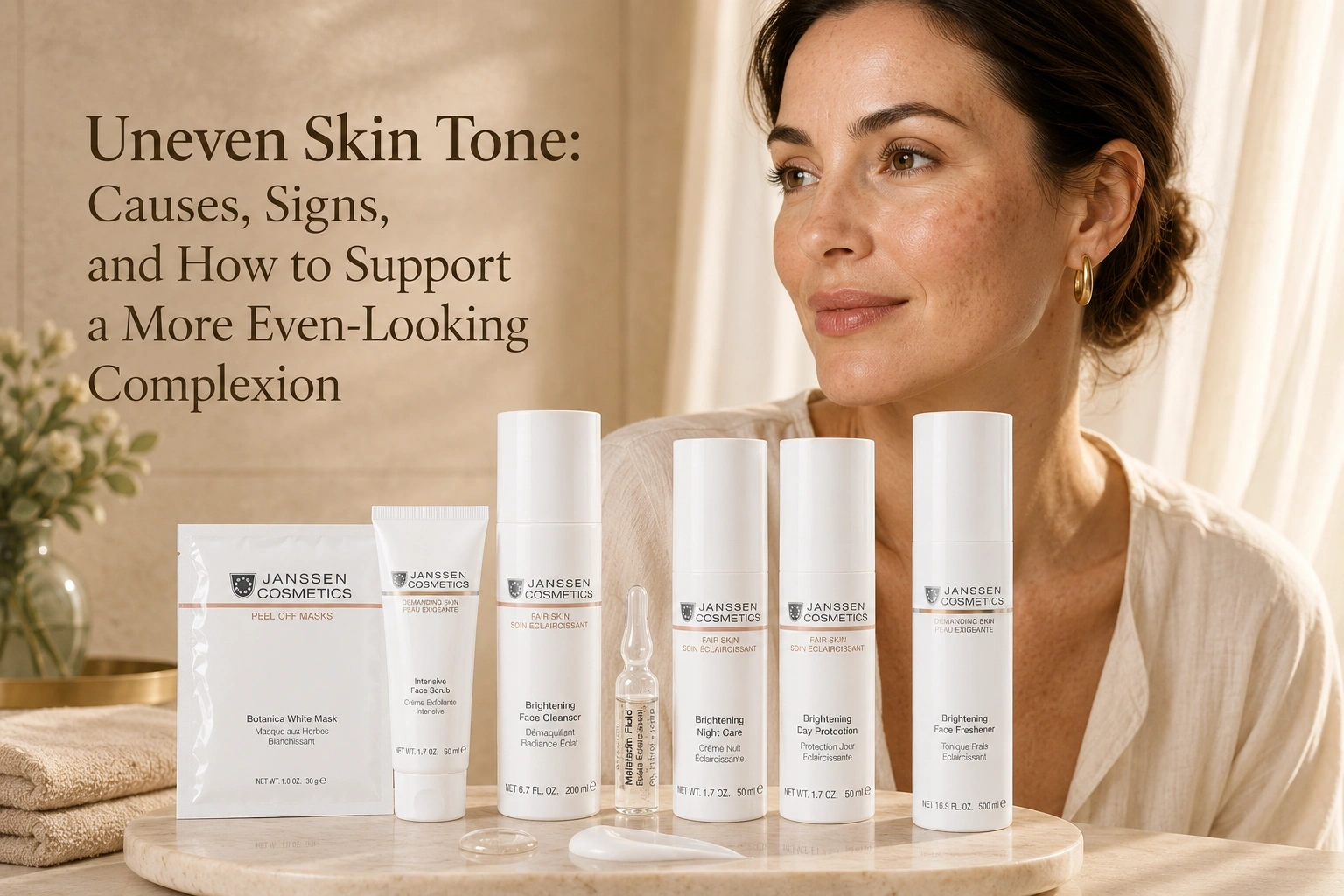
Zendevie carries Janssen Cosmetics through a consultation-first model. That means products are not recommended blindly. Uneven tone can come from different causes, so the routine should be matched carefully.
A personalized uneven tone consultation can help decide whether your skin needs brightening support, hydration, targeted care, SPF guidance, or a gentler routine first.
Janssen Cosmetics uses the internal product family name Fair Skin for products designed to support a brighter, more even-looking complexion. For Zendevie’s customer education, the safer and more respectful wording is uneven tone, dark spot appearance, and brightening support.
Products that may be discussed during a consultation include:
Professional-only options should stay professional. Brightening Mask belongs in salon or professional treatment settings and should not be presented as a home routine product.
These are examples, not automatic recommendations. A consultation helps decide what fits your skin, what should wait, and how to avoid overusing active products.
Brightening routines need patience and daytime protection. Without SPF, visible discoloration can look darker, and new uneven-looking areas may appear more easily.
If you are using exfoliating products, brightening-support serums, acids, or tone-support ingredients, SPF becomes even more important.
A brightening routine without sunscreen is incomplete.
Most uneven tone concerns are cosmetic, but some spots should be checked.
See a dermatologist or healthcare professional if a spot is new, changing, growing, bleeding, painful, very dark, irregular in shape, itchy, crusting, or concerning in any way. Also seek guidance if discoloration is persistent, spreading, or looks like melasma or another skin condition.
Skincare can support the look and feel of the skin, but it does not replace medical diagnosis or treatment.For a complete safety guide, review when uneven skin tone or dark spots may need a dermatologist.
Uneven skin tone means some areas of the skin look darker, duller, rougher, or less radiant than others. It can appear as dark spot appearance, post-blemish marks, dullness, or visible discoloration.
Common causes include sun exposure, post-blemish marks, dryness, dull surface buildup, irritation, age spot appearance, and sometimes hormonal-looking discoloration.
Skincare can help support the appearance of a more even-looking complexion, especially when used consistently with SPF. It should not promise to erase or permanently remove discoloration.
Sun exposure can make visible discoloration look darker and more persistent. SPF helps protect the skin during the day and supports the overall brightening routine.
Vitamin C is commonly used to support radiance and a brighter-looking complexion. It can be helpful for dullness and uneven-looking tone, depending on the skin’s tolerance.
Gentle exfoliation can help if dullness and surface buildup are part of the concern. But over-exfoliation can irritate the skin and make tone look worse, especially if the skin is sensitive.
It depends on the skin, the cause of the uneven tone, product consistency, SPF use, and skin tolerance. A brightening-support routine usually requires patience and steady use.
Any spot that is new, changing, growing, bleeding, painful, irregular, very dark, itchy, crusting, or concerning should be checked by a dermatologist.

Zendevie is guided by Haby Diallo, a licensed esthetician with more than 20 years of professional skincare experience. Her approach is rooted in education, professional judgment, and personal care.
years of experience