


What Causes Uneven Skin Tone? Sun, Spots, Dullness, and Skin Stress Explained
Uneven skin tone can feel frustrating because it does not always happen overnight. Sometimes it begins with one small mark after a blemish. Sometimes the cheeks look darker in certain areas. Sometimes the forehead or upper lip looks shadowed. Other times, the whole complexion simply looks dull, tired, or less even than before.
When people talk about uneven tone, they are usually describing skin that does not look consistent across the face. Some areas may look darker, duller, rougher, or more marked than others.
At Zendevie, we approach uneven tone with care. The goal is not to change your natural skin color. The goal is to support a healthier-looking, more radiant, more even-looking complexion with the right routine, patience, and daytime protection.
Quick Answer
Uneven skin tone can be caused by sun exposure, dark spot appearance, post-blemish marks, dryness, dullness, surface buildup, irritation, age spot appearance, and sometimes hormonal-looking discoloration.
A good routine for uneven-looking tone should focus on gentle cleansing, brightening-support ingredients, hydration, moisturizer, and daily SPF.
The most important step is consistency. Uneven tone routines usually need time and protection, not harsh scrubbing.
For the full overview, start with the uneven skin tone guide before changing products.
What Does Uneven Skin Tone Look Like?
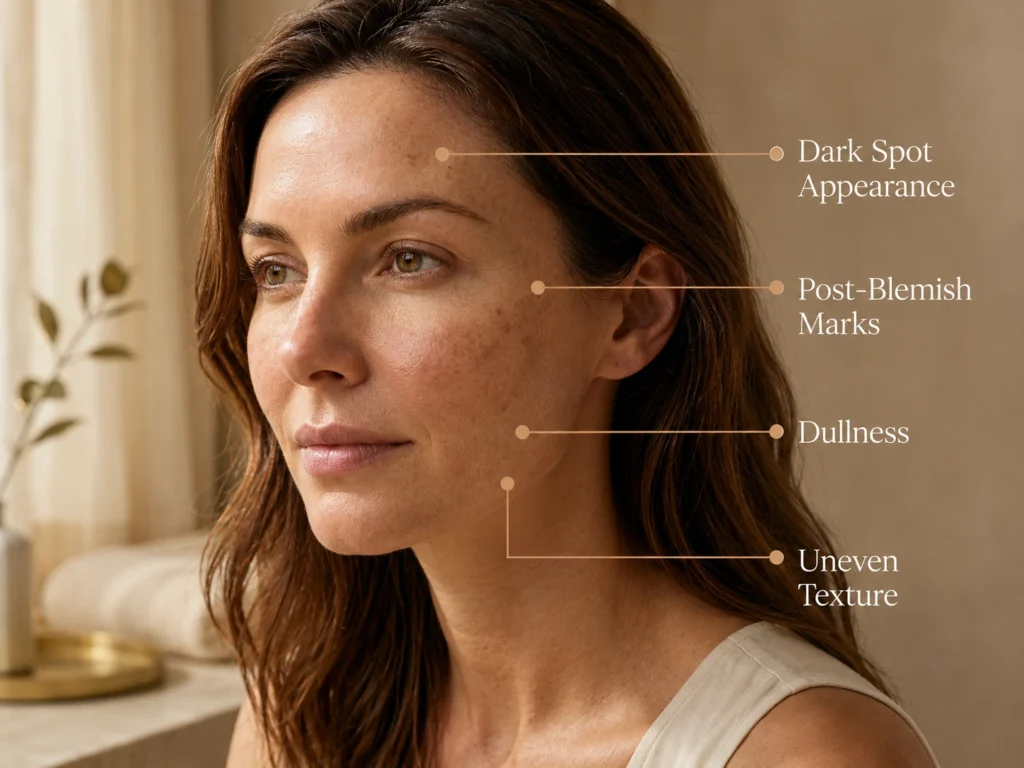
Uneven skin tone can show up in different ways depending on your skin type, skin tone, and history.
You may notice:
- Dark spot appearance
- Post-blemish mark appearance
- Sun spot appearance
- Dull or tired-looking skin
- Patches that look deeper in color
- Skin that looks less radiant
- Uneven-looking texture
- Shadow-like areas around the forehead, cheeks, upper lip, or jawline
- Darker-looking areas on the hands, neck, or chest
Uneven tone can look different on every person. This is why consultation matters. The routine should support your skin without using harsh or color-changing language.
Cause 1: Sun Exposure
Sun exposure is one of the biggest reasons uneven tone becomes more noticeable.
When the skin is exposed to UV light, it may produce more pigment in certain areas. Over time, this can make dark spots, sun spots, and uneven-looking areas appear more visible.
This is why SPF is not optional in a brightening-support routine.
If you are using products for dark spot appearance or uneven tone but skipping sunscreen, the routine is incomplete.
Cause 2: Post-Blemish Marks
After a blemish calms down, some people are left with a flat dark mark. This is very common, especially in deeper skin tones.
These marks are not the same as active breakouts, but they can make the skin look uneven for weeks or months.
Picking or squeezing blemishes can make post-blemish marks look more noticeable. A gentle routine, patience, and daytime protection can help support the appearance of a more even-looking complexion.
Cause 3: Age Spot Appearance
Flat dark areas can appear on skin that has experienced years of sun exposure. These are often seen on the face, hands, shoulders, arms, and chest.
Age spot appearance is common, but any spot that is new, changing, growing, bleeding, painful, itchy, crusting, irregular, or concerning should be checked by a dermatologist.
Skincare can support the appearance of uneven tone, but it should not replace medical evaluation.
Cause 4: Dryness and Dullness
Sometimes uneven tone is not only about dark spots. The skin may look uneven because it is dry, rough, flaky, or dull.
When the surface is not smooth, light does not reflect evenly. This can make the complexion look patchy or tired.
If dryness is part of the problem, the skin may need hydration and comfort before stronger brightening-support ingredients.
Cause 5: Irritation
Irritation can make tone look more uneven. Harsh scrubs, over-exfoliation, fragrance-heavy products, strong acids, or too many active products can leave the skin looking stressed.
For some people, irritation can make existing marks look more noticeable.
If your skin feels stingy, tight, red-prone, or reactive, slow down the routine. Comfort comes first.
Cause 6: Hormonal-Looking Discoloration
Some uneven tone patterns may look connected to hormonal changes or melasma-like discoloration. This should be handled carefully.
Zendevie content should not diagnose melasma or promise to treat it. If discoloration is persistent, spreading, changing, or concerning, a dermatologist should evaluate it.
A skincare consultation can help with cosmetic routine support, but medical concerns need medical guidance.
Cause 7: Inconsistent SPF
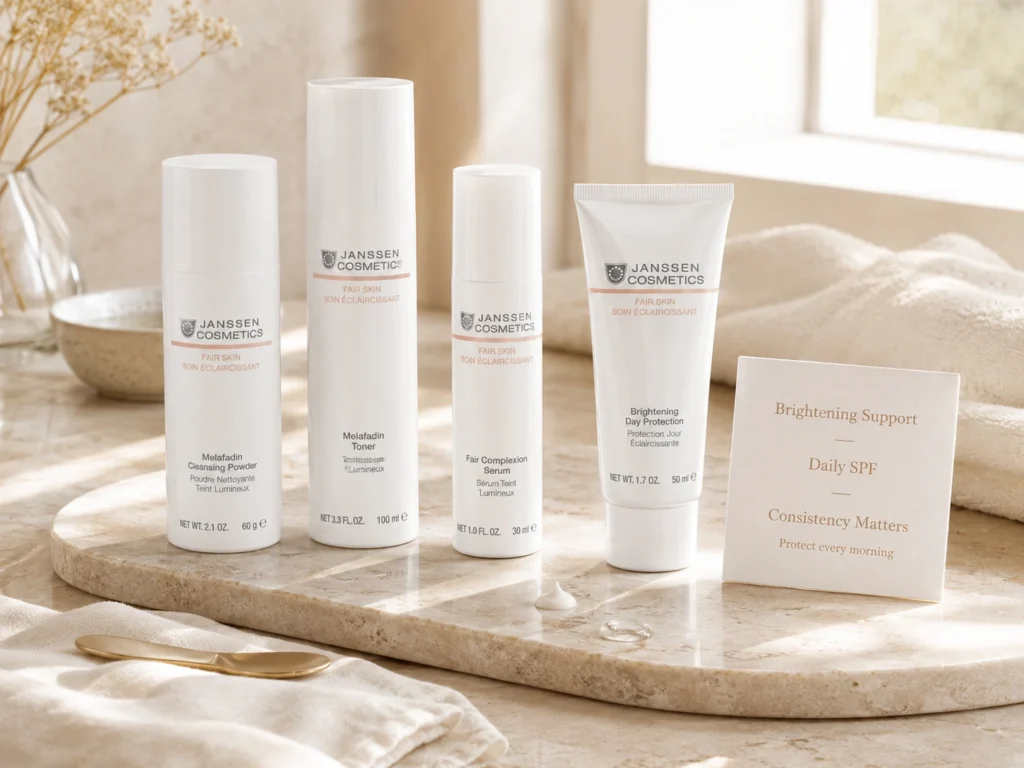
This one matters deeply.
Many people use brightening-support products but only use sunscreen sometimes. That makes it harder to support the look of uneven tone.
SPF should be part of the routine every day, especially when using brightening-support serums, exfoliation, acids, vitamin C, or targeted dark spot products.
A brightening routine without SPF is not complete.
A Simple Routine for Uneven Tone
Morning
Cleanser: Use a gentle cleanser.
Toner: Prepare the skin with a tone-support toner.
Serum: Add brightening-support serum when appropriate.
Day Cream: Support hydration and comfort.
SPF: Finish with daytime protection.
Evening
Cleanser: Remove makeup, sunscreen, and buildup.
Toner: Prepare the skin.
Targeted support: Use only when appropriate.
Night care: Support the skin overnight.
For daily steps, use a brightening skincare routine for uneven tone that supports consistency without overloading the skin.
Where Janssen Cosmetics Fits
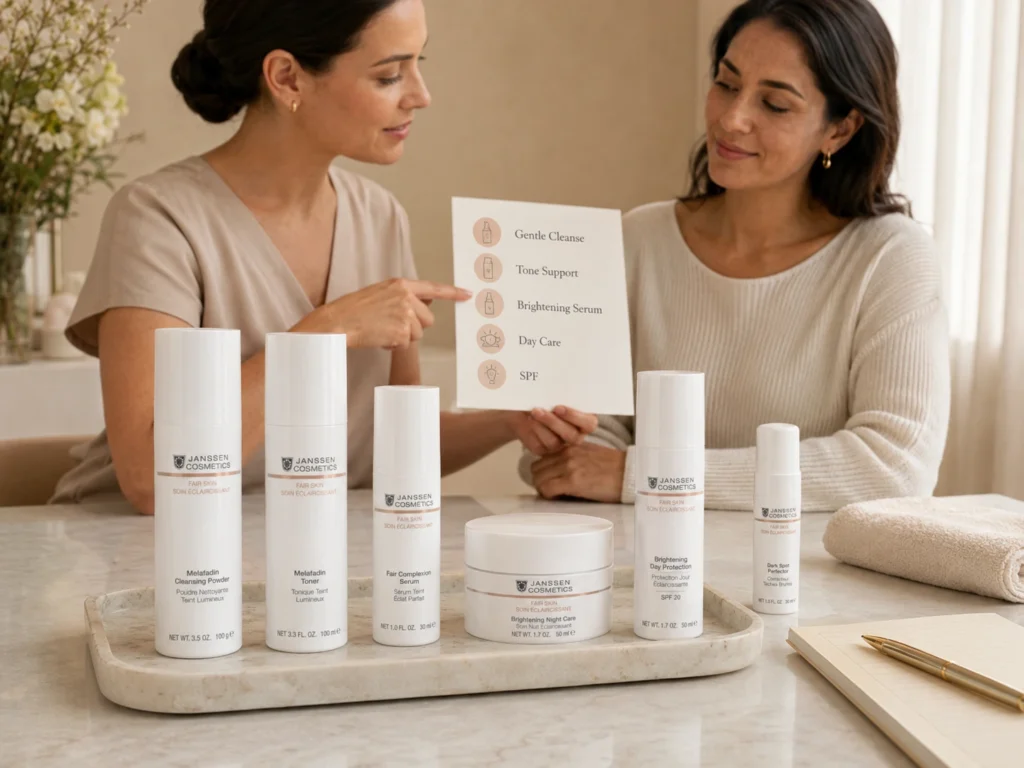
Zendevie carries Janssen Cosmetics through a consultation-first model. The internal Janssen product family name is Fair Skin, but customer-facing education should use safe wording like uneven tone, dark spot appearance, and brightening support.
Products that may be discussed during a consultation include:
- Melafadin Cleansing Powder for the cleansing step in an even-tone routine
- Melafadin Toner for tone-support preparation
- Fair Complexion Serum for a more even-looking complexion
- Brightening Day Protection for daytime care with SPF support
- Brightening Night Care for evening tone-support care
- Dark Spot Perfector for targeted dark spot appearance support
- 2-Phase Melafadin Concentrate as an intensive course-style option when appropriate
- Face Guard Advanced for additional daytime protection when appropriate
These are examples, not automatic recommendations. A consultation helps decide what your skin needs and what may be too active.
What Not to Do
Do not scrub dark spots aggressively.
Do not use whitening or bleaching language.
Do not layer every brightening product at once.
Do not skip SPF.
Do not use strong acids or retinol without guidance.
Do not expect dark spot appearance to improve overnight.
Do not ignore changing or concerning spots.
Frequently Asked Questions
What causes uneven skin tone?
Uneven skin tone can be caused by sun exposure, post-blemish marks, dullness, dryness, irritation, age spot appearance, and sometimes hormonal-looking discoloration.
Can the sun make uneven tone worse?
Yes. Sun exposure can make visible discoloration look darker or more persistent.
Can dry skin make my complexion look uneven?
Yes. Dry or rough skin can reflect light unevenly and make the complexion look dull or patchy.
Can skincare improve uneven tone?
Skincare can help support the appearance of a more even-looking complexion, especially when used consistently with SPF.
Should I exfoliate uneven tone?
Gentle exfoliation may help if dull surface buildup is part of the concern, but over-exfoliation can make the skin look worse.
When should I see a dermatologist?
See a dermatologist if a spot is new, changing, growing, bleeding, painful, irregular, itchy, crusting, or concerning.

About the Esthetician Behind Zendevie
Zendevie is guided by Haby Diallo, a licensed esthetician with more than 20 years of professional skincare experience. Her approach is rooted in education, professional judgment, and personal care.
20+
years of experience