
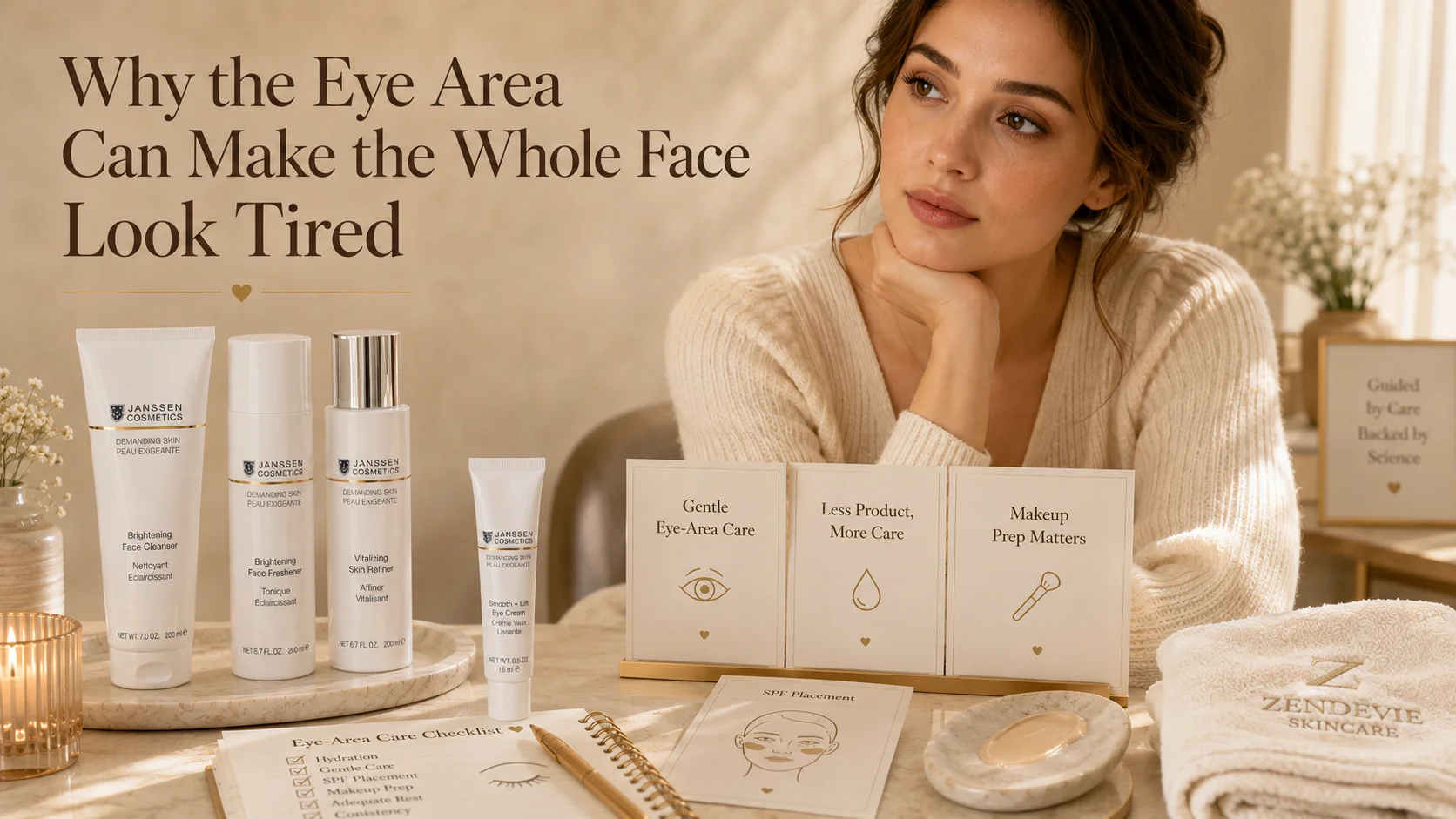
Sometimes the whole face looks tired because of one small area: the eyes.
The skin around the eyes can make the face look dull, dry, puffy, creased, shadowed-looking, or less rested, even when the rest of the skin is doing well. Concealer may crease. Powder may look heavy. Fine dryness lines may look more visible. The under-eye area may look flat or textured. The outer corners may feel tight.
This area is delicate, expressive, and often shows stress, lack of sleep, dehydration, dryness, travel, makeup wear, and product irritation quickly.
At Zendevie, we do not treat the eye area aggressively. In consultation, our licensed esthetician first looks at dryness, dehydration, sensitivity, makeup habits, sleep patterns, product placement, SPF tolerance, and whether facial actives are being used too close to the eyes.
The eye area should be cared for gently.
Not scrubbed, overloaded, or forced.
The eye area can make the whole face look tired because it is delicate and often shows dryness, dehydration, puffiness, makeup creasing, texture, and lack of rest more visibly than other areas.
The face may look tired when the eye area appears:
A simple eye-area support routine may include:
Morning: Gentle cleansing → eye-area care if appropriate → moisturizer → SPF with careful placement
Evening: Gentle cleansing → eye-area care if appropriate → moisturizer
Avoid harsh scrubs, strong acids, retinol-style products, or active facial serums close to the eyes unless the product is specifically made for that area and professionally recommended.
The eye area sits at the center of facial expression.
When the under-eye area looks dry, puffy, creased, or shadowed-looking, the whole face can appear more tired.
This can happen even if the cheeks, forehead, and jawline look hydrated.
The eyes draw attention first.
That is why small changes around the eyes can affect the overall appearance of freshness.
The skin around the eyes is more delicate than many other areas of the face.
It may react more easily to:
Because of this, the eye area needs a softer approach than the rest of the face.
When the eye area looks tired, it is easy to think only eye cream is missing.
Sometimes eye-area care can help.

But tired-looking eyes may also be connected to:
Before choosing a product, it helps to understand what is making the eye area look tired.
Dryness can make the eye area look more tired.
Dry-looking under-eyes may show as:
Dryness around the eyes should not be scrubbed.
It usually needs gentle cleansing, careful makeup removal, and appropriate eye-area comfort.
Dehydration can make the eye area look flat, creased, or less smooth.
Dehydrated-looking under-eyes may show as:
Hydration support can help the appearance of the eye area, but it should be gentle and appropriate for that delicate zone.
Do not apply any hydrating serum close to the eyes unless it is suitable for that area.
Puffy-looking eyes can make the whole face appear less rested.
Puffiness may look more noticeable after:
Gentle cooling, rest, and careful product use may help the appearance, depending on the cause.
If swelling is sudden, painful, severe, one-sided, or affects vision, seek medical guidance.
Some people notice shadowed-looking under-eyes that make the whole face look tired.
This may be related to natural facial structure, dryness, lack of sleep, makeup, dehydration, or how light hits the under-eye area.
Cosmetic skincare may support hydration and smoothness, but it cannot change natural anatomy.
If under-eye discoloration changes suddenly, worsens quickly, or appears unusual, speak with a dermatologist or medical provider.
Concealer is meant to brighten the look of the under-eye area, but it can also make the area look more textured if the skin underneath is dry or dehydrated.
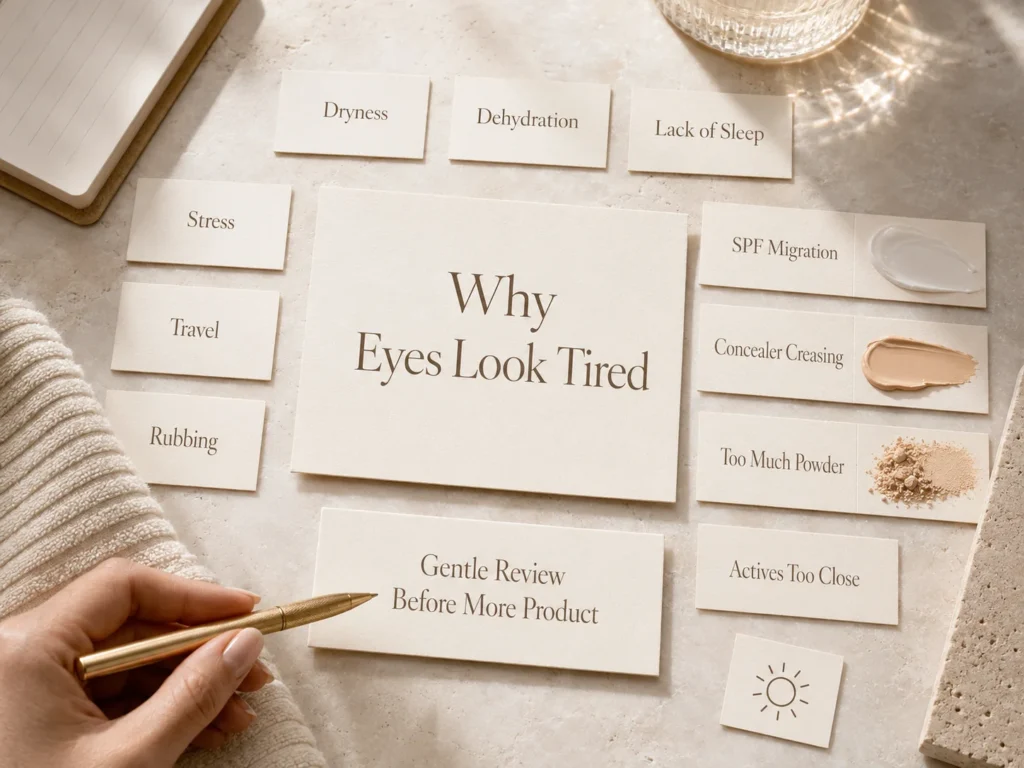
Concealer may:
If concealer makes the eye area look worse, the problem may be skin prep, product amount, texture, or powder use.
Powder can help set makeup, but too much powder under the eyes can make the face look more tired.
Powder may emphasize:
The under-eye area often needs less powder than the T-zone.
For many people, strategic powder placement looks fresher than heavy setting.
Rubbing can make the eye area look more tired because it may create temporary irritation, puffiness, or dryness.
Common rubbing triggers include:
The eye area should be cleansed gently.
Avoid rough towels, harsh cotton pads, and aggressive rubbing.
Poor makeup removal can make the eye area look dull and tired the next day.
Mascara, eyeliner, concealer, powder, SPF, and setting products can collect around the eyes.
If removal is too harsh, the area may feel dry or irritated.
If removal is incomplete, makeup residue may remain.
A gentle evening routine matters.
The goal is to remove makeup without dragging or stressing the delicate eye area.
Many facial active products are not made for the eye area.
Be careful with:
These products may be appropriate for some facial routines, but the eye area needs specific care.
Do not apply strong facial actives near the eyes unless the product is clearly made for that area and recommended appropriately.
Even if you do not apply exfoliation directly under the eyes, active products can travel or irritate nearby skin.
Over-exfoliation may make the eye area feel:
If the eye area feels irritated, pause strong active products and simplify the routine.
SPF is important, but the eye area can be sensitive to certain SPF formulas.
Some people experience stinging when SPF moves too close to the eyes or migrates with sweat.
If SPF bothers the eye area, review:
Do not skip SPF for the entire face without reviewing alternatives.
The goal is careful protection and comfort.
Poor sleep can make the eye area look tired quickly.
After lack of sleep, the eye area may look:
Skincare can support the appearance of tired-looking eyes, but it cannot replace rest.
A gentle routine is best after a sleepless night.
Stress can show around the eyes because people may sleep less, drink less water, rub the eyes more, wear makeup longer, or rush cleansing.
Stress-related tired-looking eyes may appear:
During stressful seasons, avoid testing strong new eye products.
Keep the routine gentle and consistent.
Travel often makes the eye area look tired.
This may happen because of:
After travel, the eye area may need gentle cleansing, hydration comfort, moisturizer support, and rest.
Avoid harsh exfoliation after travel.
Cold weather and indoor heating can make the eye area look dry and creased.
Winter eye-area concerns may include:
Winter eye care should focus on comfort and gentle application.
Avoid hot water and harsh makeup removal.
In summer, the eye area may look tired for different reasons.
Heat, sweat, SPF, makeup, and rubbing can affect how the under-eye area looks.
Summer eye-area concerns may include:
A lighter, simpler routine may be better in hot weather.
Mature skin often shows changes around the eyes sooner because this area is delicate and expressive.
The eye area may show:
Mature eye-area care should focus on hydration, comfort, gentle application, and not overusing powder or active products.
Oily skin can still have dry or dehydrated-looking under-eyes.
A person may have an oily T-zone and still experience:
Do not treat the eye area like the oily T-zone.
It may need gentler, more specific care.
Dry skin often shows under-eye dryness quickly.
Dry eye-area skin may look:
Dry eye-area care should focus on gentle cleansing and appropriate comfort.
Avoid scrubbing flakes around the eyes.
Sensitive skin may react around the eyes more easily than other areas.
Possible triggers include:
If the eye area is sensitive, keep products simple and avoid experimenting with strong formulas.
Combination skin may have oily areas and dry under-eyes at the same time.
This can make routine planning confusing.
The T-zone may need lightweight balance.
The cheeks may need comfort.
The eye area may need gentle care.
The same product does not always belong everywhere.
Zone awareness helps protect the delicate areas of the face.
The eye area can make dull skin look more noticeable.
Even if the cheeks are hydrated, tired-looking eyes may make the whole face appear less fresh.
This is why dull skin routines should consider:
A fresh-looking complexion is not only about the cheeks.
Texture around the eyes may make the whole face look tired.
This texture may come from:
Do not exfoliate the eye area aggressively.
Texture near the eyes should be handled gently.
Uneven-looking tone around the eyes can affect the look of the whole face.
The under-eye area may look darker, shadowed, or less even because of natural facial structure, dryness, lack of sleep, makeup, dehydration, or irritation.
Cosmetic skincare may support hydration and a smoother-looking finish, but it should not be expected to change every cause of under-eye shadow appearance.
If discoloration changes suddenly or looks concerning, seek medical guidance.
A gentle eye-area approach may include:
The eye area usually needs less product, not more.
A simple morning routine may look like:
Gentle cleanse or refresh → eye-area care if appropriate → moisturizer → SPF
If makeup is used:
Let skincare settle before concealer.
Use a small amount of product around the eyes.
Avoid heavy layers that cause concealer to slip, crease, or pill.
A simple evening routine may look like:
Gentle makeup removal if needed → gentle cleanser → eye-area care if appropriate → moisturizer
If the eye area feels irritated, keep the routine very simple.
Avoid strong active products near the eyes.
Do not rub aggressively to remove mascara or concealer.
Dry dull skin may need eye-area comfort.
Morning:
Gentle cleanser → eye-area care if appropriate → moisturizer → SPF
Evening:
Gentle cleanser → eye-area care if appropriate → moisturizer or cream
Avoid:
Dry under-eyes often need softness and consistency.
Dehydrated-looking under-eyes may look creased, flat, or less smooth.
Morning:
Gentle cleanser → lightweight eye-area hydration if appropriate → moisturizer → SPF
Evening:
Gentle cleanser → eye-area care if appropriate → moisturizer
Avoid applying regular facial serums too close to the eyes unless they are suitable for that area.
Hydration near the eyes should be gentle.
Oily skin may still need eye-area comfort.
Morning:
Gentle cleanser → eye-area care if needed → lightweight moisturizer → SPF
Evening:
Gentle cleanser → eye-area care if appropriate → lightweight moisturizer
Avoid:
The eye area may need different care than the rest of oily skin.
Sensitive eye-area care should be very simple.
Morning:
Mild cleanser → moisturizer if tolerated → SPF with careful placement
Evening:
Mild cleanser → moisturizer if tolerated
If using eye-area products, introduce them slowly.
Avoid:
If irritation persists, seek professional guidance.
Mature eye-area skin may benefit from hydration and comfort.
Morning:
Gentle cleanser → eye-area care if appropriate → moisturizer → SPF
Evening:
Gentle cleanser → eye-area care if appropriate → moisturizer or cream
Avoid:
Mature eye-area care should support a softer, smoother-looking appearance.
Use a small amount.
Apply gently.
Avoid getting product too close to the lash line unless the product directions allow it.
Do not pull, drag, or rub the area.
Let the product settle before applying concealer or SPF.
More product is not better around the eyes.
Too much product can cause pilling, creasing, or irritation.
Concealer creasing may improve when the eye area is properly prepared.
Try:
Creasing is often about skin prep and product amount.
To reduce dry-looking under-eyes:
Dry-looking under-eyes often need a softer routine.
Puffy-looking eyes may improve visually with gentle care, depending on the cause.
Helpful habits may include:
If puffiness is sudden, severe, painful, one-sided, or affects vision, speak with a medical provider.
Common mistakes include:
The eye area needs caution and consistency.
Avoid applying these near the eyes unless a product is specifically made for that area and directions support it:
The eye area is not the place to experiment aggressively.
Eye-area care may help when the concern is:
Eye-area products should be chosen carefully and introduced slowly.
The goal is comfort and a fresher-looking appearance.
Eye-area care may not be enough if tired-looking eyes are mostly related to:
In those cases, cosmetic skincare may not be the right answer.
Speak with a dermatologist or medical provider when symptoms look medical or persistent.
Professional guidance may help if:
A consultation can help decide what belongs near the eye area and what should stay away.
Speak with a dermatologist or medical provider if the eye area has:
The eye area is delicate. Medical-looking changes should not be handled with cosmetic products alone.
After consultation, our licensed esthetician may consider Janssen Cosmetics options depending on whether the tired-looking appearance is related to eye-area dryness, dull-looking skin, dehydration, sensitivity, or mature skin needs.

For the eye area, possible options may include:
For dry or dehydrated dull-looking skin around the face, options reviewed in the broader routine may include:
For tired-looking dull skin, options reviewed in the broader routine may include:
For sensitive-looking or reactive-feeling skin, comfort-focused options may come first, such as:
For morning routines, Face Guard Advanced SPF 30 may be considered as the final daytime protection step when appropriate, with careful placement around the eye area based on tolerance.
These are not automatic recommendations. The correct routine depends on skin type, sensitivity, eye-area tolerance, makeup habits, SPF habits, dryness, dehydration, and whether the concern is cosmetic or needs medical evaluation.
Do not scrub the eye area.
Do not apply strong facial acids close to the eyes.
Do not apply retinol-style facial products close to the eyes unless the product is made for that area and recommended appropriately.
Do not apply strong vitamin C near the eyes if it stings or irritates.
Do not use heavy powder to cover dry under-eyes.
Do not rub aggressively to remove makeup.
Do not sleep in eye makeup.
Do not keep using eye products that burn, sting, itch, or cause swelling.
Do not ignore sudden swelling, pain, vision changes, crusting, severe itching, or persistent irritation.
The eye area can make the whole face look tired because it often shows dryness, puffiness, dehydration, creasing, shadowed-looking areas, makeup texture, and lack of rest more visibly than other parts of the face.
Concealer may crease because the eye area is dry, dehydrated, over-powdered, overloaded with product, or not properly prepared before makeup.
Yes. Dry-looking under-eyes can make the whole face appear less fresh, especially when makeup clings or fine dryness lines look more visible.
No, do not exfoliate the eye area with harsh scrubs or facial acids unless the product is specifically made for that area and recommended appropriately.
Not always. Many facial serums are not made for the eye area. Avoid strong vitamin C, acids, retinol-style products, and exfoliating serums near the eyes unless directions clearly allow it.
Puffy-looking eyes may appear after lack of sleep, travel, stress, salty food, dehydration, crying, allergies, or rubbing. Sudden, painful, severe, or one-sided swelling should be medically evaluated.
Eye cream may help the appearance of dry-looking, less smooth-looking, or tired-looking eye areas when the product fits the skin. It will not address every cause of tired-looking eyes.
SPF is important, but the eye area can be sensitive. Use careful placement and avoid formulas that sting or migrate into the eyes. Seek guidance if SPF always irritates the area.
Too much powder can emphasize dryness, fine lines, texture, and creasing. The under-eye area often needs less powder than oily areas of the face.
Seek medical guidance if the eye area has sudden swelling, severe swelling, one-sided swelling, pain, vision changes, infection-looking symptoms, persistent rash-like irritation, crusting, bleeding, severe itching, burning that does not settle, sudden discoloration, or worsening irritation.
If your whole face looks tired because of the eye area, you may not need a stronger face routine.
You may need a gentler, more specific plan for dryness, dehydration, makeup creasing, SPF placement, or eye-area sensitivity.
At Zendevie, a free virtual consultation helps us review your eye-area concerns, cleanser, moisturizer, SPF, makeup habits, sensitivity, active products, and routine order before recommending anything.
The goal is to help the face look fresher while keeping the delicate eye area comfortable and protected.

Zendevie is guided by Haby Diallo, a licensed esthetician with more than 20 years of professional skincare experience. Her approach is rooted in education, professional judgment, and personal care.
years of experience