

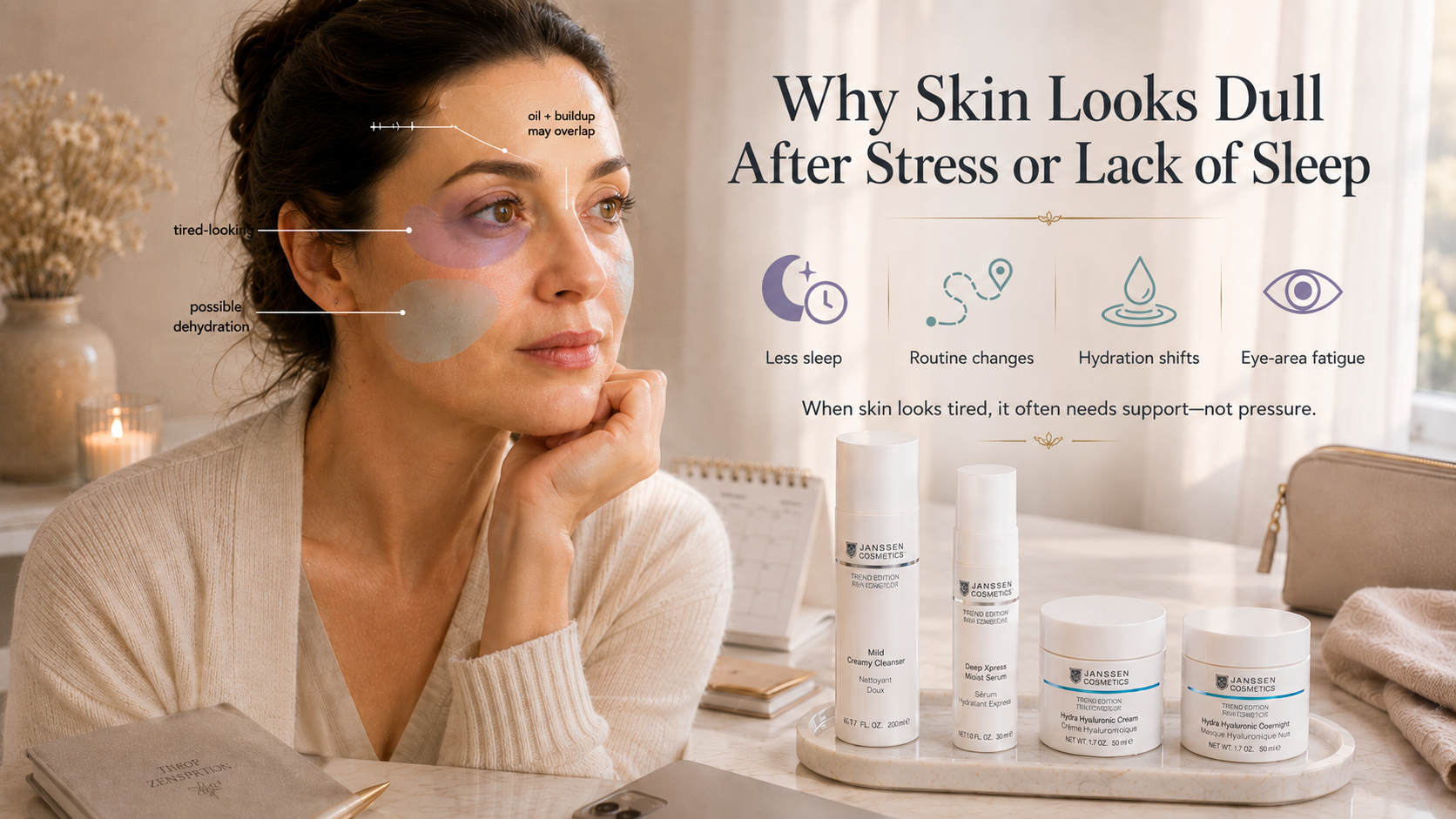
Stress and lack of sleep can show on the face.
After a long week, emotional pressure, late nights, travel, work stress, school stress, parenting stress, or a busy schedule, the skin may look dull, flat, tired, puffy, oily, dry, or less fresh. Makeup may not sit the same way. The eye area may look more tired. The skin may feel tight in some areas and oily in others.
This does not mean your skin suddenly changed overnight.
It may mean your skin is responding to a season of stress, less rest, less hydration, less consistent cleansing, more makeup, more caffeine, more indoor air, or a routine that has become rushed.
At Zendevie, we do not treat tired-looking skin as a reason to use harsh scrubs or strong active products right away. In consultation, our licensed esthetician first looks at what changed: sleep, stress, hydration, cleanser, moisturizer, SPF, makeup, exfoliation, eye-area dryness, and whether the skin feels sensitive or overworked.
When skin looks tired, it often needs support.
Not pressure.
Skin may look dull after stress or lack of sleep because the complexion can appear less fresh, less smooth, puffy, dry, oily, or patchy when the body and routine are under pressure.
Common signs include:
A simple reset may include:
Morning: Gentle cleanser → hydration support if needed → moisturizer → SPF
Evening: Gentle cleanser → moisturizer or hydration support → moisturizer if needed
Avoid harsh scrubs, strong acids, and too many new products when the skin already looks tired or feels sensitive.

Stress can affect how your face looks because it often changes your daily habits.
During stressful periods, people may:
The result may be skin that looks less fresh, less smooth, or less balanced.
The skin may not need a dramatic product change.
It may need routine stability.
Poor sleep can make the face look tired even when the skin itself is not damaged.
After a late night, the skin may look:
Skincare can support the appearance of tired-looking skin, but it cannot replace rest.
When possible, rest is part of the beauty routine too.
When the skin looks tired, it is easy to assume it is dry.
Sometimes it is.
But tired-looking skin may also be:
Before choosing products, it helps to understand what kind of tired-looking skin you are seeing.
Many people respond to dullness by exfoliating.
But stress-related dullness is not always surface buildup.
It may come from:
If the skin is already tired, harsh exfoliation may make it look worse.
Start with the basics first.
The eye area can make the whole face look tired.
After stress or lack of sleep, the eye area may look:
This area is delicate.
Do not use harsh scrubs, strong facial acids, or active products close to the eyes unless the product is made for that area and recommended appropriately.
Gentle eye-area support may be more useful than aggressive exfoliation.
Makeup may not sit well when the skin looks tired.
Foundation may look:
This can happen when the skin is dehydrated, under-moisturized, oily but tight, or not properly cleansed from the night before.
The answer is not always more coverage.
Often, better skin prep helps more.
Puffiness can make skin look tired and less defined.
It may be more noticeable around the eyes, cheeks, or face overall after poor sleep, travel, salty food, stress, or schedule disruption.
Skincare may help the skin feel refreshed, but puffiness can also be related to lifestyle factors.
Support the skin gently with:
If swelling is sudden, painful, severe, one-sided, or comes with other symptoms, seek medical guidance.
Flat-looking skin may happen when the skin feels dehydrated or when the routine becomes inconsistent.
Skin may look flat when:
Flat skin may need hydration, comfort, and consistency before stronger products.
Stressful weeks can make oily skin feel confusing.
The skin may look shiny but still not look fresh.
This may happen when oil mixes with:
Oily but dull skin should not be stripped aggressively.
It may need effective cleansing, lightweight hydration, lightweight moisturizer, and SPF that does not feel heavy.
Dry skin may look more dull when routines become rushed or sleep is disrupted.
Dry stress-related dullness may show as:
Dry skin often needs comfort before exfoliation.
A gentle cleanser, hydration support, moisturizer, and SPF may be more helpful than harsh scrubbing.
Dehydrated skin lacks water.
It may look flat, tight, creased, shiny but uncomfortable, or less smooth.
Stress and lack of sleep can make dehydration-looking dullness more noticeable because hydration habits and routine consistency often change.
Dehydrated tired-looking skin may need:
Hydration often comes before active products.
Sensitive skin may feel more reactive during stressful seasons because routines often become inconsistent or overloaded.
Sensitive tired-looking skin may feel:
If sensitive skin is reacting, simplify.
A mild cleanser, moisturizer, and SPF may be better than adding strong radiance products.
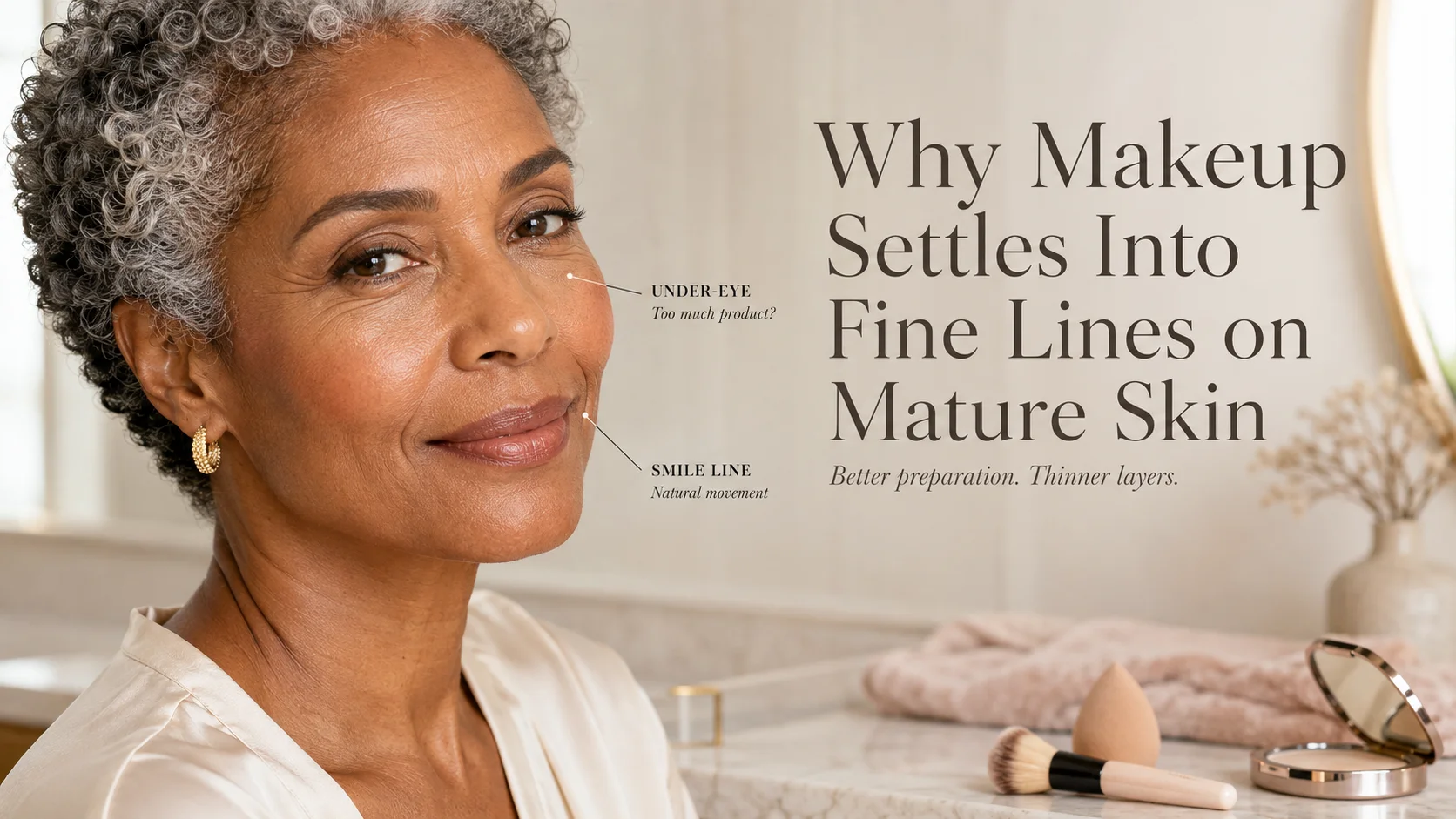
Mature skin may show tiredness quickly because dryness, dehydration, texture, and makeup settling can become more visible.
After stress or lack of sleep, mature skin may look:
Mature skin often benefits from hydration, comfort, gentle cleansing, SPF, and careful eye-area support.
Avoid aggressive scrubbing or heavy powder when the skin looks tired.
Emotional stress can affect how the face looks.
After crying or emotional exhaustion, the eye area may look puffy, skin may feel dry or tight, and the complexion may appear less fresh.
A gentle reset may include:
The skin needs tenderness during emotional stress.
Not harsh correction.
Long workdays can make skin look tired by evening.
This may come from:
A good evening cleanse matters.
The skin needs the day removed gently before moisturizer.
Busy parenting days can make skincare inconsistent.
You may rush cleansing, skip moisturizer, forget SPF, wear makeup longer, or sleep less.
The skin may look tired because life is demanding.
A simple routine is often best:
Morning: Cleanser → moisturizer → SPF
Evening: Cleanser → moisturizer
If time is limited, consistency with the basics matters more than a complicated routine.
Events often mean makeup, late nights, less sleep, more food changes, more photos, and less routine consistency.
After an event, skin may look dull because of:
The first step is not a harsh scrub.
The first step is gentle cleansing and recovery.
The morning after poor sleep, keep the routine simple and refreshing.
A routine may look like:
Gentle cleanser → hydration support if needed → moisturizer → SPF
If the eye area looks tired, use gentle eye-area care if appropriate.
Avoid testing new strong products when the skin already looks tired.
Avoid heavy powder if it makes texture look more visible.
At night, focus on removing the day and helping the skin feel comfortable.
A simple routine may look like:
Gentle cleanser → moisturizer
If hydration is needed:
Gentle cleanser → hydrating serum if tolerated → moisturizer
If makeup or heavy SPF was worn:
Makeup/SPF removal step if needed → gentle cleanser → moisturizer
Do not go to bed with makeup, SPF, sweat, and oil sitting on the skin.
When the skin looks tired, avoid:
Tired-looking skin usually needs recovery, not intensity.
Maybe, but not automatically.
Exfoliation may help if tired-looking skin is also rough from surface buildup and the skin is stable.
But avoid exfoliation if skin is:
If the skin looks tired from stress or poor sleep, hydration and comfort may come first.
Vitamin C support may help some dull-looking skin appear fresher when the skin can tolerate it.
But if the skin feels sensitive, stingy, dry, or over-exfoliated, vitamin C may need to wait.
If vitamin C is used in the morning, SPF should be applied afterward as the final skincare step.
A radiance-support routine should still feel comfortable.
A mask may be helpful when the skin looks tired, but the mask should match the skin’s need.
If skin feels dry or tight, a hydrating mask may be more appropriate.
If skin feels sensitive, a calming-style mask may be better.
If the T-zone feels oily and heavy, a clearing mask may be used carefully only when appropriate.
Do not use a strong mask just because the face looks tired.
Eye-area care may help if the eye area looks dry, creased, or tired.
The right eye product depends on the skin.
Eye-area products should be gentle and appropriate for the delicate area.
Avoid applying strong facial acids, scrubs, or active serums around the eyes unless they are made for that area.
If the eye area is swollen, painful, itchy, or irritated, seek medical guidance.
Not right away.
When skin looks dull after stress or lack of sleep, the best approach is often to return to the basics first.
Before changing everything, ask:
Your skin may need routine consistency more than a new routine.

A simple reset may look like:
Morning:
Gentle cleanser → hydration support if needed → moisturizer → SPF
Evening:
Gentle cleanser → moisturizer
Optional add-ons if appropriate:
Keep the reset calm and consistent.
Morning:
Gentle cleanser → hydrating serum if needed → moisturizer → SPF
Evening:
Gentle cleanser → moisturizer or cream
Optional:
Hydrating mask when appropriate
Avoid:
Dry tired-looking skin needs comfort first.
Morning:
Gentle cleanser → lightweight hydration if needed → lightweight moisturizer → SPF
Evening:
Gentle cleanser → lightweight moisturizer
Optional later:
Targeted BHA or clearing mask only if clogged-looking pores are present and the skin is stable
Avoid:
Oily tired-looking skin still needs balance.
Morning:
Gentle cleanser → lightweight hydration if needed → moisturizer by zone → SPF
Evening:
Gentle cleanser → moisturizer by zone
Use less product where the skin feels oily and more comfort where the skin feels tight.
Combination skin often needs small adjustments, not a completely different routine.
Morning:
Mild cleanser → moisturizer → SPF
Evening:
Mild cleanser → moisturizer
Avoid:
Sensitive tired-looking skin needs calm before glow.
Morning:
Gentle cleanser → hydrating serum if tolerated → moisturizer → SPF
Evening:
Gentle cleanser → serum or moisturizer → cream if needed
Optional:
Eye-area care and hydrating mask when appropriate
Avoid:
Mature tired-looking skin often needs hydration, comfort, and consistency.
Before makeup, avoid aggressive last-minute scrubbing.
A better prep may include:
Makeup looks better when skin feels comfortable.
If skin looks dull by evening, review your morning and daytime habits.
Consider:
Evening dullness is often routine-related.
During stressful weeks, simplify.
A realistic routine is better than a perfect routine you cannot follow.
Focus on:
Consistency helps tired-looking skin look more settled.
After a sleepless night:
One poor night of sleep does not require a full routine overhaul.
You may not be able to avoid every stressful season, but you can make your routine more supportive.
Helpful habits may include:
A simple routine protects consistency.
Common mistakes include:
Tired-looking skin improves better with care than intensity.
Professional guidance may help if your skin often looks dull after stress or lack of sleep.
This is especially helpful if:
A consultation can help create a routine that fits real life.
A dermatologist should evaluate the skin if dullness or tired-looking skin comes with:
Cosmetic skincare can support appearance and routine structure, but medical-looking changes need medical evaluation.

After consultation, our licensed esthetician may consider Janssen Cosmetics options depending on why the skin looks dull or tired.
For tired-looking dull skin, possible options may include:
For dry or dehydrated tired-looking skin, hydration-focused options may be reviewed, such as:
For sensitive tired-looking skin, comfort-focused options may come first, such as:
For oily tired-looking skin, lightweight balance may be reviewed, such as:
For the eye area, Smooth + Lift Eye Cream may be reviewed when the concern is tired-looking, dry-looking, or less smooth-looking eye-area appearance.
For morning routines, Face Guard Advanced SPF 30 may be considered as the final daytime protection step when appropriate.
These are not automatic recommendations. The correct routine depends on whether the skin is dry, dehydrated, oily, sensitive, mature, over-exfoliated, product-overloaded, or simply tired from stress and poor sleep.
Do not scrub aggressively because your skin looks tired.
Do not start several new active products after a stressful week.
Do not sleep in makeup.
Do not skip moisturizer.
Do not skip SPF.
Do not use strong vitamin C, acids, or retinol-style products on irritated skin.
Do not apply strong facial actives close to tired or irritated eyes.
Do not over-cleanse oily but dehydrated skin.
Do not use heavy powder to cover every sign of tiredness.
Do not ignore burning, swelling, rash-like irritation, pain, crusting, bleeding, severe itching, eye-area irritation, sudden facial swelling, or persistent worsening.
Skin may look dull after stress because routines change, sleep may decrease, hydration habits may shift, makeup may stay on longer, and the skin may look less balanced or less fresh.
Lack of sleep can make the face look puffy, flat, dull, less smooth, and tired around the eyes. Skincare can support the appearance, but rest also matters.
Not automatically. If your skin feels tight, sensitive, stingy, hot, or over-exfoliated, hydration and moisturizer should come first.
Makeup may look patchy or flat because the skin is dehydrated, dry, oily but tight, under-cleansed, or not properly moisturized.
Yes. Oily skin can look shiny but dull when oil mixes with SPF, makeup, sweat, powder, and product buildup.
A simple evening routine may be gentle cleanser and moisturizer. If you wore makeup or SPF, remove it thoroughly but gently.
Use a gentle cleanser, hydration support if needed, moisturizer, and SPF. Keep makeup light if skin looks textured or tired.
Vitamin C support may help some dull-looking skin appear fresher when tolerated, but it should not be used on irritated or over-exfoliated skin.
Eye-area care may help if the eye area looks dry, creased, or tired. Use gentle products made for the eye area.
See a dermatologist if dullness or tired-looking skin comes with persistent rash-like irritation, swelling, pain, crusting, bleeding, infection-looking areas, severe itching, eye-area irritation, sudden major changes, burning that does not settle, sudden facial swelling, or worsening symptoms.
If your skin looks dull, tired, dry, oily, or patchy after stress or lack of sleep, a free virtual consultation can help you understand what your skin needs first.
At Zendevie, we review your cleanser, moisturizer, SPF, makeup wear, hydration needs, sensitivity, exfoliation habits, eye-area concerns, and current products before recommending a routine.
The goal is not to force your skin to glow overnight.
The goal is to support it with care, consistency, and the right steps.

Zendevie is guided by Haby Diallo, a licensed esthetician with more than 20 years of professional skincare experience. Her approach is rooted in education, professional judgment, and personal care.
years of experience