

Dull skin and dehydrated skin often appear together.
Your skin may look flat, tired, less smooth, or less fresh. It may also feel tight, even if it gets oily during the day. Makeup may sit unevenly. SPF may look heavy. The T-zone may shine, but the cheeks may feel stretched. By evening, your skin may look like it has lost its freshness.
This is where many people get confused.
They think, “My skin is oily, so it cannot be dehydrated.”
But dehydrated skin is not the same as dry skin.
Dry skin often lacks oil or lipid comfort. Dehydrated skin lacks water. That means oily, combination, sensitive, mature, and blemish-prone skin can all look dull because of dehydration.
At Zendevie, we do not assume dull-looking skin needs immediate exfoliation. In consultation, our licensed esthetician first looks at how the skin feels after cleansing, whether it gets oily but still feels tight, whether makeup clings or separates, and whether the routine is helping the skin hold hydration through the day.
Dull-looking skin may not need stronger products.
It may need better hydration.
Dull skin describes how the skin looks. Dehydrated skin describes a lack of water in the skin.
Dull skin may look:
Dehydrated skin may feel or look:
Dry skin lacks oil or lipid comfort. Dehydrated skin lacks water. You can have oily dehydrated skin, dry dehydrated skin, sensitive dehydrated skin, or mature dehydrated skin.
Before exfoliating dull skin, check whether hydration is the missing step.
Dull skin is mainly about appearance.
The skin may look less fresh, less smooth, or less rested. It may appear tired by the end of the day, patchy under makeup, or uneven in texture.
Dullness can be caused by many things, including:
Dullness is a visual clue. It does not tell the whole story by itself.
Dehydrated skin means the skin lacks water.
It is not the same as dry skin.
Dehydrated skin can happen even when the skin produces oil. That is why someone can feel oily and tight at the same time.
Dehydrated skin may show up as:
Dehydration is about water balance, not simply oil level.
Dry skin often lacks oil or lipids.
Dehydrated skin lacks water.
A simple way to think about it:
Dry skin asks for comfort and lipid nourishment.
Dehydrated skin asks for water-binding hydration.
Dry skin may feel rough, flaky, tight, and uncomfortable.
Dehydrated skin may feel tight, flat, creased, or shiny but not comfortable.
Some people have both dry and dehydrated skin at the same time.
That is why the routine should be built around what the skin shows and feels, not just the skin type label.
When the skin lacks hydration, the surface may not look as smooth or flexible.
Light does not reflect as evenly. Makeup may sit in fine lines. Texture may look more visible. The skin may appear flat or tired, especially by the end of the day.
Dehydrated dullness may look like:
Hydration can make the skin look fresher because hydrated skin often appears more flexible and smooth.
Oily skin can still lack water.
This is one of the most common misunderstood skin patterns.
Oily dehydrated skin may show:
This skin does not need to be stripped.
It often needs better cleansing balance, lightweight hydration, moisturizer, and SPF that layers well.

Combination skin may be oily in the T-zone and dehydrated on the cheeks.
It may also feel tight in some areas and greasy in others.
Combination dehydrated skin may show:
This skin may need different product amounts by zone.
The whole face may not need the same texture everywhere.
Dry skin can lack oil and water at the same time.
This may make the skin feel especially tight, rough, flaky, or dull.
Dry dehydrated skin may show:
This skin may need both hydration and richer comfort, depending on the person.
Sensitive skin may become more reactive when it lacks hydration.
Dehydrated sensitive skin may feel:
If skin is sensitive and dehydrated, strong active products may be too much at first.
A calm, hydration-first routine is often a better place to start.
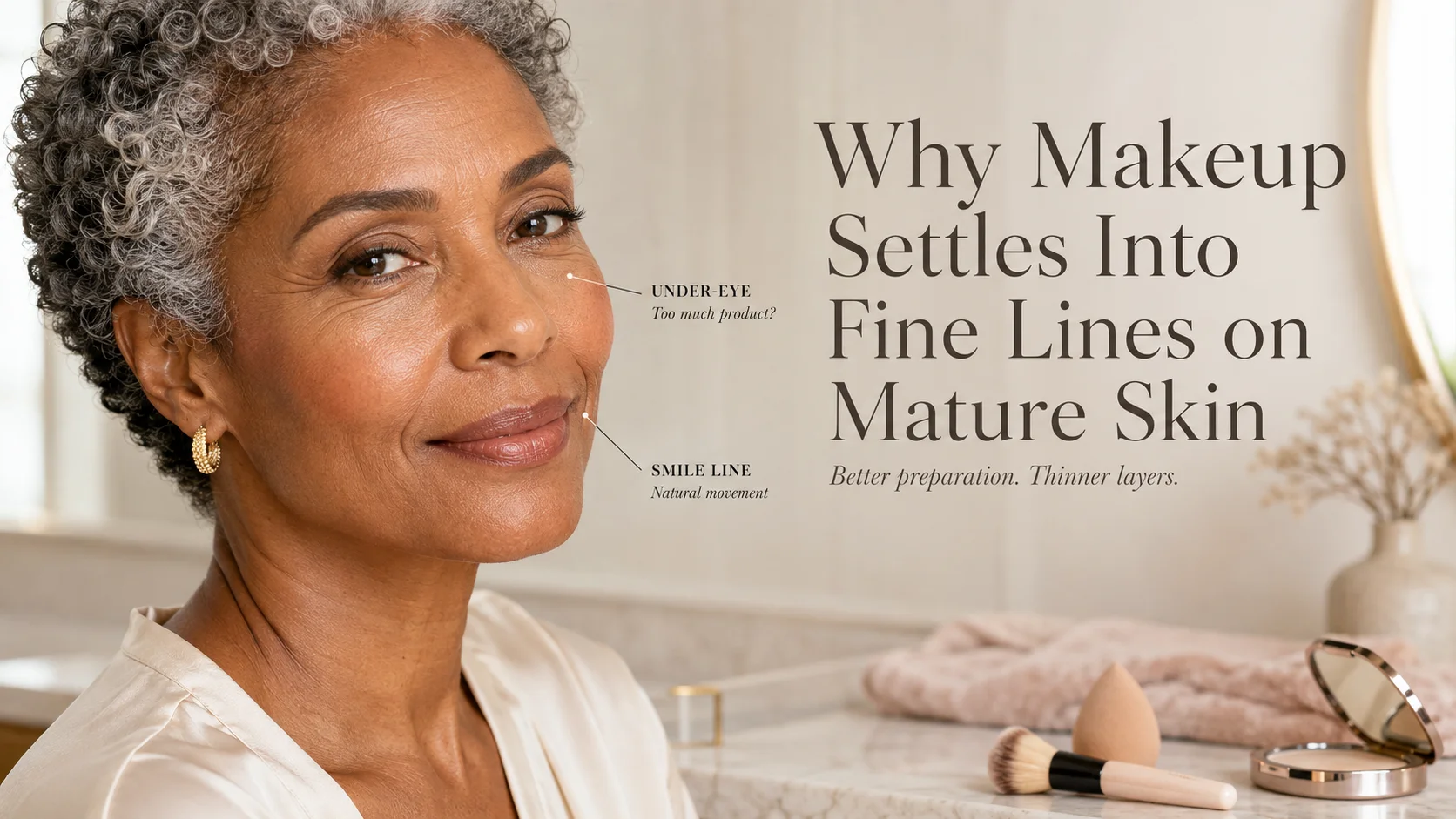
Mature skin may show dehydration more visibly.
Fine dehydration lines may look more noticeable. Makeup may settle. The eye area may look tired. The skin may look less fresh by evening.
Mature dehydrated skin may benefit from:
Mature skin should not be treated aggressively just because it looks dull.
Blemish-prone skin can become dehydrated from over-cleansing, drying spot products, too much exfoliation, or skipping moisturizer.
This may create a confusing pattern:
This skin does not always need more drying products.
It may need a better balance between clarifying steps and hydration.
Your dull-looking skin may be dehydrated if you notice:
If several of these are happening, hydration may be more important than exfoliation.
Your skin may be dry if you notice:
Dry skin may also be dehydrated, but it often needs lipid comfort in addition to water-binding hydration.
Dullness is not always dehydration.
It may be buildup if your skin feels:
In this case, cleansing and layering may need review.
Hydration may help, but buildup still needs to be addressed.
Over-exfoliated skin can look dull and feel irritated.
This can happen when dullness is treated too aggressively.
Signs include:
If this is happening, pause exfoliation and rebuild comfort.
Cleansing can either help or hurt dehydrated-looking skin.
If the cleanser is too strong, the skin may feel tight and look duller.
If the cleanser is not effective enough, SPF, makeup, oil, and daily buildup may remain and make the skin look heavy.
A good cleanser for dehydrated dull skin should remove the day without leaving the face uncomfortable.
Clean skin should not feel stripped.
Hot water can make the skin feel more dehydrated.
It may leave the face tight, flushed, or less comfortable after cleansing.
For dull or dehydrated-looking skin, use lukewarm water.
Avoid:
Hydration starts with not removing too much from the skin.
Dehydrated skin needs water-binding hydration, but moisturizer still matters.
Moisturizer helps the skin feel more comfortable after hydration steps.
If you use a hydrating serum but skip moisturizer, the skin may still feel tight.
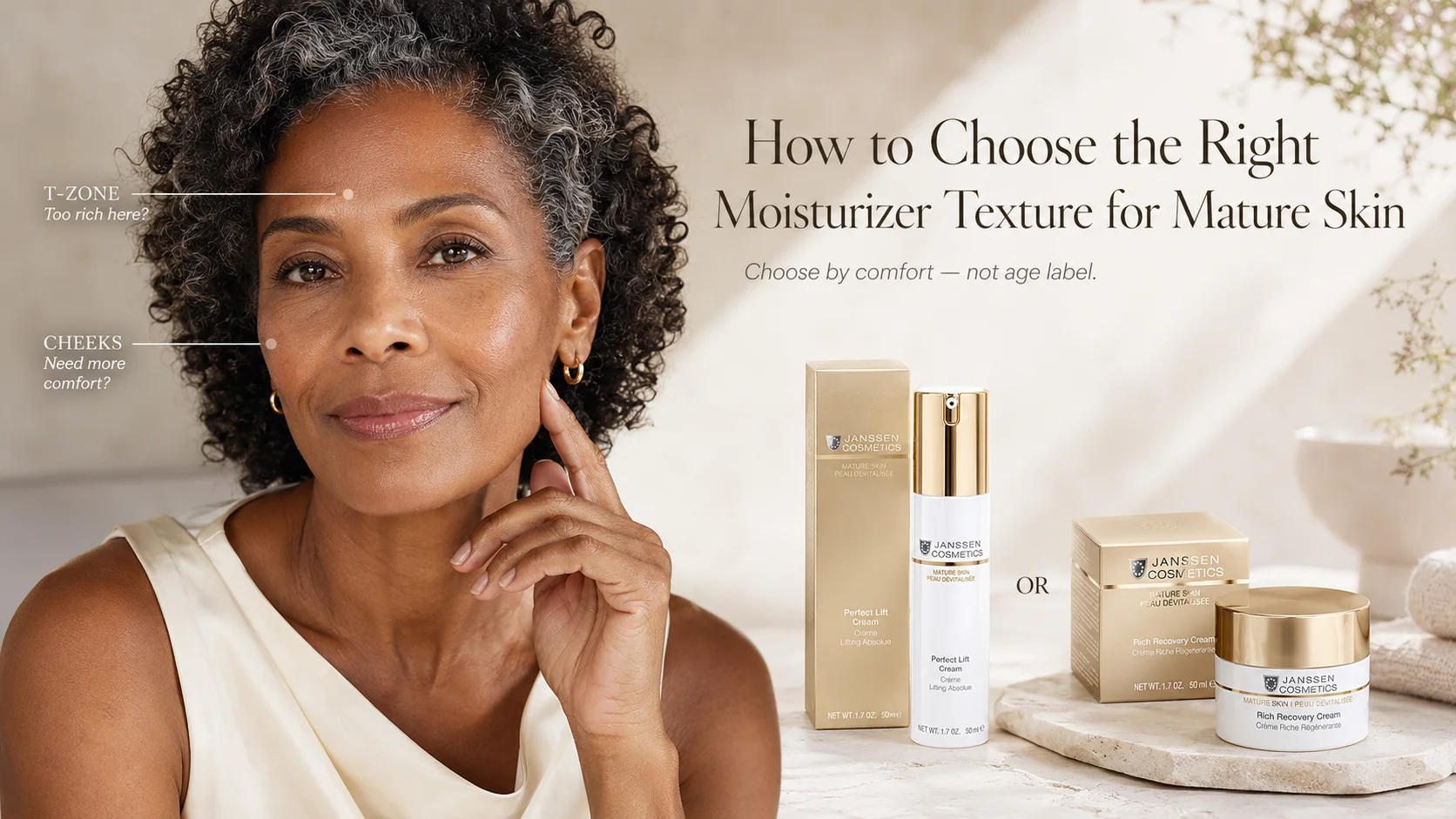
The right moisturizer texture depends on the skin:
Moisturizer should match the skin, not just the trend.
A hydration-focused serum may help when dullness is related to water loss.
Serum can be useful when the skin feels:
But serum is not always the first answer.
If the cleanser is harsh, the moisturizer is wrong, or the routine is overloaded, serum alone may not fix the pattern.
Dehydrated dull skin still needs SPF during the day.
Sun exposure can make dryness, uneven-looking tone, texture, and tired-looking skin more noticeable over time.
If vitamin C, exfoliating acids, or retinol-style products are used, SPF becomes even more important.
If SPF makes the skin look dull, adjust the formula or layering.
Do not remove daytime protection without replacing it with a better-fitting option.
Dehydrated skin can make makeup look uneven.
Foundation may settle into fine lines, cling in certain areas, or separate where oil appears.
This can happen because the skin is not balanced underneath.
Makeup may look patchy when:
Better skin prep often improves makeup finish.
Shine is not the same as radiance.
Skin can look shiny from oil but still look dull underneath.
This may happen when oil sits over dehydrated or textured skin.
Shiny dull skin may need:
The goal is not to make the skin dry. The goal is to help it look fresher and feel more balanced.
Dehydrated skin may need:

It may not need harsh scrubs or multiple active products.
Dry skin may need:
Dry skin can still need hydration, but it often also needs comfort from the right moisturizer texture.
Oily dehydrated skin may need:
Skipping moisturizer often makes oily dehydrated skin feel more unbalanced.
Sensitive dehydrated skin may need:
If sensitive skin is also dehydrated, comfort comes before brightening, exfoliation, or retinol-style steps.
Mature dehydrated skin may need:
Mature dehydrated skin should not be pushed with too many active products at once.
Hydration-focused routines often include ingredients that help the skin hold or attract water.
Common hydration-support ingredients include:
The ingredient list matters, but the full formula and skin response matter more.
A hydrating product should make the skin feel more comfortable, not sticky, tight, or irritated.
If the skin looks dull and feels tight, hydration should often come before exfoliation.
Exfoliation may help when dullness is caused by surface buildup, but it may worsen skin that is already dehydrated, irritated, or over-exfoliated.
Before exfoliating, ask:
If yes, slow down.
Hydration may be the better first step.
Vitamin C may help some dull-looking skin, but dehydrated or sensitive skin should be careful.
If vitamin C stings, the skin may not be ready.
A better plan may be:
Gentle cleanser → hydrating serum → moisturizer → SPF
Once the skin feels stable, vitamin C can be considered carefully.
Brightening-support steps should not come before skin comfort.
Retinol-style products may be too much when the skin is dehydrated.
If the skin is already tight, flaky, or dull from dehydration, retinol may increase discomfort.
Before retinol-style care, the skin should tolerate:
Hydration and comfort make a stronger foundation.
A simple morning routine may look like:
Gentle cleanser → hydration-focused serum → moisturizer → SPF
For oily dehydrated skin, keep textures light.
For dry dehydrated skin, choose a more comforting moisturizer.
For sensitive dehydrated skin, keep the routine simple and avoid active-product overload.
The morning routine should help the skin stay fresh-looking without creating heaviness.
A simple evening routine may look like:
Gentle cleanser → hydration-focused serum → moisturizer
If wearing makeup or heavier SPF, cleansing should remove the day thoroughly without stripping.
Avoid using strong exfoliation every night.
If the skin feels tight or irritated, use a simple evening routine and let the skin settle.
If your skin looks dull, tight, shiny, and irritated, simplify first.
Morning:
Mild cleanser → moisturizer → SPF
Evening:
Mild cleanser → moisturizer
Pause:
Once the skin feels more stable, hydration or other steps can be added carefully.
Hydration may be helping if the skin begins to look:
Hydration does not need to create an instant dramatic change. Consistency matters.
Hydration may not be the only issue if:
In that case, the routine needs a broader review.
Common mistakes include:
The right routine should match the skin’s pattern.
Do not scrub the skin aggressively.
Do not exfoliate every night.
Do not skip moisturizer because your skin gets oily.
Do not assume shine means your skin has enough hydration.
Do not use drying toner to remove a tight feeling.
Do not add vitamin C, acids, retinol-style products, and masks all at once.
Do not use hot water because the skin feels heavy.
Do not ignore burning, swelling, rash-like irritation, pain, crusting, bleeding, or persistent worsening.
Professional guidance may help if you are unsure whether your skin is dry, dehydrated, oily, sensitive, mature, or product-overloaded.
This is especially helpful if:
A consultation can help simplify the pattern.
A dermatologist should evaluate the skin if dullness or dehydration-like changes come with:
Cosmetic skincare can help with routine structure, but medical-looking changes need medical evaluation.
After consultation, our licensed esthetician may consider Janssen Cosmetics options depending on whether the skin is dull because of dehydration, dryness, oiliness, sensitivity, product buildup, or tired-looking skin.
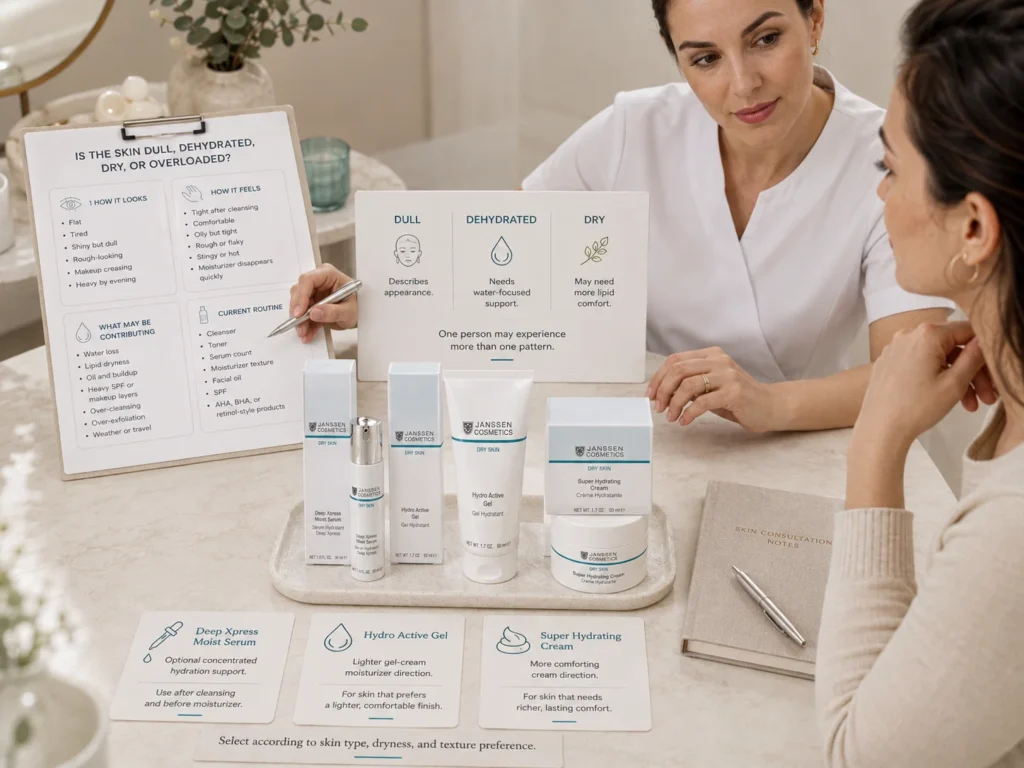
For dehydrated or dry dull-looking skin, possible options may include:
For tired-looking skin that is not truly dry, Demanding Skin options may be reviewed after consultation, such as:
If the skin is sensitive or irritated, calming options may come before vitamin C, exfoliation, or other active products.
These are not automatic recommendations. The correct routine depends on whether the skin is dry, dehydrated, oily, sensitive, mature, over-exfoliated, or product-overloaded.
Dull skin describes how the skin looks. Dehydrated skin describes a lack of water in the skin. Dehydrated skin may look dull, flat, tight, creased, or less fresh.
Yes. Oily skin can lack water. It may look shiny but still feel tight, flat, or uncomfortable.
Yes. Dehydrated skin can look flat, tired, less smooth, and less fresh, especially by the end of the day.
No. Dry skin usually lacks oil or lipid comfort. Dehydrated skin lacks water. Some people have both.
Not automatically. If the skin feels tight, stings, burns, or looks irritated, hydration and comfort should come before exfoliation.
Yes. Hydration helps add water support, but moisturizer helps finish the routine and keep the skin feeling comfortable.
Your skin may be oily and dehydrated. Oil production does not always mean the skin has enough water.
See a dermatologist if dullness or dehydration-like symptoms come with persistent rash-like irritation, swelling, pain, crusting, bleeding, infection-looking areas, severe itching, eye-area irritation, sudden changes, or worsening symptoms.
If your skin looks dull, feels tight, gets oily by evening, or never seems to hold moisture properly, a free virtual consultation can help you understand what your skin may need.
At Zendevie, we review how your skin feels after cleansing, how it behaves under moisturizer and SPF, whether it is dry or dehydrated, and whether your routine may need hydration, comfort, or simplification before recommending products.

Zendevie is guided by Haby Diallo, a licensed esthetician with more than 20 years of professional skincare experience. Her approach is rooted in education, professional judgment, and personal care.
years of experience