
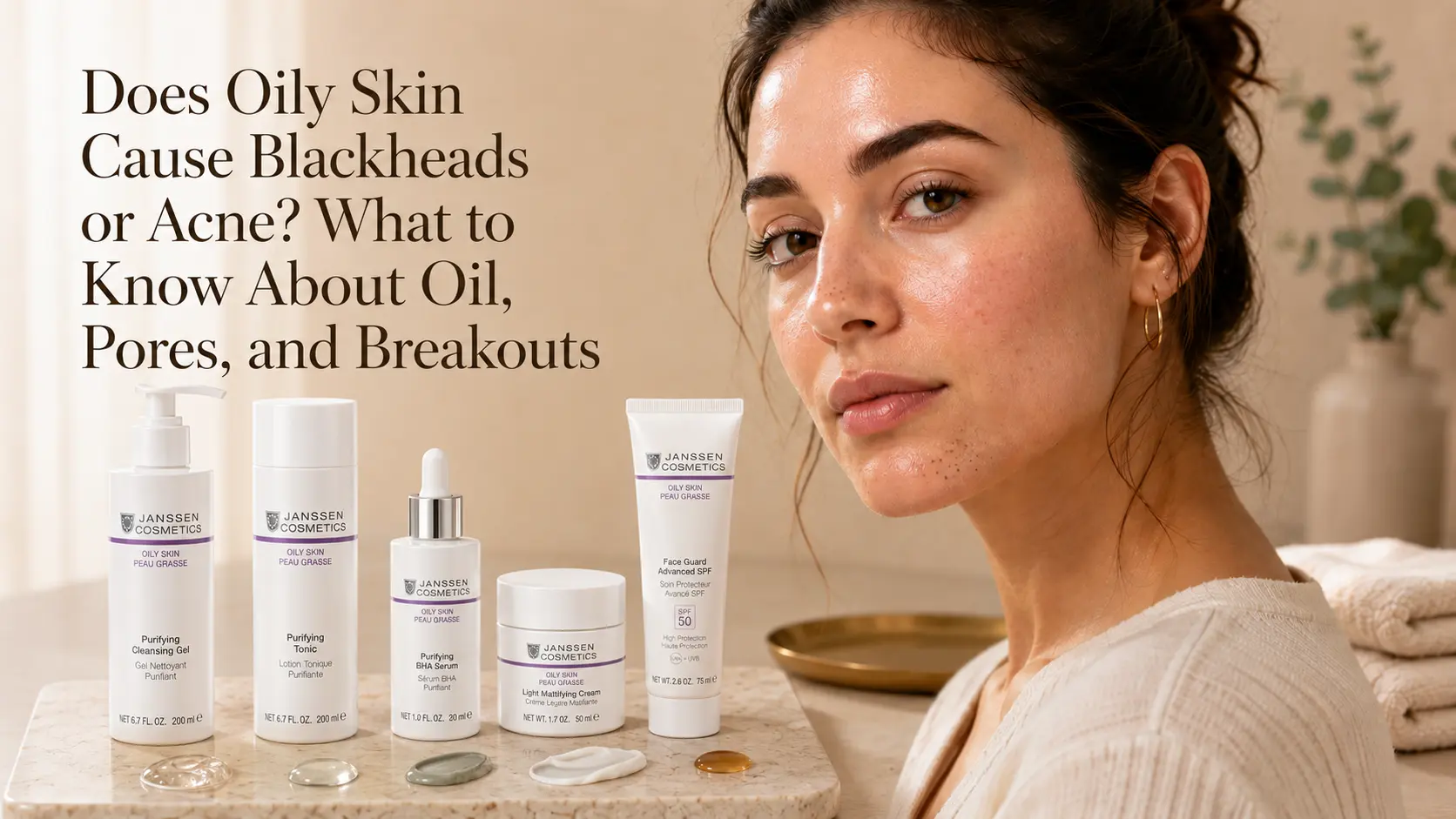
Oily skin and blackheads often seem to go together. You may notice shine on your nose, clogged-looking pores around the chin, or tiny dark dots that keep coming back no matter how much you cleanse.
It is easy to blame oil for everything.
But oily skin is only one part of the story. Blackheads and breakouts can involve oil, dead surface cells, clogged pores, bacteria, hormones, stress, products, and skin habits.
At Zendevie, we keep the language careful. Skincare can support a clearer-looking complexion, but persistent acne, painful breakouts, scarring, or cystic acne should be evaluated by a dermatologist.
Oily skin can contribute to clogged-looking pores and blackheads because excess oil can mix with dead surface cells and buildup. However, oil is not the only cause of acne or breakouts.
A good oily skin routine should cleanse gently, support hydration, use targeted clarifying ingredients when appropriate, and avoid stripping the skin.
For painful, cystic, severe, or persistent acne, professional medical guidance is important.
Blackheads are clogged pores that look dark at the surface. They often appear on the nose, chin, forehead, or areas where oil and buildup collect.
They are not dirt. The dark appearance happens when material in the pore is exposed to air and changes color.
Because blackheads involve clogged pores, oily skin may be more prone to them, but rough scrubbing is not the answer.
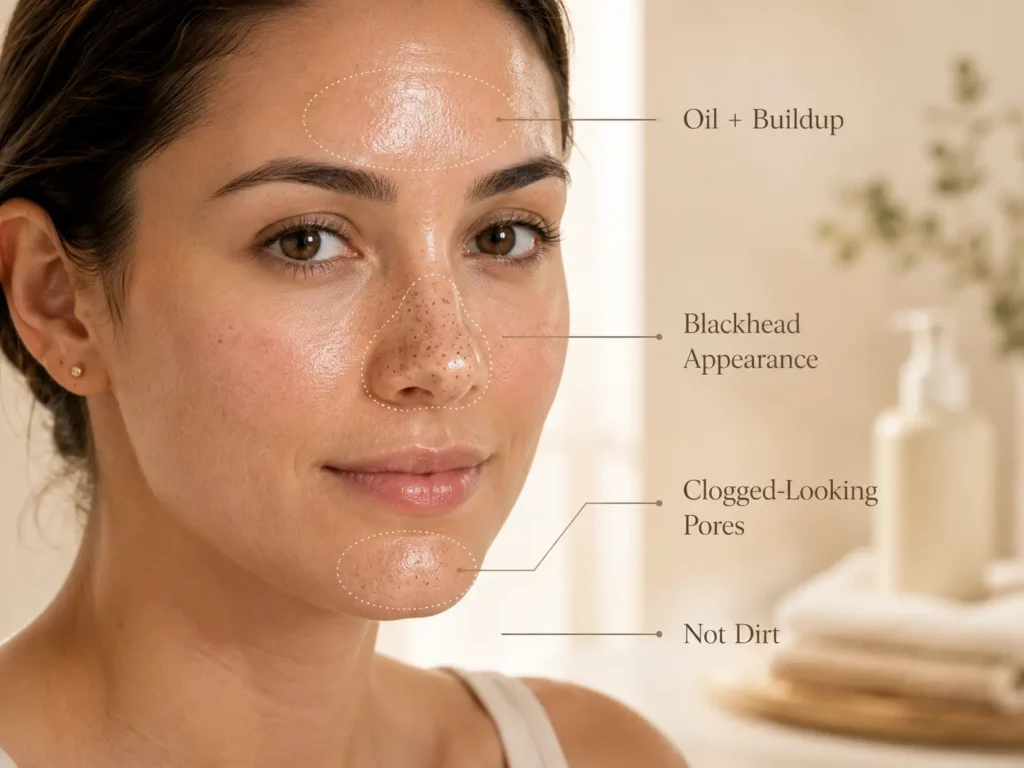
Oily skin produces more sebum. When sebum mixes with dead surface cells, makeup, sunscreen residue, or heavy products, pores may look clogged.
This can show up as:
The goal is to keep the skin clean and balanced without drying it out.
Oily skin can be one factor in acne-prone skin, but it is not the only cause.
Breakouts can be influenced by hormones, genetics, bacteria, clogged follicles, stress, products, and inflammation. Because acne is a medical condition, it should be handled carefully.
To understand the bigger picture, review why your skin may be so oily before adding stronger products.
For Zendevie educational content, safer language includes:
Avoid promising to cure or eliminate acne.
When people see blackheads or oil, they often cleanse more aggressively. But harsh cleansing can leave the skin tight and stressed.
If your skin feels stripped, you may start using more products to correct the discomfort. That can lead to more irritation and confusion.
Oily, blackhead-prone skin needs consistent care, not punishment.
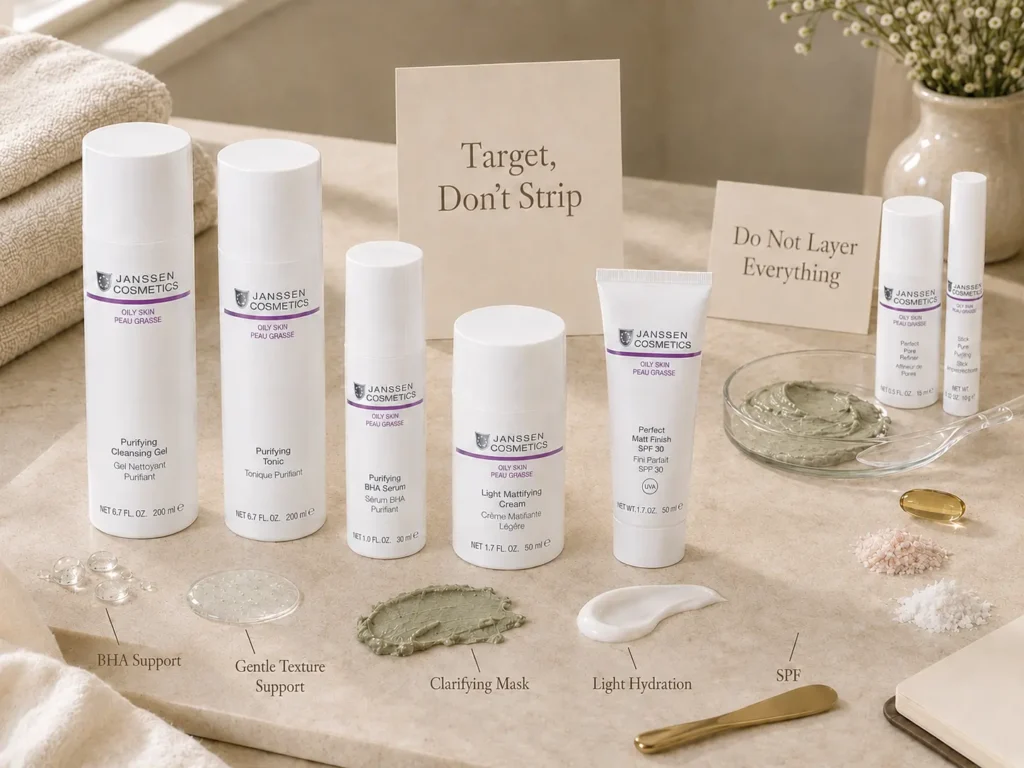
Salicylic acid is commonly used in oily skin routines because it can support the look of clearer pores and smoother skin texture.
It should be used carefully, especially if the skin is sensitive or already dry from harsh products.
AHA ingredients can support smoother-looking texture and help with dull surface buildup. They may be helpful when the skin looks rough or uneven.
They should not be layered carelessly with other strong active products.
Clarifying masks can help oily areas look fresher and less shiny. They are often helpful for the T-zone.
They should not be overused, and they do not need to be applied to dry or sensitive cheeks.
Retinol-style products may support the look of smoother texture and clogged-looking pores for some people, but they should be introduced carefully.
Do not combine retinol with multiple exfoliating acids or scrubs without guidance.
Even blackhead-prone oily skin needs hydration. If the skin gets too dry, it can become uncomfortable and reactive.
Cleanser: Cleanse gently.
Tonic: Refresh and balance.
Serum: Use targeted support if appropriate.
Moisturizer: Choose lightweight comfort.
SPF: Protect during the day.
Cleanser: Remove oil, sunscreen, and buildup.
Tonic: Prepare the skin.
Targeted care: Use BHA, exfoliant, or retinol-style support only when appropriate.
Moisturizer: Keep the skin comfortable.
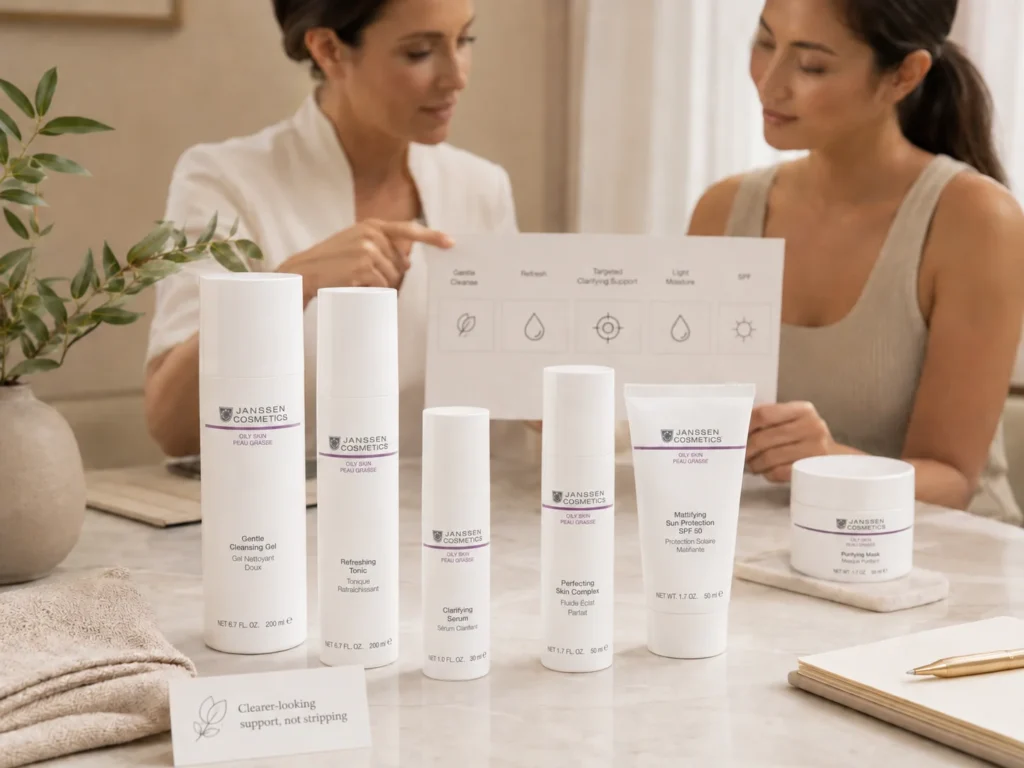
Products that may be discussed during a consultation include:
These are examples, not automatic recommendations. A consultation helps prevent overusing strong products.
Do not squeeze blackheads aggressively at home.
Do not scrub the nose harshly.
Do not use pore strips as your only routine.
Do not layer BHA, AHA, retinol, and masks all at once.
Do not skip moisturizer.
Do not ignore painful or persistent acne.
Do not expect blackheads to disappear overnight.
Speak with a dermatologist or healthcare professional if you have:
Skincare can support the look and feel of the skin, but it does not replace medical care.
Oily skin can contribute to blackheads because excess oil can mix with dead surface cells and buildup, making pores look clogged.
No. Blackheads are clogged pores that look dark because of oxidation at the surface.
Oily skin can be one factor, but acne can also involve hormones, bacteria, genetics, clogged follicles, and other causes.
Salicylic acid is commonly used in oily skin routines to support clearer-looking pores, but it should be used carefully.
It is better not to squeeze aggressively at home. Improper squeezing can irritate the skin.
The wrong heavy moisturizer may feel congesting, but oily skin still needs lightweight moisture support.
Some oily skin routines may include retinol-style support, but it should be introduced carefully and not combined blindly with strong exfoliants.

Zendevie is guided by Haby Diallo, a licensed esthetician with more than 20 years of professional skincare experience. Her approach is rooted in education, professional judgment, and personal care.
years of experience