
Oily skin can feel frustrating. Your face may look shiny only a few hours after washing. Makeup may separate around the nose, forehead, or chin. Your pores may look more noticeable. You may feel tempted to wash your face again and again just to feel clean.
But oily skin does not need punishment. It needs balance.
One of the biggest mistakes people make with oily skin is trying to strip all the oil away. Harsh cleansers, alcohol-heavy toners, rough scrubs, and too many active products can make the skin feel dry, tight, and irritated. When the skin feels stripped, it can become even harder to manage.
At Zendevie, oily skin is approached with education first. The goal is not to dry the skin out. The goal is to help the skin feel clean, fresh, balanced, and comfortable while supporting a smoother, less shiny-looking complexion.
Oily skin happens when the skin produces more oil, also called sebum, than it needs on the surface. This can make the face look shiny, especially on the forehead, nose, and chin.
A good oily skin routine should include gentle cleansing, a balancing tonic, lightweight hydration, targeted serum support when appropriate, a light moisturizer, and SPF during the day.
The goal is not to remove every drop of oil. The goal is to control excess shine without damaging the skin barrier or making the skin feel tight.
Oily skin is skin that produces more surface oil than other skin types. This oil often appears most clearly in the T-zone, which includes the forehead, nose, and chin.
Some people have oily skin across the whole face. Others may have combination skin, where the T-zone is oily but the cheeks are normal or dry.
Oily skin can still be healthy skin. Oil helps protect the skin and keeps it from becoming too dry. The problem starts when oil feels excessive, the face looks very shiny, or pores look clogged.
Oily skin may need more balancing support, but it still needs hydration and gentle care.
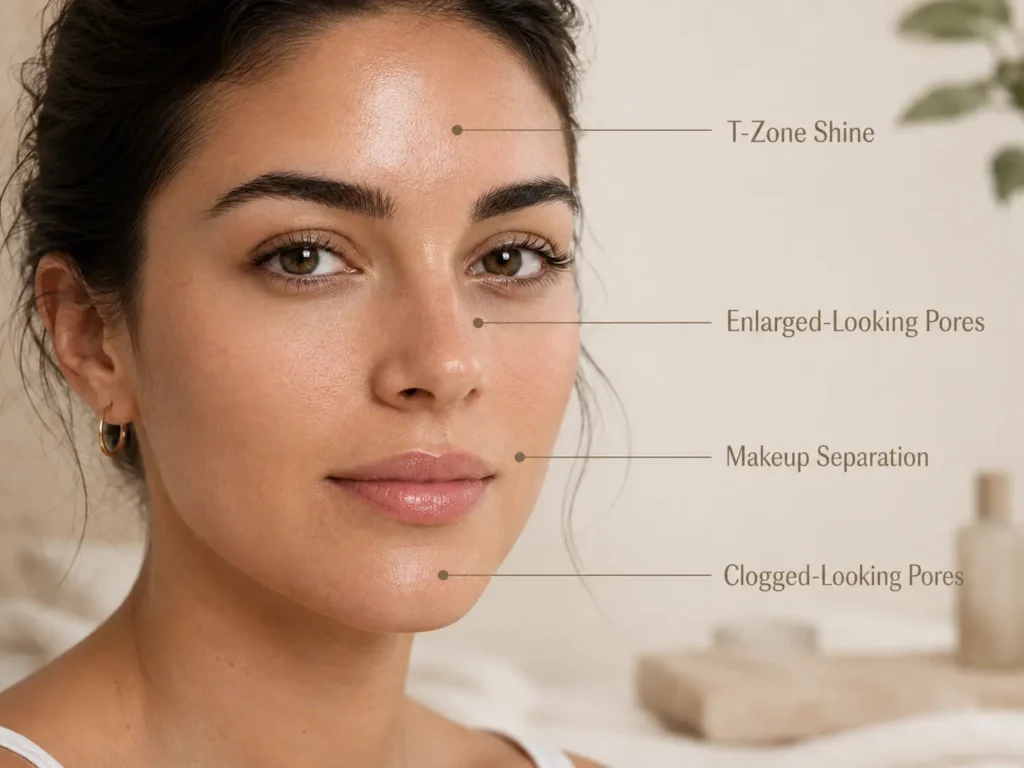
You may have oily skin if you notice:
Oily skin can look different from person to person. Some people have mild shine. Others feel oily all day.
Oily skin can happen for several reasons. It is not always because the skin is dirty, and it is not something to feel embarrassed about.
Some people naturally produce more oil. This can be influenced by genetics, hormones, age, climate, and the skin’s natural activity.
Oil production can change during puberty, menstrual cycles, pregnancy, stress, or other hormonal shifts. This is one reason oily skin may feel worse at certain times.
Warm, humid weather can make oily skin look shinier. In summer, many people need lighter textures than they use in colder months.
Washing the face too often or using strong cleansers can make the skin feel tight and dry on the surface. This does not truly balance oily skin. It can leave the skin uncomfortable and reactive.
Many people with oily skin avoid moisturizer because they think it will make the skin more greasy. But when the skin becomes dehydrated or dry from harsh products, it may feel more uncomfortable and look less balanced.
The right moisturizer for oily skin should be lightweight, non-heavy, and comfortable.
Heavy oils, thick creams, or pore-clogging textures may feel too heavy for oily skin. They can make shine look worse or contribute to clogged-looking pores.
Oily skin and combination skin are often confused.
Oily skin usually produces oil across most of the face. The cheeks may also feel oily or shiny.
Combination skin usually has an oily T-zone but cheeks that feel normal, dry, or tight.
This matters because oily skin may need lightweight balancing care across the face, while combination skin may need zone-based care. For example, the T-zone may need clarifying support, while the cheeks may need more comfort.
Yes. Oily skin can be dehydrated.
This means your skin may have oil on the surface but still lack water. You may notice that your face looks shiny but feels tight after washing. You may also see fine-looking dehydration lines, dullness, or roughness.
This is why oily skin still needs hydration. The right hydration does not have to feel heavy. Lightweight serums, gel textures, and non-heavy moisturizers can help support comfort without adding a greasy feeling.
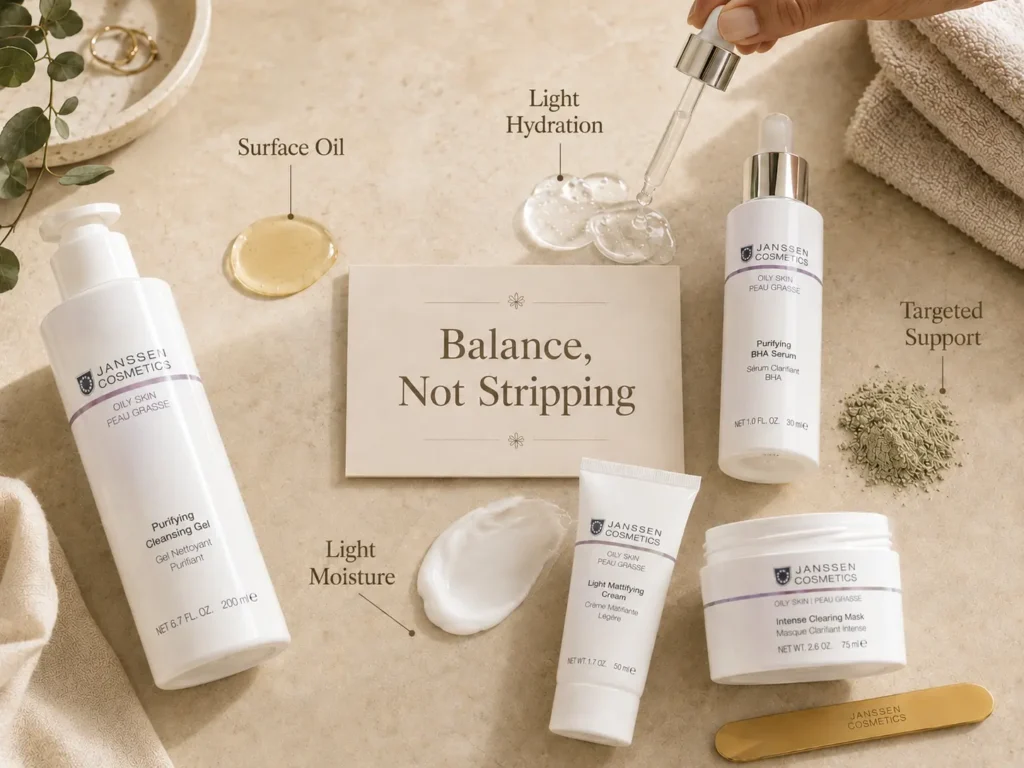
Oily skin usually does best with ingredients and textures that support balance, clarity, and lightweight hydration.
Salicylic acid is often used in oily skin routines because it can support the look of clearer pores and smoother skin texture. It is commonly found in products designed for oily or blemish-prone skin.
It should still be used carefully. More is not always better.
AHA ingredients may help improve the look of dullness and uneven texture. They can support smoother-looking skin when used properly.
People with sensitive or easily irritated skin should be careful with exfoliating acids.
Oily skin needs hydration, but the texture matters. Lightweight humectants can help the skin feel fresh and hydrated without a heavy finish.
A clarifying mask can help absorb excess oil and support a cleaner-looking T-zone. However, masks should not be used too often or left on until the skin feels overly tight.
Even oily skin can become irritated. Soothing support is helpful when the skin feels tight, reactive, or stressed from too many strong products.
A morning routine for oily skin should help the skin feel clean, fresh, and balanced without stripping it.
Start with a gentle cleanser made for oily skin. The skin should feel clean, not tight or dry.
If your face feels pulled or uncomfortable after washing, the cleanser may be too harsh.
A tonic can help complete the cleansing step and prepare the skin for serum or moisturizer. For oily skin, the tonic should feel fresh and balancing, not burning or drying.
A serum may help support the appearance of clearer, smoother, or more balanced-looking skin. This depends on whether the concern is shine, clogged-looking pores, blemish-prone areas, or uneven texture.
Oily skin still needs moisturizer. Choose a light texture that does not feel greasy or heavy.
SPF is important for every skin type, including oily skin. Choose a texture that feels comfortable and does not make the skin look overly shiny.
A simple morning structure:
Cleanser → Tonic → Serum if needed → Lightweight Moisturizer → SPF
The evening routine should remove oil, sunscreen, makeup, and daily buildup without over-cleansing.
Use a cleanser that removes the day’s buildup while keeping the skin comfortable.
A tonic can help refresh the skin and prepare it for the next step.
This may be a serum, balancing product, or exfoliating product depending on the skin’s needs. Strong active products should not be layered blindly.
Use a lightweight moisturizer to help the skin feel comfortable overnight.
A simple evening structure:
Cleanser → Tonic → Targeted Support if appropriate → Lightweight Moisturizer
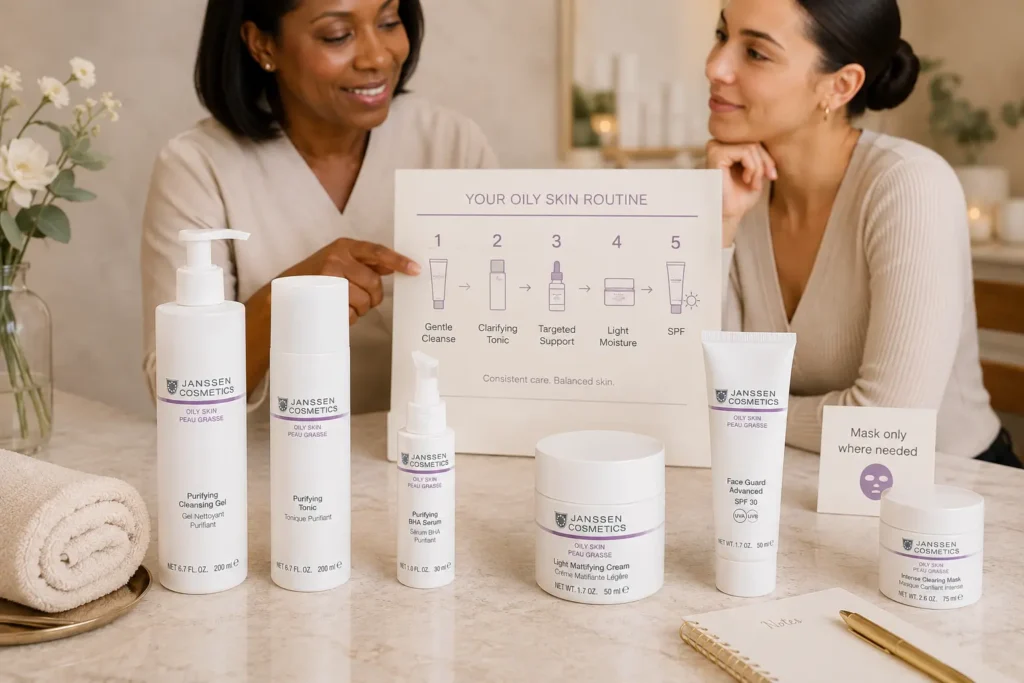
Zendevie carries Janssen Cosmetics through a consultation-first model. That means oily skin products are not recommended blindly. Oily skin can be sensitive, dehydrated, acne-prone, combination, or mature, so the routine should match the person’s skin.
A personalized oily skin consultation can help decide which steps belong in your routine before choosing products.
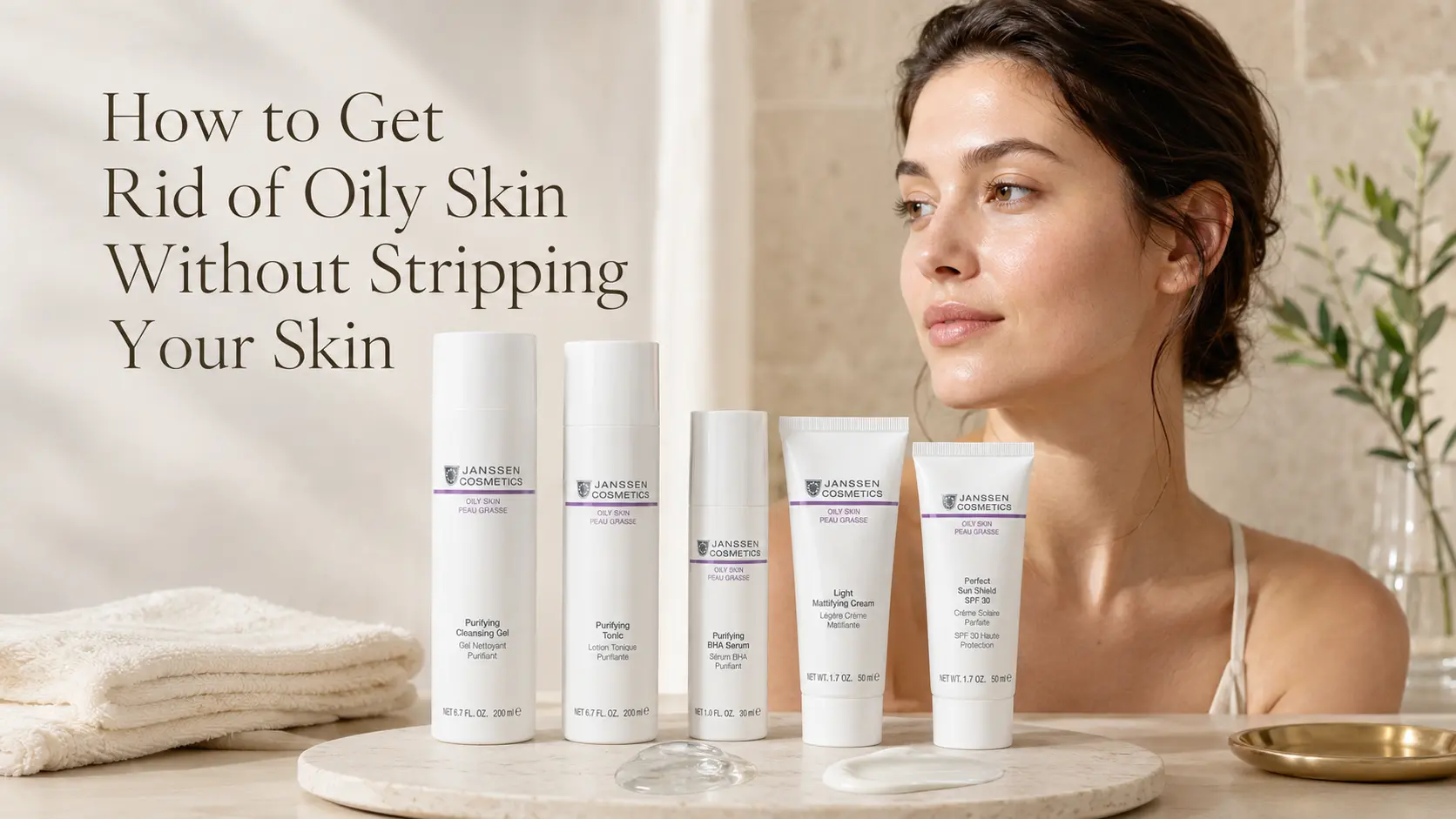
Janssen Cosmetics has an Oily Skin family designed to support skin that feels oily, shiny, clogged-looking, or in need of balancing care.
Products that may be discussed during an oily skin consultation include:
These are examples, not automatic recommendations. A consultation helps decide what belongs in the routine, what should wait, and how to avoid combining too many strong active products at once.
Do not wash your face too many times a day. Over-cleansing can make the skin feel tight and uncomfortable.
Do not use harsh alcohol-heavy toners that burn or sting.
Do not skip moisturizer. Oily skin still needs hydration and comfort.
Do not use heavy creams if they make your skin feel greasy or clogged.
Do not scrub your face aggressively to remove oil.
Do not layer salicylic acid, AHA, retinol, exfoliating masks, and strong serums all at once.
Do not expect oily skin to become completely oil-free. The goal is balance, not dryness.
Oily skin itself is usually a cosmetic skin type. But if you have painful breakouts, cystic acne, severe irritation, swelling, infection-looking bumps, scarring, or acne that does not improve, it is best to speak with a dermatologist or healthcare professional.
A skincare consultation can help with product selection and routine structure, but it does not replace medical diagnosis or treatment.
You may have oily skin if your face looks shiny soon after cleansing, especially on the forehead, nose, and chin. You may also notice enlarged-looking pores, clogged-looking areas, or makeup that separates during the day.
Oily skin can be caused by natural oil production, hormones, weather, stress, harsh cleansing, skipping moisturizer, or using products that do not match your skin.
Yes. Oily skin still needs moisturizer. The key is choosing a lightweight, non-heavy texture that supports hydration without making the skin feel greasy.
Yes. Oily skin can have excess surface oil but still lack water. This can make the skin feel tight, dull, or uncomfortable.
A simple oily skin routine includes gentle cleanser, balancing tonic, serum if needed, lightweight moisturizer, and SPF during the day.
Oily skin may benefit from gentle exfoliation, but over-exfoliation can irritate the skin. Exfoliating acids, enzyme products, or scrubs should be used carefully.
Oily skin can be more prone to clogged-looking pores and blackheads because excess oil and buildup can collect in pores. A gentle routine can help support a clearer-looking complexion.
Retinol may be helpful for some oily skin routines, especially when texture or clogged-looking pores are a concern, but it should be introduced carefully and not combined blindly with acids or exfoliants.

Zendevie is guided by Haby Diallo, a licensed esthetician with more than 20 years of professional skincare experience. Her approach is rooted in education, professional judgment, and personal care.
years of experience