
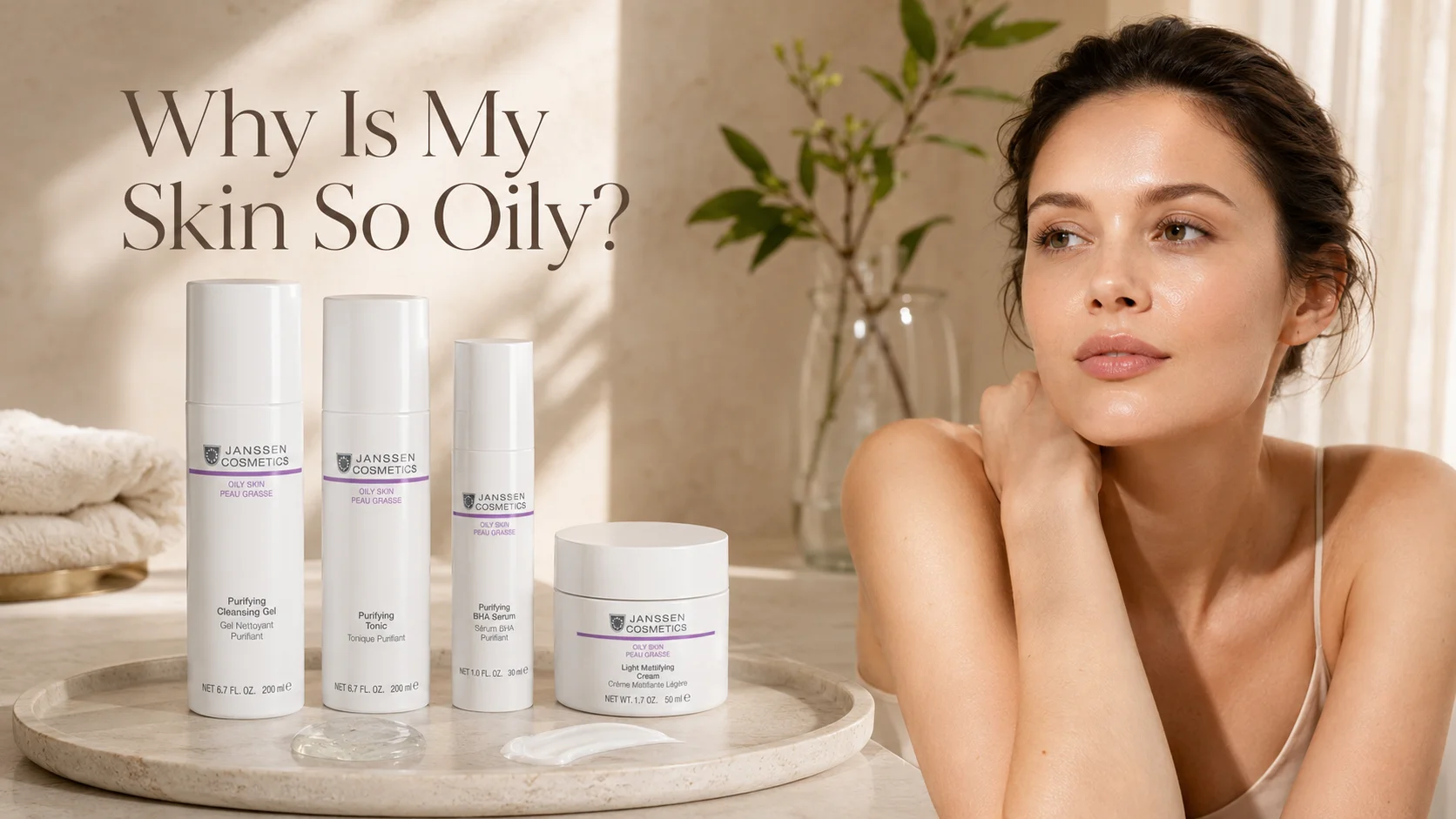
When your skin gets oily quickly, it can feel frustrating. You wash your face in the morning, and by midday your forehead, nose, or chin already looks shiny. Makeup may separate. Your skin may feel greasy, but somehow it can still feel tight after cleansing.
This is where many people make the first mistake: they try to remove every bit of oil.
But oily skin is not dirty skin. Oil is part of your skin’s natural function. The goal is not to fight your skin. The goal is to understand why it is producing more oil and how to care for it without making it feel stripped or irritated.
At Zendevie, oily skin care starts with education. Before choosing products, we look at what your skin is showing: shine, clogged-looking pores, dehydration, sensitivity, breakouts, or product buildup.
Your skin may be oily because of natural oil production, hormones, hot or humid weather, genetics, stress, harsh cleansing, skipping moisturizer, or using products that are too heavy for your skin.
A good oily skin routine should help the skin feel clean, fresh, hydrated, and balanced without leaving it tight.
The goal is not to make the skin oil-free. The goal is to help reduce the look of excess shine while keeping the skin comfortable.
For the full routine approach, start with the guide to oily skin without stripping your skin.
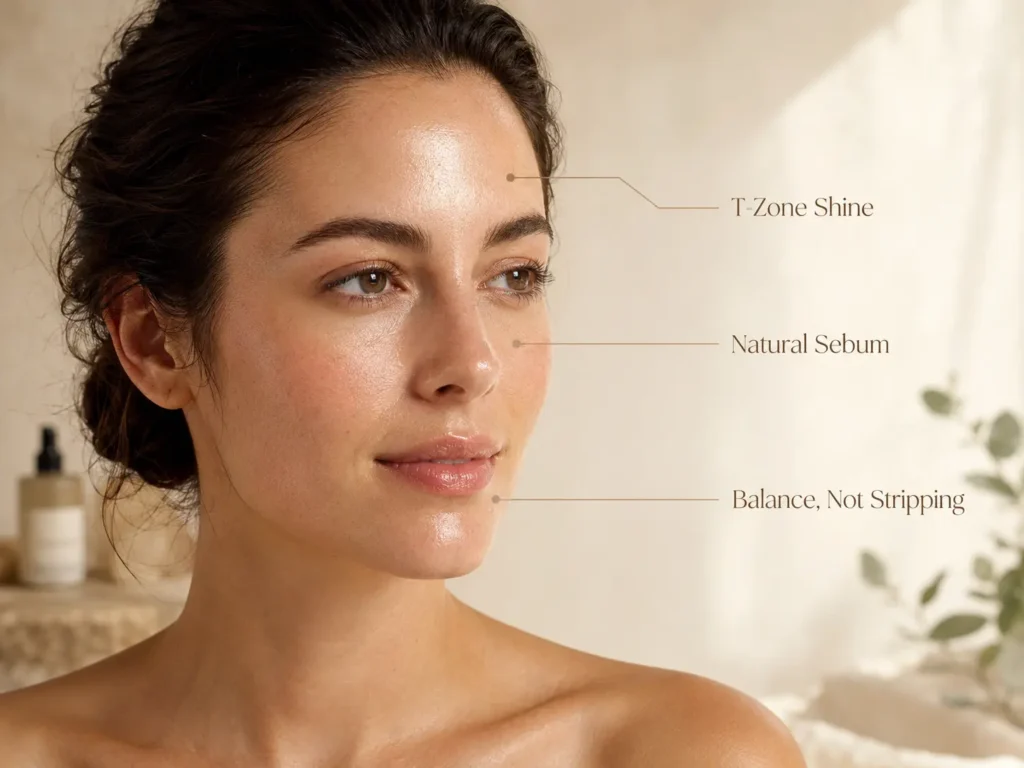
Sebum is the natural oil your skin produces. It helps protect the skin and keeps it from becoming too dry.
When the skin produces more sebum than needed on the surface, the face may look shiny or feel greasy. This often happens around the T-zone, which includes the forehead, nose, and chin.
Sebum itself is not bad. The problem is when excess oil mixes with buildup, dead surface cells, makeup, or heavy products. This can make the skin look congested or shiny.
Some people simply have more active oil glands. This can be influenced by genetics and skin type.
If oily skin runs in your family, you may naturally notice more shine, especially around the T-zone.
This does not mean your skin is unhealthy. It just means your routine needs to support balance.
Hormonal changes can affect how oily the skin feels. This may happen during puberty, menstrual cycles, pregnancy, stress, or other body changes.
You may notice your skin becomes oilier during certain times of the month or when your body is under pressure.
Skincare can help support the look and feel of the skin, but persistent or painful breakouts should be discussed with a dermatologist.
Hot, humid weather can make oily skin look shinier. Sweat and oil can mix on the surface, making the face feel greasy faster.
In warmer months, your skin may prefer lighter textures. In cooler months, oily skin may still need hydration, but not necessarily heavy cream.
Your routine may need small seasonal adjustments.
This is one of the biggest issues with oily skin.
If your cleanser leaves your face feeling tight, dry, or squeaky clean, it may be too strong. The skin may look less oily for a moment, but the comfort of the skin can suffer.
Oily skin still needs gentle care. A cleanser should remove excess oil and buildup without making the skin feel stripped.
Many people with oily skin skip moisturizer because they think it will make the skin greasier.
But oily skin can still become dehydrated. When the skin lacks water, it may feel tight even though it looks shiny.
A lightweight moisturizer can help support comfort without adding a heavy finish.
Heavy creams, thick oils, or products that do not suit oily skin can make shine look worse. They may also make the skin feel coated or congested.
For oily skin, texture matters. Lightweight, non-heavy products usually feel better.
If you are using strong cleansers, exfoliating acids, masks, retinol, spot products, and scrubs all at the same time, your skin may feel stressed.
More active products do not always mean better results. Oily skin can become irritated too.
A simple, consistent routine is often better than an aggressive one.
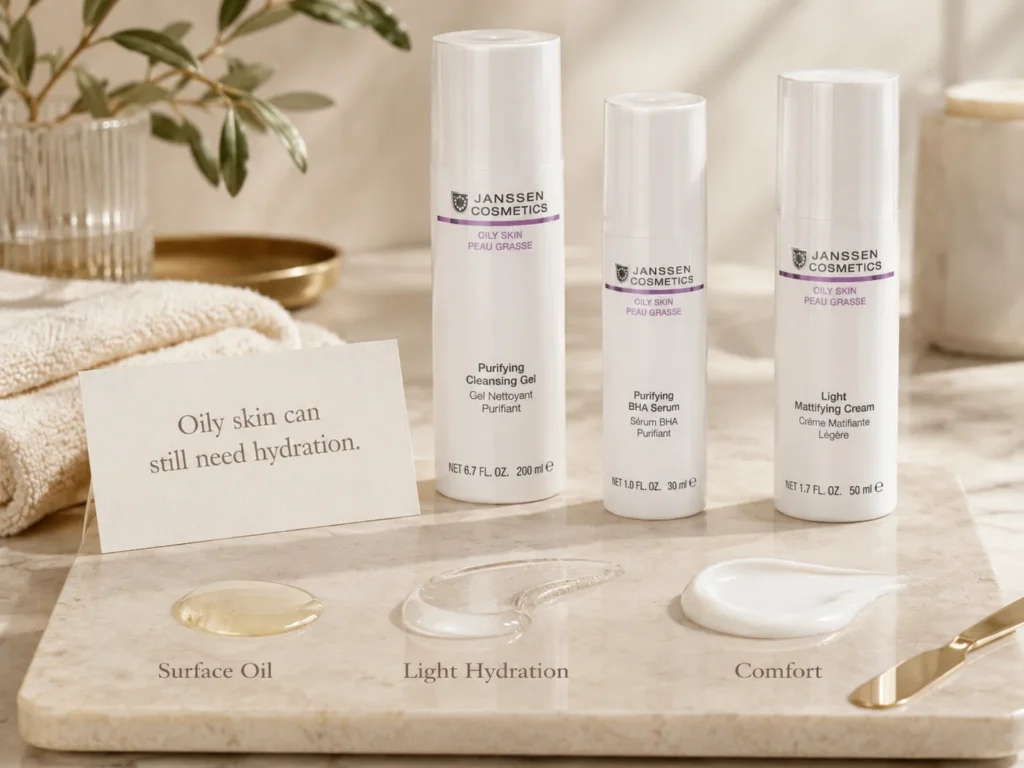
This is very common.
You may think, “How can my skin be oily and tight at the same time?”
The answer is usually dehydration or barrier stress. The skin can have oil on the surface but still lack water or comfort underneath.
If your skin feels oily but tight, you may need:
Oily skin does not need to be dried out. It needs to be balanced.
Cleanser: Use a gentle cleanser made for oily skin.
Tonic: Follow with a balancing tonic.
Serum: Use targeted support if needed.
Moisturizer: Choose a lightweight moisturizer.
SPF: Finish with daytime protection.
Cleanser: Remove oil, sunscreen, and buildup.
Tonic: Refresh the skin.
Targeted support: Use only if appropriate.
Moisturizer: Keep the skin comfortable overnight.
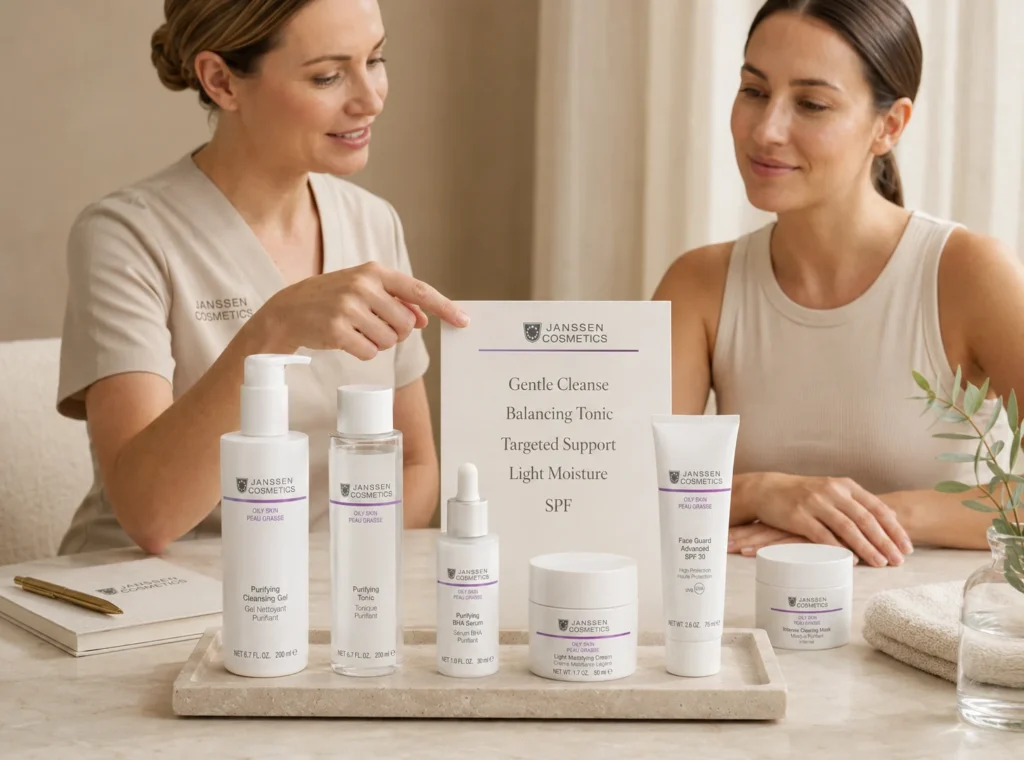
Zendevie carries Janssen Cosmetics through a consultation-first model. Products are not recommended blindly because oily skin can also be dehydrated, sensitive, combination, or mature.
Products that may be discussed during an oily skin consultation include:
These are examples, not automatic recommendations. A consultation helps decide what your skin actually needs.
Do not wash your face over and over during the day.
Do not use harsh alcohol-heavy products that burn or sting.
Do not skip moisturizer.
Do not scrub aggressively to remove oil.
Do not use every oily skin active at the same time.
Do not expect your skin to become completely oil-free.
Do not ignore painful, severe, or persistent breakouts.
Your face may be oily because your skin naturally produces more sebum, or because of hormones, weather, stress, harsh cleansing, or products that do not match your skin.
No. Oily skin is not dirty skin. Oil is part of the skin’s natural function.
Yes. Oily skin can have excess oil on the surface while still lacking water underneath.
Usually no. Cleansing twice daily and after sweating is often enough. Over-washing can make the skin feel tight or irritated.
Your moisturizer may be too heavy, or your routine may not match your skin. Oily skin usually needs a lightweight texture.
Stress can affect how the skin looks and feels. Some people notice more oiliness or breakouts during stressful periods.

Zendevie is guided by Haby Diallo, a licensed esthetician with more than 20 years of professional skincare experience. Her approach is rooted in education, professional judgment, and personal care.
years of experience