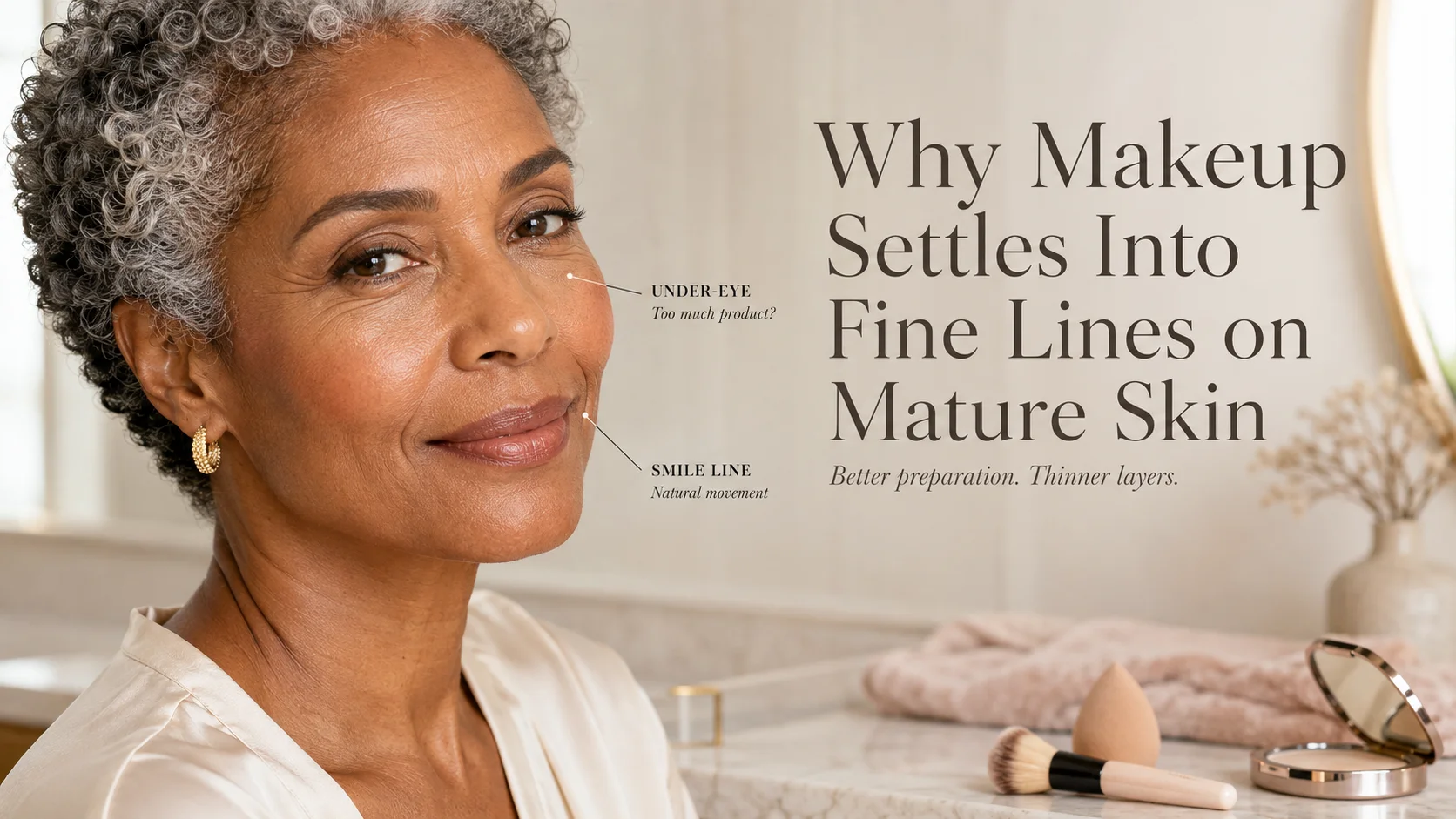


Makeup can only look as smooth as the skin underneath allows.
If your skin looks dull, tired, dry, oily, textured, dehydrated, or product-overloaded, your makeup may show it. Foundation may cling to rough areas. Powder may make the face look flat. SPF may pill. Concealer may crease. Makeup may separate on the T-zone and look dry on the cheeks.
This does not always mean your foundation is bad.
Sometimes the skin underneath is not properly prepared.
At Zendevie, we do not look at patchy makeup as only a makeup problem. In consultation, our licensed esthetician reviews the full routine: cleanser, toner, serum, moisturizer, SPF, exfoliation habits, product texture, oil pattern, dryness, and sensitivity before recommending products.
When makeup looks flat or patchy, the skin may be asking for better balance.
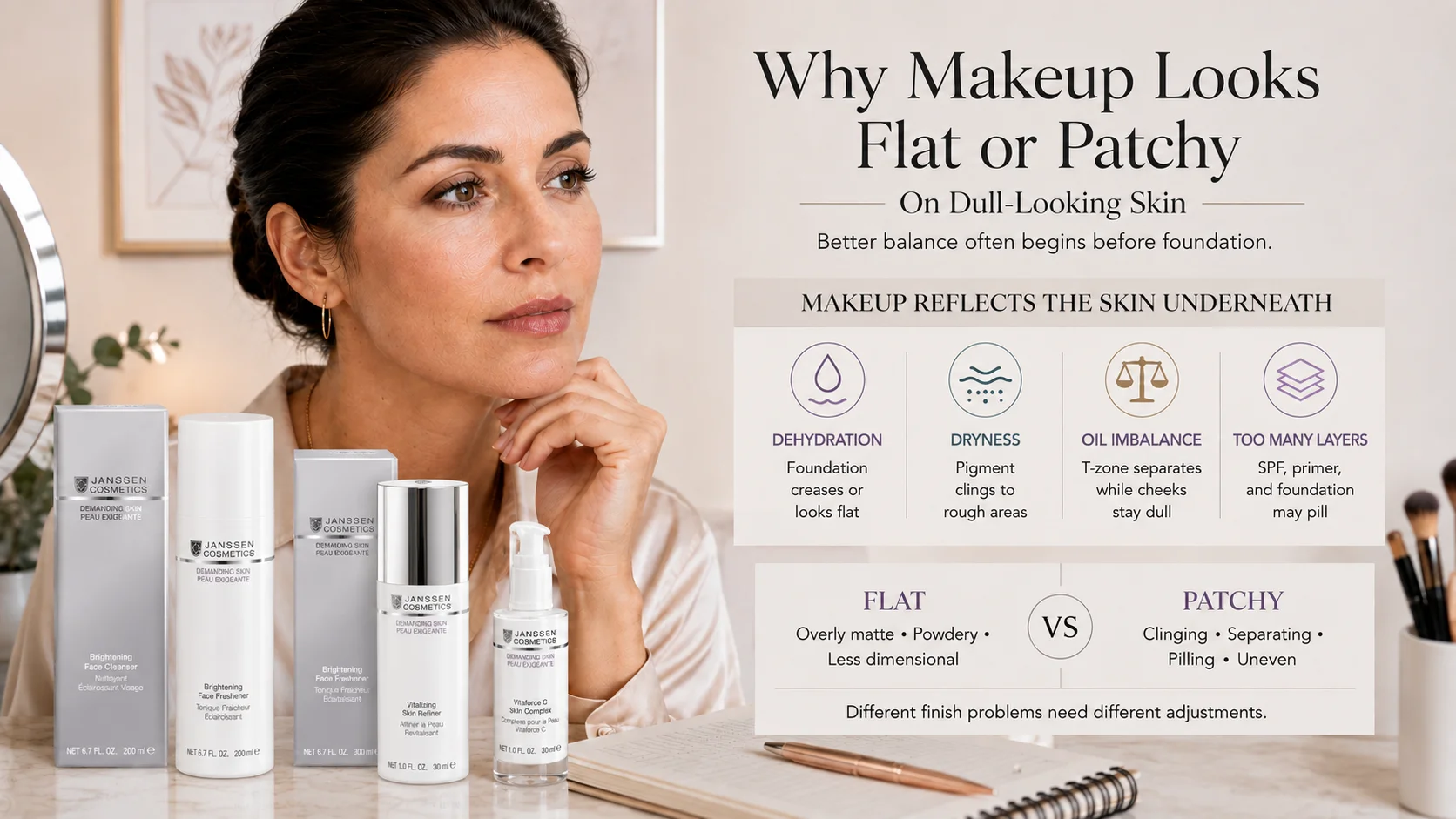
Makeup may look flat or patchy on dull skin because the skin underneath is dry, dehydrated, oily, textured, over-exfoliated, product-overloaded, or not properly cleansed and moisturized.
Common causes include:
The answer is not always more foundation. Often, the first step is better skin prep.
Foundation, concealer, and powder sit on top of the skin.
If the skin surface is smooth and comfortable, makeup usually blends more easily.
If the skin surface is dry, rough, oily, coated, flaky, or dehydrated, makeup may magnify those signs.
Makeup can make dull skin look more noticeable when it settles into:
That is why skin prep matters as much as the makeup product.
Flat makeup and patchy makeup are not exactly the same.
Flat makeup usually looks dull, lifeless, matte in the wrong way, or less fresh. The face may look covered but not radiant.
Patchy makeup looks uneven. Foundation may cling, separate, lift, crack, or collect in certain areas.
Flat makeup may come from:

Patchy makeup may come from:
Understanding the difference helps you adjust the right step.
Dull skin may look flat, tired, or less smooth before makeup is even applied.
When foundation goes over dull-looking skin, it may cover color unevenness but still leave the face looking less fresh.
Dullness may come from:
Makeup can improve the appearance temporarily, but if the skin underneath is not balanced, the finish may not last.
Dehydrated skin lacks water.
It can happen in dry, oily, combination, mature, or sensitive skin.
When dehydrated skin wears makeup, the finish may look:
Dehydrated skin may make makeup settle into fine lines or cling around areas that feel tight.
Hydration before makeup can make the skin look more flexible and prepared.
Dry skin often lacks moisture, lipids, or both.
Foundation may cling to dry skin because rough or flaky areas catch pigment.
Dry skin makeup problems may include:
Dry skin often needs gentle cleansing, hydration, moisturizer, and SPF that do not leave the skin tight.
A harsh scrub is not always the answer.
Oily skin can still look dull and patchy.
When oil breaks through foundation, makeup may separate, especially around the nose, forehead, and chin.
Oily makeup issues may include:
The goal is not to strip oily skin. Oily skin still needs lightweight hydration and moisturizer so the skin stays balanced under makeup.
Combination skin may have more than one makeup problem at the same time.
The T-zone may get oily and separate.
The cheeks may look dry or dull.
The nose may show texture.
The chin may look clogged-looking.
The outer face may need more comfort than the center of the face.
Combination skin may need different product amounts by zone. The same moisturizer, primer, or powder may not behave the same way across the full face.
Sensitive or irritated skin can make makeup look patchy.
When the skin is red-looking, tight, stingy, over-exfoliated, or reactive, makeup may not sit smoothly.
Sensitive skin makeup concerns may include:
Sensitive skin should focus on comfort before coverage.
Mature skin may show makeup texture more easily because of dryness, dehydration, fine lines, uneven-looking texture, and makeup settling.
Flat makeup on mature skin may happen when:
Mature skin often looks fresher with hydration and careful layering instead of heavy powder or overly matte products.
If skincare from the morning or previous night is not working well, makeup may sit on top instead of blending.
Product buildup may come from:
When makeup goes over buildup, it may look coated, uneven, or dull.
The skin may not need more makeup. It may need cleaner layering.
If makeup, SPF, oil, and daily buildup are not removed properly at night, the next morning’s makeup may not sit well.
Signs include:
Evening cleansing matters for next-day makeup.
The goal is to remove the day without stripping the skin.
Cleansing too aggressively can leave the skin tight and dry-looking.
Makeup applied over over-cleansed skin may cling, crack, or look flat.
Signs of over-cleansing include:
Clean skin should feel comfortable, not squeaky or stripped.
Many people exfoliate more when makeup looks patchy.
But if the skin is already over-exfoliated, exfoliation can make makeup look worse.
Over-exfoliated skin may cause:
If makeup suddenly looks worse after using acids, scrubs, or retinol-style products, pause and simplify.
Sometimes makeup looks patchy because of rough surface buildup.
This may happen when the skin feels uneven, flakes are not from irritation, and products do not apply smoothly.
In this case, gentle exfoliation may help if the skin can tolerate it.
But exfoliation should be careful, especially if the skin is sensitive, dry, mature, or already using active products.
Do not use every exfoliating option at once.
SPF should remain part of the morning routine.
But SPF texture can strongly affect makeup.
Makeup may look patchy if SPF:
If SPF causes makeup problems, review the texture and layering instead of skipping SPF.
Pilling happens when products roll off the skin in small flakes or balls.
SPF may pill when:
Pilling makes makeup look uneven and dull.
Often, the routine needs fewer layers or better texture matching.
Primer can help some makeup last longer, but it can also create another layer of buildup.
Primer may make makeup look worse if it does not work with your SPF, moisturizer, or foundation.
Signs primer may not be helping:
Before adding primer, review whether the skin is properly hydrated, moisturized, and protected.
Powder can be useful, especially for oily areas.
But too much powder can make dull skin look flat, dry, or tired.
Powder may emphasize:
If your makeup looks lifeless after powder, try using less or applying it only where needed.
The whole face may not need the same amount.
Matte foundation can work for some people, especially oily skin. But if the skin is dehydrated, dry, mature, or textured, matte foundation may make the face look flatter.
Matte foundation may look dull when:
A balanced finish often looks fresher than an overly matte finish.
Dewy makeup is not always the answer either.
If the skin has product buildup, oiliness, or heavy SPF underneath, dewy makeup may look greasy rather than fresh.
Dewy makeup may look patchy when:
Fresh-looking makeup usually depends on balance, not just shine.
Makeup often clings around the nose because that area can be dry, oily, rubbed, irritated, or textured.
Common reasons include:
Avoid scrubbing the nose area aggressively.
Adjust cleansing, hydration, and product amount first.
The T-zone often produces more oil.
Makeup may separate there when oil, sweat, SPF, primer, and foundation mix.
T-zone separation may happen because:
A lighter moisturizer and better SPF compatibility may help more than stronger cleansing.
Cheeks may look patchy when they are dry, dehydrated, sensitive, or under-moisturized.
Cheek patchiness may show as:
Cheeks may need more hydration or moisturizer than the T-zone.
Combination skin often needs zone-based prep.
The eye area is delicate.
Concealer may look dry, creased, or heavy if the eye area is dehydrated, dry, tired-looking, or over-powdered.
Common causes include:
The eye area should not be treated with harsh facial exfoliants.
Good makeup starts before foundation.
Skin prep may include:
Skin prep should make the skin feel comfortable, not sticky, greasy, or tight.
Dry dull skin may need more comfort before makeup.
A simple prep may be:
Gentle cleanser → hydrating serum if needed → moisturizer → SPF
Allow layers to settle before applying makeup.
Avoid harsh scrubs right before makeup.
Avoid heavy powder over dry areas.
If flakes are present, focus on moisture first. Do not scrape or scrub the skin aggressively before foundation.
Dehydrated dull skin needs water support.
A simple prep may be:
Gentle cleanser → hydration-focused serum → moisturizer → SPF
Dehydrated skin may look better when hydration is layered under moisturizer.
But avoid using too much serum, especially if it pills under SPF.
The goal is comfortable hydration, not sticky layers.
Oily dull skin needs balance.
A simple prep may be:
Gentle cleanser → lightweight moisturizer → SPF
If dehydration is present:
Gentle cleanser → lightweight hydrating serum → lightweight moisturizer → SPF
Avoid skipping moisturizer. Avoid using overly drying toner before makeup. Avoid heavy creams on the T-zone if they make makeup slide.
Combination skin may need different amounts by zone.
A simple prep may be:
Gentle cleanser → lightweight hydration → moisturizer where needed → SPF
Use less moisturizer on oily areas and more on dry areas if appropriate.
Powder the T-zone lightly if needed, but avoid over-powdering dry cheeks.
The face does not always need the same product amount everywhere.
Sensitive dull skin should be prepped gently.
A simple prep may be:
Mild cleanser → moisturizer → SPF
Avoid testing new active products right before makeup.
Avoid strong acids, retinol-style products, scrubs, and fragrance-heavy products if the skin is already reacting.
If makeup stings, review both the makeup and the skin condition underneath.
Mature dull skin may need hydration and comfort before makeup.
A simple prep may be:
Gentle cleanser → hydrating serum if needed → moisturizer → SPF
Avoid too much powder, especially around the eyes and expression areas.
Allow moisturizer and SPF to settle before applying foundation.
A lighter, well-prepped finish may look fresher than heavy coverage.
Sometimes, but not always.
Gentle exfoliation may help if makeup looks patchy because of rough surface buildup and the skin can tolerate exfoliation.
But do not exfoliate right before makeup if your skin is:
Exfoliation should not be used as emergency makeup prep for irritated skin.
A serum may help if the skin looks dull from dehydration, tiredness, or uneven-looking texture.
But too much serum can make makeup pill or feel sticky.
A serum before makeup should:
If a serum makes makeup worse, the formula or layering may not be right.
Toner may help some skin feel refreshed after cleansing.
But toner is optional.
A toner before makeup should not burn, sting, dry, or leave the skin tight.
If toner makes the skin feel sharp, makeup may cling or look patchy later.
For sensitive or dry skin, toner should be chosen carefully.
Yes, most skin needs moisturizer before makeup, but the texture matters.
Dry skin may need a more comforting moisturizer.
Oily skin may need a lightweight moisturizer.
Combination skin may need different amounts by zone.
Sensitive skin may need a simple moisturizer that does not sting.
Mature skin may need comfort without heavy buildup.
Moisturizer should prepare the skin, not make makeup slide.
Yes. SPF should still be part of the morning routine.
Use SPF as the final skincare step before makeup.
If SPF makes makeup look patchy, review:
Do not skip SPF because makeup looks better without it. Find a better routine match.
A good prep routine does not have to be complicated.
Sometimes the best prep is fewer layers that work well together.
A simple makeup prep routine may be:
Cleanser → moisturizer → SPF
Or:
Cleanser → hydrating serum → moisturizer → SPF
If makeup is pilling or looking heavy, reduce steps before adding more.
If makeup looks patchy right away, check:
Immediate patchiness is often a layering or texture issue.
If makeup looks patchy later in the day, check:
Evening patchiness is often a wear-time issue.
If makeup looks flat, review:
Flat makeup may need better skin prep, not more highlighter.
Cakey makeup may happen when too much product sits on top of the skin.
Review:
Cakey makeup often improves when skincare and makeup layers are simplified.
Makeup separation may happen when products are incompatible or oil breaks through.
Review:
Separation does not always mean you need a more matte product. Sometimes oily skin is dehydrated underneath.
If makeup clings to flakes, do not scrub aggressively.
Flakes may come from dryness, irritation, over-exfoliation, retinol-style products, acids, or weather.
Try:
If flaking is persistent, painful, swollen, rash-like, or worsening, seek dermatologist guidance.
If makeup pills, reduce friction and layers.
Try:
Pilling is usually a product compatibility or layering issue.
Makeup should not sting.
If makeup stings, the skin may be irritated, over-exfoliated, sensitive, or reacting to a product.
Stop and review:
If stinging is persistent, swollen, rash-like, eye-area related, painful, or worsening, seek dermatologist guidance.
A simple morning routine may look like:

Gentle cleanser → hydration step if needed → moisturizer → SPF → makeup
For oily skin, keep textures light.
For dry skin, choose more comfort.
For sensitive skin, keep the routine simple.
For mature skin, avoid heavy powder and allow prep layers to settle.
The goal is a smooth, comfortable base.
A simple evening routine may look like:
Cleanser → toner if tolerated → moisturizer
If wearing makeup or heavy SPF:
Makeup/SPF removal step if needed → gentle cleanser → moisturizer
Remove the day thoroughly without stripping.
Tomorrow’s makeup starts with tonight’s cleansing.
Simplify if your makeup often:
A simplified prep can help you identify what is causing the problem.
Start with the basics and add only what the skin truly needs.
Change texture if your skincare is not supporting your makeup.
You may need a lighter texture if:
You may need a more comforting texture if:
Texture matching is part of skin prep.
Sometimes the skincare is fine, but the makeup texture is not right.
Review foundation if:
Skincare and makeup should work together.
Do not test strong new skincare right before makeup or an event.
Avoid starting:
New products can create unexpected patchiness, stinging, or irritation.
Use products your skin already tolerates before important events.
Professional guidance may help if makeup keeps looking flat or patchy despite changing foundation.
This is especially useful if:
A consultation can help identify the skin pattern under the makeup issue.
A dermatologist should evaluate the skin if makeup problems come with:
Cosmetic skincare can help with appearance and routine structure, but medical-looking changes need medical evaluation.
After consultation, our licensed esthetician may consider Janssen Cosmetics options depending on why makeup looks flat or patchy.
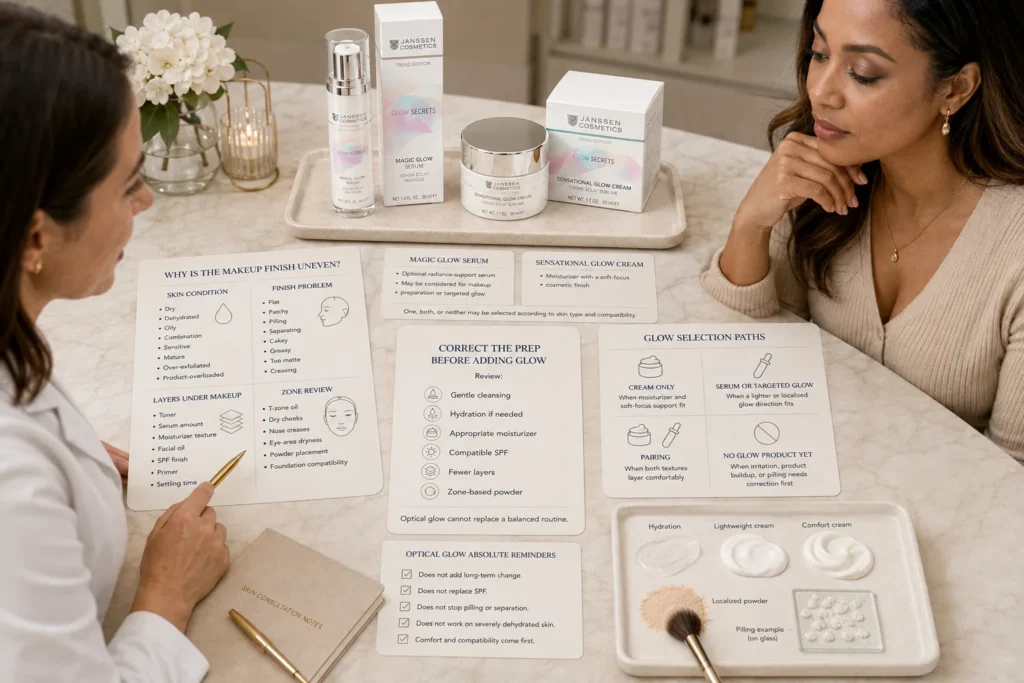
If makeup looks patchy because the skin is dry or dehydrated, possible options may include:
If makeup looks dull because the skin looks tired or flat, possible options may include:
If makeup separates because the skin is oily or combination, possible options may include:
If the skin is sensitive or irritated, calming options should come before active products or stronger makeup prep steps.
These are not automatic recommendations. The correct routine depends on whether the skin is dry, dehydrated, oily, combination, sensitive, mature, product-overloaded, or over-exfoliated.
Do not blame foundation before checking skin prep.
Do not scrub flakes aggressively before makeup.
Do not skip moisturizer if makeup looks patchy.
Do not skip SPF because makeup sits better without it.
Do not use too much powder to hide oiliness.
Do not layer too many serums under makeup.
Do not start vitamin C, acids, retinol-style products, or scrubs right before an event.
Do not apply makeup over burning, swollen, rash-like, or painful skin.
Do not ignore persistent stinging, eye-area irritation, crusting, bleeding, or worsening reactions.
Makeup may look flat when the skin underneath is dehydrated, over-mattified, tired-looking, product-overloaded, or lacking proper moisture before foundation.
Foundation may look patchy because of dry patches, dehydration, product buildup, SPF pilling, oil separation, over-exfoliation, or the wrong moisturizer texture.
Not always. Exfoliation may help rough surface buildup, but it can make makeup look worse if the skin is sensitive, dry, burning, or over-exfoliated.
Makeup may separate because oil, sweat, SPF, primer, moisturizer, and foundation are not working well together. Dehydration can also make makeup separate.
SPF may pill if too many products are underneath, the moisturizer is too heavy, layers are not given time to settle, or SPF and primer/foundation are incompatible.
Yes. Oily skin still needs moisturizer, but the texture should be lightweight and appropriate for the skin.
The eye area may be dehydrated, dry, sensitive, over-powdered, or tired-looking. Too much concealer or powder can make dryness more visible.
See a dermatologist if makeup stinging or patchiness comes with persistent rash-like irritation, swelling, pain, crusting, bleeding, infection-looking areas, severe itching, eye-area irritation, sudden changes, or worsening symptoms.
If your makeup keeps looking flat, patchy, dry, separated, or heavy, a free virtual consultation can help you understand what your skin may need before makeup.
At Zendevie, we review your skin type, cleanser, moisturizer, SPF, exfoliation habits, makeup prep, product textures, and how your skin changes throughout the day before recommending products. The goal is to help your skin look fresher and more comfortable under makeup without overloading it.

Zendevie is guided by Haby Diallo, a licensed esthetician with more than 20 years of professional skincare experience. Her approach is rooted in education, professional judgment, and personal care.
years of experience