
Dull skin still needs SPF every day.
Even if your skin looks tired, flat, dry, oily, textured, or uneven, SPF should remain part of your morning routine. In fact, dull-looking skin often needs daily protection even more because sun exposure can make uneven-looking tone, dryness, texture, and tired-looking skin appear more noticeable over time.
Many people skip SPF because they feel it makes their skin look greasy, gray, heavy, patchy, or less fresh.
That is understandable.
But the answer is usually not to remove SPF completely. The better answer is to find a formula, texture, and layering method that works for your skin.
At Zendevie, we do not treat SPF as optional when discussing dull-looking skin. In consultation, our licensed esthetician reviews your skin type, moisturizer, serum, makeup, product layering, and whether you are using exfoliation, vitamin C, or brightening-support products before recommending a routine.
A fresh-looking routine still needs protection.
Dull skin still needs SPF every day because daily sun exposure can make uneven-looking tone, dryness, texture, and tired-looking skin appear more noticeable over time.
SPF is especially important if you use:
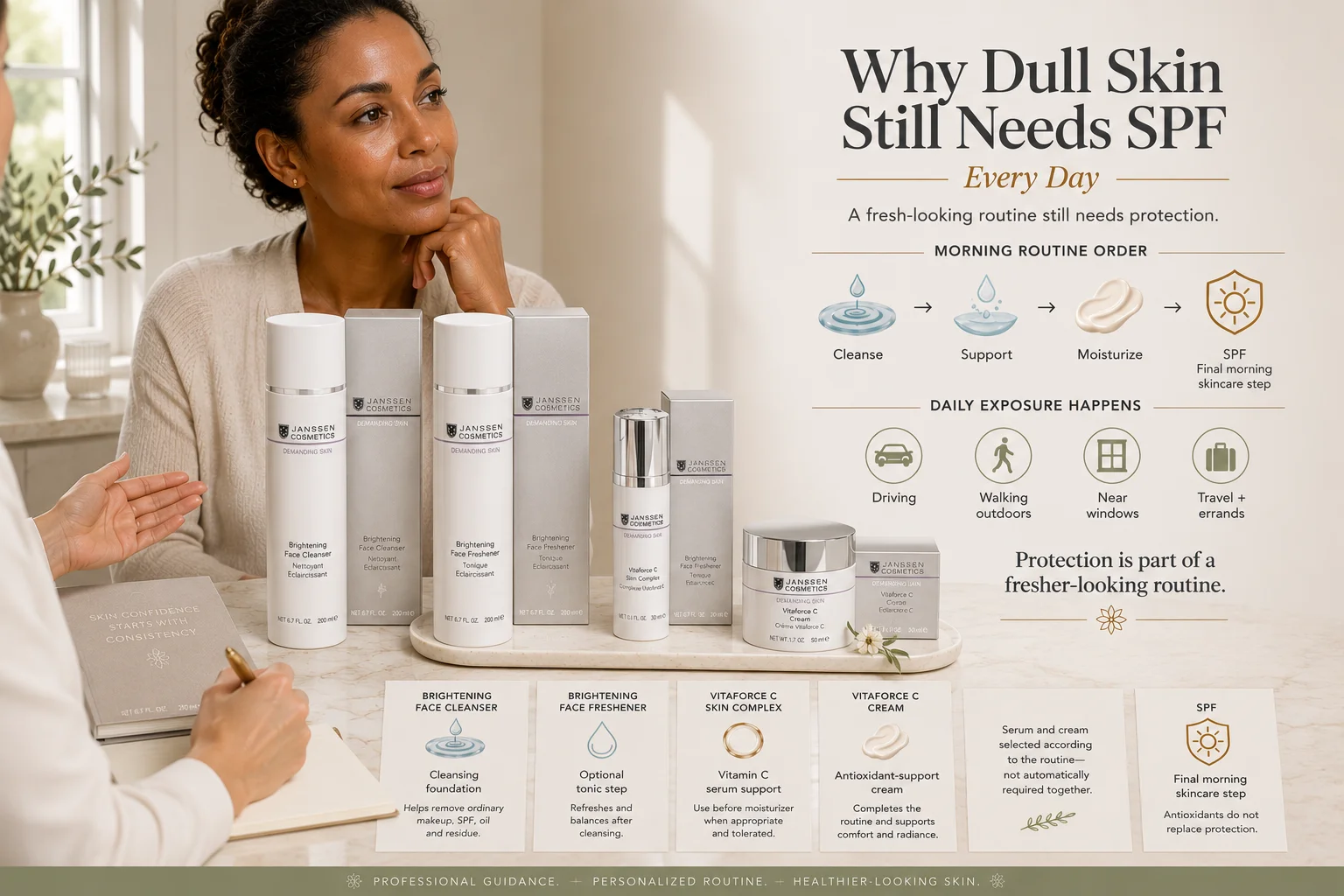
SPF should be the final morning skincare step.
A simple morning routine may look like:
Cleanser → toner if used → serum if needed → moisturizer → SPF
If SPF makes your skin look dull, greasy, gray, patchy, or heavy, the issue may be formula choice, product layering, moisturizer texture, makeup compatibility, or skin dehydration — not SPF itself.
SPF should not only be used at the beach or during summer.
Dull-looking skin can be affected by daily sun exposure during:
Even small daily exposure can add up visually over time.
If your goal is to support a fresher-looking, more even-looking complexion, SPF belongs in the routine consistently.
Sun exposure can make the skin look less even, less smooth, and less fresh over time.

For dull-looking skin, this may show as:
SPF helps protect the skin during the day so your routine is not working against daily exposure.
Dullness and uneven-looking tone often appear together.
A person may say, “My skin looks dull,” but the real concern may include:
When uneven-looking tone is part of the concern, SPF is very important.
Brightening-support products should not be used without daytime protection.
Dull-looking skin often has texture concerns.
Texture may look more visible when the skin is dry, dehydrated, oily, clogged-looking, over-exfoliated, or exposed to too much sun without protection.
SPF helps support the overall routine by protecting the skin during the day.
If you are exfoliating to support smoother-looking texture, SPF becomes even more important.
Exfoliation without SPF is not a complete plan.
Dry skin can look dull because rough or flaky areas do not reflect light evenly.
Sun exposure can make dryness and tightness feel more noticeable for some people, especially when combined with heat, travel, wind, or outdoor activity.
Dry dull skin still needs SPF, but the formula should not make dryness look worse.
If SPF makes dry skin look patchy, review:
Dry dull skin often needs comfort under SPF.
Dehydrated skin lacks water.
It may look flat, tight, shiny but uncomfortable, or patchy under makeup.
SPF can look dull or heavy on dehydrated skin if the skin underneath is not properly prepared.
This does not mean SPF is the problem.
It may mean the skin needs better hydration before SPF.
A simple morning routine may be:
Gentle cleanser → hydration-support serum if needed → moisturizer → SPF
Hydrated skin often allows SPF to sit more smoothly.
Oily skin can look shiny and dull at the same time.
SPF can feel challenging for oily skin because some formulas may look greasy or heavy.
But oily dull skin still needs SPF.
If SPF makes oily skin look dull, review:
Oily skin should not skip SPF. It needs the right texture and layering.
Sensitive dull skin can be difficult because some SPF formulas may sting or feel uncomfortable.
If SPF stings, the skin may be sensitive, over-exfoliated, dehydrated, or reacting to the formula.
Sensitive dull skin may need:
If SPF causes persistent burning, swelling, rash-like irritation, eye-area irritation, or worsening symptoms, seek dermatologist guidance.
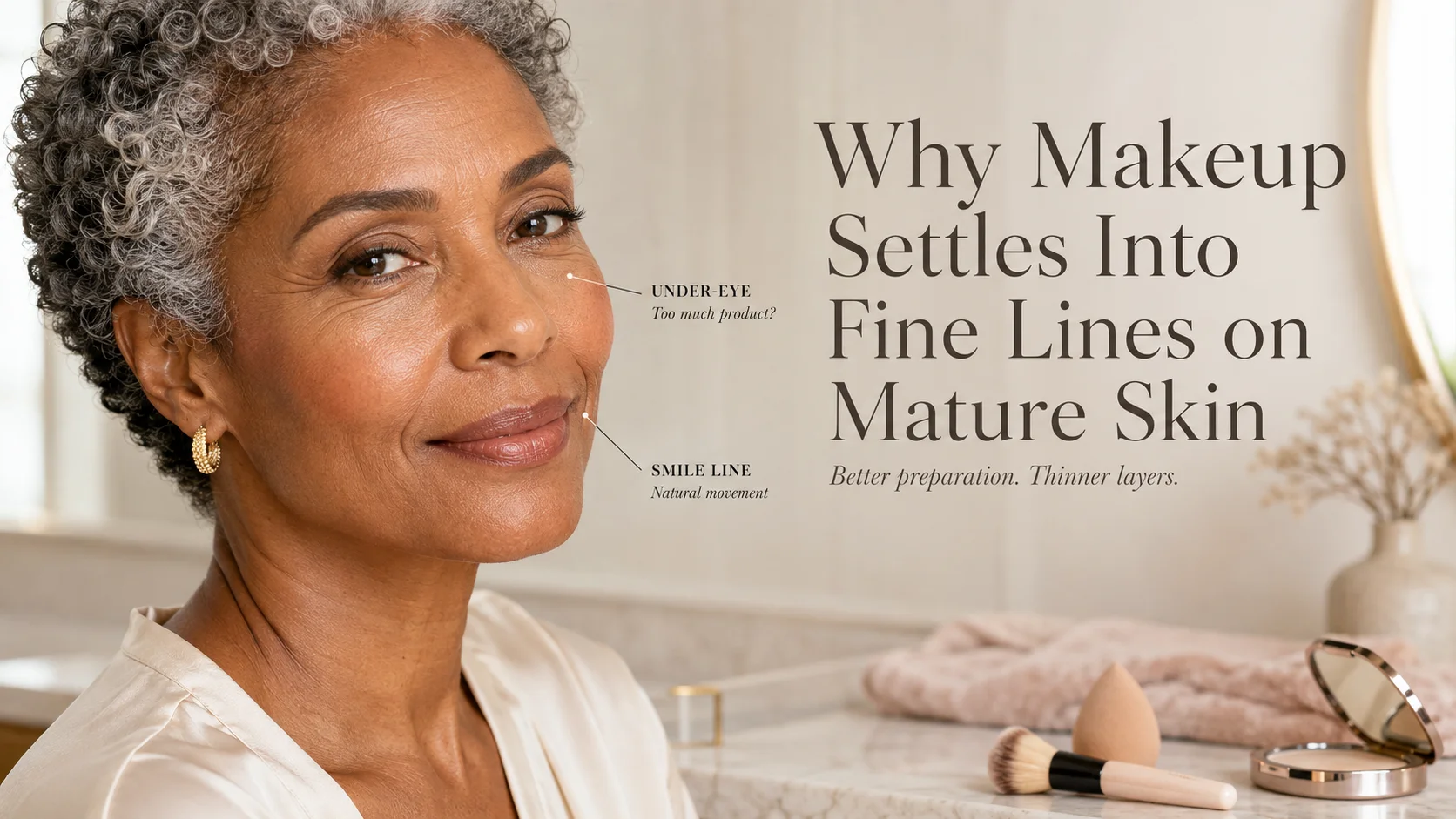
Mature skin may look dull because of dryness, dehydration, makeup settling, texture, and tired-looking skin.
SPF is still important every morning.
For mature dull skin, SPF may look better when the skin is properly prepared with hydration and moisturizer first.
A simple routine may look like:
Gentle cleanser → hydrating serum if needed → moisturizer → SPF
Avoid too much powder over SPF if it makes the skin look flat or textured.
Mature skin often looks fresher when protection is paired with comfort.
Vitamin C is often discussed for dull-looking skin because it can support the look of radiance and antioxidant care.
But if vitamin C is part of the morning routine, SPF should follow.
A simple routine may be:
Cleanser → vitamin C support if tolerated → moisturizer → SPF
If vitamin C stings, burns, or irritates the skin, the skin may not be ready.
Do not force vitamin C on sensitive or over-exfoliated skin.
But if vitamin C is used, SPF is part of the plan.
Exfoliation may help dull-looking skin when dullness is caused by surface buildup or rough texture.
But exfoliation should be paired with SPF.
This includes:
If you exfoliate and skip SPF, your routine is missing an important daytime step.
SPF helps support the skin while active products are part of the routine.
Retinol-style products can be too strong for some skin and should be introduced carefully.
If retinol-style products are used, daily SPF is important.
A routine using retinol-style products should also avoid over-exfoliation and active-product stacking.
If the skin becomes tight, flaky, burning, or duller after retinol-style use, pause and simplify.
SPF should remain part of the morning routine, but the formula may need to be gentle and well tolerated.
Any routine focused on dullness, radiance, dark spot appearance, or uneven-looking tone should include SPF.
Brightening-support products are not complete without daytime protection.
A brightening-support routine may include:
The SPF step helps protect the routine’s purpose.
Without SPF, uneven-looking tone may continue to appear more noticeable over time.
Some SPF formulas can make the skin look dull because of texture, finish, or layering.
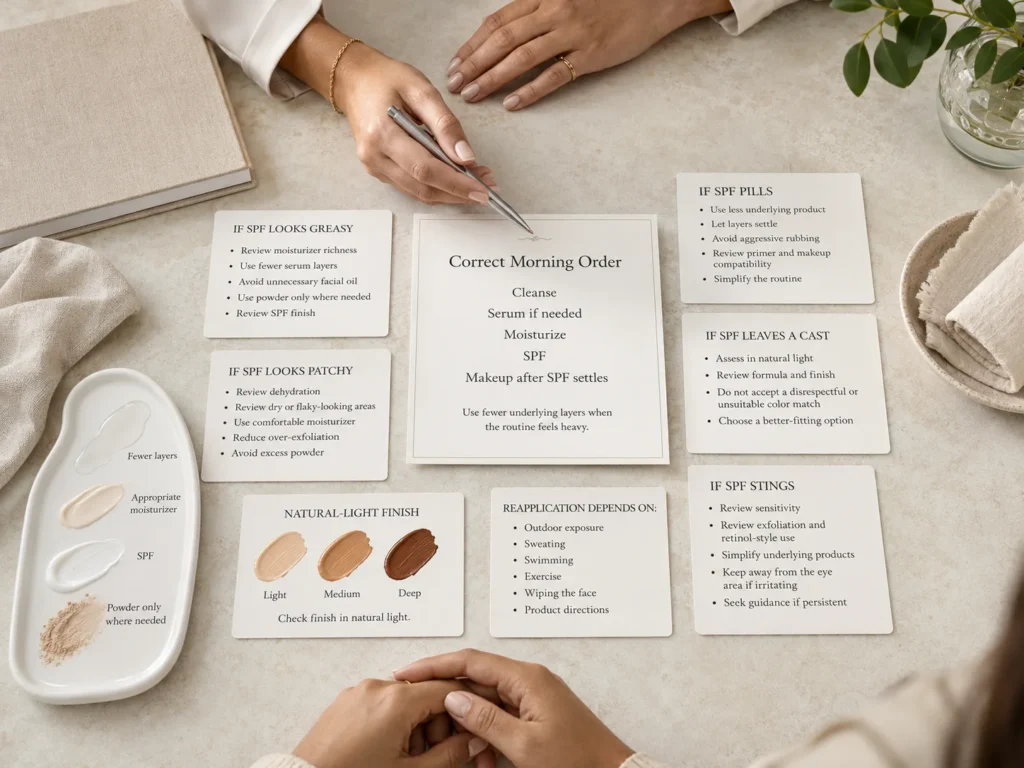
SPF may look dull if it:
If this happens, do not give up on SPF.
Review the product match.
SPF may look greasy if the formula is too rich for your skin type.
This is common with oily and combination skin.
Greasy SPF may happen when:
A lighter routine underneath may help.
SPF may look patchy when the skin underneath is dry, dehydrated, textured, or over-exfoliated.
Patchy SPF may happen when:
Patchiness is often a skin-prep issue.
Pilling happens when products roll off the skin.
SPF may pill when:
Pilling can make skin look dull and textured.
Simplifying the routine may help.
Some SPF formulas may leave a gray or ashy-looking cast on certain skin tones.
This can make dull-looking skin appear even less fresh.
If SPF leaves a cast, the formula may not be the right match.
Do not skip SPF completely. Look for a better-fitting option.
For deeper skin tones, consultation can help review texture, finish, and how the product looks on the skin.
SPF and makeup need to work together.
If makeup looks flat, patchy, or separated over SPF, review:
SPF should be the last skincare step before makeup.
Makeup should be applied after SPF has settled.
Powder can help reduce shine, but too much powder over SPF can make dull skin look flat.
This is especially true for dry, dehydrated, mature, or textured skin.
Powder may make SPF look:
If you need powder, consider applying it only where shine appears rather than over the entire face.
Primer can help some makeup routines, but it can also cause pilling or buildup with SPF.
If primer makes SPF or foundation roll, separate, or feel heavy, it may not be helping.
Before adding primer, make sure:
Primer should solve a problem, not create another layer of dullness.
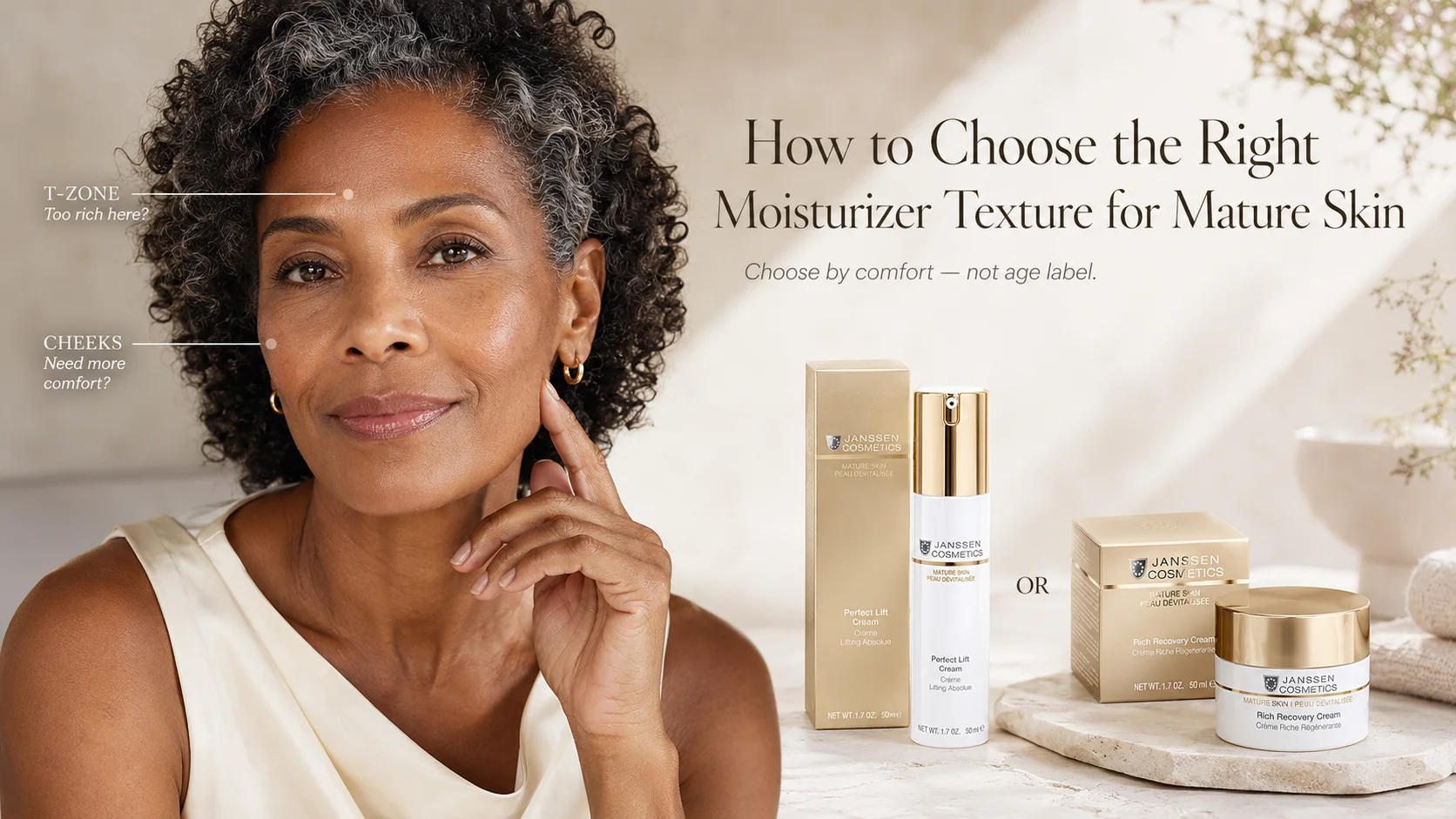
Moisturizer and SPF must work together.
If moisturizer is too rich, SPF may pill or look greasy.
If moisturizer is too light, SPF may cling to dry patches.
If moisturizer stings, the skin may be irritated.
A good morning routine should leave the skin comfortable before SPF.
Moisturizer helps prepare the skin, but the texture must match the skin type.
Serum can help dull skin, but too much serum can interfere with SPF.
SPF may pill if serum is sticky, heavy, or layered too generously.
A morning serum should absorb comfortably before moisturizer and SPF.
If SPF pills over serum, try:
The routine should feel smooth, not crowded.
Toner is usually used after cleansing and before serum or moisturizer.
A gentle toner may help refresh the skin before SPF.
But an active or harsh toner may make SPF sting.
If SPF stings after toner, the toner may be too strong, or the skin may be irritated.
Toner should not make the morning routine uncomfortable.
Evening cleansing matters when SPF is used every day.
SPF should be removed properly at night.
If SPF remains on the skin, it may contribute to:
The goal is to remove SPF without stripping the skin.
Many people benefit from SPF indoors, especially if they spend time near windows or move in and out during the day.
If your dullness is connected to uneven-looking tone, brightening-support products, exfoliation, or retinol-style products, daily SPF habits matter.
You do not need to think of SPF as only an outdoor product.
It is part of the morning routine.
Yes, dull skin still needs SPF in winter.
Winter skin may already look dry, tight, and less radiant because of cold air and indoor heating.
Skipping SPF in winter can leave the routine incomplete.
Winter SPF may need a more comfortable texture, especially for dry or mature skin.
If your skin feels dry under SPF in winter, review moisturizer and hydration first.
Yes, SPF is still useful on cloudy days.
Cloudy weather does not mean the skin has no daylight exposure.
If you are working on dullness, uneven-looking tone, texture, or radiance support, consistency matters.
Daily SPF is simpler than deciding day by day.
Yes.
Oily skin still needs SPF.
The key is finding a texture that does not feel too heavy.
For oily dull skin, review:
Oily skin should be protected without being stripped.
Yes.
Dry skin still needs SPF.
If SPF makes dry skin look patchy, the issue may be that the skin needs more hydration or a more comfortable moisturizer underneath.
Dry dull skin may need:
The SPF should not be applied over tight, under-moisturized skin.
Yes, but the formula matters.
Sensitive skin may need a gentler SPF option and fewer active products underneath.
If SPF stings, review:
If reactions are persistent or worsening, speak with a dermatologist.
Yes.
Mature dull skin benefits from consistent SPF because it supports the overall routine and helps protect the appearance of the skin during the day.
For mature skin, SPF often looks best when layered over hydration and moisturizer.
Avoid heavy powder if it makes SPF look flat or textured.
Use enough SPF to cover the face and exposed areas evenly.
Many people under-apply because they dislike the texture.
If the recommended amount feels too heavy, the product may not be the right formula for your skin.
A better SPF match is more helpful than applying too little of a product you dislike.
Consistency matters.
SPF should be applied in the morning as the final skincare step.
A simple routine order:
Cleanser → toner if used → serum if needed → moisturizer → SPF
Then makeup, if used.
SPF should not be buried under moisturizer or serum.
It should be the final skincare layer before makeup.
Reapplication may be needed depending on your day.
This is especially relevant with:
For everyday indoor routines, the reapplication plan depends on lifestyle and exposure.
A consultation can help make SPF realistic for your routine.
SPF reapplication over makeup can feel difficult.
Common problems include:
This is why morning layering matters.
If your lifestyle requires reapplication, choose products and makeup that make reapplication more practical.
Morning:
Gentle cleanser → hydrating serum if needed → moisturizer → SPF
Dry dull skin may need more comfort before SPF.
If SPF clings, review whether the skin is dehydrated, flaky, over-exfoliated, or under-moisturized.
Avoid heavy powder over dry areas.
Morning:
Gentle cleanser → hydration-support serum → moisturizer → SPF
Dehydrated skin may look flat or tight under SPF if hydration is missing.
Use lightweight hydration if skin is oily but tight.
Use more comforting moisturizer if skin is dry and tight.
SPF sits better when the skin underneath feels balanced.
Morning:
Gentle cleanser → lightweight moisturizer → SPF
If the skin is oily but tight:
Gentle cleanser → lightweight hydration support → lightweight moisturizer → SPF
Avoid heavy creams under SPF if the T-zone gets greasy quickly.
Avoid skipping moisturizer completely.
Morning:
Gentle cleanser → lightweight hydration if needed → moisturizer by zone → SPF
Combination skin may need less moisturizer on the T-zone and more on the cheeks.
SPF should still cover the whole face evenly.
Adjust moisturizer, not protection.
Morning:
Mild cleanser → moisturizer → SPF
Keep the routine simple.
Avoid layering strong vitamin C, acids, retinol-style products, or exfoliating toners under SPF if the skin is sensitive or irritated.
If SPF stings repeatedly, seek guidance.
Morning:
Gentle cleanser → hydrating serum if tolerated → moisturizer → SPF
Mature dull skin may need more comfort before SPF.
Use less powder if the skin looks flat or textured.
Allow moisturizer to settle before SPF.
If SPF makes your skin look dull, review the routine before removing SPF.
Ask:
Often, the solution is better layering, not skipping SPF.
If SPF feels heavy:
Heavy SPF may be a formula mismatch.
If SPF makes you look greasy:
Greasy does not mean SPF is wrong as a category.
It means this SPF or layering may not fit.
If SPF makes you look dry:
Dry-looking SPF often improves when the skin is better prepared.
If SPF stings, stop and review your skin condition.
SPF may sting when skin is:
If stinging is persistent, severe, eye-area related, swollen, rash-like, painful, or worsening, speak with a dermatologist.
If SPF pills:
Pilling is often a layering issue.
If SPF leaves a cast, the formula may not match your skin tone or finish preference.
This is especially important for deeper skin tones, where some products may leave an ashy or gray-looking effect.
Do not stop using SPF completely.
Look for a better-fitting option and test how it looks in natural light.
If SPF breaks up makeup:
SPF and makeup need compatibility.
Common mistakes include:
SPF should support the routine, not be forgotten.
SPF is especially important when your routine includes:
If these are part of your routine, SPF is not an optional step.
Professional guidance may help if SPF always feels wrong.
This is especially helpful if:
A consultation can help adjust the routine so SPF fits more comfortably.
A dermatologist should evaluate the skin if SPF use or dullness comes with:
Cosmetic skincare can help with routine structure and appearance, but medical-looking changes need medical evaluation.
After consultation, our licensed esthetician may consider Janssen Cosmetics options depending on why the skin looks dull and how SPF fits into the routine.
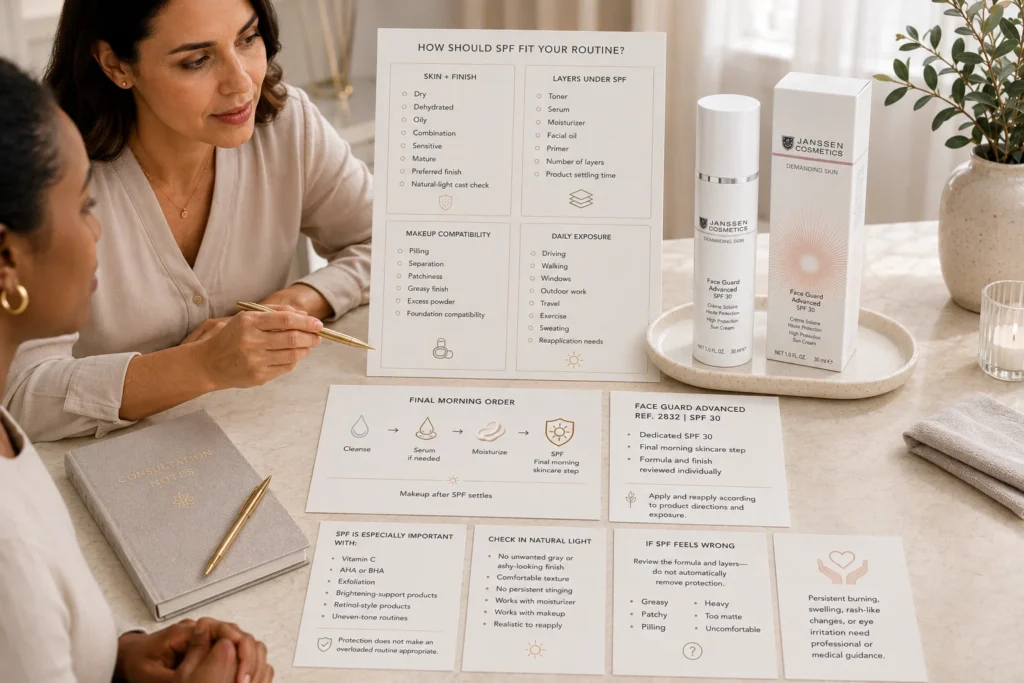
For daily morning protection, possible options may include:
For tired-looking or demanding dull skin, possible options before SPF may include:
For dry or dehydrated dull skin, options before SPF may include:
For sensitive dull skin, options before SPF may include:
These are not automatic recommendations. The correct routine depends on skin type, sensitivity, moisturizer texture, SPF tolerance, makeup use, sun exposure, and whether active products are part of the routine.
Do not skip SPF because your skin looks dull.
Do not use vitamin C, acids, retinol-style products, or brightening-support products without consistent SPF.
Do not apply SPF before moisturizer unless the product directions specifically support that order.
Do not use too little SPF because the texture feels heavy.
Do not over-layer serum, moisturizer, oil, primer, SPF, and makeup if the skin looks coated.
Do not keep using an SPF that stings without reviewing the routine.
Do not scrub the skin because SPF pills.
Do not ignore swelling, rash-like irritation, pain, crusting, bleeding, severe itching, eye-area irritation, or persistent worsening.
Yes. Dull skin still needs SPF every day because sun exposure can make uneven-looking tone, texture, dryness, and tired-looking skin appear more noticeable over time.
Some SPF formulas can make skin look dull if they are too heavy, too matte, too greasy, leave a cast, pill, or layer poorly with moisturizer or makeup.
No. Instead of skipping SPF, review the formula, moisturizer texture, serum amount, and makeup layering.
Yes. SPF should be used in the morning, especially when vitamin C or radiance-support products are part of the routine.
Yes. SPF is important when using AHA, BHA, enzyme exfoliation, scrubs, exfoliating cleansers, or brightening-support products.
SPF should be the final morning skincare step. A common order is cleanser, toner if used, serum if needed, moisturizer, then SPF.
SPF may pill because of too many layers, sticky serum, heavy moisturizer, product incompatibility, rubbing too much, or product buildup.
SPF may sting if the skin is sensitive, irritated, over-exfoliated, dehydrated, dry, or reacting to the formula. Persistent or severe stinging should be evaluated.
No. Oily skin still needs SPF. The key is finding a texture that feels comfortable and does not make the skin look heavy.
See a dermatologist if SPF use or dullness comes with persistent rash-like irritation, swelling, pain, crusting, bleeding, infection-looking areas, severe itching, eye-area irritation, sudden changes, burning that does not settle, or worsening symptoms.
If SPF always makes your skin look dull, greasy, gray, patchy, or heavy, a free virtual consultation can help you understand what is happening.
At Zendevie, we review your cleanser, toner, serum, moisturizer, SPF, makeup, skin type, sensitivity, and active products before recommending a routine. The goal is to keep daily protection in place while helping the skin look fresher and more comfortable.
SPF is not the step to skip.
It is the step to personalize.

Zendevie is guided by Haby Diallo, a licensed esthetician with more than 20 years of professional skincare experience. Her approach is rooted in education, professional judgment, and personal care.
years of experience