
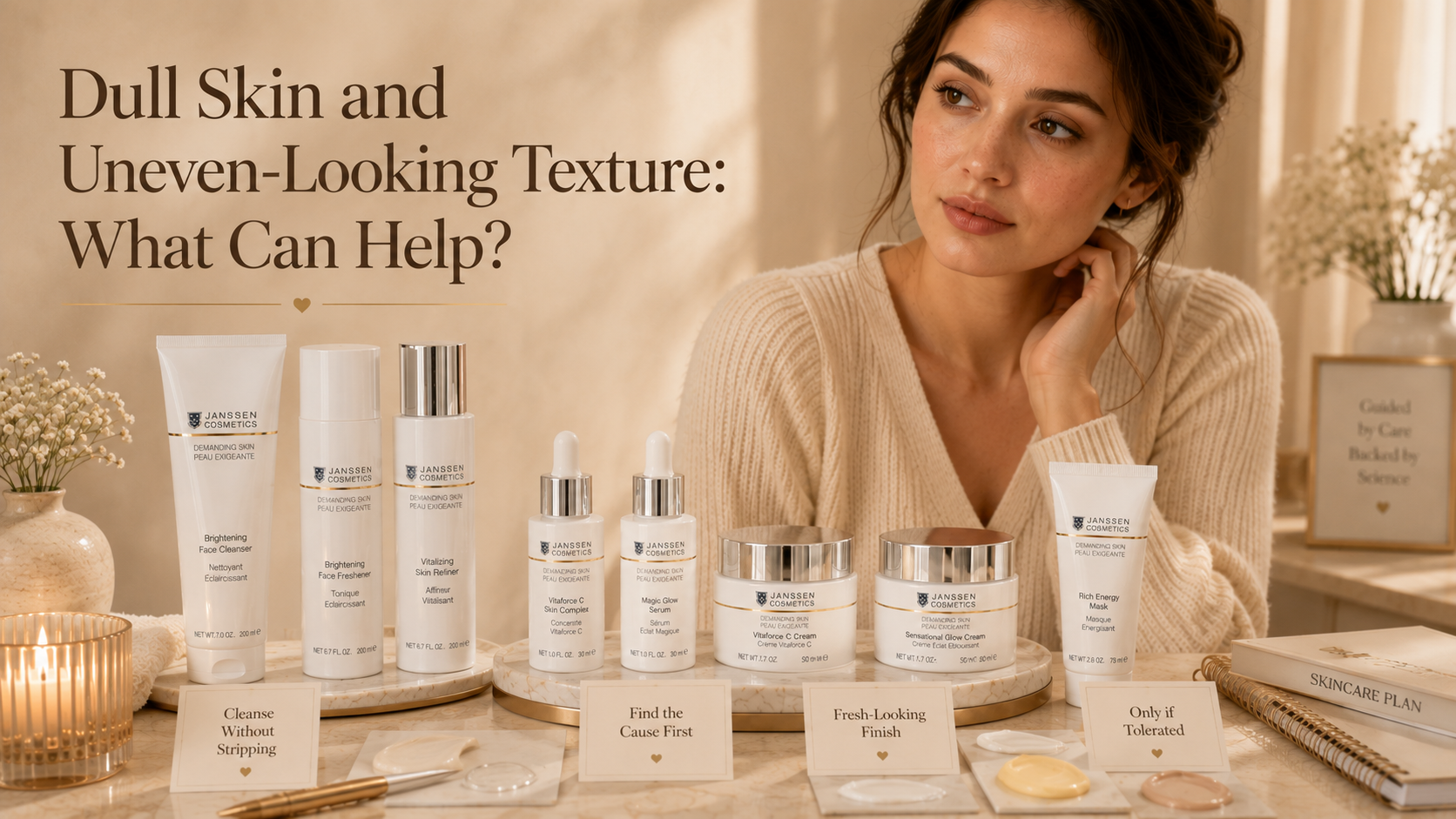
Dull skin and uneven-looking texture often show up together.
The skin may look flat, rough, bumpy, flaky, oily in some areas, dry in others, or less smooth under makeup. Foundation may cling to dry patches. SPF may pill. Powder may make texture look more visible. The T-zone may look shiny but still not fresh.
When this happens, many people think they need stronger exfoliation.
Sometimes gentle exfoliation can help.
But uneven-looking texture is not always a sign that the skin needs more scrubbing. It may be caused by dehydration, dryness, product buildup, oil, SPF residue, makeup residue, over-exfoliation, sensitivity, clogged-looking pores, or a moisturizer that does not match the skin.
At Zendevie, we do not treat uneven-looking texture as one simple concern. In consultation, our licensed esthetician first looks at the skin type, cleanser, hydration, moisturizer, SPF habits, makeup wear, exfoliation history, oil pattern, sensitivity, and whether the texture feels rough, flaky, bumpy, congested-looking, or irritated.
The goal is not to force the skin smooth.
The goal is to understand what is making the surface look uneven.
Dull skin and uneven-looking texture can happen together when the skin is dehydrated, dry, oily, product-overloaded, under-cleansed, over-exfoliated, sensitive, or showing buildup from SPF, makeup, sweat, oil, and daily residue.
A smoother-looking routine may include:
Morning: Gentle cleanser → hydration support if needed → moisturizer → SPF
Evening: Gentle cleanser → moisturizer or hydration support
If the skin is stable and rough surface buildup is present, gentle exfoliation may be added carefully.
If the skin is oily and has clogged-looking pores, BHA may be considered carefully.
If the skin is dry, tight, or sensitive, hydration and moisturizer may come before exfoliation.
Uneven-looking texture should not be scrubbed aggressively.
Uneven-looking texture can describe many different skin patterns.
It may look like:
Because texture can come from many causes, it should not be handled with one universal solution.
The cause matters.
Dull skin often looks textured because the skin surface is not reflecting light evenly.
This can happen when the surface is:
When light hits uneven skin, the complexion may look less fresh.
A smoother-looking complexion often begins with comfort and balance.

Many people assume texture means dead skin buildup.
Sometimes surface buildup is part of the concern.
But uneven-looking texture can also come from:
Before exfoliating, look at how the skin feels.
Tight, burning, stingy, or raw skin usually needs calming and moisture before exfoliation.
Dry skin often looks dull and textured because rough or flaky areas do not reflect light smoothly.
Dry texture may show as:
Dry texture should not be scrubbed aggressively.
The first support steps are usually gentle cleansing, hydration, moisturizer, and SPF.
Dehydrated skin lacks water.
It can look dull, flat, tight, creased, or shiny but uncomfortable.
Dehydration-related texture may show as:
Hydration often comes before active products.
A hydrating serum followed by moisturizer may help support a smoother-looking complexion.
Buildup can make the skin look dull and uneven.
Buildup may come from:
Buildup-related texture may feel coated or heavy.
In this case, adding more products may make the problem worse.
The routine may need better evening cleansing and fewer layers.
Oily skin can look textured and dull at the same time.
This may happen when oil mixes with SPF, makeup, sweat, powder, and product buildup.
Oily texture may show as:
Oily skin should not be stripped.
It may need gentle cleansing, lightweight hydration, lightweight moisturizer, and targeted support only when needed.
Combination skin can have different texture concerns in different areas.
The T-zone may look oily and textured.
The cheeks may feel dry and dull.
The nose may look congested-looking.
The chin may feel bumpy.
The outer face may feel tight.
Combination skin often needs zone awareness.
Do not treat the whole face as oily just because the T-zone is shiny.
Do not treat the whole face as dry just because the cheeks feel tight.
Sensitive skin can look textured when it is irritated.
Texture from sensitivity may show as:
Sensitive texture should not be attacked with scrubs or strong acids.
A simple routine may be more helpful first:
Mild cleanser → moisturizer → SPF
At night:
Mild cleanser → moisturizer
Mature skin may look dull and textured because of dryness, dehydration, makeup settling, and changes in how the skin surface reflects light.
Mature texture may appear as:
Mature skin often needs hydration, comfort, SPF, and gentle exfoliation only when tolerated.
Aggressive scrubbing can make mature skin look less fresh.
The nose is a common place for uneven-looking texture.
This area may collect:
If the nose looks textured, it does not mean the whole face needs strong exfoliation.
The nose may need targeted cleansing or targeted support, while cheeks may need hydration and comfort.
Zone-based care can prevent over-treating the rest of the face.
Forehead texture may come from oil, sweat, SPF, hair products, hats, head coverings, makeup, or product buildup.
It may also look more noticeable when the skin is dehydrated or over-exfoliated.
Helpful questions include:
Forehead texture may need cleansing adjustment, hydration, or targeted support depending on the cause.
Cheek texture may come from dryness, dehydration, sensitivity, makeup patchiness, sun exposure, or over-exfoliation.
Cheek texture may look like:
Cheeks often need more comfort than the T-zone.
Do not apply strong oily-skin products to the cheeks just because the nose or forehead is oily.
Chin texture may be connected to oil, makeup, SPF, friction, masks, touching the face, or clogged-looking pores.
The chin may also become dry or flaky if too many active products are used.
A chin-focused routine may need:
The chin should not be scrubbed aggressively if it is irritated.
Makeup can make uneven-looking texture more obvious if the skin underneath is dry, dehydrated, oily, coated, or over-exfoliated.
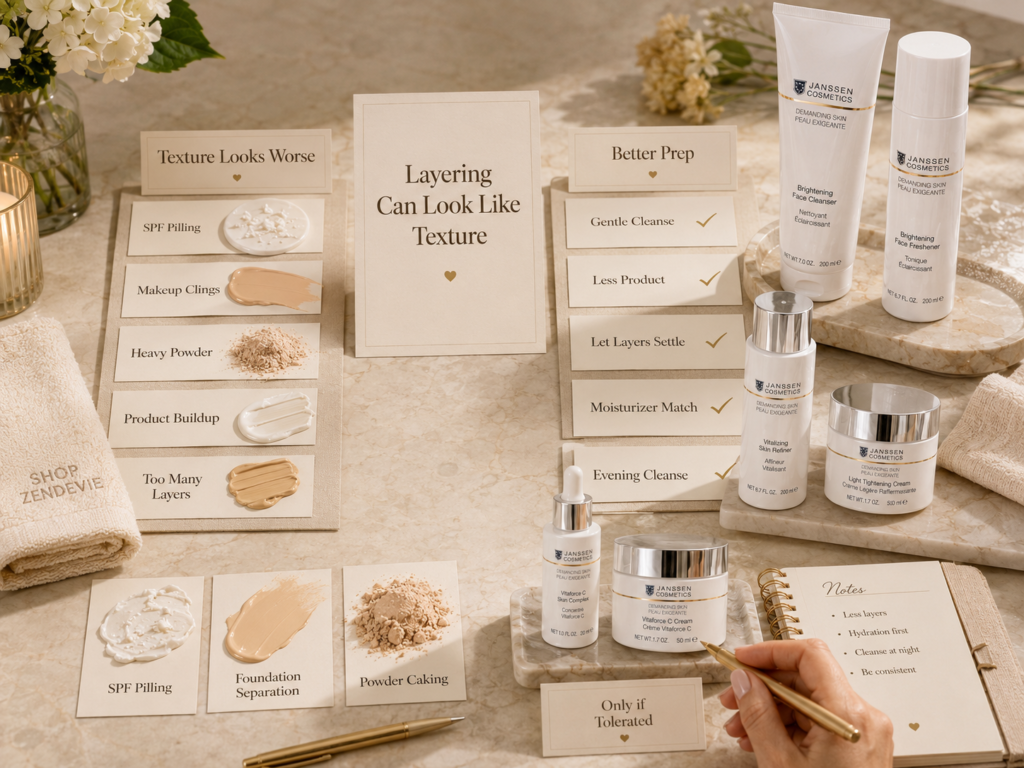
Foundation may:
If makeup makes texture more visible, review skin prep before changing every makeup product.
A smoother-looking base often starts with skincare.
SPF is essential, but it can look uneven if the skin underneath is not prepared well.
SPF may make texture look more visible if:
Do not skip SPF.
Adjust the routine around it.
Pilling happens when products roll off the skin.
It can make the skin look rough, uneven, or dull.
Pilling may happen when:
If pilling happens, simplify the routine before adding exfoliation.
Over-exfoliated skin can look dull and textured.
It may feel smooth briefly, then become tight, shiny, flaky, or irritated.
Signs of over-exfoliation include:
If this happens, pause active products and return to a simple routine.
Harsh scrubs may create temporary smoothness, but they can also irritate the skin.
If scrubs are too rough or used too often, they may make texture look more noticeable.
Avoid harsh scrubs if the skin is:
Fresh-looking skin should not feel raw.
Gentle exfoliation may help if uneven-looking texture is caused by surface buildup and the skin is stable.
Signs exfoliation may be appropriate include:
Exfoliation should be introduced slowly.
More is not always better.
AHA may be considered when dullness is connected to rough surface texture.
It may support the look of smoother skin when used correctly.
A simple AHA night may look like:
Cleanser → AHA if appropriate → moisturizer
But AHA should not be combined blindly with scrubs, retinol-style products, active toners, or other exfoliating products.
SPF is important every morning when exfoliation is part of the routine.
BHA may be considered when texture is connected to oily areas, clogged-looking pores, blackheads, whiteheads, or T-zone buildup.
A simple BHA routine may look like:
Evening: Cleanser → BHA if appropriate → moisturizer
BHA should not be overused.
Avoid BHA if the skin is tight, flaky, burning, or over-exfoliated.
Oily skin still needs hydration and moisturizer.
Enzyme exfoliation may be a gentler-feeling option for some dull skin routines.
It may support surface smoothness when used appropriately.
But enzyme products can still irritate some sensitive skin.
Avoid enzymes if the skin is:
Gentle does not mean unlimited.
Hydration is one of the most important support steps for uneven-looking texture.
When skin is dehydrated, it may look less smooth and more textured under makeup.
Hydration may help support the look of:
Hydration serum should usually be followed with moisturizer.
Moisturizer helps skin feel comfortable and supported.
The right moisturizer texture can make skin look smoother.
The wrong moisturizer texture can make skin look dull or heavy.
If moisturizer is too light, skin may look dry and rough.
If moisturizer is too heavy, skin may look coated and greasy.
If moisturizer stings, the skin may be irritated.
Moisturizer should match skin type, season, and current skin condition.
SPF is still important when skin looks textured.
SPF helps protect the routine’s purpose, especially when using exfoliation, vitamin C, brightening-support products, or retinol-style products.
A morning routine may look like:
Cleanser → hydration or serum if needed → moisturizer → SPF
If SPF looks patchy, review hydration and moisturizer.
If SPF pills, review product amount and layering.
Do not remove SPF from the routine.
Antioxidant support may help dull-looking skin that appears tired or affected by daily environmental exposure.
Vitamin C support may be considered for radiance and more even-looking tone when the skin can tolerate it.
But antioxidants should not be used on irritated skin just because the skin looks dull.
If antioxidant serum stings, pause and review hydration, cleanser, moisturizer, and exfoliation use.
Retinol-style products may be part of some routines, but they should be used carefully.
If retinol-style products are introduced too quickly or combined with exfoliating acids and scrubs, they may make texture look worse.
Possible signs the routine is too strong include:
Retinol-style products need a stable routine foundation.
Masks can support texture when chosen correctly.
A hydrating mask may help when skin looks dull, tight, or flat.
A clearing mask may help oily areas when appropriate.
A calming mask may help sensitive-feeling skin when tolerated.
An exfoliating mask may help rough surface buildup only when the skin is stable.
Masks should be add-ons, not daily corrections for every texture concern.
Clay masks may help oily areas feel less heavy when used appropriately.
But clay masks can be drying if overused or applied to dry zones.
Use caution if the skin feels:
A clay mask may belong only on the T-zone, not the whole face.
Hydrating masks may help dry or dehydrated dull skin look more comfortable and smoother.
They may be useful after:
A hydrating mask should support comfort.
It should not sting or feel heavy in a way that clogs the routine.
Too many products can create uneven-looking texture.
Product overload may look like:
In this case, the skin may need fewer products, smaller amounts, and better cleansing.
Not more actives.
Under-cleansing can make texture look worse.
If SPF, makeup, oil, sweat, and powder are not removed properly, the skin may look dull and bumpy the next day.
Signs of under-cleansing include:
Evening cleansing should remove the day without stripping.
Over-cleansing can also create uneven-looking texture.
If the cleanser is too strong, the skin may become dry, tight, flaky, and dull.
Signs of over-cleansing include:
Clean skin should feel comfortable.
Not stripped.
Texture may change with the season.
In winter, skin may become dry, flaky, rough, and tight.
In summer, skin may become oily, sweaty, coated, or congested-looking.
Seasonal texture routines should adjust by product texture and cleansing needs.
Winter may need more comfort.
Summer may need lighter layers and better SPF removal.
The routine should move with the skin.
Travel can make texture look more visible because of airplane air, climate changes, SPF, makeup, sweat, stress, and less routine consistency.
Post-travel texture may need:
Travel skin usually needs recovery first.
Stress and lack of sleep can make the face look dull, tired, and uneven.
The eye area may look more tired.
Makeup may sit differently.
The skin may look puffy, flat, oily, dry, or less fresh.
A simple reset may include:
Morning: Gentle cleanser → moisturizer → SPF
Evening: Gentle cleanser → moisturizer
If hydration is needed, add hydration support carefully.
Start simple.
Morning:
Gentle cleanser → hydration support if needed → moisturizer → SPF
Evening:
Gentle cleanser → moisturizer
Then decide what the texture needs:
Do not add every solution at once.
Morning:
Gentle cleanser → hydrating serum if needed → moisturizer → SPF
Evening:
Gentle cleanser → moisturizer or cream
Optional:
Hydrating mask when appropriate
Gentle exfoliation may be considered only when the skin is stable.
Avoid harsh scrubs, hot water, and strong acids on tight skin.
Morning:
Gentle cleanser → hydrating serum → moisturizer → SPF
Evening:
Gentle cleanser → hydrating serum → moisturizer
Avoid:
Dehydrated texture often improves when the skin feels more flexible and comfortable.
Morning:
Gentle cleanser → lightweight hydration if needed → lightweight moisturizer → SPF
Evening:
Gentle cleanser → lightweight moisturizer
Optional:
BHA only when clogged-looking pores, blackheads, whiteheads, or T-zone buildup are present and skin is stable
Avoid:
Oily texture needs balance.
Morning:
Gentle cleanser → lightweight hydration → moisturizer by zone → SPF
Evening:
Gentle cleanser → moisturizer by zone
Optional:
Targeted exfoliation or BHA only where needed and tolerated
Avoid treating the whole face the same.
Combination texture often needs different care in different areas.
Morning:
Mild cleanser → moisturizer → SPF
Evening:
Mild cleanser → moisturizer
Optional later:
Gentle hydration or calming support if tolerated
Avoid:
Sensitive texture needs calm before active support.
Morning:
Gentle cleanser → hydrating serum if tolerated → moisturizer → SPF
Evening:
Gentle cleanser → serum or moisturizer → cream if needed
Optional:
Gentle exfoliation only when tolerated
Avoid:
Mature texture often looks better when hydration, comfort, and SPF are consistent.
Morning:
Gentle cleanser → hydration if needed → moisturizer → SPF → makeup
Evening:
Makeup/SPF removal step if needed → gentle cleanser → moisturizer
Avoid:
Makeup-friendly skin prep should make the skin feel comfortable, not overloaded.
If SPF pills and makes texture look worse, try simplifying.
Morning:
Gentle cleanser → moisturizer → SPF
If hydration is needed:
Gentle cleanser → lightweight hydrating serum → moisturizer → SPF
Avoid:
Pilling is often a layering problem.
Avoid:
Texture needs strategy, not pressure.
Your routine may be helping if the skin starts to feel:
Improvement should feel comfortable.
If the skin feels raw, the routine may be too strong.
Professional guidance may help if:
A consultation can help identify which step matters most.
A dermatologist should evaluate the skin if uneven-looking texture or dullness comes with:
Cosmetic skincare can support appearance and routine structure, but medical-looking changes need medical evaluation.
After consultation, our licensed esthetician may consider Janssen Cosmetics options depending on whether uneven-looking texture is connected to dehydration, dryness, oil buildup, sensitivity, mature skin needs, SPF buildup, or surface roughness.

For dry or dehydrated dull texture, possible options may include:
For tired-looking dull texture, possible options may include:
For sensitive dull texture, comfort-focused options may come first, such as:
For oily dull texture or clogged-looking areas, possible options may include:
For exfoliation support, products such as Mild Face Rub, Enzyme Peeling Powder, Skin Refining Enzyme Peel, AHA + BHA Exfoliator, or Brightening Exfoliator should only be reviewed after skin type, sensitivity, SPF habits, current active use, and tolerance are understood.
Professional exfoliation systems should remain in professional treatment settings and should not be treated as home-use routine steps.
For morning routines, Face Guard Advanced SPF 30 may be considered as the final daytime protection step when appropriate.
These are not automatic recommendations. The correct routine depends on whether the skin is dry, dehydrated, oily, sensitive, mature, product-overloaded, over-exfoliated, or truly in need of gentle texture support.
Do not assume uneven-looking texture always needs stronger exfoliation.
Do not scrub harshly because makeup looks patchy.
Do not use AHA, BHA, scrubs, and retinol-style products all together without guidance.
Do not skip moisturizer if your skin is oily.
Do not skip SPF.
Do not use clay masks over dry or sensitive areas.
Do not use heavy creams everywhere if only some areas are dry.
Do not add multiple active products at once.
Do not apply strong facial actives close to the eyes.
Do not keep using products that burn, sting, pill, or make texture worse.
Do not ignore swelling, rash-like irritation, pain, crusting, bleeding, severe itching, eye-area irritation, blistering, deep cracking, sudden texture changes, or persistent worsening.
Skin may look dull and textured because of dehydration, dryness, product buildup, oil, SPF residue, makeup residue, clogged-looking pores, over-exfoliation, sensitivity, or the wrong product texture.
Sometimes, but not always. Exfoliation may help if texture is from surface buildup and the skin is stable. If skin is tight, burning, stinging, flaky, or sensitive, hydration and moisturizer should come first.
Yes. Dehydrated skin can look flat, creased, less smooth, patchy under makeup, and dull by evening.
Yes. Oily skin can look shiny but dull when oil mixes with SPF, sweat, makeup, powder, and product buildup. Oily skin can also be dehydrated.
Makeup may make texture look worse if the skin underneath is dry, dehydrated, oily, coated, over-exfoliated, or not properly moisturized.
SPF may look patchy or textured if the skin is dehydrated, dry, over-layered, pilling, or not properly cleansed at night. SPF should still remain in the routine.
BHA may help oily textured areas when clogged-looking pores, blackheads, whiteheads, or T-zone buildup are present and the skin is stable. It should not be overused.
AHA may support rough surface texture when the skin can tolerate it. Avoid AHA if skin is tight, sensitive, over-exfoliated, or irritated.
A simple routine is gentle cleanser, hydration support if needed, moisturizer, and SPF in the morning; gentle cleanser and moisturizer at night. Add exfoliation or targeted support only if the skin needs and tolerates it.
See a dermatologist if dullness or texture comes with persistent rash-like irritation, swelling, pain, crusting, bleeding, infection-looking areas, severe itching, eye-area irritation, sudden changes, burning that does not settle, deep cracking, blistering, changing marks, or worsening symptoms.
If your skin looks dull and textured, you may not need a stronger product right away.
You may need to understand whether the texture is coming from dryness, dehydration, buildup, oil, sensitivity, makeup, SPF layering, or over-exfoliation.
At Zendevie, a free virtual consultation helps us review your cleanser, moisturizer, SPF, exfoliation habits, makeup wear, sensitivity, skin type, and product order before recommending anything.
The goal is to support smoother-looking skin with care.
Not to overwhelm it.

Zendevie is guided by Haby Diallo, a licensed esthetician with more than 20 years of professional skincare experience. Her approach is rooted in education, professional judgment, and personal care.
years of experience