

Moisturizer is important.
But moisturizer alone does not fix every reason skin looks patchy.
You may apply moisturizer every morning and night and still notice uneven-looking tone, dry patches, makeup clinging, SPF pilling, dark spot appearance, post-blemish marks, dull areas, or areas that look different from the rest of the face.
That does not always mean the moisturizer is useless.
It may mean the skin needs something else in the routine.
At Zendevie, we do not assume patchy-looking skin needs a stronger cream or a brightening product right away. In consultation, our licensed esthetician first looks at skin type, cleanser, hydration, moisturizer texture, SPF habits, exfoliation history, product buildup, sensitivity, makeup use, dark spot appearance, and whether the patchiness looks cosmetic or medically concerning.
Moisturizer supports the skin.
But the full routine creates the environment for a more even-looking complexion.
Skin can look patchy even when you moisturize because moisturizer may not address the real cause of the patchiness.
Patchy-looking skin may come from:
A simple routine may include:
Morning: Gentle cleanser → hydration support if needed → moisturizer → SPF
Evening: Gentle cleanser → moisturizer or targeted support if appropriate
If patchiness comes from uneven-looking tone, SPF and patience are essential.
If patchiness comes from irritation, calm and simplicity come first.
Moisturizer can help the skin feel softer, more comfortable, and less tight.
It can support the look of smoother skin.
But moisturizer may not fully address patchiness caused by:
This is why patchy-looking skin needs a full routine review.
Not only a heavier cream.

Patchy-looking skin can describe many different things.
It may look like:
Because patchiness can come from different causes, the routine should be personalized.
Dryness and dehydration are not the same.
Moisturizer helps seal and comfort the skin, but dehydrated skin may need water-supporting hydration before moisturizer.
Dehydrated skin may look:
If skin is dehydrated, a hydrating serum or hydration-focused step may help support a fresher-looking finish.
Moisturizer still matters, but it may need hydration underneath.
A harsh cleanser can make the skin feel dry and patchy even if moisturizer is applied afterward.
Signs the cleanser may be too harsh include:
If the cleanser strips the skin every day, moisturizer may struggle to keep the skin comfortable.
Gentle cleansing matters.
If the skin looks patchy because of sun exposure or uneven SPF use, moisturizer alone is not enough.
Uneven tone routines need SPF.
Patchiness may become more visible when:
Moisturizer supports comfort.
SPF supports daytime protection.
Both matter.
Product buildup can make skin look patchy, dull, and uneven.
This can happen even if you moisturize.
Buildup may come from:
If the skin feels coated or sticky, the routine may need better evening cleansing or fewer layers.
Not more moisturizer.
Over-exfoliation can make skin look patchy even when moisturizer is used.
Over-exfoliated skin may look:
Moisturizer may help comfort, but the bigger step is pausing harsh active products and simplifying.
A simple reset may include:
Morning: Mild cleanser → moisturizer → SPF
Evening: Mild cleanser → moisturizer
Irritated skin can look patchy.
Irritation may come from:
If the skin is irritated, do not keep adding brightening products.
Calm comes first.
Dark spot appearance can make the skin look patchy even when the skin is moisturized.
Moisturizer can help the surrounding skin look smoother and more comfortable, but it does not replace:
Dark spot appearance should not be scrubbed or treated aggressively.
Post-blemish marks can make skin look patchy after blemishes calm down.
Moisturizer helps comfort the skin, but the mark may still be visible.
Post-blemish marks need:
Do not apply active products to broken, crusted, bleeding, or painful skin.
Makeup can still look patchy even with moisturizer if the routine underneath is not balanced.
Makeup may look patchy when:
Sometimes the skin does not need more moisturizer.
It needs better layering.
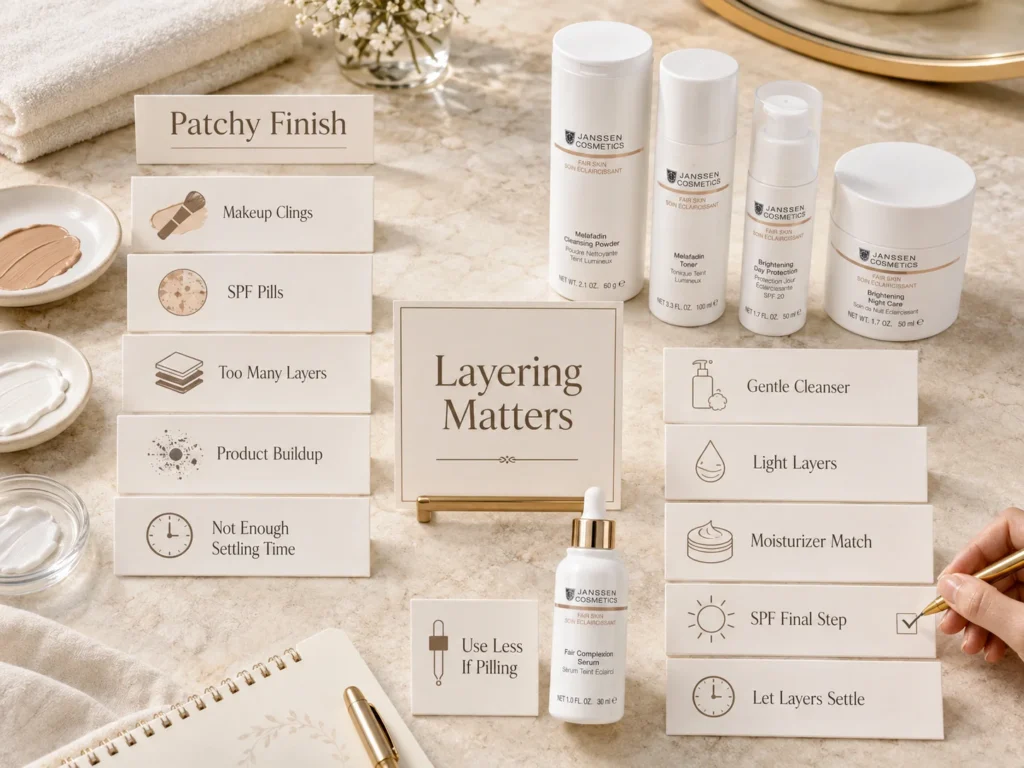
SPF pilling can make skin look patchy and uneven.
Pilling may happen when:
If SPF pills, simplify the morning routine.
Do not skip SPF as the first solution.
Oily skin can look patchy too.
The skin may be oily in some areas and dry or dehydrated in others.
Oily patchiness may look like:
Oily skin still needs moisturizer, but it needs the right texture.
It also needs SPF and gentle cleansing.
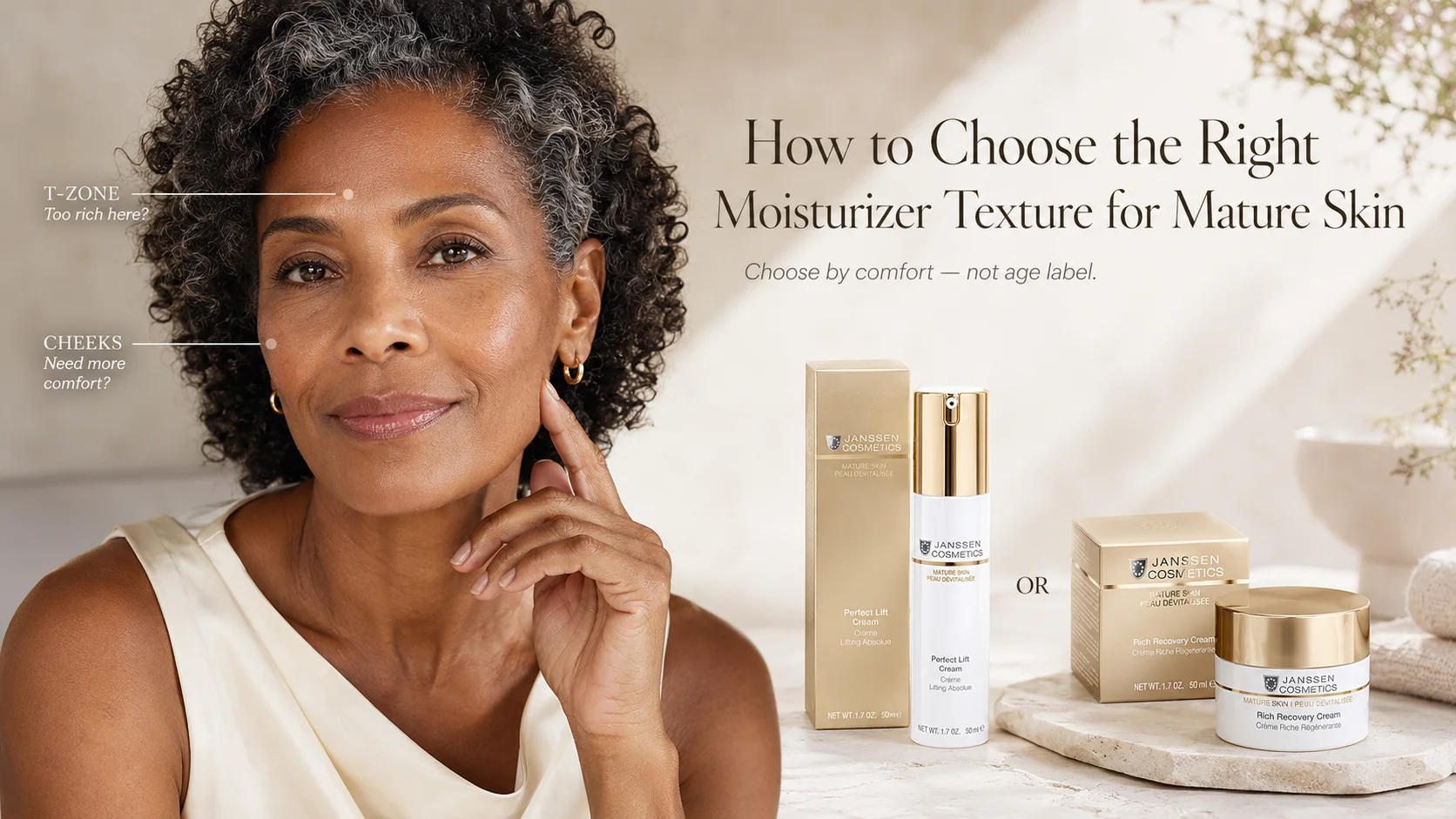
Combination skin can look patchy because different zones have different needs.
The T-zone may need lightweight balance.
The cheeks may need more comfort.
The mouth area may be dry.
The forehead may have buildup.
The chin may show post-blemish marks.
One moisturizer texture may not feel perfect everywhere.
Combination skin often needs zone awareness.
Sensitive skin can look patchy when it is reacting.
Patchiness may come from:
Sensitive patchy skin may need a simpler routine before brightening-support products are considered.
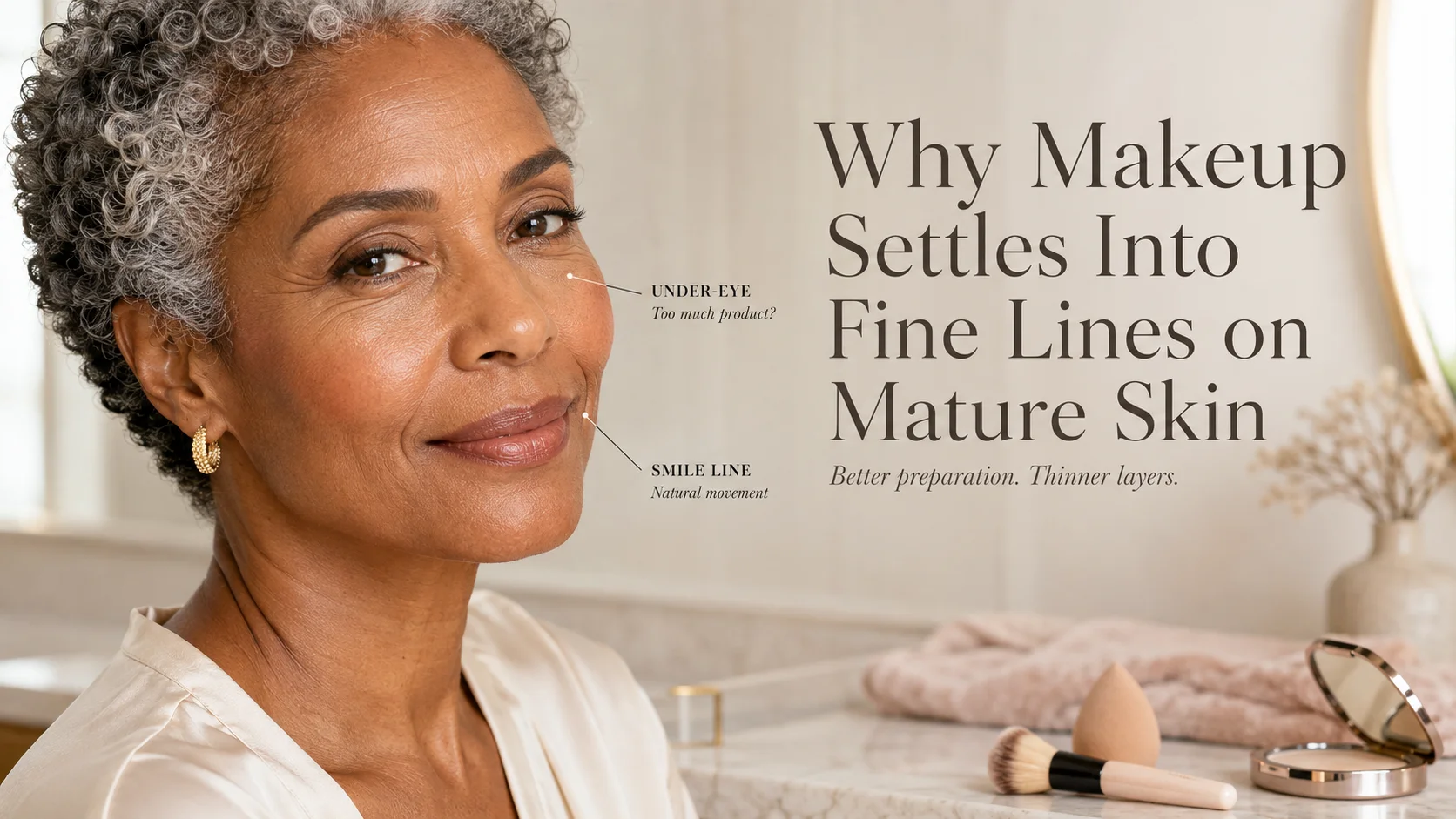
Mature skin may look patchy because of dryness, dehydration, texture, makeup settling, sun-related unevenness appearance, and dark spot appearance.
Moisturizer helps, but mature skin may also need:
Mature skin often needs comfort and consistency.
Patchiness around the mouth may happen even when you moisturize.
Possible causes include:
The around-mouth area can be sensitive.
Avoid harsh scrubbing and strong active products if the area feels irritated.
Forehead patchiness may happen from:
Moisturizer may help, but the forehead may also need better cleansing, SPF placement, and hairline routine awareness.
Cheek patchiness often comes from dryness, dehydration, sensitivity, sun exposure, or makeup clinging.
Cheeks may look:
Cheeks often need comfort and hydration before active products.
Do not treat dry cheeks like an oily T-zone.
The neck and décolleté can look patchy even when the face is moisturized.
These areas may be affected by:
If the face is protected but the neck is not, tone differences may become more noticeable.
Bring skincare and SPF down when appropriate.
Patchiness may be dryness if the skin feels:
Dry patchiness needs gentle cleansing, moisturizer, and SPF.
If the skin is deeply cracked, bleeding, painful, or rash-like, seek medical guidance.
Patchiness may be dehydration if the skin feels:
Dehydrated skin may need a hydrating step before moisturizer.
Patchiness may be buildup if the skin feels:
Buildup may need better evening cleansing and fewer layers.
Not heavier moisturizer.
Patchiness may be uneven-looking tone if you see:
Uneven tone needs SPF, patience, and low irritation.
Patchiness may be irritation if the skin feels:
Irritated skin should not be pushed with more actives.
Simplify and seek guidance if symptoms persist or worsen.
If your skin looks patchy even when you moisturize, do not immediately add a stronger product.
Start by asking:
The answer will guide the next step.
A simple routine may include:
Morning:
Gentle cleanser → hydration support if needed → moisturizer → SPF
Evening:
Gentle cleanser → moisturizer
If the skin is stable and uneven tone is present:
Brightening-support products may be reviewed carefully.
If rough surface buildup is present:
Gentle exfoliation may be reviewed carefully.
If the skin is irritated:
Pause active products first.
Morning:
Gentle cleanser → hydrating serum if needed → moisturizer → SPF
Evening:
Gentle cleanser → hydrating serum or moisturizer → cream if needed
Avoid:
Dry patchy skin needs comfort first.
Morning:
Gentle cleanser → hydrating serum → moisturizer → SPF
Evening:
Gentle cleanser → hydrating serum → moisturizer
Avoid:
Dehydrated skin often needs water support before active support.
Morning:
Gentle cleanser → lightweight hydration if needed → lightweight moisturizer → SPF
Evening:
Gentle cleanser → lightweight moisturizer
Optional:
BHA only when clogged-looking pores, blackheads, whiteheads, or T-zone buildup are present and skin is stable
Avoid:
Oily patchy skin needs balance.
Morning:
Gentle cleanser → lightweight hydration → moisturizer by zone → SPF
Evening:
Gentle cleanser → moisturizer by zone
For combination skin:
Patchiness often improves when zones are respected.
Morning:
Mild cleanser → moisturizer → SPF
Evening:
Mild cleanser → moisturizer
Optional later:
Gentle hydration or calming support if tolerated
Avoid:
Sensitive patchy skin needs calm before tone support.
Morning:
Gentle cleanser → hydrating or radiance support if tolerated → moisturizer → SPF
Evening:
Gentle cleanser → serum or moisturizer → cream if needed
Do not forget:
Avoid:
Mature patchiness often needs comfort, hydration, and protection.
Morning:
Gentle cleanser → hydration if needed → moisturizer → SPF → makeup
Tips:
Patchy makeup often needs better skin prep, not more coverage.
If SPF looks patchy, try simplifying.
Morning:
Gentle cleanser → moisturizer → SPF
If skin feels dehydrated:
Gentle cleanser → lightweight hydrating serum → moisturizer → SPF
Avoid:
SPF should be supported, not removed.
Brightening-support products may be considered when:
Introduce one product at a time.
Do not layer too many active products.
Exfoliation may be considered when:
Exfoliation should be gentle and limited.
It should not be used to attack dark spots.
Pause active products if patchiness comes with:
Active products include vitamin C, AHA, BHA, retinol-style products, exfoliating toners, scrubs, peeling products, and strong brightening-support serums.
Professional guidance may help if:
A consultation can help identify what step is missing.
A dermatologist should evaluate patchy-looking skin if there are warning signs such as:
Cosmetic skincare can support appearance, but changing, painful, sudden, or medically concerning patches should be evaluated.
After consultation, our licensed esthetician may consider Janssen Cosmetics options depending on whether patchiness is connected to dryness, dehydration, uneven-looking tone, sensitivity, oiliness, product buildup, SPF habits, or post-blemish mark appearance.

For dry or dehydrated patchy-looking skin, possible options may include:
For uneven-looking tone and radiance support, possible options may include:
For sensitive patchy-looking skin, comfort-focused options may come first, such as:
For oily patchy-looking skin or clogged-looking areas, possible options may include:
For morning routines, Face Guard Advanced SPF 30 may be considered as the final daytime protection step when appropriate.
These are not automatic recommendations. The correct routine depends on whether patchiness is caused by dryness, dehydration, SPF issues, makeup texture, irritation, product buildup, uneven-looking tone, post-blemish marks, or a concern that needs dermatologist evaluation.
Do not assume moisturizer alone can fix every type of patchiness.
Do not keep adding heavier cream if the issue is buildup.
Do not exfoliate patchy skin if it feels irritated.
Do not use brightening-support products without SPF.
Do not scrub dark spot appearance.
Do not pick post-blemish marks.
Do not apply strong active products to broken, crusted, bleeding, or painful skin.
Do not skip moisturizer because the skin is oily.
Do not skip SPF because it pills.
Do not ignore changing, bleeding, crusting, painful, sudden, or unusual patches.
Your skin may look patchy because of dehydration, dryness, harsh cleanser, product buildup, SPF pilling, uneven SPF application, makeup texture, over-exfoliation, irritation, dark spot appearance, or post-blemish marks.
Moisturizer can support comfort and smoothness, but uneven-looking tone often also needs SPF, low irritation, patience, and brightening-support products when appropriate.
Makeup may look patchy if the skin is dehydrated, dry, over-exfoliated, coated with product buildup, or if SPF and moisturizer are not layering well.
Yes. Dehydrated skin can look tight, flat, dull, creased, and patchy even if moisturizer is used.
Yes. Oily skin can look patchy when it is dehydrated, over-cleansed, marked from blemishes, or mixed with dry areas.
Only if the skin is stable and patchiness is from rough surface buildup. Do not exfoliate skin that is burning, stinging, rash-like, broken, crusted, bleeding, or irritated.
SPF may look patchy if the skin is dry, dehydrated, over-layered, pilling, or if the SPF texture does not match the routine.
You may need a serum if the skin needs hydration or brightening support, but it depends on the cause of patchiness. A serum should not replace moisturizer or SPF.
Yes. Sensitive skin can look patchy when it is irritated, over-exfoliated, reacting to products, or not properly supported with gentle care.
See a dermatologist if patchiness comes with changing spots, bleeding, crusting, pain, severe itching, sudden appearance, irregular-looking borders, swelling, rash-like irritation, infection-looking areas, blistering, or worsening symptoms.
If your skin still looks patchy even though you moisturize, the answer may not be a heavier cream.
Your skin may need hydration, better cleansing, SPF support, routine simplification, less exfoliation, or a different approach to uneven-looking tone.
At Zendevie, a free virtual consultation helps us review your skin type, cleanser, moisturizer, SPF habits, hydration level, makeup wear, sensitivity, exfoliation, dark spot appearance, and post-blemish marks before recommending anything.
The goal is to understand why the skin looks patchy.
Then support it with care.

Zendevie is guided by Haby Diallo, a licensed esthetician with more than 20 years of professional skincare experience. Her approach is rooted in education, professional judgment, and personal care.
years of experience