
Mature skin and dry skin are often connected, but they are not the same thing.
Dry skin is about moisture and oil balance. Mature skin is about the changes the skin experiences over time. A person can have mature skin that is dry, oily, combination, or sensitive. But because mature skin often feels drier than before, many people confuse the two.
At Zendevie, this difference matters because your routine should match what your skin actually needs. If the skin is dry, it needs hydration and comfort. If the skin is mature, it may also need support for visible lines, texture, firmness appearance, radiance, eye area, and SPF protection.
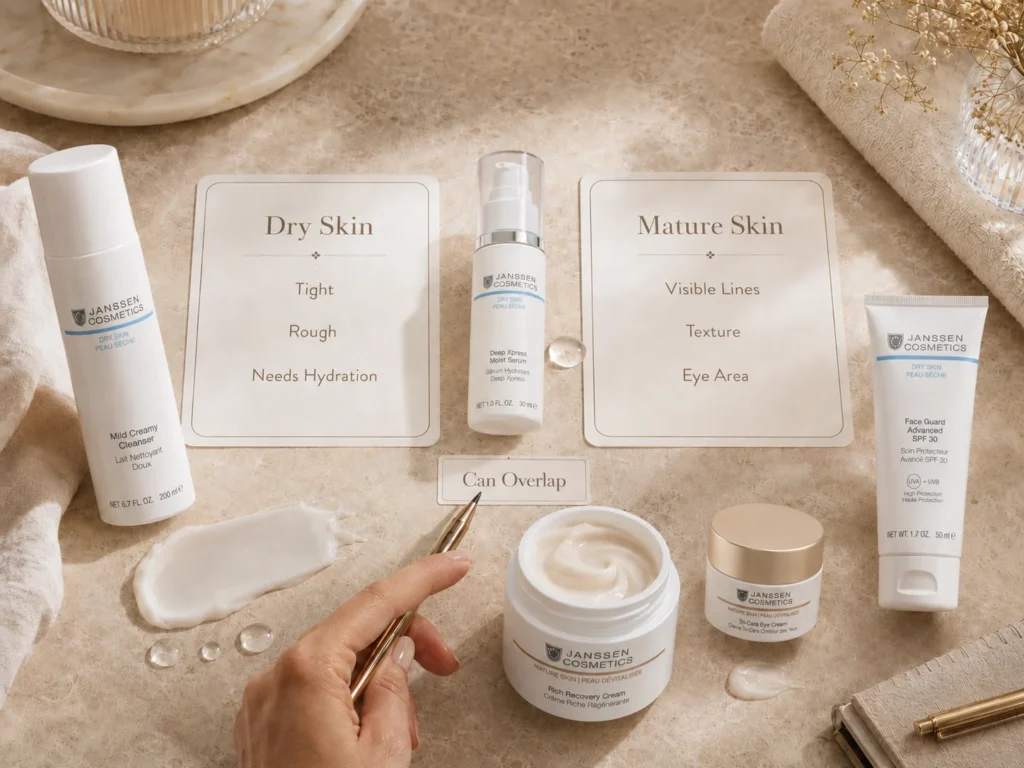
Dry skin usually means the skin lacks oil, moisture, or comfort and may feel tight, rough, flaky, or dry.
Mature skin means the skin has changed over time and may show dryness, visible lines, dullness, texture changes, and loss of firmness appearance.
They can overlap. Many mature skin types are also dry, but not all dry skin is mature skin.
For the full overview, start with what is considered mature skin before deciding whether dryness is the main concern.
Dry skin is usually focused on how the skin feels and behaves.
Dry skin may feel:
Dry skin needs hydration, gentle cleansing, moisturizer, and barrier comfort.
A person can have dry skin at any age.
For a deeper dry-skin explanation, read why your skin feels dry even when you moisturize.
Mature skin is skin that has changed over time.
Mature skin may show:
To understand the full pattern, compare these changes with the signs of mature skin before choosing a routine.
Mature skin is not just about dryness. It is about the full pattern of age-related skin changes.
Mature skin often becomes drier because the skin may need more moisture and lipid comfort over time.
That is why many mature skin routines include:
But mature skin may also need ingredients that support smoother-looking texture, radiance, and firmness appearance.
For ingredient choices, review the best ingredients for mature skin so hydration, comfort, radiance, and firming-support steps are chosen carefully.
Dry skin asks:
“How can I feel more hydrated and comfortable?”
Mature skin asks:
“How can I support hydration, comfort, texture, visible lines, radiance, and firmness appearance?”
Dry skin is a skin type or condition.
Mature skin is a stage of skin that may include multiple concerns.
Yes. A younger person can have dry skin without having mature skin.
Their routine may focus mostly on hydration, moisturizer, and gentle care.
They may not need firming-support products, richer anti-aging textures, or advanced renewal support.
Yes. Mature skin can still be oily or combination.
This is why age alone should not decide the routine. A mature skin consultation should look at oiliness, dryness, sensitivity, tone, texture, and product tolerance.
A person with oily mature skin may need lightweight support, not a very rich cream all over.
A dry skin routine may look like:
Cleanser → Tonic → Hydrating Serum → Moisturizer → SPF
At night:
Cleanser → Tonic → Serum → Cream → Optional Hydrating Mask
This routine focuses mainly on moisture and comfort.
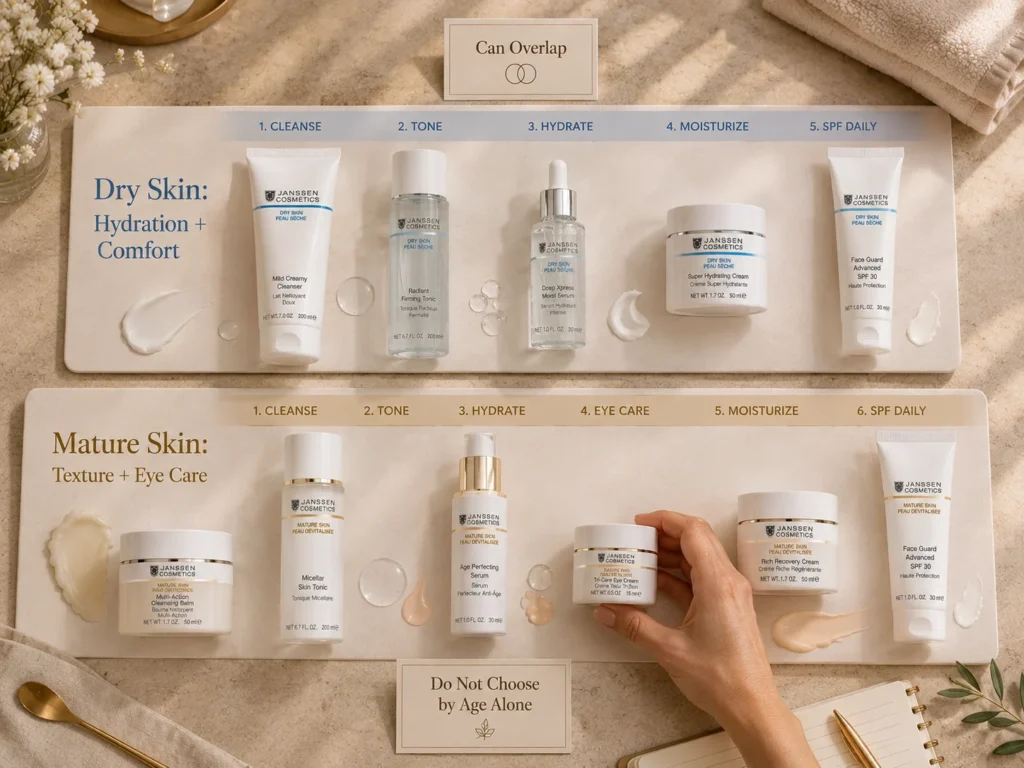
A mature skin routine may look like:
Cleanser → Tonic → Serum → Eye Care → Cream → SPF
At night:
Cleanser → Tonic → Night Serum → Eye Care → Rich Cream
This routine supports hydration, comfort, eye area, visible lines, texture, and firmness appearance.
If both dryness and mature-skin changes are present, a simple mature skin routine can help organize serum, eye care, cream, and SPF without overwhelming the skin.
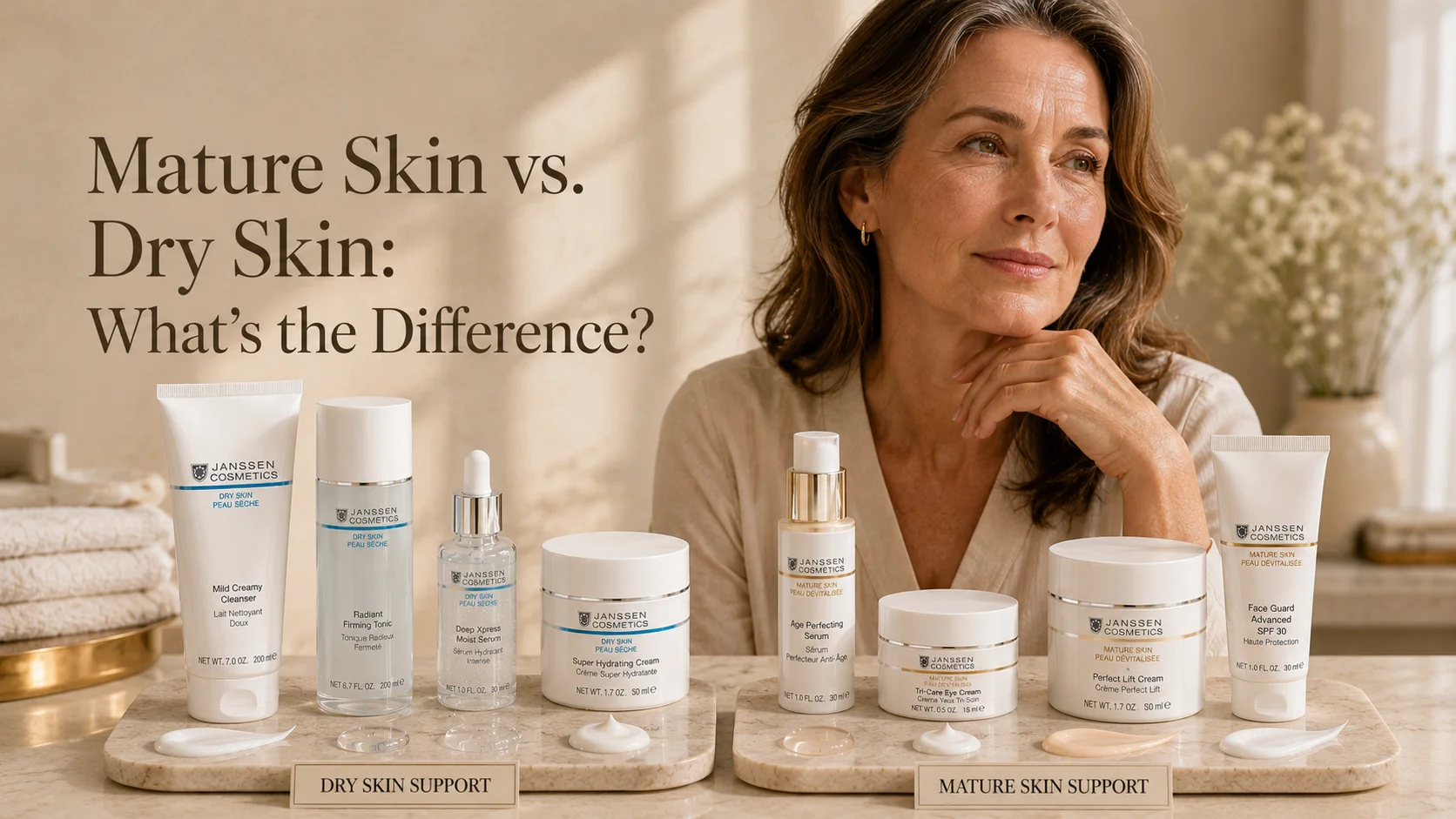
For dry skin, products that may be discussed include:

For mature skin, products that may be discussed include:
These are examples only. A consultation helps decide whether the skin should be treated more like dry skin, mature skin, sensitive skin, or a combination of concerns.
Do not assume every mature skin needs the richest cream.
Do not assume every dry skin needs anti-aging products.
Do not skip SPF.
Do not over-exfoliate dry mature skin.
Do not use retinol without considering dryness or sensitivity.
Do not expect skincare to reverse aging.
Do not choose products based only on age.
No. Mature skin and dry skin are different, but they can overlap.
Yes. Many mature skin types feel dry or need more comfort support.
Yes. Dry skin can happen at any age.
Yes. Mature skin can be oily, combination, dry, or sensitive.
Sometimes, but not always. It depends on whether dryness is the main concern.
Dry mature skin often benefits from gentle cleansing, hydrating serum, eye care, nourishing cream, and SPF

Zendevie is guided by Haby Diallo, a licensed esthetician with more than 20 years of professional skincare experience. Her approach is rooted in education, professional judgment, and personal care.
years of experience