

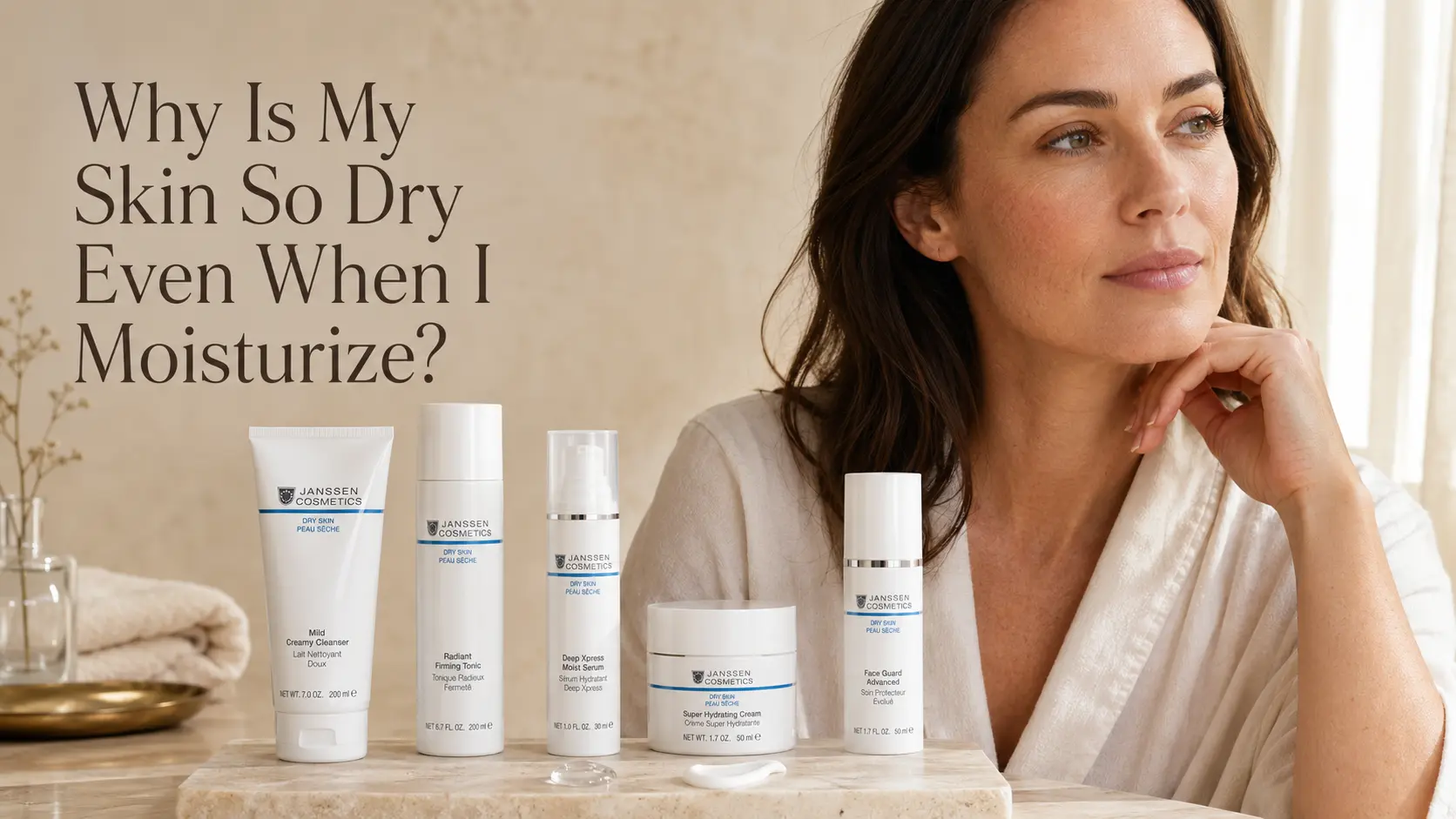
You apply moisturizer, and for a short time your skin feels better. Then the tightness comes back. Your cheeks feel rough again. Makeup clings to dry patches. Your skin may look dull, flaky, or less smooth than usual.
If this keeps happening, the problem may not be that you need to keep adding more cream. Your skin may need a better routine structure.
Dry skin can happen when the skin is missing water, oil, or barrier support. Sometimes the skin needs more hydration. Sometimes it needs richer comfort. Sometimes the cleanser is too strong. Sometimes the moisturizer is not the right texture for the season, the skin condition, or the person using it.
At Zendevie, dry skin care begins with understanding. The goal is not to push the richest cream or the most expensive product. The goal is to understand what your skin is asking for and build a routine that feels comfortable, gentle, and realistic.
Your skin may still feel dry after moisturizing because it may not be holding moisture well, may be lacking lipids, or may have a stressed skin barrier. A moisturizer can help, but it cannot always solve dry skin by itself.
A dry skin routine usually works best when it includes a gentle cleanser, an alcohol-free tonic, a hydrating serum, the right moisturizer texture, and SPF during the day.
If the skin feels tight, flaky, rough, dull, or uncomfortable even after moisturizer, it may need both water-based hydration and comforting moisture support.
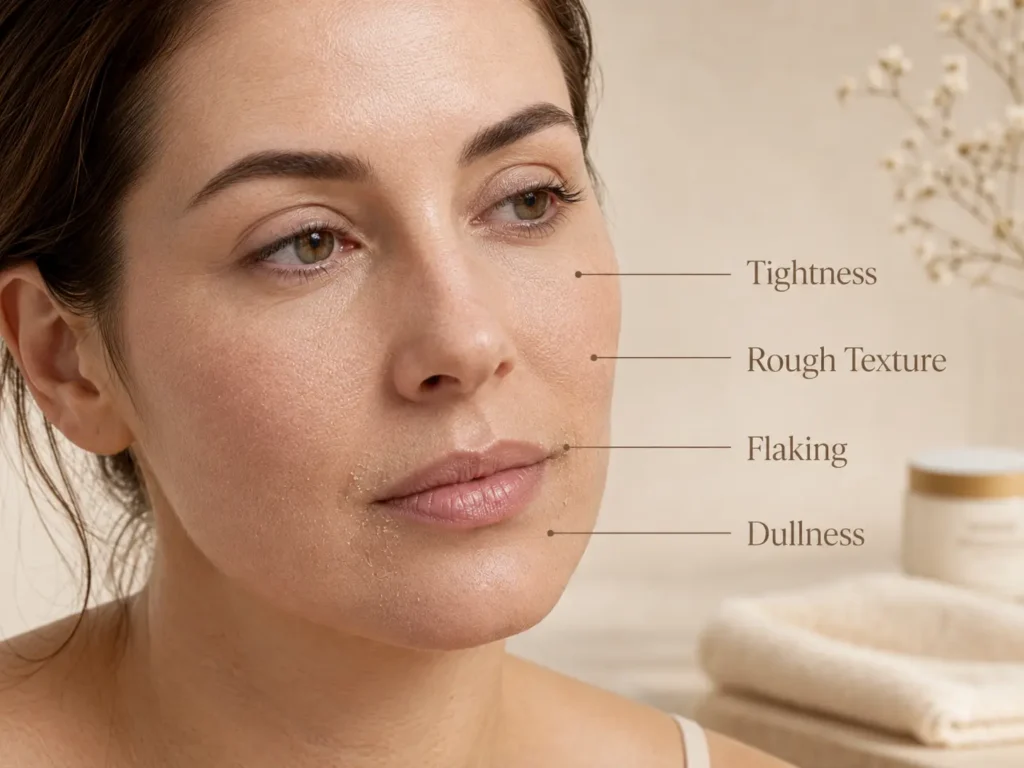
Dry skin does not look the same on everyone. Some people feel tightness right after washing. Others notice flakes around the nose, cheeks, mouth, or forehead. Some people feel dryness only in winter, while others struggle with it all year.
Common signs of dry skin include:
Dry skin can be mild, seasonal, or more persistent. It can also overlap with sensitivity, mature skin, or dehydration.
If you are unsure whether your skin is truly dry, these common signs of dry skin can help you understand what your skin may be showing.
This is one of the most important things to understand.
Dry skin and dehydrated skin are often used as if they mean the same thing, but they are different.
Dry skin usually means the skin is lacking oil or lipid comfort. Dehydrated skin means the skin is lacking water. You can have dry skin, dehydrated skin, or both at the same time.
Dry skin often feels rough, tight, flaky, or undernourished. Dehydrated skin can look dull, tired, or less plump. It may also show fine-looking lines more easily, especially around the eyes, mouth, and cheeks.
This is why moisturizer alone may not be enough. If the skin is thirsty underneath, a cream may sit on top without making the skin feel truly comfortable. A hydrating serum underneath the moisturizer can help the routine feel more complete.
To understand why your skin may feel tight even when it does not look flaky, it helps to learn the difference between dry skin and dehydrated skin.
Moisturizer is important, but it is only one part of a dry skin routine.
If your skin feels squeaky clean, shiny, tight, or uncomfortable after washing, your cleanser may be too strong. Dry skin needs cleansing that removes dirt, makeup, sunscreen, and excess oil without stripping the skin’s comfort layer.
A gentle creamy cleanser or cleansing milk is often a better choice for dry or tight-feeling skin than a harsh cleanser that leaves the face feeling pulled.
Many people cleanse and go straight to moisturizer. That may work for some skin types, but dry or dehydrated skin often needs a water-support step first.
This is where a hydrating serum can help. Ingredients like hyaluronic acid and other humectants help support water in the outer layers of the skin. Then moisturizer helps comfort and seal the routine.
If your moisturizer feels good for a little while but your skin feels dry again by lunchtime, the texture may be too light for your skin’s needs.
This is common in winter, during travel, in dry indoor air, or when the skin is more mature or lipid-deficient. In these cases, a richer cream may be helpful, especially at night.
A heavier cream is not always the answer. Sometimes a rich cream sits on top of the skin, but the skin still feels thirsty underneath.
That usually means the routine needs hydration before comfort. The order matters: hydrate first, then seal with the right cream.
When the skin barrier feels stressed, the skin may lose moisture more easily. Products may sting. The skin may feel tight, rough, or easily irritated.
Dry skin routines should support the barrier gently. That means avoiding harsh scrubs, over-cleansing, too many acids, and frequent product switching.
Once you understand what your skin is missing, choosing the best ingredients for dry skin becomes much easier.
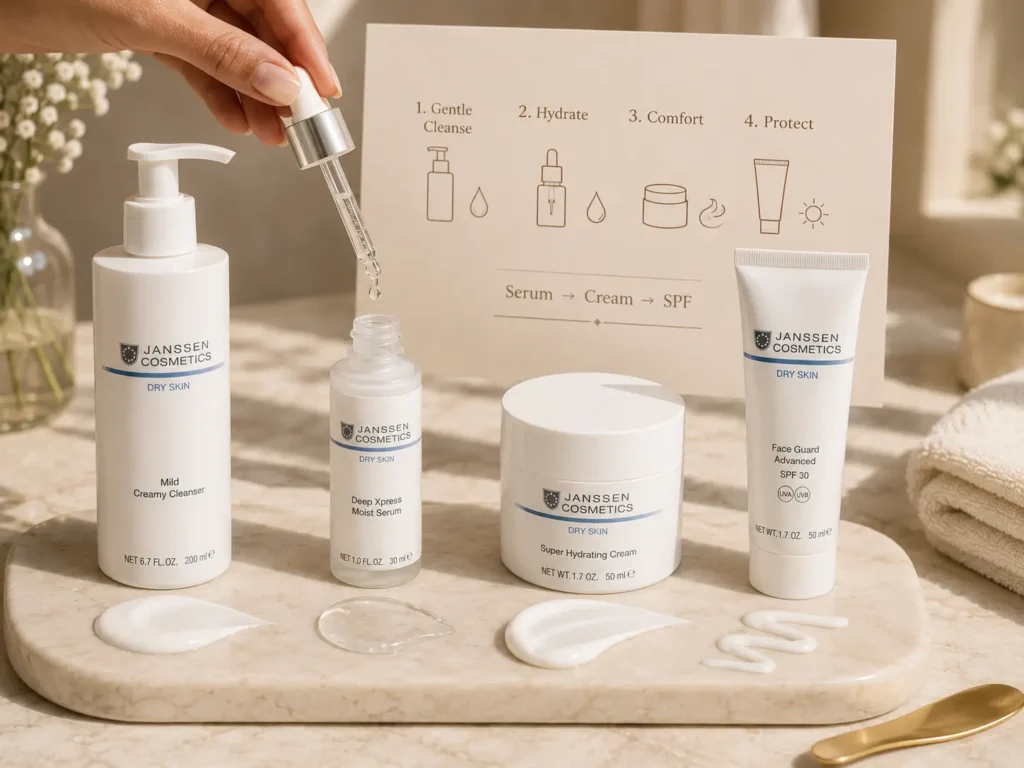
Dry skin usually responds best when the routine includes both hydration and comfort.
Hyaluronic acid is commonly used in skincare because it helps support the appearance of hydrated, plumper-looking skin. It is especially helpful when the skin looks creased from dehydration or feels thirsty underneath moisturizer.
For dry skin, hyaluronic acid usually works best when followed by a moisturizer.
Humectants help attract and hold water in the outer layers of the skin. These ingredients are helpful when the skin feels tight, dull, or dehydrated.
A humectant-based serum or mask can help dry skin feel more comfortable when paired with the right cream.
Dry skin often needs lipids, not just hydration. Shea butter, avocado oil, and macadamia oil are examples of nourishing ingredients used in formulas for dry or lipid-deficient skin.
These ingredients help the skin feel softer, smoother, and more comfortable. They are especially helpful when the skin feels rough or tight even after a lighter moisturizer.
Panthenol and allantoin are often used in skincare for comfort support. They can help the skin feel calmer and more comfortable, especially when dryness makes the skin feel tight or stressed.
Dry skin can look dull when dead surface cells build up. Gentle exfoliation can help smooth the look of roughness, but it should not be aggressive.
If the skin feels irritated, cracked, burning, or very sensitive, exfoliation should wait. Comfort comes first.
For daily care, a simple dry skin routine can help you cleanse, hydrate, moisturize, and protect without overwhelming the skin.
A dry skin morning routine should help the skin feel clean, hydrated, comfortable, and protected.
Start with a gentle cleanser that does not leave the skin tight. The skin should feel clean, not stripped.
A tonic can help complete the cleansing step and prepare the skin for serum and cream. For dry skin, the tonic should feel refreshing and comfortable, not drying.
A hydrating serum can support water content before cream. This step is especially helpful when the skin feels dehydrated, dull, or tight.
Choose a moisturizer based on your skin’s dryness level. Some dry skin needs a lighter cream during the day. Very dry or winter-dry skin may need richer comfort.
SPF matters during the day. It helps protect the skin from UV exposure that can contribute to dryness, uneven tone, and visible aging signs over time.
A simple morning structure:
Cleanser → Tonic → Hydrating Serum → Moisturizer → SPF
At night, the routine should focus on comfort and moisture support.
Remove makeup, sunscreen, oil, and daily buildup without scrubbing harshly.
A gentle tonic helps complete cleansing and prepare the skin for the next steps.
A hydrating serum can help the skin feel more comfortable before cream.
At night, many dry skin routines benefit from a richer cream, especially when the skin feels tight or winter-dry.
A hydrating mask can be used as an occasional add-on when the skin feels especially tight, thirsty, or dull.
A simple evening structure:
Cleanser → Tonic → Serum → Cream → Optional Hydrating Mask
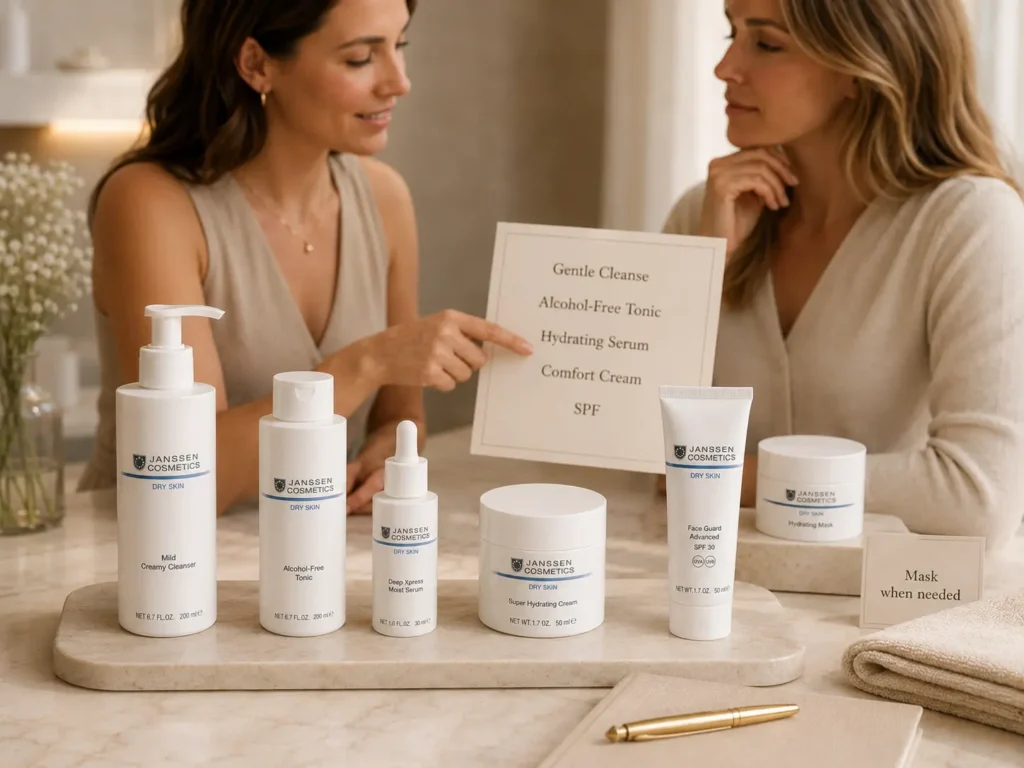
Zendevie carries Janssen Cosmetics through a consultation-first model. That means products are not recommended blindly. Dry skin can be moisture-deficient, lipid-deficient, dehydrated, sensitive, mature, seasonal, or a mix of several concerns.
Janssen Cosmetics has a dedicated Dry Skin family designed around gentle cleansing, hydration, moisture comfort, and barrier support.
Products that may be discussed during a dry skin consultation include:
These are examples, not automatic recommendations. A consultation helps decide what belongs in the routine, what texture is best, and how to layer products without overwhelming the skin.
Do not use a harsh cleanser that leaves your skin tight.
Do not scrub flakes aggressively. Flaking can be a sign that the skin needs comfort first.
Do not keep switching products every few days. Dry skin needs consistency.
Do not skip serum if your skin feels dehydrated underneath moisturizer.
Do not assume the richest cream is always the right answer. Some dry skin needs hydration first.
Do not combine strong acids, retinol, and exfoliating products without guidance.
Do not skip SPF during the day.
Most everyday dryness can be supported with better skincare habits and the right routine. But some symptoms should not be ignored.
Consider speaking with a dermatologist or healthcare professional if your skin is cracked, bleeding, painful, severely itchy, inflamed, infected-looking, rash-like, or not improving with gentle care.
Skincare can support how the skin looks and feels, but it does not replace medical diagnosis or treatment.
Your skin may need more than cream. It may need a gentler cleanser, hydration before moisturizer, a richer cream at night, barrier support, or a routine that is better matched to your skin.
Yes. Dry skin can lack oil, while dehydrated skin lacks water. Many people experience both at the same time.
Tightness after washing can be a sign that your cleanser is too strong or that your skin barrier feels stressed. Dry skin usually needs gentle cleansing.
Hyaluronic acid can be helpful for dry or dehydrated-looking skin because it supports a more hydrated appearance. It usually works best when followed by moisturizer.
Dry skin may benefit from gentle exfoliation when it looks dull or flaky, but over-exfoliation can make dryness worse. If the skin feels irritated, focus on comfort first.
The best moisturizer depends on what your skin is missing. If the skin is dehydrated, it may need serum before cream. If the skin is lipid-deficient, it may need a richer moisturizer.
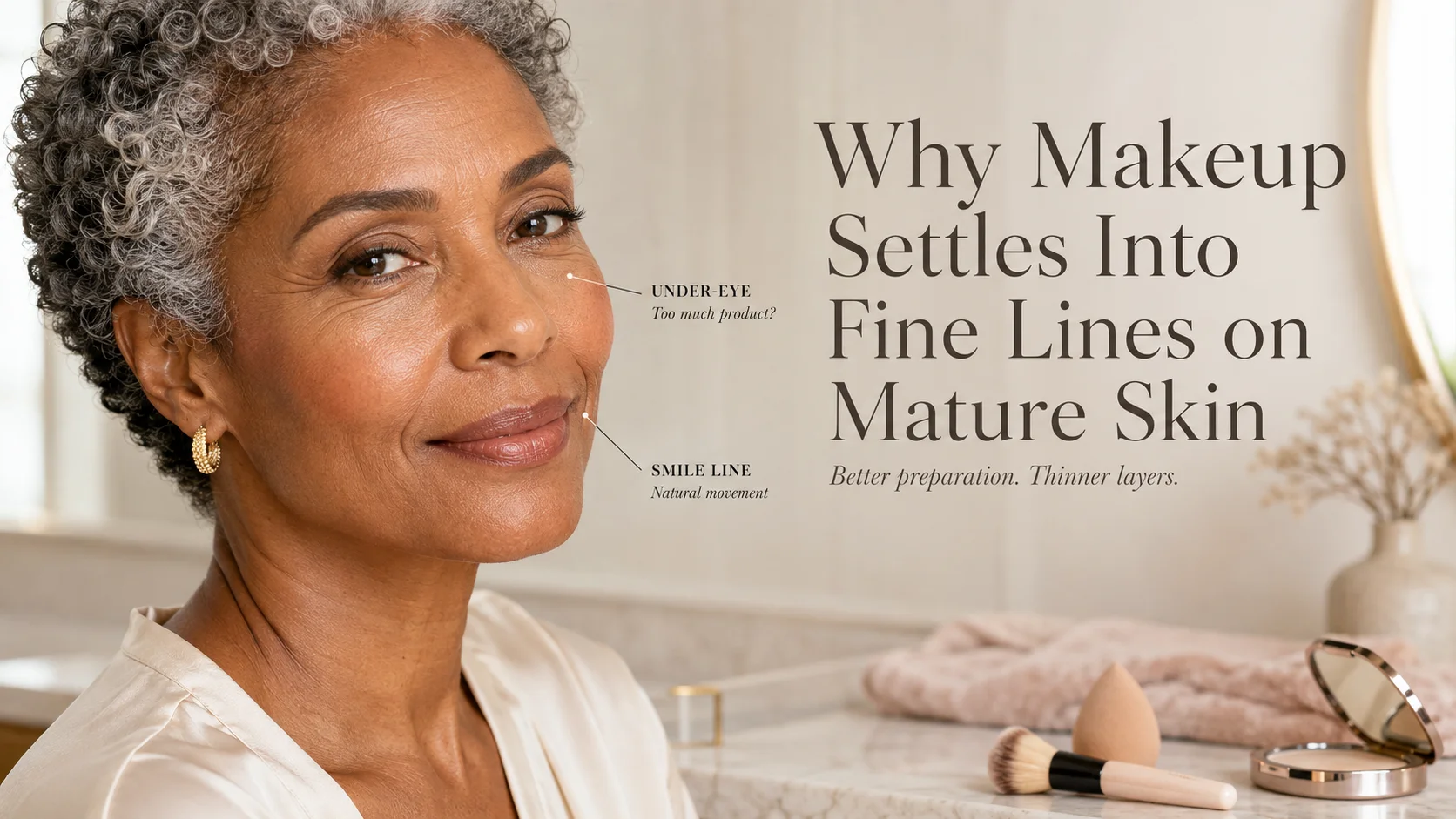
Makeup can cling to dry patches when the skin surface is rough, dehydrated, or not properly prepped. A gentle routine with hydration and the right moisturizer can help create a smoother-looking base.
Yes. Dry skin can feel sensitive when the barrier is stressed. If your skin stings, burns, or feels reactive, simplify your routine and avoid strong active products.

Zendevie is guided by Haby Diallo, a licensed esthetician with more than 20 years of professional skincare experience. Her approach is rooted in education, professional judgment, and personal care.
years of experience