


What Are the Signs of Dry Skin? How to Know If Your Skin Needs More Support
Dry skin is not always obvious at first. Sometimes it starts with a little tightness after washing. Then makeup begins to cling to certain areas. A few dry patches appear around the nose or cheeks. Your skin may look dull, even when you are using moisturizer.
Many people wait until the skin is very flaky or uncomfortable before they call it dry. But dry skin often gives small signs before it becomes more noticeable.
At Zendevie, we believe the earlier you understand what your skin is showing, the easier it is to build a routine that supports comfort, hydration, and a smoother-looking complexion.
Quick Answer
Common signs of dry skin include tightness, flaking, rough texture, dullness, dry patches, itching, makeup clinging to the skin, and moisturizer not feeling like enough.
Dry skin may need gentle cleansing, hydrating serum, moisture support, barrier comfort, and SPF during the day.
If dryness becomes cracked, bleeding, painful, severely itchy, or does not improve with gentle care, it is best to speak with a dermatologist or healthcare professional.
Sign 1: Your Skin Feels Tight After Cleansing
One of the most common signs of dry skin is tightness after washing your face.
Your skin may feel pulled, stretched, or uncomfortable. Some people describe it as a “squeaky clean” feeling. While that may seem like the skin is clean, it can also be a sign that the cleanser is too strong.
Dry skin needs cleansing that removes buildup without stripping comfort.
If your face feels tight every time you wash it, your cleanser may not be the right fit.
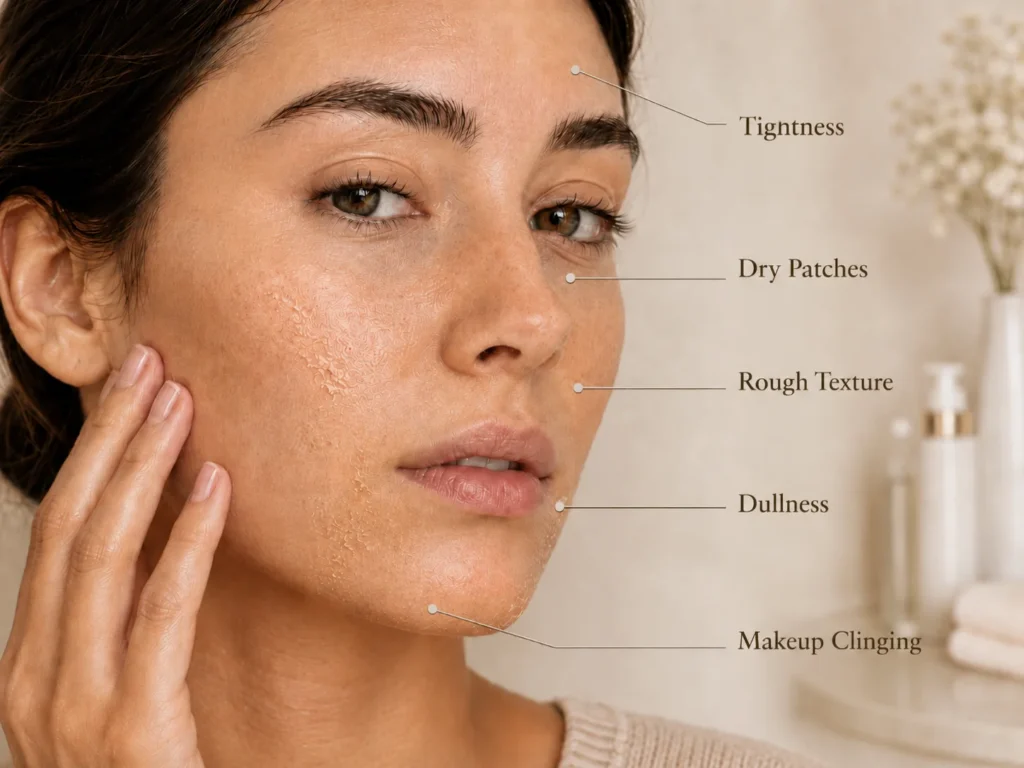
Sign 2: Your Skin Looks Flaky or Patchy
Flaking is a clear sign that the skin needs more support. You may notice small flakes around the nose, eyebrows, cheeks, mouth, or forehead.
Sometimes the skin looks patchy even after moisturizer. This can happen when the skin surface is rough or when the moisturizer is not giving enough comfort.
Flaky skin should be handled gently. Scrubbing flakes away can make the skin feel worse.
Sign 3: Your Skin Feels Rough
Dry skin often feels rough when you touch it. It may not feel smooth or soft, even after skincare.
Rough texture can happen when the skin lacks moisture or when dry surface cells build up. Gentle exfoliation may help in some cases, but not when the skin feels irritated, cracked, or sensitive.
If roughness comes with tightness or stinging, focus on comfort first.
Sign 4: Your Skin Looks Dull
Dry skin can look dull because the surface is not smooth enough to reflect light evenly. The skin may look tired, flat, or less radiant.
This does not always mean you need stronger brightening products. Sometimes the skin simply needs hydration and moisture support.
A dull complexion can improve in appearance when the skin feels more hydrated, comfortable, and cared for.
Sign 5: Makeup Does Not Sit Smoothly
Dry skin can make makeup more difficult. Foundation may cling to patches, settle into fine-looking lines, or look uneven by midday.
This usually means the skin surface needs better preparation. A gentle routine with serum and moisturizer can help create a smoother-looking base before makeup.
For dry skin, skincare under makeup matters just as much as the makeup itself.
Sign 6: Your Skin Feels Itchy or Uncomfortable
Dryness can sometimes make the skin feel itchy or uncomfortable. Mild itching can happen when the skin is lacking moisture, but severe itching should not be ignored.
If the skin is very itchy, cracked, bleeding, rash-like, or painful, professional medical guidance is important.
Skincare can support everyday dryness, but it should not be used to diagnose or treat skin disease.
Sign 7: Your Moisturizer Does Not Last
If your skin feels good right after moisturizer but feels dry again within a few hours, your routine may not be complete.

This can happen when:
- The moisturizer is too light
- The cleanser is too drying
- The skin needs a hydrating serum first
- The skin barrier feels stressed
- The weather or indoor air is drying the skin
- The routine does not match the season
Sometimes the answer is not more cream. Sometimes it is better layering.
If your skin feels dry again shortly after cream, it may help to understand the difference between dry skin and dehydrated skin before changing products.
Sign 8: Your Skin Feels Sensitive
Dry skin can become sensitive when it is uncomfortable. Products may sting. Toners may burn. Even moisturizer may feel irritating.
When this happens, it is usually best to simplify the routine. Avoid strong acids, retinol, fragrance-heavy products, and harsh scrubs until the skin feels more comfortable.
Sensitive-feeling dry skin needs patience.
What Causes These Dry Skin Signs?
Dry skin signs can appear because of several factors:
- Cold weather
- Indoor heating
- Hot showers
- Harsh cleansers
- Over-exfoliation
- Aging skin changes
- Low humidity
- Sun exposure
- Not using moisturizer consistently
- Using products that do not match your skin
The exact cause matters because the routine should respond to the skin’s real need.
Once you understand the signs, choosing the best ingredients for dry skin becomes easier because the routine can match what your skin is showing.
A Simple Routine When You Notice Dry Skin Signs
Morning
Cleanser: Choose gentle, non-stripping cleansing.
Tonic: Use an alcohol-free tonic that feels comfortable.
Serum: Add hydration support.
Cream: Choose a moisturizer that matches your dryness level.
SPF: Protect the skin during the day.
Evening
Cleanser: Remove makeup, sunscreen, and daily buildup gently.
Tonic: Prepare the skin for care.
Serum: Support hydration.
Cream: Use richer comfort if needed.
Mask: Add a hydrating mask when the skin feels especially tight or dull.
Where Janssen Cosmetics Fits

Products that may be discussed during a dry skin consultation include:
- Mild Creamy Cleanser
- Radiant Firming Tonic
- Deep Xpress Moist Serum
- Super Hydrating Cream
- Hyaluron3 Replenish Cream
- Deep Xpress Hydro Mask
- Aqualift Eye Gel
- Face Guard Advanced
These may support dry skin routines, but they should be matched carefully based on how the skin feels, what it shows, and whether sensitivity is also present.
A personalized skincare consultation helps decide which steps make sense for your skin before choosing products.
What Not to Do
Do not ignore tightness after cleansing.
Do not scrub flakes aggressively.
Do not use hot water to “soften” dry patches.
Do not jump into strong exfoliation when the skin feels uncomfortable.
Do not keep layering products that sting.
Do not skip SPF because your skin feels dry.
Frequently Asked Questions
How do I know if my skin is dry?
You may have dry skin if your skin feels tight, rough, flaky, dull, itchy, or uncomfortable, especially after cleansing.
Why does my skin feel tight after washing?
Your cleanser may be too harsh, or your skin barrier may feel stressed. Dry skin usually needs gentle cleansing.
Can dry skin look dull?
Yes. Dry skin can look dull because rough or flaky surface texture does not reflect light smoothly.
Should I exfoliate flaky dry skin?
Maybe, but gently and only when the skin is not irritated. If the skin feels sensitive or cracked, comfort comes first.
When should I see a dermatologist for dry skin?
If dryness is cracked, bleeding, painful, severely itchy, rash-like, infected-looking, or not improving with gentle care, speak with a dermatologist or healthcare professional.

About the Esthetician Behind Zendevie
Zendevie is guided by Haby Diallo, a licensed esthetician with more than 20 years of professional skincare experience. Her approach is rooted in education, professional judgment, and personal care.
20+
years of experience