
Mature skin is not something to fear. It is simply skin that has changed over time. The skin may feel drier than it used to. Makeup may settle differently. Fine lines may look more visible. The face may look less firm, less rested, or less radiant than before.
These changes are normal, but that does not mean your skin has to feel uncomfortable or uncared for.
At Zendevie, mature skin is approached with respect. The goal is not to erase age or promise unrealistic transformation. The goal is to support skin that feels hydrated, comfortable, smoother-looking, and cared for with professional guidance.
Common signs of mature skin include dryness, visible fine lines, deeper-looking expression lines, rough texture, dullness, thinner-looking skin, loss of firmness appearance, dehydration, and makeup settling into lines.
Mature skin often benefits from a routine that includes gentle cleansing, hydrating serum, nourishing cream, eye care, SPF, and careful renewal support when appropriate.
The best mature skin routine should feel supportive, not harsh.
If you want the broader explanation first, start with what is considered mature skin before choosing products or routine steps.
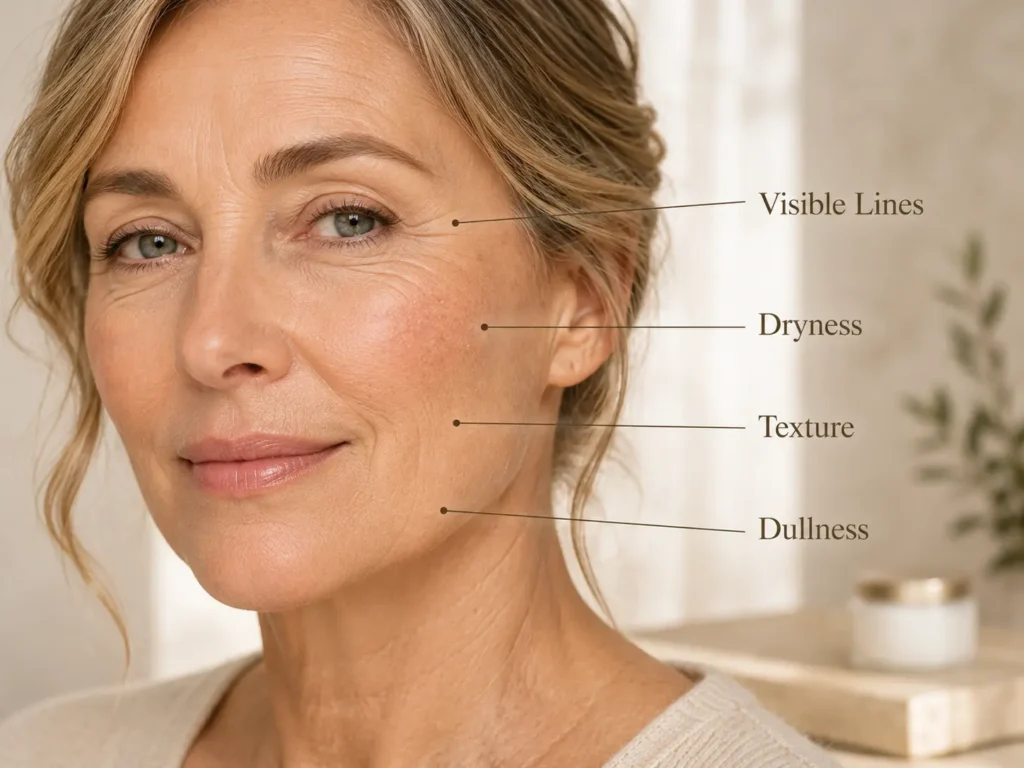
One of the most common signs of mature skin is dryness. Skin that once felt balanced may begin to feel tight, rough, or undernourished.
This can happen because mature skin often needs more hydration and comfort support than it did before.
You may notice:
Dry mature skin usually needs more than a light moisturizer. It may need serum, richer cream, and gentle cleansing.
If dryness is the first change you notice, comparing mature skin vs. dry skin can help you understand whether your skin needs only moisture support or broader mature-skin care.
Mature skin may show fine lines around the eyes, mouth, forehead, or cheeks. Expression lines may also look deeper over time.
Skincare cannot permanently remove wrinkles, but it can support the appearance of smoother, softer-looking skin.
Hydration is especially important because dehydrated skin can make lines look more noticeable.
Mature skin may feel less smooth than before. Texture can appear because of dryness, surface buildup, dehydration, or routine mismatch.
Gentle exfoliation may help some mature skin look fresher, but it must be used carefully.
If the skin feels dry, sensitive, or tight, comfort should come before exfoliation.
Mature skin can look dull when it lacks hydration, radiance support, or gentle renewal.
This does not mean the skin needs aggressive brightening or strong exfoliation. Sometimes the skin simply needs better moisture support, antioxidant care, and SPF.
A healthy-looking glow should feel comfortable, not irritated.
Over time, the skin may look less firm or less lifted in appearance. This can show around the jawline, cheeks, neck, or eye area.
Safe skincare language matters here.
Use:
Avoid:
The eye area is delicate and often shows dryness, fine-looking lines, puffiness, or tiredness earlier than other areas.
Mature skin may benefit from eye care that supports hydration, comfort, and a smoother-looking eye area.
Eye care should be gentle. The skin around the eyes should not sting or feel irritated.
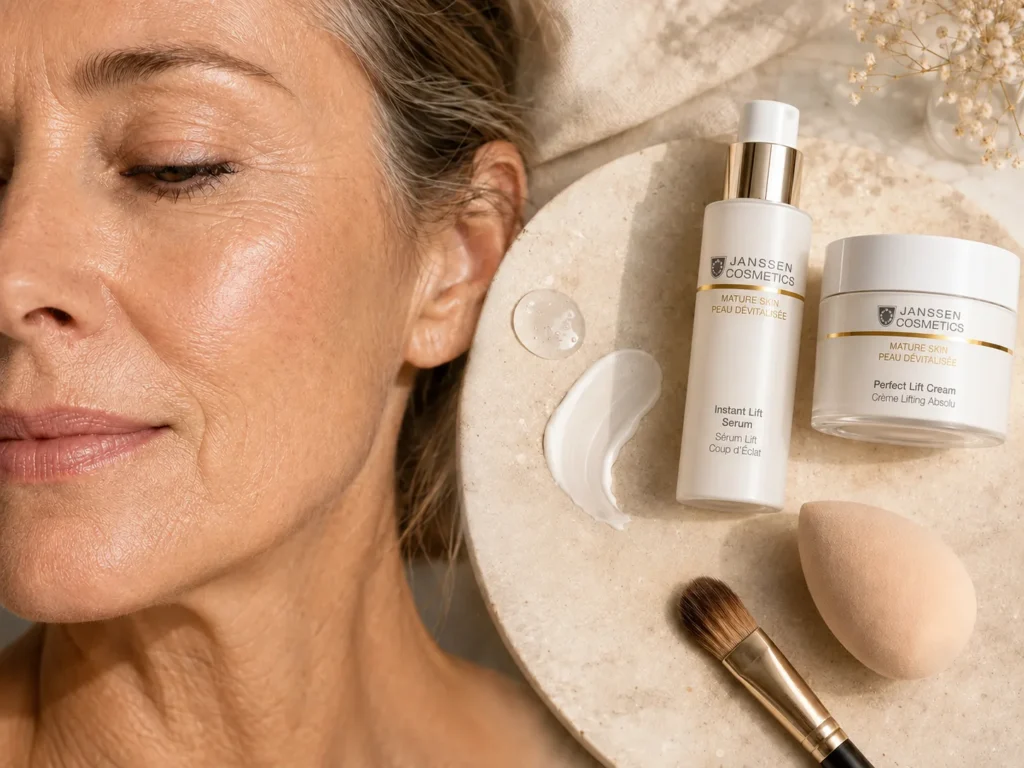
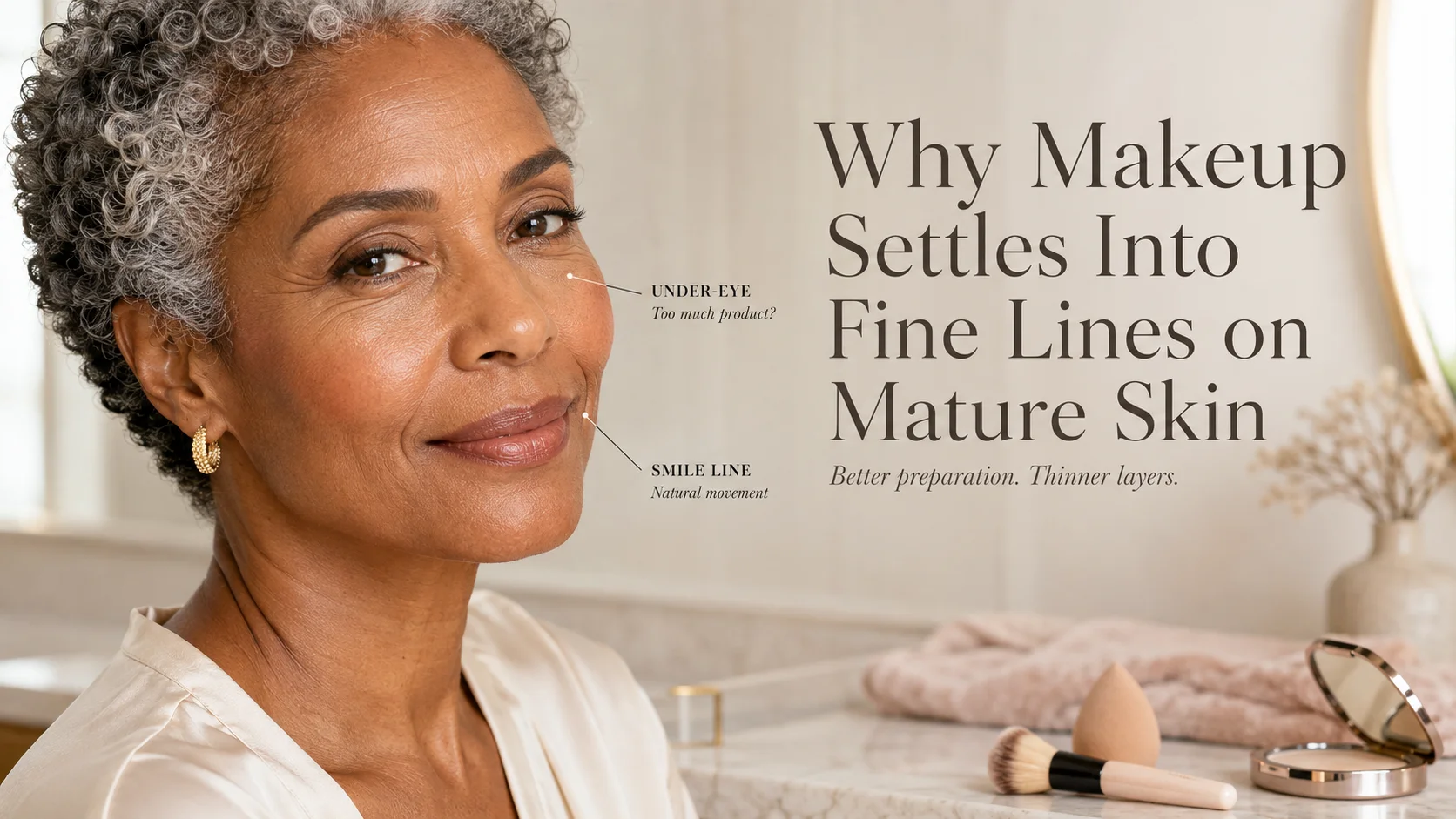
Many people notice mature skin changes through makeup first.
Foundation may:
Often, the issue is not the makeup alone. The skin may need a simple mature skin routine with hydration, serum, moisturizer, and gentle exfoliation when appropriate.
Mature skin often needs:
To choose support more carefully, review the best ingredients for mature skin before adding stronger active products.
The routine should not be rushed or overloaded.
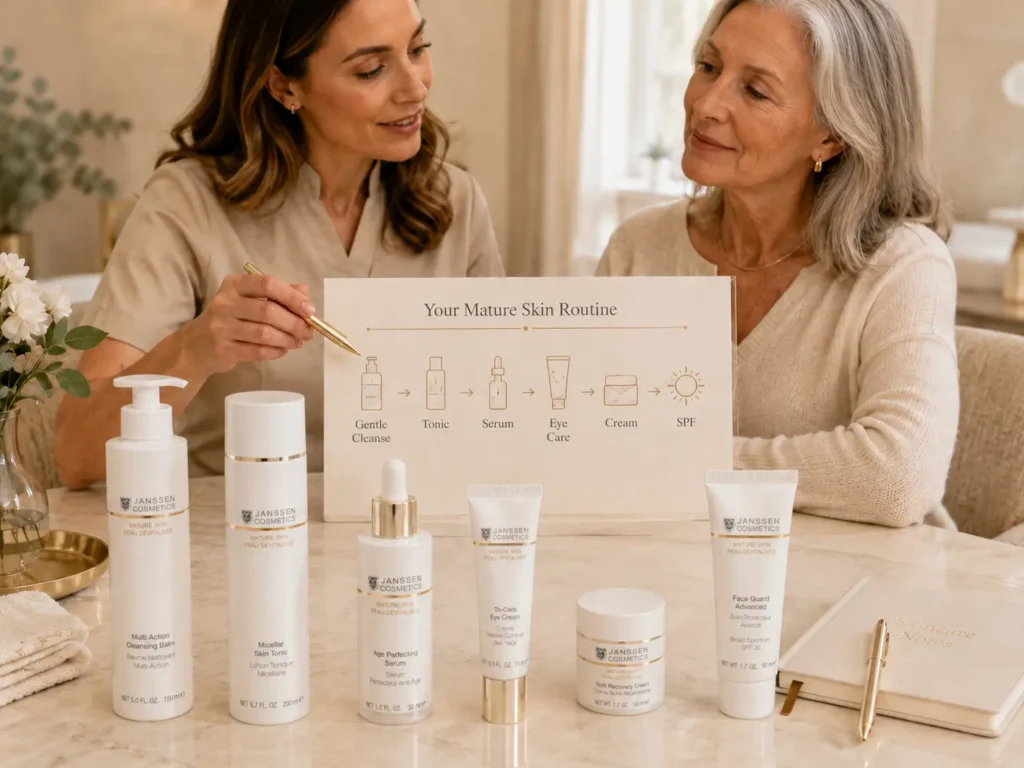
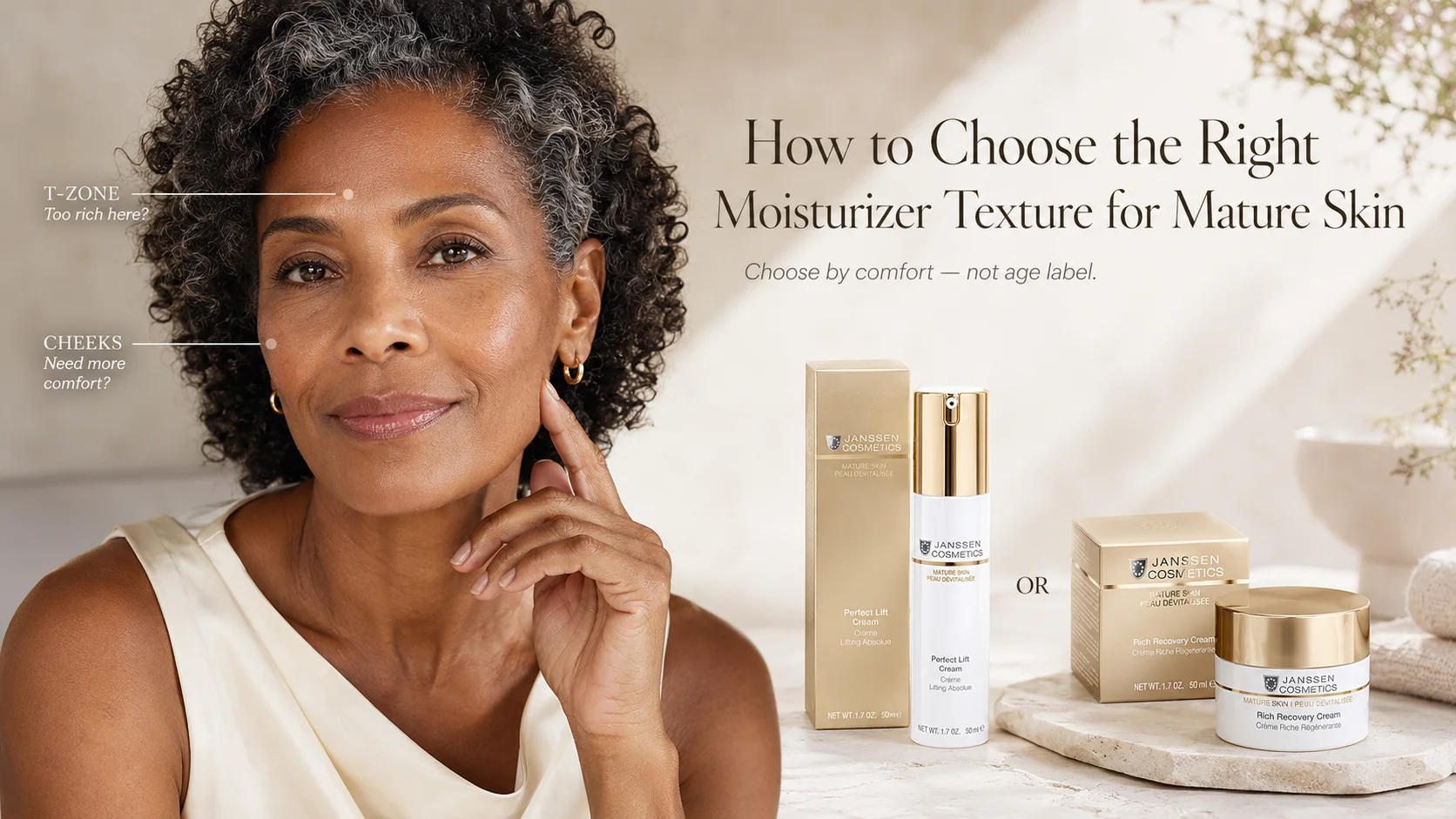
Zendevie carries Janssen Cosmetics through a consultation-first model. Mature skin products should be chosen based on dryness level, sensitivity, visible lines, texture, and routine tolerance.
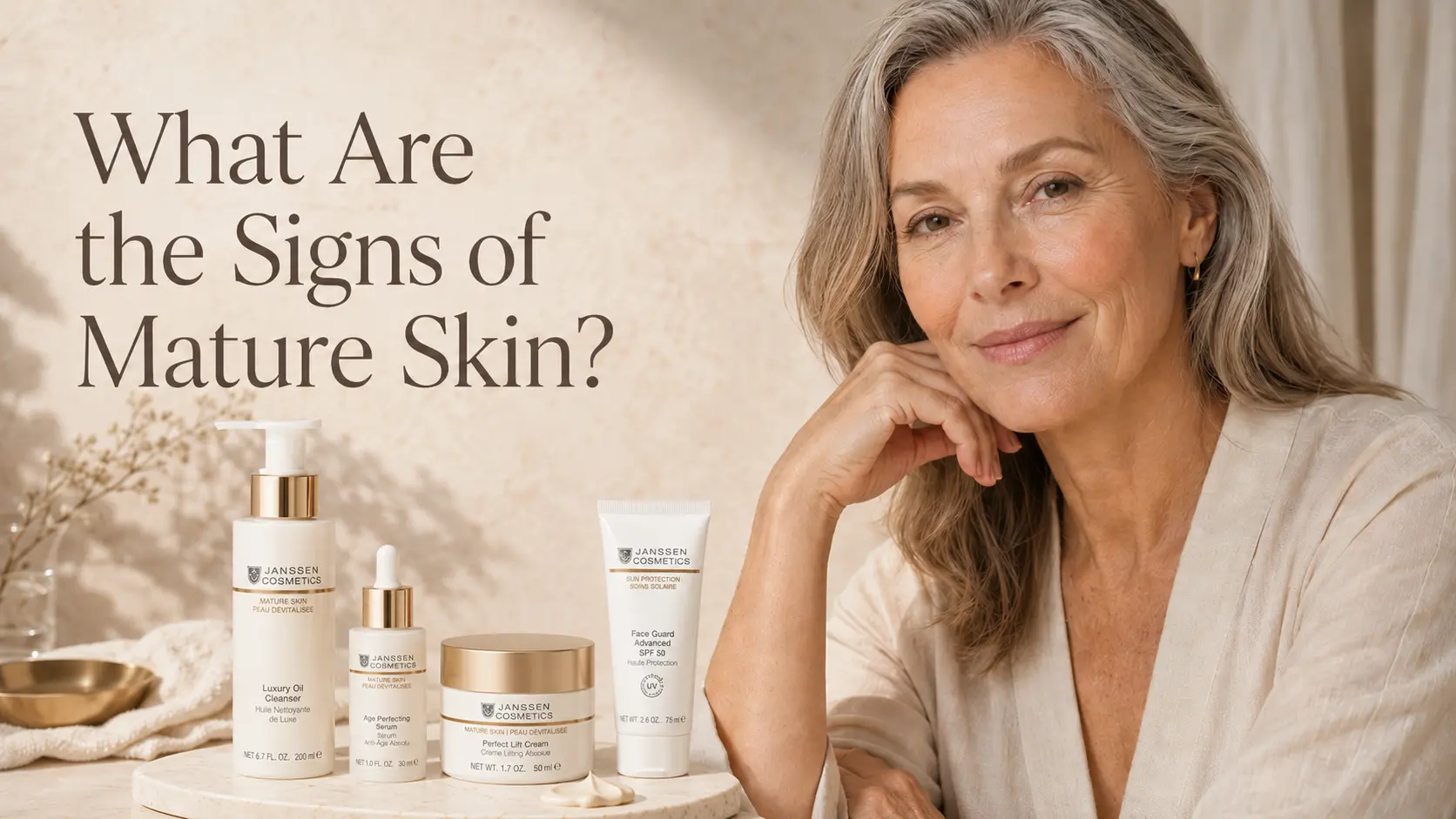
Products that may be discussed during a mature skin consultation include:
These are examples, not automatic recommendations. A consultation helps decide what your skin truly needs.
Do not use harsh cleansers that leave skin tight.
Do not over-exfoliate mature skin.
Do not skip moisturizer.
Do not skip SPF.
Do not layer retinol, acids, and strong actives without guidance.
Do not expect one cream to erase wrinkles.
Do not use aggressive anti-aging language that creates fear.
The first signs often include dryness, fine lines, dullness, rough texture, and makeup settling differently.
There is no exact age. Many people notice changes in their 40s, 50s, or beyond, but skin can change earlier depending on lifestyle, sun exposure, hormones, and genetics.
Yes. Mature skin can be dry, oily, combination, or sensitive. Mature skin is about skin changes over time, not only dryness.
Mature skin may need more hydration, lipids, and barrier comfort than it did before.
Skincare can support the appearance of smoother-looking skin, but it should not promise to remove wrinkles permanently.
Many mature skin routines benefit from serum because serum can support hydration, texture, radiance, or firmness appearance.

Zendevie is guided by Haby Diallo, a licensed esthetician with more than 20 years of professional skincare experience. Her approach is rooted in education, professional judgment, and personal care.
years of experience