
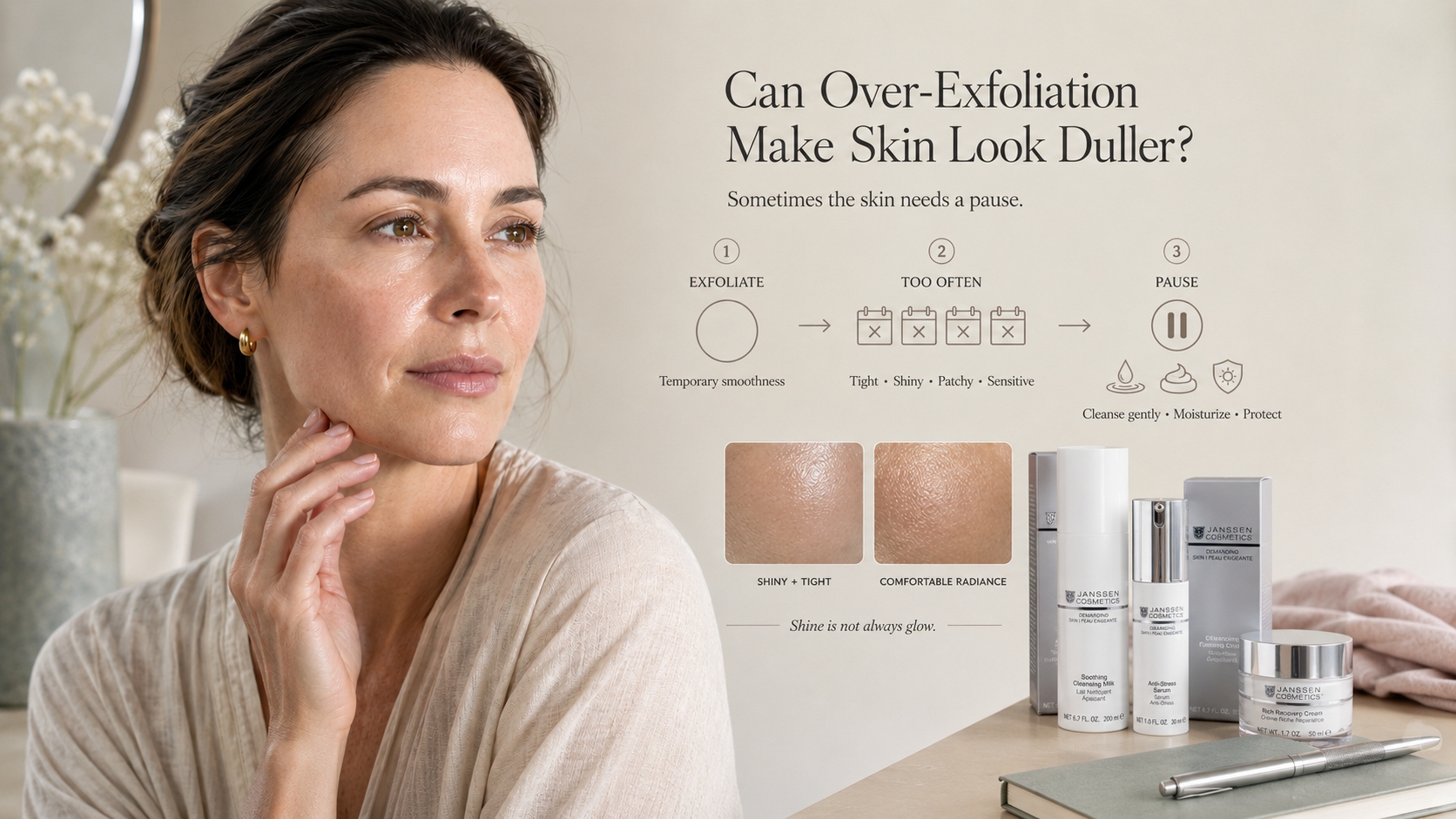
Yes, over-exfoliation can make skin look duller.
This can feel confusing because exfoliation is often used to support smoother-looking, fresher-looking skin. When used carefully, exfoliation can help with surface buildup and rough-looking texture. But when the skin is exfoliated too often, too strongly, or with too many active products at once, the result can be the opposite.
Instead of looking fresh, the skin may look tight, shiny, patchy, flaky, rough, irritated, or tired. Makeup may cling. SPF may sting. Moisturizer may burn. The skin may look polished for a moment, then duller later.
At Zendevie, we do not believe dull-looking skin should automatically be exfoliated more. In consultation, our licensed esthetician first looks at whether the skin is truly dealing with surface buildup or whether it is already stressed from too many active steps.
Sometimes dull skin is not asking for more exfoliation.
Sometimes it is asking for rest.
Over-exfoliation can make skin look duller because it may leave the skin feeling tight, dry, irritated, flaky, shiny without comfort, or more textured under makeup.
Signs of over-exfoliation may include:
If this happens, stop exfoliating for a while, simplify your routine, moisturize, use SPF, and avoid layering acids, scrubs, retinol-style products, and active masks.
Exfoliation removes surface buildup, but too much exfoliation can stress the skin.
When the skin is stressed, the surface may stop looking smooth and fresh. Instead, it can look uneven, dry-looking, shiny, tight, flaky, or patchy.
That is why someone can exfoliate often and still say, “My skin looks dull.”
The issue may no longer be buildup. It may be irritation.
Over-exfoliation often starts with a good result.
The skin may look smoother after the first few uses. Makeup may apply better. The surface may feel softer.
Then the routine slowly becomes too much.
A person may begin using exfoliation more often because the skin looked fresh at first. But after repeated use, the skin may start to feel tight, stingy, or flaky.
The result may become:
This cycle can make skin look less fresh over time.
Over-exfoliation does not always look like dramatic peeling.
It can be subtle.
Sometimes it looks like:
These small signs matter.
The skin may be telling you to slow down.
This is important.
Dull-looking skin can come from many causes, including:
If the dullness is caused by irritation, more exfoliation can make it worse.
The goal is to identify the cause before adding stronger products.

Over-exfoliated skin may look:
The shine can be confusing because the skin may look reflective, but not fresh.
That shiny-tight look is not the same as a healthy-looking glow.
Over-exfoliated skin may feel:
It may also feel like every product is suddenly too strong.
That is a sign to simplify.
Over-exfoliated skin may look shiny because the surface is stressed and overly smoothed.
But that shine may not look fresh.
It may look tight, flat, or almost plastic-like.
This is different from radiance.
Radiance looks comfortable, smooth, and balanced.
Over-exfoliated shine often comes with tightness, stinging, dryness, or patchiness.
If your skin looks shiny but feels uncomfortable, do not exfoliate more.
It seems strange, but over-exfoliated skin can feel rough.
That roughness may come from dryness, irritation, flaking, or skin stress.
A person may think, “My skin is rough, so I need more exfoliation.”
But if the roughness is caused by irritation, more exfoliation can keep the cycle going.
Roughness after repeated exfoliation is often a reason to pause, not intensify.
Moisturizer should not burn.
If your moisturizer burns after exfoliation, your skin may be stressed or irritated.
This can happen when the skin has been exposed to:
A burning moisturizer is a warning sign.
Pause exfoliation and simplify.
SPF is important, especially when exfoliation is part of the routine.
But if SPF suddenly stings, the skin may be irritated.
This does not mean SPF should be removed completely. It means the skin may need a calmer routine and a better-tolerated formula.
If SPF stings after exfoliation, pause active products and focus on comfort.
If stinging is persistent, severe, eye-area related, swollen, rash-like, or worsening, seek dermatologist guidance.
Many people exfoliate because they want makeup to look smoother.
But over-exfoliation can make makeup look worse.
Makeup may:
If makeup looks worse after exfoliating, the skin may need hydration and rest.
If your skin looks fresh for a few hours after exfoliation but dull again quickly, the issue may not be surface buildup alone.
The skin may be dehydrated, over-cleansed, irritated, or not properly moisturized.
A better long-term routine may need:
Temporary smoothness is not the same as true routine balance.
Over-exfoliation often happens accidentally.
A routine may include several exfoliating or active steps without the person realizing it.
Common examples include:
Each step may seem reasonable alone.
Together, they may be too much.
An active cleanser can be useful for some skin, but it may be too much if used too often or combined with other exfoliating steps.
Signs your cleanser may be too active include:
If this happens, switch to a gentler cleansing rhythm and avoid layering too many active products.
AHA may help with dull-looking texture, but overuse can leave the skin sensitive and dry-looking.
Too much AHA may cause:
AHA should be introduced slowly and not layered blindly with other active steps.
BHA may be useful for clogged-looking pores, blackheads, whiteheads, and oily T-zone concerns.
But too much BHA can make the skin feel dry, tight, or irritated.
This is especially true when BHA is combined with:
Oily skin can still be over-exfoliated.
A scrub may feel like it is making the skin smoother, but pressure matters.
Scrubbing too hard can leave skin feeling raw, irritated, or more textured.
This can happen even with a gentle scrub if the pressure is too strong or frequency is too high.
The face should not feel scraped.
The goal is gentle smoothing, not forcing the skin to glow.
Using a scrub and acids in the same routine can be too much for many people.
For example:
Scrub → acid toner → BHA serum → retinol-style product
This type of layering can overwhelm the skin.
If exfoliation is needed, choose one method at a time.
The skin should not be challenged from every direction.
Retinol-style products can be helpful for some routines, but they should be introduced carefully.
Using retinol-style products with frequent exfoliation may lead to:
If retinol-style care is already in the routine, exfoliation should be reduced and spaced carefully.
Clay masks can help oily areas look more refined, but using them too often can make skin feel tight.
This is especially true if clay masks are combined with:
Clay masks should be used according to skin need, not as punishment for oil.
Exfoliation is not the answer to every skin concern.
It may not be the best first step for:
Exfoliation is one tool.
It should not become the entire routine.
Dry skin can become duller when over-exfoliated.
Dry skin may already need moisture and lipid comfort. Too much exfoliation can make it feel tighter, rougher, or more uncomfortable.
Over-exfoliated dry skin may show:
Dry dull skin often needs hydration and moisturizer before more exfoliation.
Dehydrated skin lacks water.
If dehydrated skin is exfoliated too often, it may become even more tight-looking and dull.
Over-exfoliated dehydrated skin may look:
Hydration should come before more exfoliation.
Oily skin can be over-exfoliated too.
This is common because oily skin is often treated with strong cleansers, toners, acids, masks, and drying products.
Over-exfoliated oily skin may show:
Oily skin needs balance, not dryness.
Combination skin can become over-exfoliated in certain areas.
The T-zone may tolerate more than the cheeks.
The cheeks may become tight, while the nose and chin still feel oily.
This can create confusing signs:
Combination skin often needs zone-based care.
Do not exfoliate the whole face just because the T-zone feels rough.
Sensitive skin should be especially careful.
Over-exfoliation can make sensitive skin feel more reactive.
Signs may include:
Sensitive dull skin usually needs a calm foundation before active products.
If sensitive skin is already irritated, exfoliation should wait.
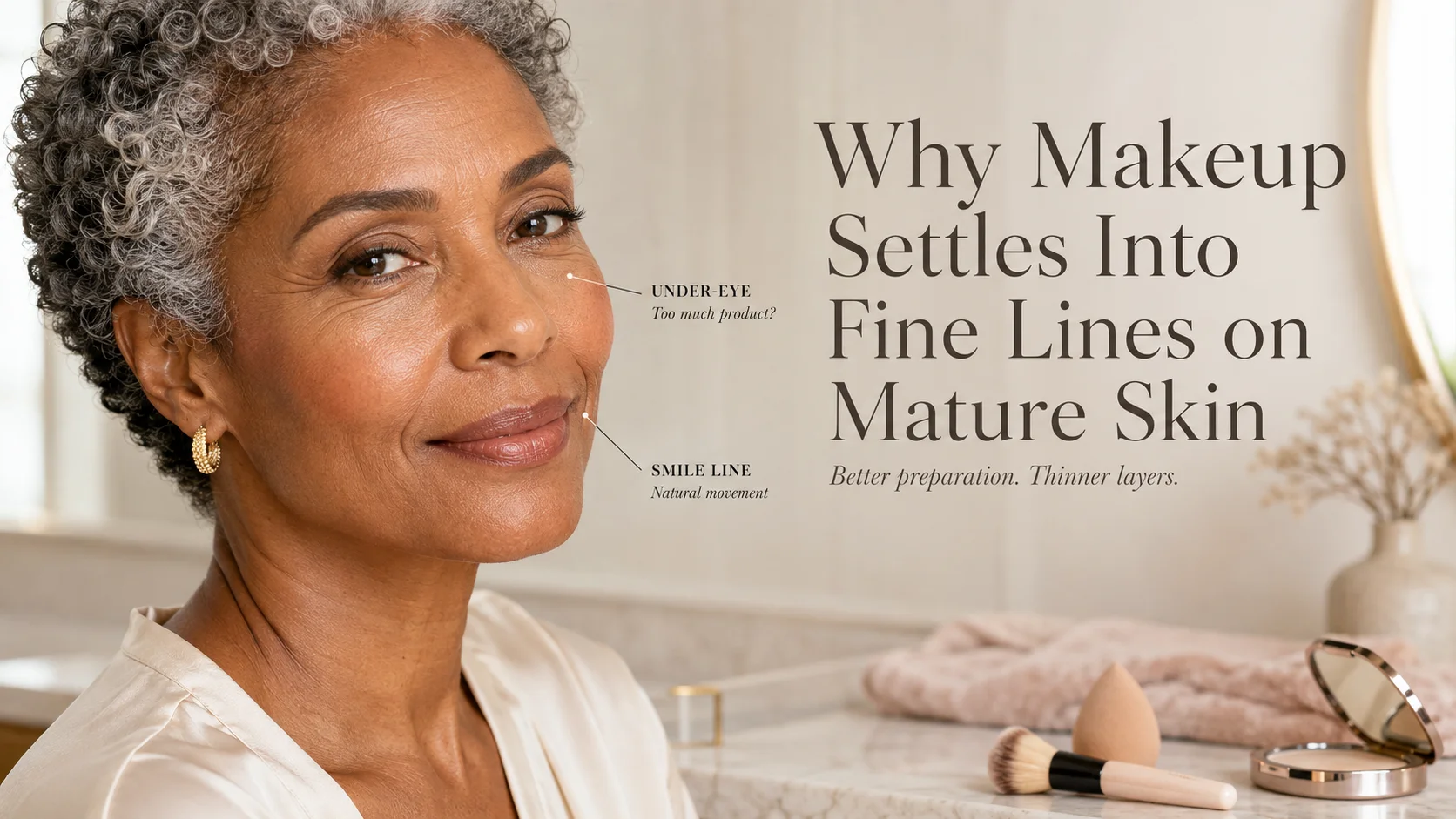
Mature skin may look dull because of dryness, texture, makeup settling, and dehydration.
Gentle exfoliation may help some mature skin, but over-exfoliation can make it look less comfortable.
Over-exfoliated mature skin may show:
Mature skin often needs hydration, comfort, and SPF along with careful smoothing.
The eye area is delicate.
Exfoliating too close to the eyes can cause discomfort.
Possible signs include:
Most facial exfoliants should not be applied close to the eye area unless they are specifically made for that area and professionally recommended.
The mouth corners and nose creases are common irritation zones.
Exfoliating products may collect or migrate into these areas.
Signs include:
Use less product in these areas and avoid rubbing.
Travel can make skin more vulnerable to over-exfoliation.
Airplane air, climate changes, different water, less sleep, more SPF, and inconsistent cleansing can make the skin feel tighter or more reactive.
Starting or increasing exfoliation during travel can backfire.
Travel skin often needs:
Do not use travel as a time to test strong products.
Exfoliating right before an event can be risky.
If the skin reacts, makeup may look worse.
Avoid starting new exfoliating products right before:
A fresher-looking complexion comes from consistency, not last-minute intensity.
Ask yourself:
If several answers are yes, your skin may need a break.
The first step is to pause exfoliation.
Do not keep exfoliating to remove the dullness.
A simple reset may help the skin feel more comfortable.
Morning:
Gentle cleanser → moisturizer → SPF
Evening:
Gentle cleanser → moisturizer

Pause:
Let the skin settle before adding anything new.
There is no exact timeline for every person.
Some skin may feel better after a few days. Other skin may need longer.
The pause should continue until:
Do not restart exfoliation while the skin is still reacting.
During an exfoliation break, keep the routine gentle.
Focus on:
The goal is comfort.
This is not the time to test multiple new products.
Avoid:
Give the skin a calmer environment.
Over-exfoliated skin often feels tight or dehydrated.
Hydration can help the skin feel more comfortable and look less flat.
Hydration-focused care may support:
Hydration does not mean adding many layers. It means choosing supportive steps carefully.
Moisturizer helps the skin feel more comfortable after exfoliation stress.
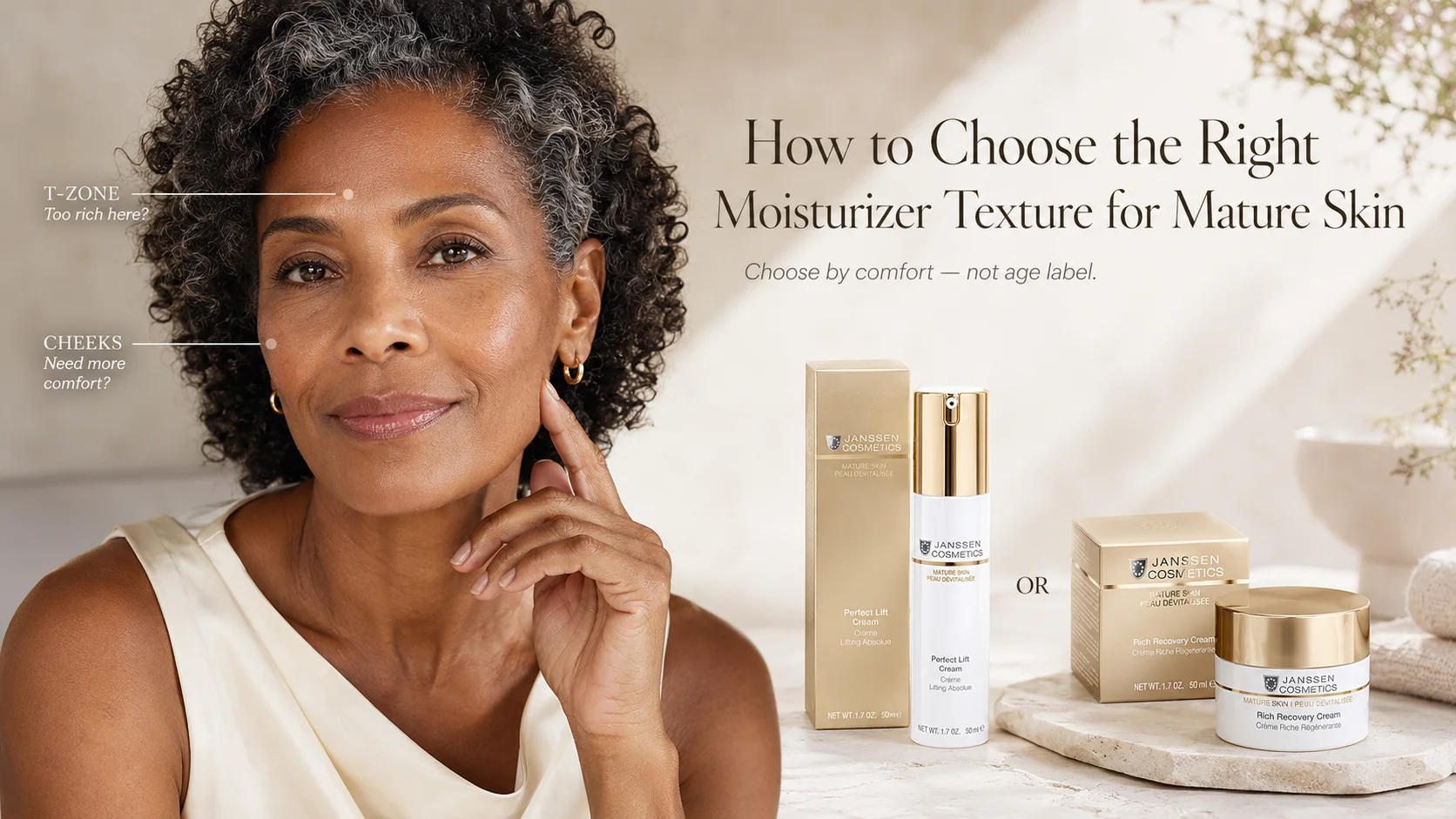
Choose moisturizer based on the skin:
If moisturizer burns, keep the routine simpler and avoid active products.
SPF is important every morning, especially after exfoliation.
Exfoliated skin needs daytime protection.
If your skin is too irritated to tolerate your usual SPF, do not respond by adding more actives. Simplify, protect with shade and hats as needed, and seek professional guidance if the discomfort continues.
SPF should remain part of the plan, but the formula may need to be chosen carefully.
Only reintroduce exfoliation when the skin feels stable.
Signs the skin may be ready include:
When you restart, use one exfoliating product at a time.
A careful reintroduction may look like:
Do not return immediately to the old routine.
After overdoing it, start much slower than before.
Many people should begin with once weekly or less.
Some sensitive skin may need even less.
Some oily skin may tolerate more later, but only if the skin remains comfortable.
Your routine should be based on skin response, not the desire for faster results.
Maybe.
If the previous exfoliant was too strong, too frequent, or combined with too many actives, a gentler approach may be better.
Possibilities may include:
A consultation can help decide what is appropriate.
Some skin may need a long pause.
If your skin is sensitive, reactive, or frequently irritated, you may not need regular exfoliation at first.
A routine can still support a fresher-looking complexion through:
Exfoliation is optional. Skin comfort comes first.
Seek dermatologist guidance if the skin has:
A skincare consultation can help with routine structure, but it does not replace medical diagnosis or treatment.
Morning:
Mild cleanser → moisturizer → SPF
Evening:
Mild cleanser → moisturizer
Avoid:
Dry over-exfoliated skin needs comfort first.
Morning:
Gentle cleanser → lightweight moisturizer → SPF
Evening:
Gentle cleanser → lightweight moisturizer
Avoid:
Oily over-exfoliated skin still needs moisture and comfort.
Morning:
Mild cleanser → moisturizer → SPF
Evening:
Mild cleanser → moisturizer
Avoid:
Sensitive skin needs the slowest return.
Morning:
Gentle cleanser → hydration if tolerated → moisturizer → SPF
Evening:
Gentle cleanser → moisturizer or cream
Avoid:
Mature skin needs smoothing only when comfort is protected.
After consultation, our licensed esthetician may consider Janssen Cosmetics options depending on whether dullness is caused by over-exfoliation, dryness, dehydration, oiliness, sensitivity, or product overload.

If the skin looks dull because it is stressed after exfoliation, calming and hydration-focused support may come first. Possible options may include:
If the skin is dry or dehydrated after too much exfoliation, hydration-focused options may be reviewed, such as:
If the skin is oily but over-exfoliated, the focus may shift away from stronger acids for a while and toward a balanced routine, such as:
Exfoliating options such as AHA + BHA Exfoliator, AHA + BHA Cleanser, Enzyme Peeling Powder, Mild Face Rub, Brightening Exfoliator, or Skin Refining Enzyme Peel should not be used blindly when the skin is already irritated.
Professional exfoliation systems should remain in professional treatment settings, with proper timing, observation, neutralizing steps, and post-care. They should not be presented as home-use routines.
These are not automatic recommendations. The correct plan depends on what the skin looks like, how it feels, what products were used, and whether the skin is stable enough for active products.
Do not keep exfoliating because your skin looks dull after exfoliation.
Do not use acids and scrubs together when the skin is irritated.
Do not layer retinol-style products with multiple exfoliating products.
Do not use clay masks repeatedly on tight skin.
Do not skip moisturizer after exfoliation.
Do not skip SPF after exfoliating.
Do not apply exfoliating products close to the eyes unless specifically appropriate.
Do not start a new exfoliant right before travel or an event.
Do not treat professional peels like home routines.
Do not ignore burning, swelling, rash-like irritation, pain, crusting, bleeding, severe itching, eye-area irritation, or persistent worsening.
Yes. Over-exfoliation can make skin look duller by causing tightness, flaking, irritation, shiny-but-uncomfortable skin, makeup patchiness, and sensitivity.
Your skin may look dull after exfoliating if the product was too strong, used too often, combined with other active products, or applied when the skin was already dehydrated or irritated.
Over-exfoliated skin may look shiny, tight, flaky, rough, patchy, red-looking, textured, or less fresh. Makeup may cling or separate.
Moisturizer may burn after exfoliation when the skin is stressed or irritated. This is a sign to stop exfoliating and simplify your routine.
Not automatically. If your skin is tight, stingy, flaky, or irritated, more exfoliation may make dullness worse. Hydration and comfort may be more important.
Pause until your skin feels comfortable again. Moisturizer and SPF should not sting, flaking should settle, and the skin should not feel hot or raw before restarting.
Yes. Oily skin can become over-exfoliated from strong cleansers, acids, scrubs, toners, masks, and retinol-style products used too often.
Sensitive skin should wait until it feels stable. If it burns, stings, feels hot, or reacts easily, exfoliation should pause.
Use a simple routine: gentle cleanser, moisturizer, and SPF in the morning. Avoid acids, scrubs, retinol-style products, strong vitamin C, and new products until the skin feels stable.
See a dermatologist if over-exfoliation comes with persistent rash-like irritation, swelling, pain, crusting, bleeding, infection-looking areas, severe itching, eye-area irritation, blistering, sudden severe reaction, or worsening symptoms.
If your skin looks dull even though you are exfoliating, your routine may need a reset.
At Zendevie, a free virtual consultation can help you understand whether your dullness is coming from surface buildup, dehydration, dryness, oil, product overload, sensitivity, or over-exfoliation. We review your cleanser, toner, active products, moisturizer, SPF, and skin response before recommending next steps.
The goal is not to exfoliate more.
The goal is to help your skin look fresh while still feeling comfortable.

Zendevie is guided by Haby Diallo, a licensed esthetician with more than 20 years of professional skincare experience. Her approach is rooted in education, professional judgment, and personal care.
years of experience