


Dark Spots on the Face: What They Are and How to Support a More Even Look
Dark spots on the face can feel discouraging because they often stay long after the original trigger is gone. A blemish may disappear, but the mark remains. A sunny summer may pass, but spots on the cheeks or forehead become more noticeable. Makeup may cover them for a while, but you may still want to understand why they are there.
Dark spots are common, but they should be treated with patience and care.
At Zendevie, we do not use harsh promises like “erase spots” or “remove pigmentation permanently.” The safer and more honest goal is to support the appearance of a more even-looking complexion with a gentle, consistent, SPF-supported routine.
Quick Answer
Dark spots on the face are areas that look deeper in color than the surrounding skin. They may appear after sun exposure, blemishes, irritation, or age-related sun exposure patterns.
Skincare can help support the appearance of dark spot improvement over time, especially with daily SPF and brightening-support products.
Any spot that is new, changing, irregular, bleeding, painful, itchy, crusting, or concerning should be checked by a dermatologist.
For the broader picture, review the uneven skin tone guide so you can understand how dark spots fit into the full complexion pattern.
What Do Dark Spots Look Like?
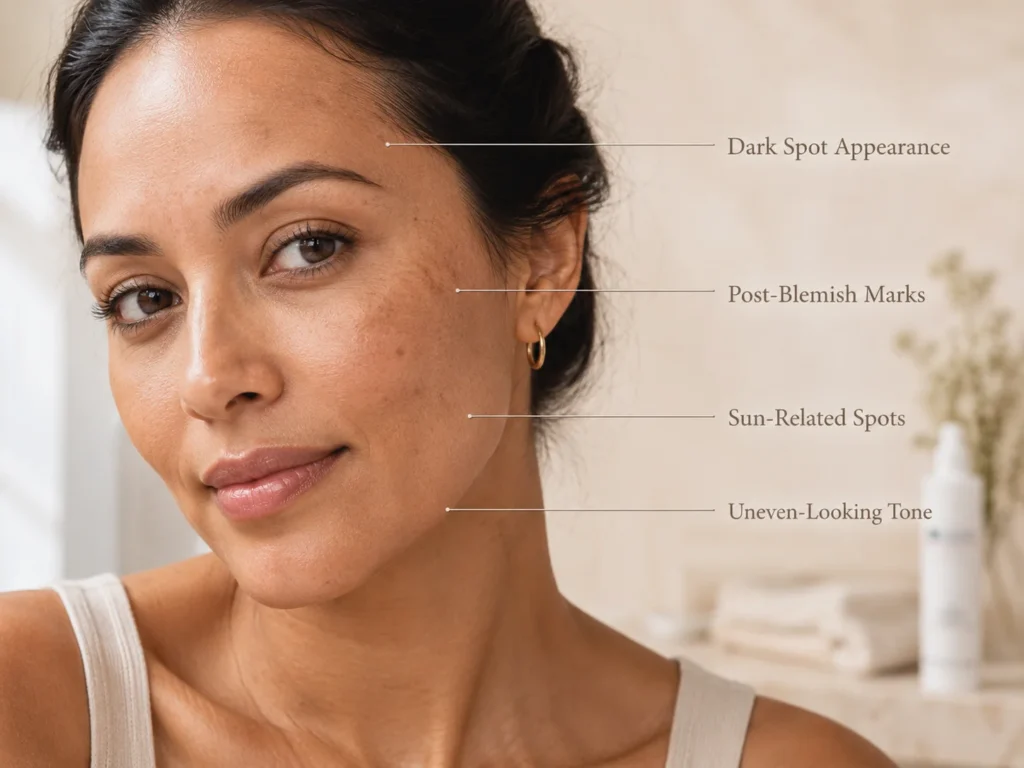
Dark spots may appear as small or larger flat areas of visible discoloration. They can range from tan to brown, gray-brown, or deeper-looking patches depending on skin tone.
They may appear on:
- Cheeks
- Forehead
- Chin
- Upper lip area
- Jawline
- Hands
- Chest
- Shoulders
- Arms
Some spots are linked to sun exposure. Some appear after blemishes. Some may be related to irritation or hormonal-looking patterns.
Because different types of discoloration can look similar, professional guidance is important when a spot is changing or concerning.
Why Dark Spots May Appear
Dark spot appearance can happen for several reasons.
Sun Exposure
UV exposure can make certain areas of the skin produce more pigment. Over time, this can make spots more visible.
Post-Blemish Marks
After a breakout or irritation, the skin may leave behind a flat mark. This is common and can be more noticeable in deeper skin tones.
Picking or Squeezing
Picking blemishes can make marks look darker or last longer. Gentle care is important.
Irritation
Harsh scrubs, over-exfoliation, or products that sting repeatedly can stress the skin and make uneven tone more noticeable.
Age Spot Appearance
Flat dark spots may become more visible on areas that have received years of sun exposure.
What Skincare Can and Cannot Do
Skincare can support:
- A more even-looking complexion
- A brighter-looking appearance
- The look of dark spot improvement over time
- Smoother-looking texture
- Hydration and comfort
- Protection during the day with SPF
Skincare should not promise:
- Permanent dark spot removal
- Melasma treatment
- Pigmentation cure
- Guaranteed results
- Overnight transformation
- Whitening or bleaching
Honest skincare respects the skin and the person.
For a fuller ingredient breakdown, review the best ingredients for uneven skin tone before choosing a brightening-support product.
Why SPF Matters for Dark Spots
SPF is one of the most important parts of dark spot care.
Without daytime protection, dark spot appearance may become more noticeable. Even the best brightening-support routine will struggle if the skin is not protected during the day.
SPF should be applied as the last step in the morning routine and reapplied when needed, especially with sun exposure, sweating, or outdoor activity.
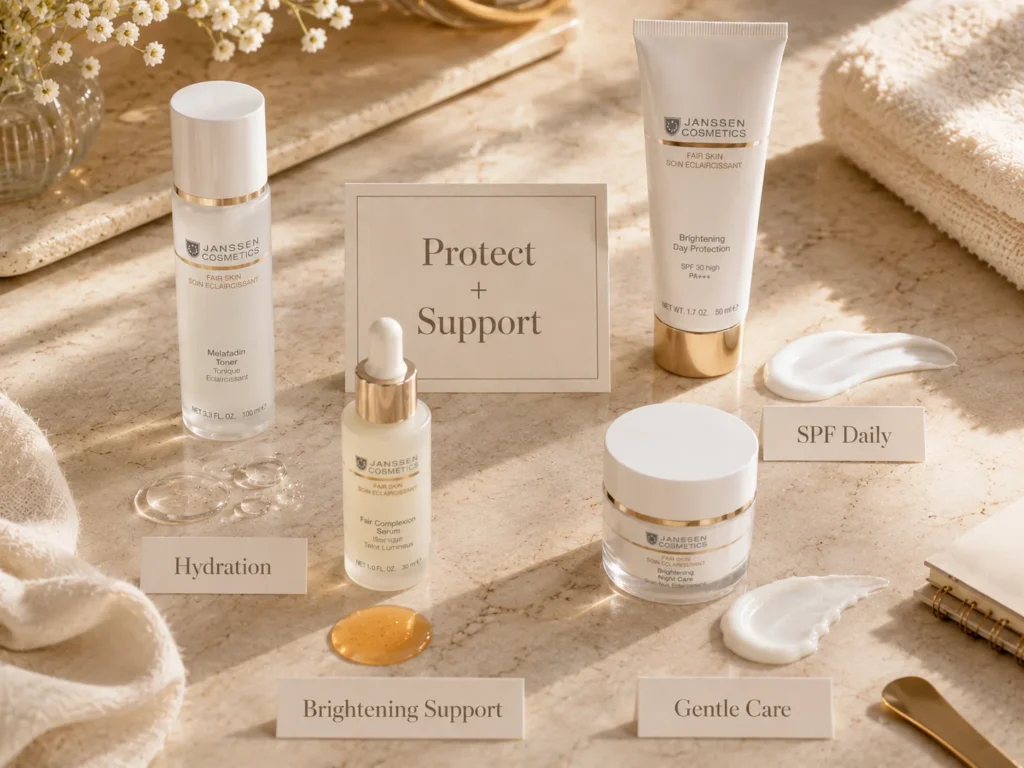
Ingredients That May Support Dark Spot Appearance
Vitamin C
Vitamin C is commonly used to support radiance and a brighter-looking complexion. It is also used for antioxidant support.
Brightening-Support Ingredients
Some cosmetic formulas include ingredients designed to support the appearance of more even-looking tone. These should be described as tone-support or brightening-support, not whitening.
Gentle Exfoliation
Gentle exfoliation may help if dull surface buildup is making the skin look uneven. It should be used carefully.
Hydration
Hydration matters. When the skin is dry or rough, dark spots can look more noticeable because the skin surface is not smooth.
SPF
SPF is the foundation of a dark spot routine.
A Simple Dark Spot Appearance Routine
Morning
Cleanser: Use gentle cleansing.
Toner: Prepare the skin.
Serum: Use brightening-support serum if appropriate.
Day cream: Support comfort and tone care.
SPF: Protect the skin during the day.
Evening
Cleanser: Remove sunscreen, makeup, and buildup.
Toner: Prepare the skin.
Targeted support: Apply only where appropriate.
Night cream: Support the skin overnight.
For morning and evening order, follow a brightening skincare routine for uneven tone that includes SPF and targeted support only when appropriate.
Where Janssen Cosmetics Fits
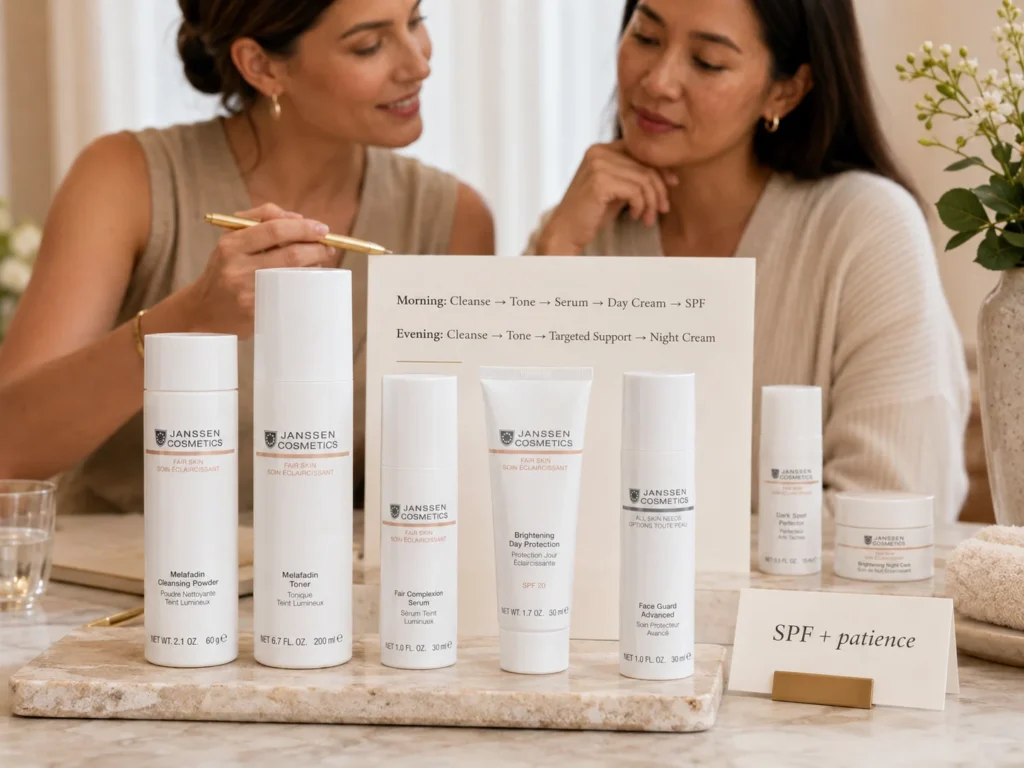
Products that may be discussed during a Zendevie consultation include:
- Melafadin Cleansing Powder for cleansing in an even-tone routine
- Melafadin Toner for tone-support preparation
- Fair Complexion Serum for more even-looking complexion support
- Dark Spot Perfector for targeted dark spot appearance support
- Brightening Day Protection for daytime tone-support care
- Brightening Night Care for evening care
- 2-Phase Melafadin Concentrate when an intensive course-style option is appropriate
- Face Guard Advanced for daytime protection when appropriate
These are examples only. Dark spot routines should be personalized based on skin type, sensitivity, and the appearance of the concern.
What Not to Do
Do not scrub dark spots.
Do not pick blemishes.
Do not use harsh peeling products without guidance.
Do not skip SPF.
Do not expect instant fading.
Do not use whitening or bleaching language.
Do not ignore a spot that changes.
Frequently Asked Questions
What are dark spots on the face?
Dark spots are areas that look deeper in color than surrounding skin. They may appear after sun exposure, blemishes, irritation, or age-related sun exposure patterns.
Can skincare help dark spots look better?
Skincare can support the appearance of a more even-looking complexion over time, especially with daily SPF.
Why do dark spots come back?
Dark spots may look darker again with sun exposure, irritation, or inconsistent protection.
Should I use sunscreen for dark spots?
Yes. SPF is essential for dark spot appearance routines.
Can I use exfoliation for dark spots?
Gentle exfoliation may help when appropriate, but over-exfoliation can irritate the skin.
When should I see a dermatologist for a dark spot?
Any spot that is new, changing, growing, bleeding, painful, itchy, crusting, irregular, or concerning should be checked.

About the Esthetician Behind Zendevie
Zendevie is guided by Haby Diallo, a licensed esthetician with more than 20 years of professional skincare experience. Her approach is rooted in education, professional judgment, and personal care.
20+
years of experience