


A Simple Combination Skin Routine: Morning and Night Steps for Balance
Combination skin does not need a complicated routine. It needs a smart one.
When your T-zone is oily but your cheeks feel dry or normal, the best routine is usually simple, lightweight, and flexible. You do not need ten steps. You need the right steps in the right order.
At Zendevie, we guide combination skin with balance. The goal is not to strip the T-zone or overload the cheeks. The goal is to help the whole face feel comfortable while respecting each area.
Quick Answer
A simple combination skin routine includes:
Morning: Gentle cleanser → Lightweight balancing moisturizer → Targeted T-zone support if needed → SPF
Evening: Gentle cleanser → Balancing moisturizer → Optional T-zone mask or targeted support when appropriate
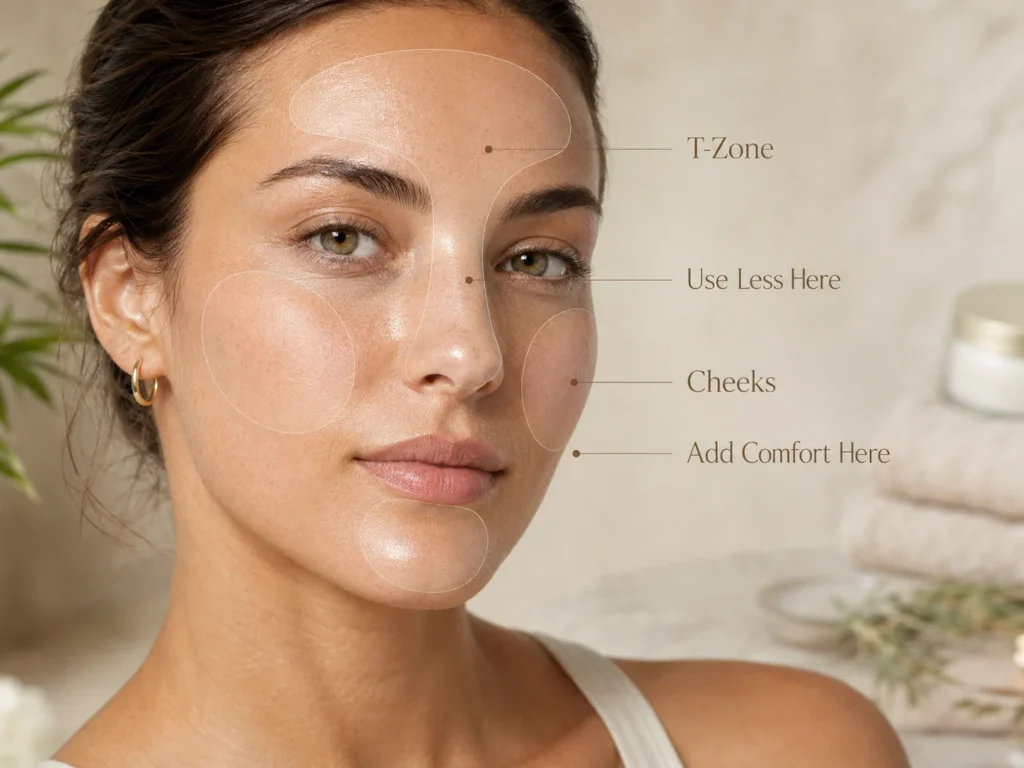
Combination skin works best with zone-aware care: use lighter support on oily areas and more comfort where the skin feels dry.
If you are still identifying your skin type, review what combination skin means before changing every step in your routine.
Step 1: Cleanse Without Stripping
Cleansing is important for combination skin because the T-zone may produce oil and buildup throughout the day.
But the cleanser should not leave the cheeks tight.
A good combination skin cleanser should leave the face feeling clean, fresh, and comfortable. If your cheeks feel dry immediately after washing, your cleanser may be too strong.
Step 2: Use Lightweight Moisture
Combination skin still needs moisturizer.
The best choice is usually a lightweight moisturizer that does not feel heavy on the T-zone but still gives comfort to the cheeks.
You can adjust the amount:
Use less on the T-zone.
Use a little more on dry cheeks.
This small change can make the routine feel more balanced.
Not sure whether this pattern is truly yours? Review how to know if you have combination skin before building a new routine.
Step 3: Treat the T-Zone Only When Needed
If your forehead, nose, or chin becomes oily or clogged-looking, you may use targeted support in those areas.
This may include:
- A clarifying mask on the T-zone
- Lightweight mattifying support
- Pore-appearance support
- Gentle exfoliating support when appropriate
To choose the right textures and support, review the best ingredients for combination skin before adding stronger active products.
The important part is this: do not automatically apply drying products to the whole face.
Step 4: Protect During the Day
SPF is important for combination skin. The challenge is texture.
Choose a daytime protection step that feels comfortable, not greasy or drying. If the SPF is too heavy, the T-zone may feel oily. If it is too drying, the cheeks may feel tight.
Consistency matters more than perfection.
Morning Combination Skin Routine
1. Gentle Cleanser
Start with a cleanser that removes oil and buildup without stripping the cheeks.
2. Lightweight Balancing Moisturizer
Apply a light layer all over. Add a little more to dry areas if needed.
3. Targeted T-Zone Support
Use only if your T-zone gets very shiny or congested-looking.
4. SPF
Finish with daytime protection.
Morning structure:
Cleanser → Lightweight Balancing Moisturizer → Targeted T-Zone Support if needed → SPF
Evening Combination Skin Routine
1. Cleanse
Remove sunscreen, makeup, oil, and daily buildup gently.
2. Apply Balancing Moisturizer
Support comfort without heaviness.
3. Use Optional Zone Care
If needed, use a clarifying mask only on oily areas. If cheeks feel dry, give them extra comfort instead.
Evening structure:
Cleanser → Balancing Moisturizer → Optional Zone Care
Weekly Add-Ons for Combination Skin
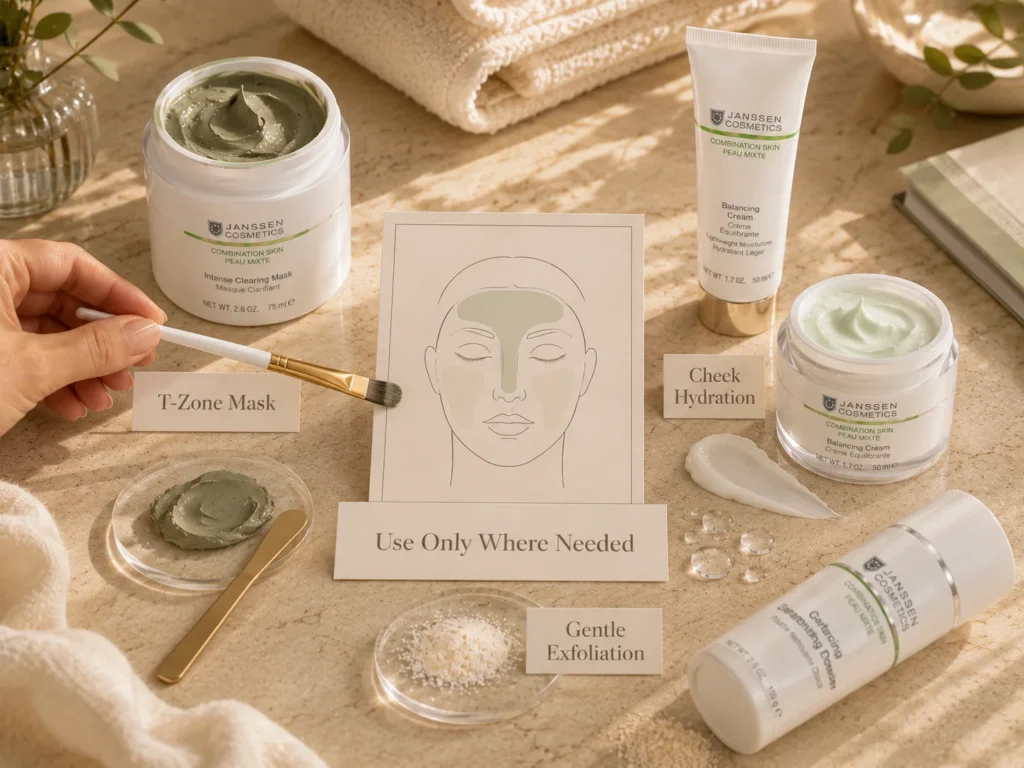
Combination skin can benefit from add-ons, but only when they are used carefully.
Clarifying Mask
Use on the T-zone when oily or congested-looking. Avoid dry cheeks if they feel tight.
Hydrating Support
Use on cheeks if they feel dry or uncomfortable.
Gentle Exfoliation
Use only when appropriate. If cheeks are sensitive, avoid applying exfoliation everywhere.
A simple routine with occasional zone care is often better than a crowded routine.
How to Adjust the Routine by Season
Combination skin can shift with weather.
In summer:
- T-zone may need more oil-balance support
- Lighter textures may feel better
- SPF texture matters
In winter:
- Cheeks may need more comfort
- Indoor heat may cause dehydration
- You may need a richer layer only on dry areas
Your routine should be flexible, not fixed forever.
Where Janssen Cosmetics Fits
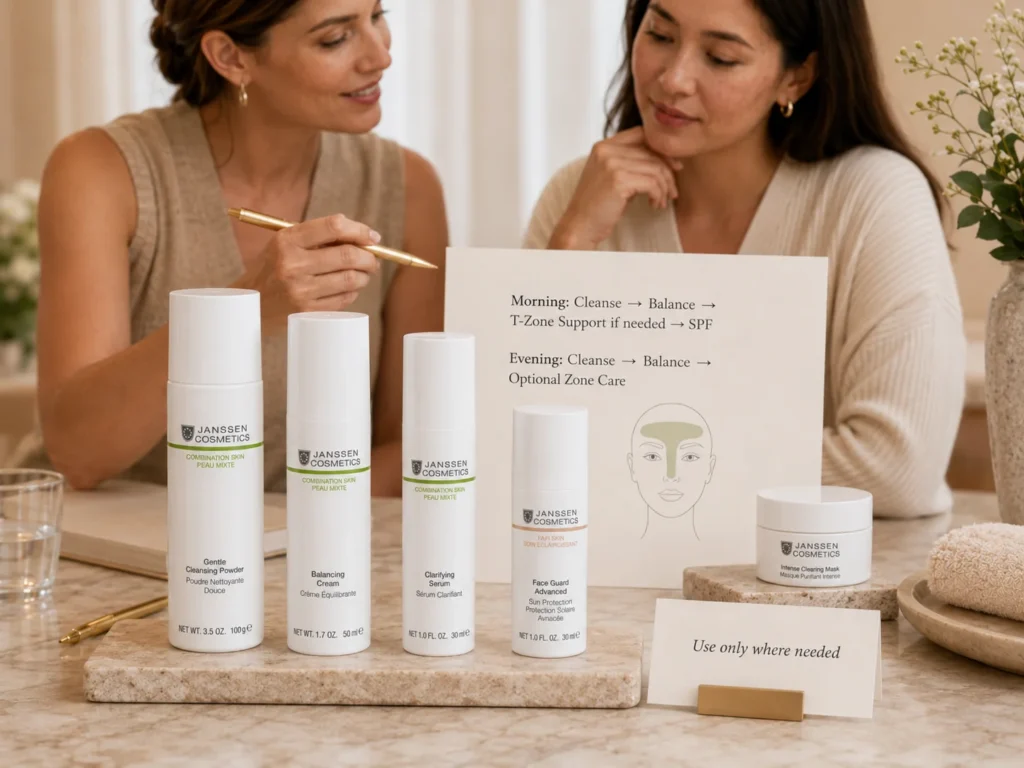
Products that may be discussed during a Zendevie combination skin consultation include:
- Gentle Cleansing Powder for mild daily cleansing
- Balancing Cream for lightweight moisture and balance
- Tinted Balancing Cream for a low-lipid tinted moisturizer option when appropriate
- Intense Clearing Mask for T-zone support when appropriate
- Face Guard Advanced for daytime protection when appropriate
These are examples only. A consultation helps decide which products fit, how often to use them, and whether they should be applied all over or only to certain zones.
What Not to Do in a Combination Skin Routine
Do not over-cleanse the T-zone.
Do not ignore dry cheeks.
Do not apply clay masks over the whole face if only the T-zone is oily.
Do not use heavy cream everywhere if only some areas need it.
Do not skip moisturizer.
Do not layer too many active products.
Do not treat combination skin like one simple category.
Frequently Asked Questions
What is the best routine for combination skin?
A simple routine includes gentle cleansing, lightweight moisturizer, SPF during the day, and zone-based care when needed.
Should combination skin moisturize?
Yes. Combination skin still needs moisturizer. Choose a lightweight texture and adjust the amount by zone.
Should I use toner for combination skin?
You can use a gentle tonic if it feels comfortable, but avoid drying formulas that make cheeks tight.
Should I use a mask on combination skin?
Yes, but apply clarifying masks only where needed, often the T-zone.
Can combination skin use exfoliation?
Yes, carefully. Avoid over-exfoliating dry or sensitive areas.
How do I stop my T-zone from getting oily?
Use gentle cleansing, lightweight moisture, and targeted T-zone support when needed. Avoid stripping the skin.
Why do my cheeks feel dry but my nose is oily?
Your T-zone may produce more oil while the cheeks need more hydration or comfort. This is a common combination skin pattern.

About the Esthetician Behind Zendevie
Zendevie is guided by Haby Diallo, a licensed esthetician with more than 20 years of professional skincare experience. Her approach is rooted in education, professional judgment, and personal care.
20+
years of experience