
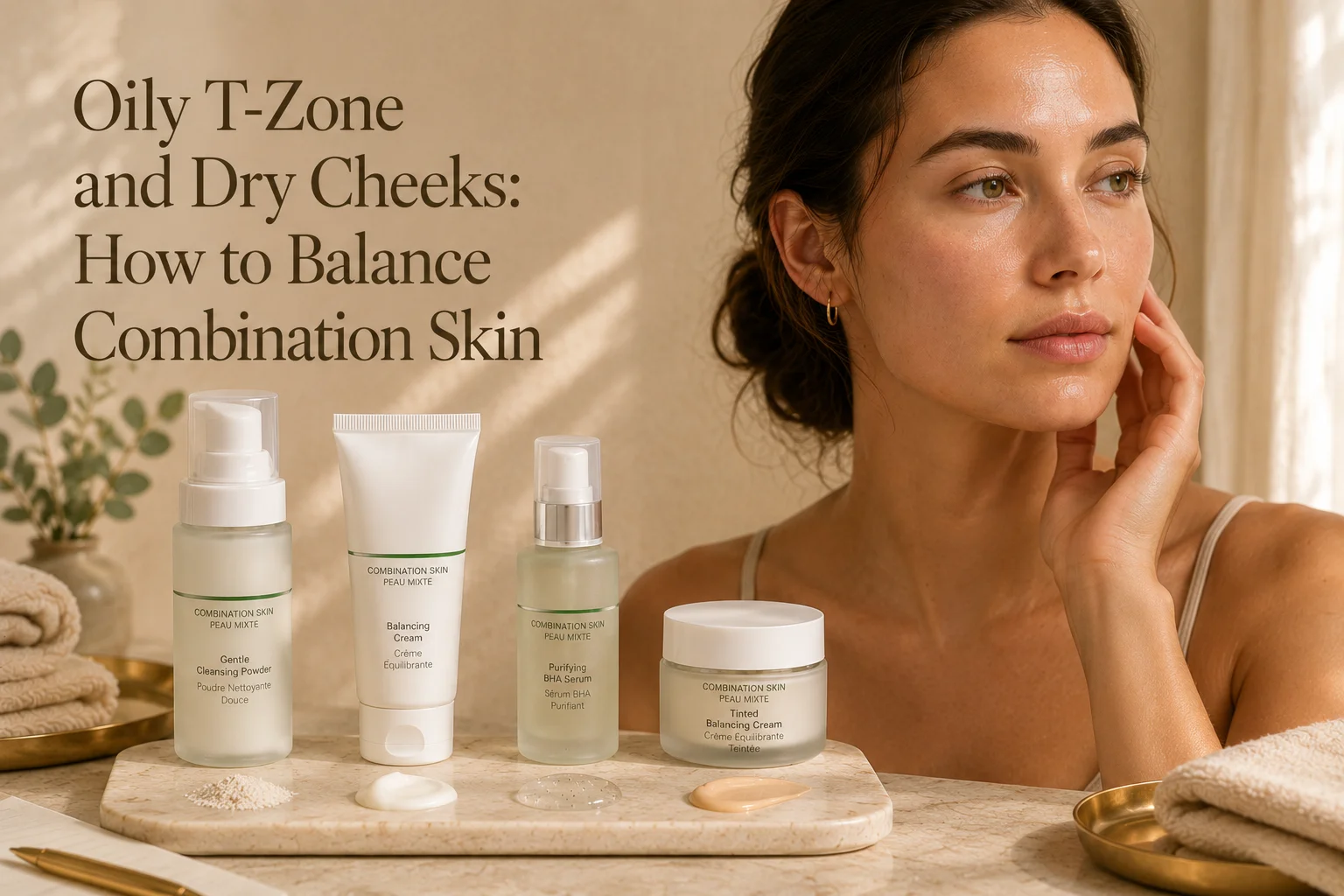
If your forehead and nose become shiny but your cheeks feel dry, your skin may feel like it has two different personalities.
You may use an oily skin cleanser and notice your cheeks feel tight. Then you try a richer cream and your T-zone looks greasy. It can feel like nothing works perfectly.
This is the classic challenge of combination skin: one area needs oil balance, while another area needs comfort.
At Zendevie, we do not treat combination skin with one extreme solution. We look at zones. The T-zone may need a different level of support than the cheeks.
An oily T-zone with dry cheeks usually means you have combination skin. The forehead, nose, and chin may produce more oil, while the cheeks may need more hydration or comfort.
The best approach is zone-based care: use lightweight balancing products all over, add extra comfort to the cheeks if needed, and use clarifying support only on oily areas when appropriate.
If you are still unsure whether this pattern fits you, review how to know if you have combination skin before changing your routine.
The T-zone includes the forehead, nose, and chin. This area often produces more oil because it naturally has more active oil glands.
That is why the nose may look shiny first. The forehead may need blotting. The chin may feel congested or oily by the end of the day.
This oil is not bad. It is part of the skin’s natural function. The goal is not to remove all oil. The goal is to manage excess shine while keeping the skin comfortable.
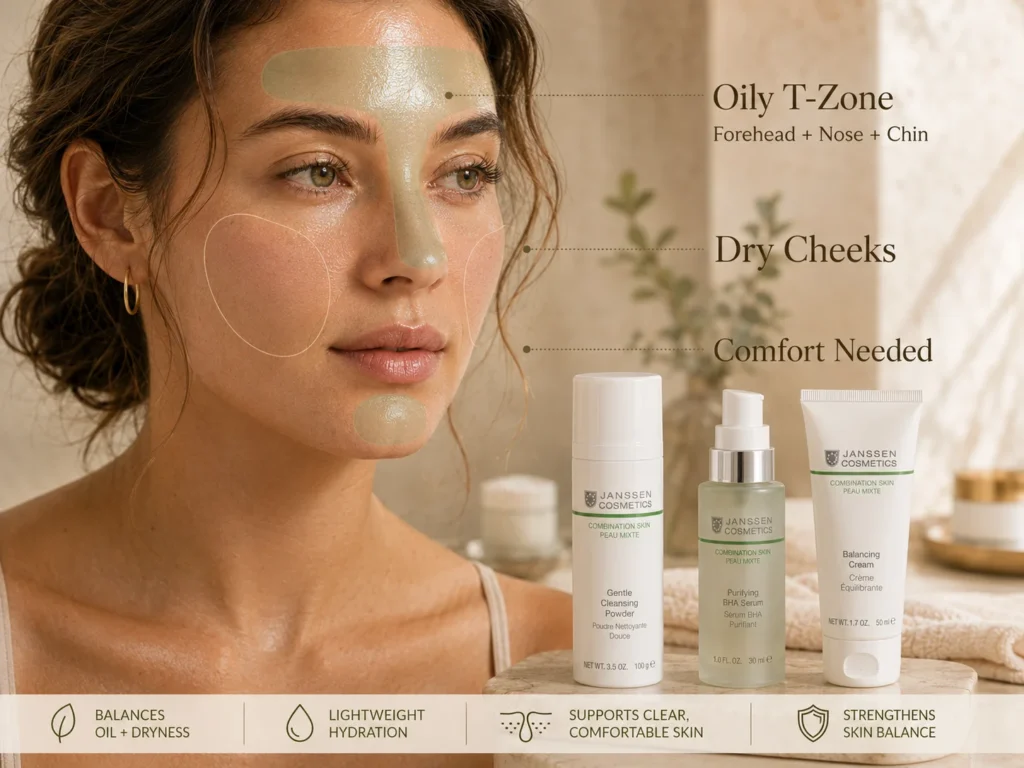
The cheeks may produce less oil than the T-zone. They may also be more affected by weather, cleansing, indoor air, or sensitivity.
Dry cheeks may feel:
If your cheeks feel tight but your T-zone is oily, your routine needs balance.
Combination skin often struggles because one product can feel different across the face.
A purifying cleanser may feel good on the nose but too strong on the cheeks.
A rich moisturizer may comfort the cheeks but feel too heavy on the forehead.
A clay mask may refresh the T-zone but make the cheeks feel dry.
This does not mean the product is always bad. It may mean it should be used in the right area, in the right amount, or not as often.
For product texture and ingredient direction, review the best ingredients for combination skin before choosing oil-control or comfort products.
Zone-based care means you do not treat every area of your face exactly the same.
You may:
This keeps the routine simple but smarter.
Combination skin still needs moisturizer.
The trick is using the right amount in the right place.
Try this:
Apply a thin layer of lightweight moisturizer all over.
Add a little extra to the cheeks if they still feel tight.
Use less product on the nose and forehead if they become shiny easily.
This approach helps prevent the T-zone from feeling greasy while still supporting dry areas.
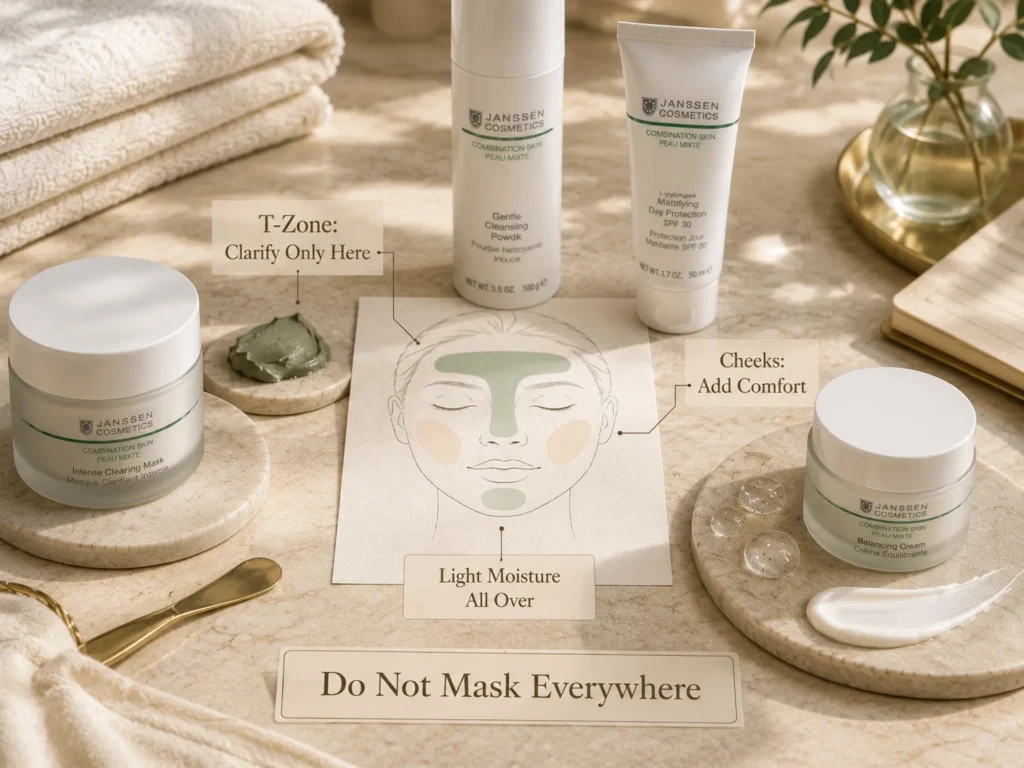
Masks should be used carefully.
If you use a clarifying mask, apply it only where needed, often the T-zone. Your cheeks may not need that same level of oil-control support.
If the cheeks are dry, a hydrating or comfort-support mask may be better for those areas.
This is sometimes called multi-masking, but it does not need to be complicated. It simply means matching the mask to the area.
Cleansing is important for combination skin, but harsh cleansing can make the cheeks worse.
Your cleanser should remove oil and buildup without leaving your face tight.
If your cheeks feel uncomfortable after cleansing, the cleanser may be too strong or you may be cleansing too often.
Clean skin should feel fresh, not stripped.
Cleanser: Use a gentle cleanser.
Moisturizer: Apply lightweight moisture all over.
Extra comfort: Add a touch more to dry cheeks if needed.
SPF: Finish with daytime protection.
Cleanser: Remove makeup, sunscreen, oil, and daily buildup.
Moisturizer: Use lightweight balancing care.
Mask: Use clarifying mask on T-zone only when appropriate.
For daily order, follow a simple combination skin routine that keeps lightweight moisture, cheek comfort, T-zone care, and SPF organized.
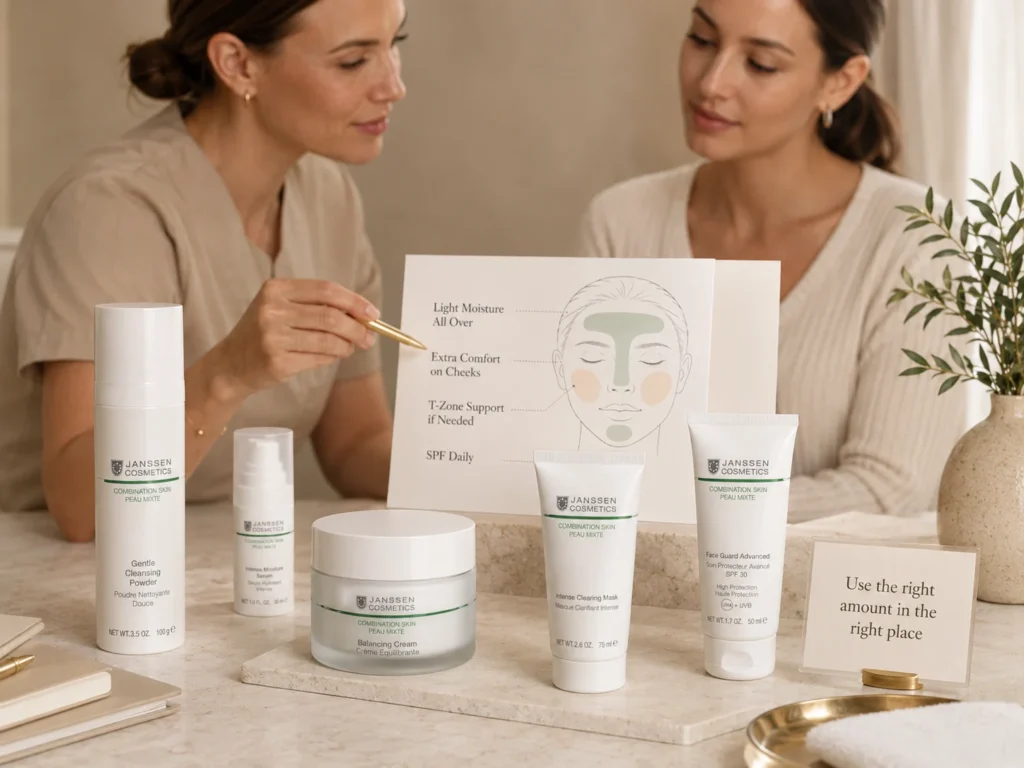
Products that may be discussed during a Zendevie combination skin consultation include:
These are examples only. A consultation helps decide whether your T-zone needs clarifying support and whether your cheeks need more comfort.
Do not apply a drying mask over the whole face if your cheeks are dry.
Do not use heavy cream everywhere if only your cheeks need it.
Do not cleanse aggressively to remove shine.
Do not skip moisturizer because the T-zone is oily.
Do not ignore cheek sensitivity.
Do not use strong actives on the whole face if only one area needs support.
The T-zone often produces more oil, while the cheeks may produce less oil or become dry from cleansing, weather, or dehydration
Yes, this is one of the most common combination skin patterns.
Sometimes, yes. You may use a clarifying product on the T-zone and more comfort on the cheeks.
Yes, but it is often best to use it only on oily areas, not over dry cheeks.
Yes, but use a lightweight amount. Oily areas still need hydration.
Your cleanser may be too strong, or your cheeks may need more moisture support.
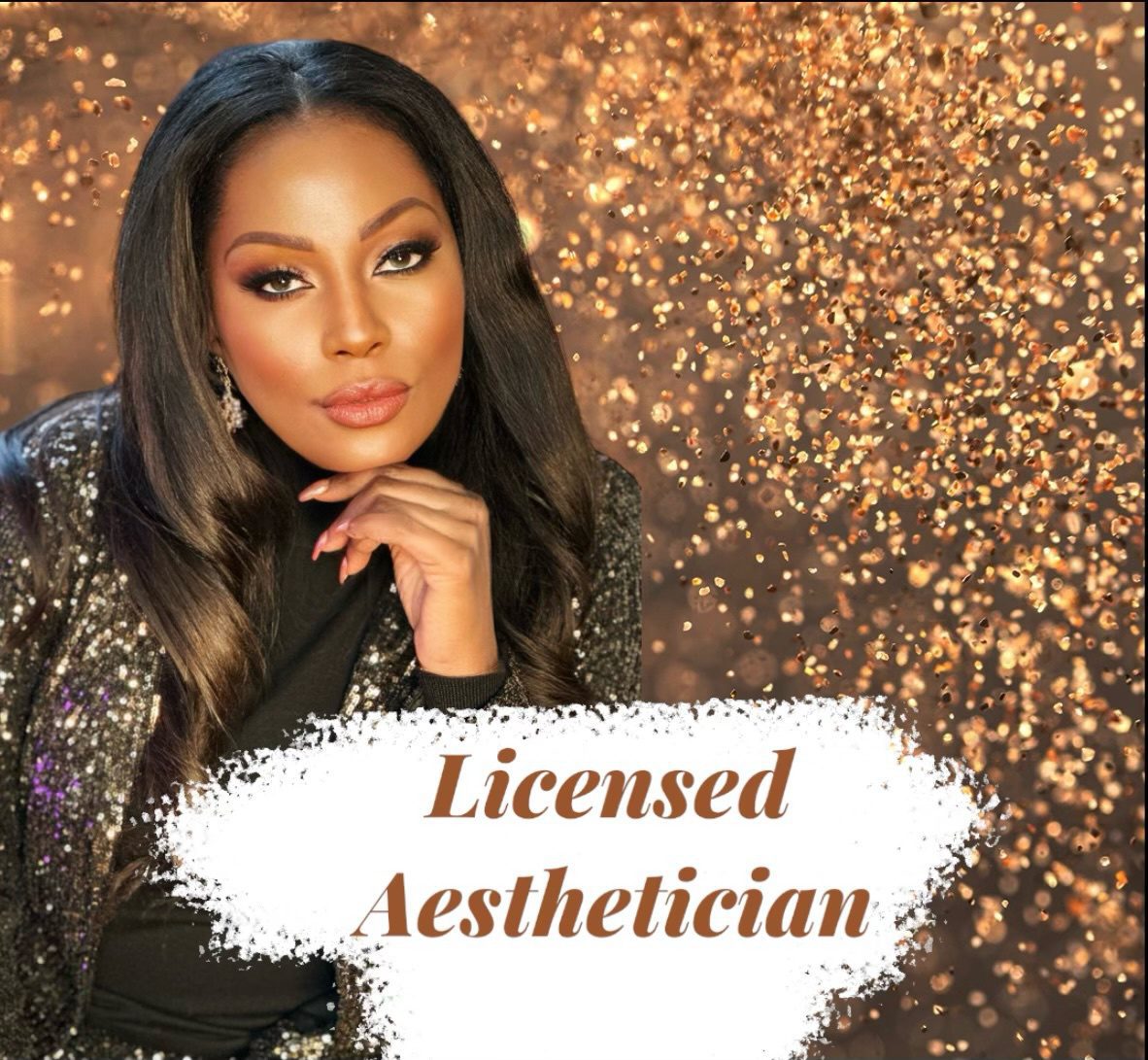
Zendevie is guided by Haby Diallo, a licensed esthetician with more than 20 years of professional skincare experience. Her approach is rooted in education, professional judgment, and personal care.
years of experience