
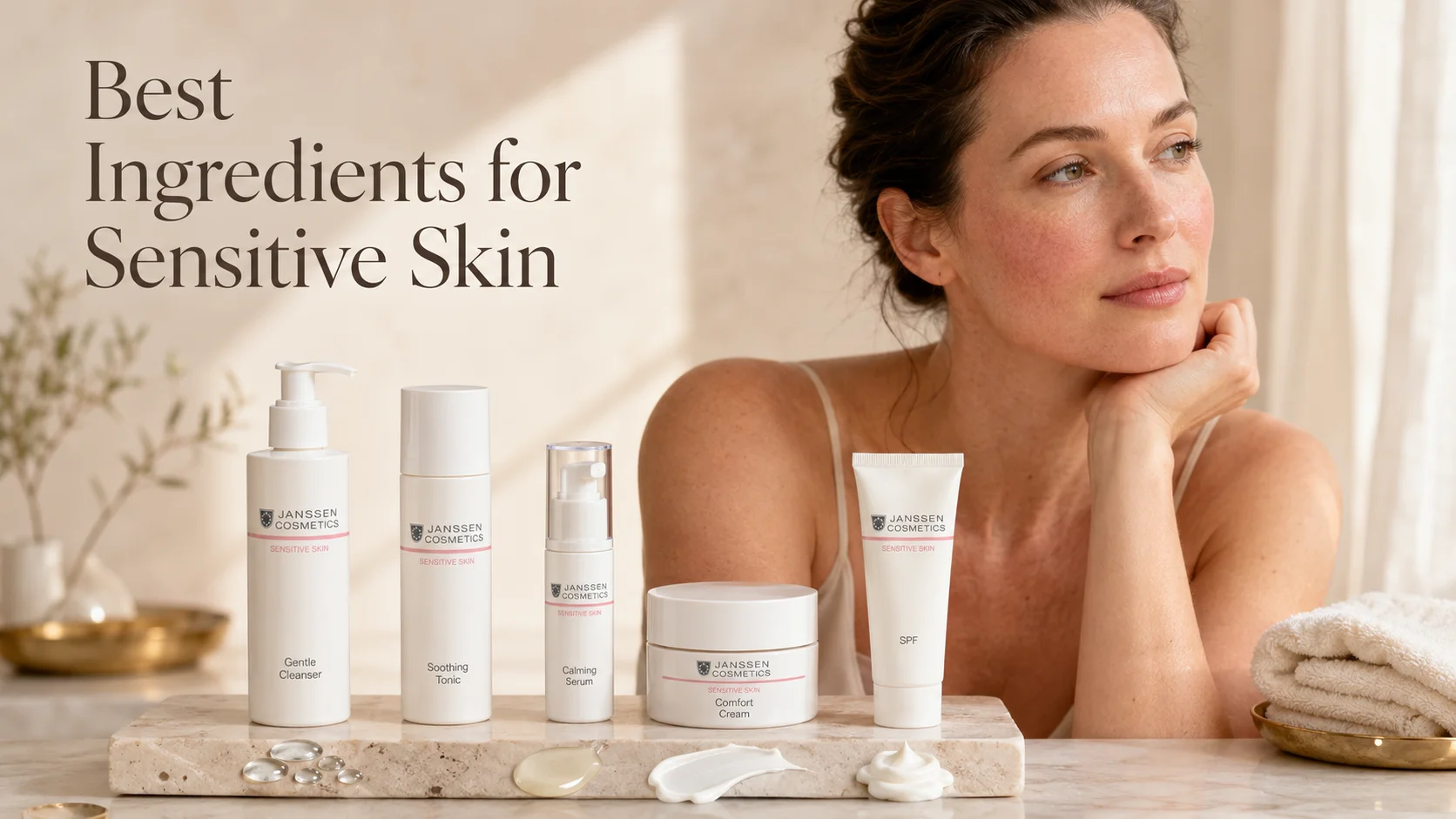
Sensitive skin does not need the strongest ingredients. It needs the right ingredients.
When skin feels stingy, tight, dry, red-prone, or reactive, it usually responds best to ingredients that support comfort, hydration, and barrier care. The goal is not to chase quick results. The goal is to help the skin feel calmer and more supported.
At Zendevie, sensitive skin ingredient education is important because many people with reactive skin are overwhelmed by trends. They try acids, retinol, strong vitamin C, scrubs, and brightening products before the skin is ready.
For sensitive skin, gentleness is not weakness. It is strategy.
The best ingredients for sensitive skin often include panthenol, allantoin, hyaluronic acid, saccharide isomerate, squalane, shea butter, bisabolol, and barrier-supporting ingredients.
Sensitive skin usually benefits from ingredients that help support hydration, comfort, and a calmer-looking complexion.
Avoid overusing strong acids, retinol, fragrance-heavy products, and harsh scrubs when the skin feels reactive.
If you are still unsure whether your skin fits this pattern, start with how to know if you have sensitive skin before choosing products.
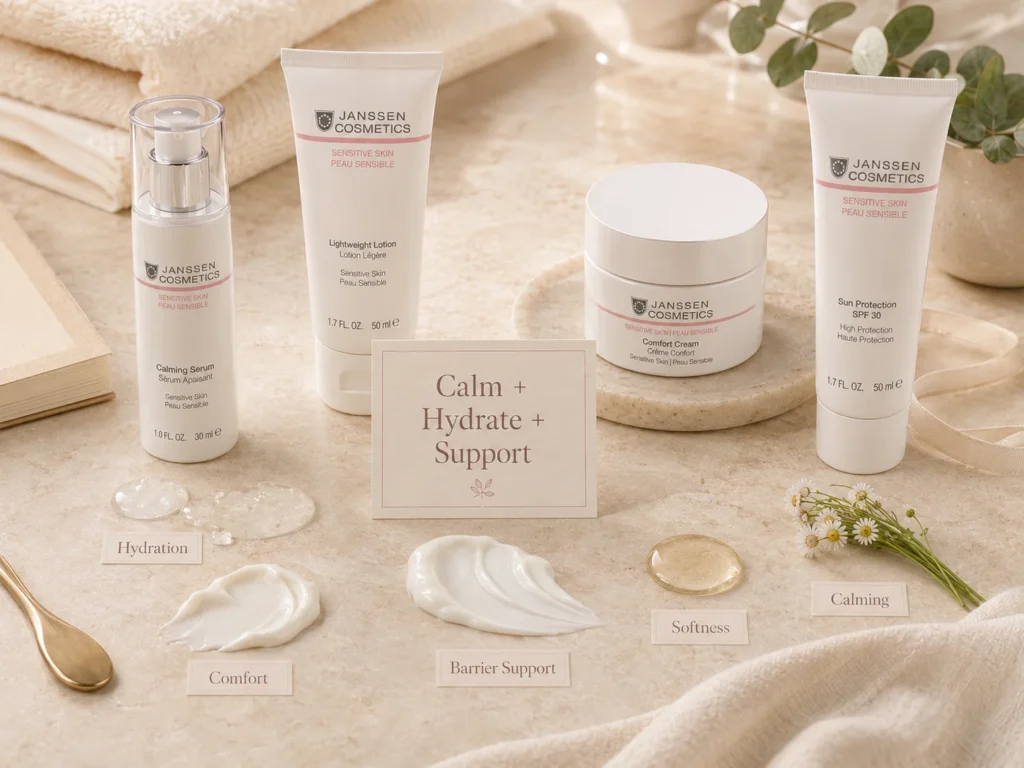
Sensitive skin usually needs:
A sensitive skin routine should not feel like a challenge. If every step burns, the routine is not gentle enough.
Because many sensitive skin concerns begin with discomfort in the sensitive skin barrier, comfort should come before stronger correction.
Panthenol, also known as provitamin B5, is commonly used in skincare to support hydration and comfort.
For sensitive-feeling skin, panthenol can be helpful when the skin feels tight, dry, or stressed.
Best for: tightness, dryness, comfort support, barrier-feeling care.
Allantoin is often used in gentle formulas because it helps support a softer, more comfortable skin feel.
It is a helpful ingredient category for skin that feels rough, tight, or easily irritated.
Best for: sensitive-feeling skin, roughness, comfort, gentle routines.
Hyaluronic acid helps support hydration in the outer layers of the skin. Sensitive skin often feels dry or tight, so lightweight hydration can be helpful.
It usually works best when followed by a lotion or cream.
Best for: dehydrated-looking sensitive skin, tightness, dullness, lightweight hydration.
Saccharide isomerate is used in skincare to support lasting moisture feel. It can be helpful when the skin feels dry again quickly after applying products.
Best for: skin that loses comfort quickly, dryness, hydration support.
Squalane is a lightweight emollient ingredient that can help skin feel softer without always feeling heavy.
Some sensitive skin types enjoy squalane because it can support comfort while still feeling elegant in texture.
Best for: softness, comfort, lightweight moisture support.
Shea butter can be helpful for sensitive skin that is also dry or undernourished. It supports softness and comfort, especially in richer creams.
However, texture matters. Some sensitive skin prefers lotion, while very dry sensitive skin may prefer cream.
Best for: dry-sensitive skin, richer night comfort, roughness.
Bisabolol is often used in calming skincare formulas. It is commonly associated with sensitive skin routines because it helps support a more comfortable skin feel.
Best for: redness-prone appearance, reactive-feeling skin, comfort support.
Sensitive skin does not always need to avoid every active ingredient forever, but it should be careful with strong or frequent use.
Use caution with:
These ingredients may be too much when the skin already feels stingy, tight, or irritated.
If your skin changed quickly after new products or active ingredients, review why your skin became sensitive suddenly before adding more steps.
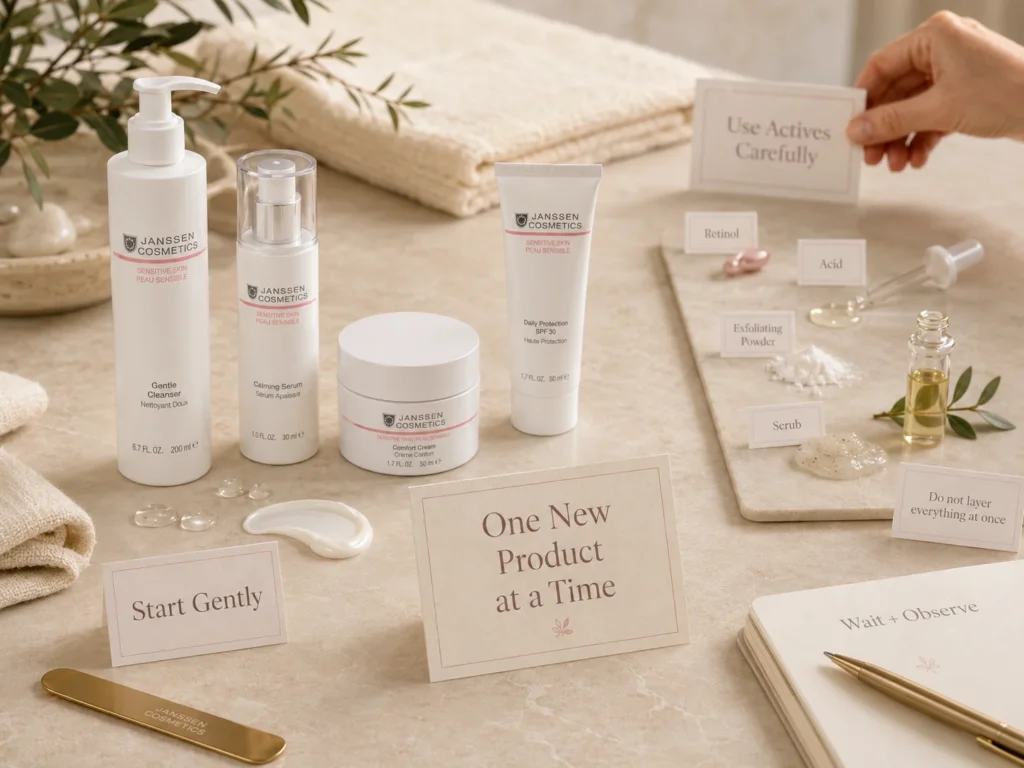
Sensitive skin should introduce new products slowly.
A safer approach:
This helps you understand what your skin tolerates.
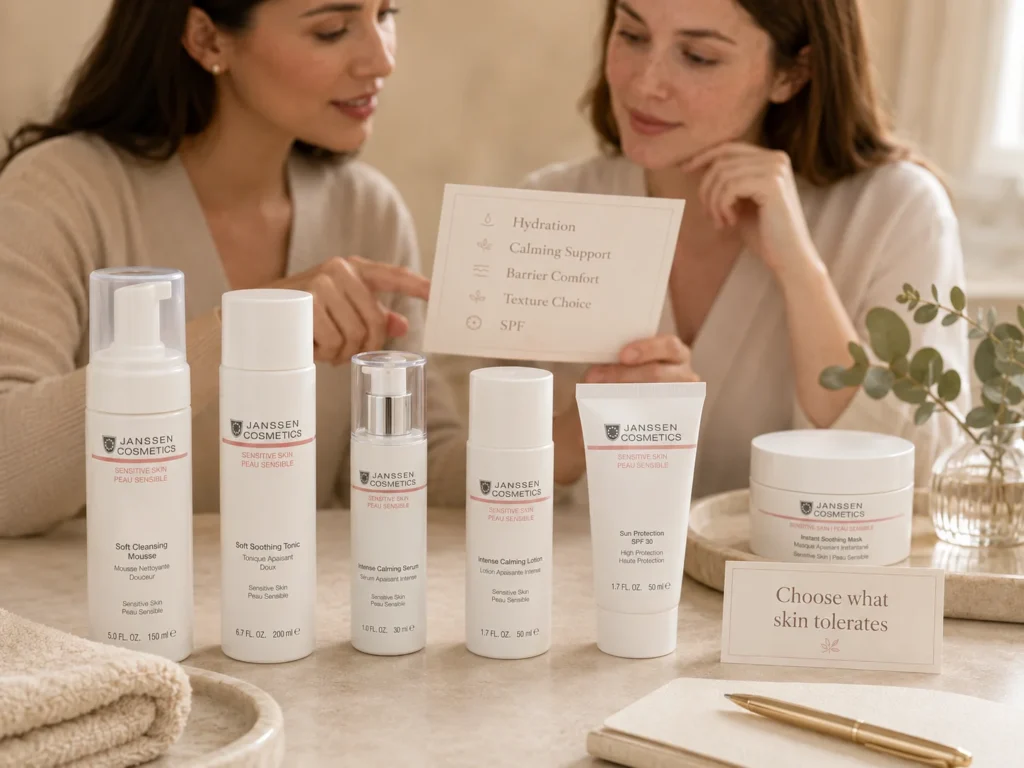
Products that may be discussed during a sensitive skin consultation include:
A consultation helps match ingredients and textures to the skin’s tolerance.
Do not choose products only because they are trending.
Do not add retinol, acids, and brightening products all at once.
Do not assume “natural” means non-irritating.
Do not use fragrance-heavy products if your skin reacts easily.
Do not exfoliate when the skin is burning or tight.
Do not skip moisturizer.
Sensitive skin often benefits from panthenol, allantoin, hyaluronic acid, saccharide isomerate, squalane, shea butter, bisabolol, and barrier-support ingredients.
Yes, many sensitive skin routines can use hyaluronic acid for hydration support, especially when followed by moisturizer.
Fragrance can be a trigger for some sensitive skin types. Fragrance-free formulas may be safer for people who react easily.
Some sensitive skin may eventually tolerate retinol, but it should be introduced carefully and not combined blindly with acids or scrubs.
Only carefully. If the skin feels irritated, stingy, warm, or tight, focus on comfort before exfoliation.
Some sensitive skin can use vitamin C, but strong formulas may irritate. A consultation can help decide if it is appropriate.

Zendevie is guided by Haby Diallo, a licensed esthetician with more than 20 years of professional skincare experience. Her approach is rooted in education, professional judgment, and personal care.
years of experience