
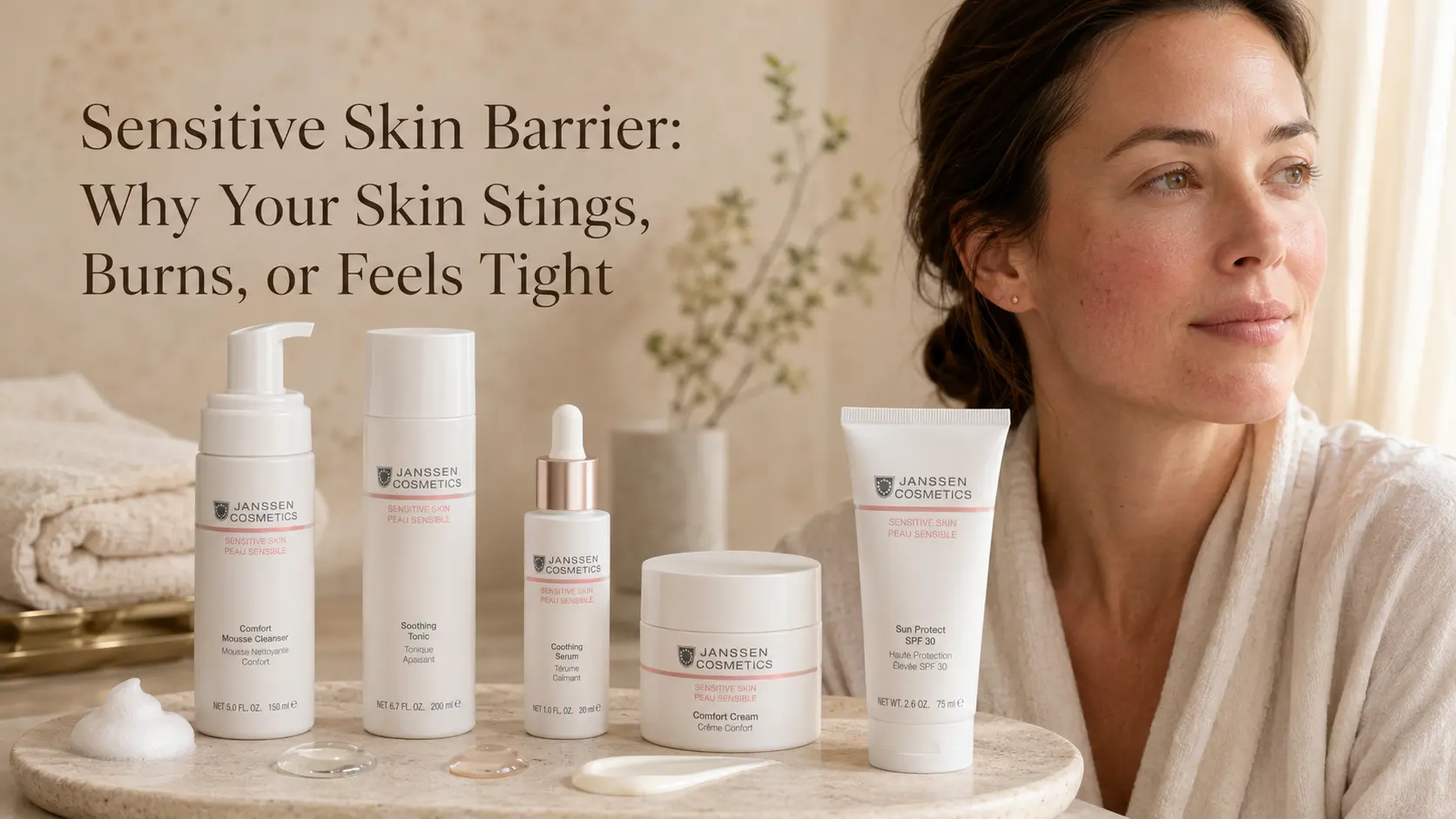
When your skin barrier feels stressed, everything can feel harder. Your cleanser may feel too strong. Your moisturizer may sting. Your cheeks may feel tight even after applying cream. Your skin may look flushed, rough, dry, or reactive.
This is often when people say, “My skin is sensitive.”
The skin barrier is one of the most important parts of sensitive skin care. If the barrier feels uncomfortable, the routine should focus on gentle support first.
At Zendevie, we do not believe in forcing sensitive skin through strong routines. We believe in building comfort before adding more active products.
The skin barrier is the outer protective layer of the skin. When it feels stressed, the skin may lose moisture more easily and react more strongly to products, weather, fragrance, cleansing, or exfoliation.
A barrier-support routine should include gentle cleansing, hydrating support, calming ingredients, a comforting lotion or cream, and SPF during the day.
If the skin is painful, cracked, bleeding, swollen, infected-looking, or rash-like, it should be checked by a dermatologist or healthcare professional.
If you are still identifying your skin pattern, review how to know if you have sensitive skin before adding more products.
The skin barrier is the outermost protective layer of your skin. Its job is to help keep moisture in and help protect the skin from outside stress.
When the barrier feels strong and comfortable, the skin usually feels smoother, calmer, and more balanced.
When the barrier feels stressed, the skin may feel:
This is why sensitive skin routines often focus on barrier comfort.
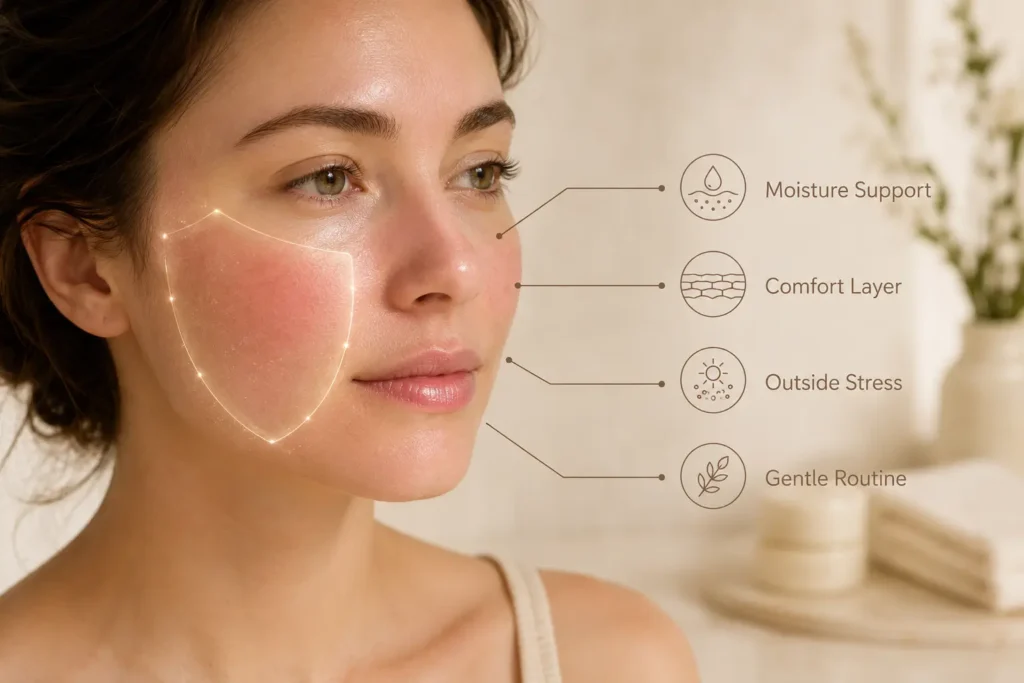
The barrier can feel stressed for many reasons. Often, it is not one thing. It is a combination.
Common causes include:
When the skin barrier is already stressed, even a good product may feel uncomfortable.
If the sensitivity appeared recently, it may help to understand why your skin became sensitive suddenly before changing the whole routine.
You may need barrier support if you notice:
These signs do not always mean something serious, but they do mean the routine should slow down.
When skin feels rough or dull, many people reach for exfoliation. But if the barrier is stressed, exfoliation may make the skin feel worse.
Strong products can be helpful in the right routine, but sensitive skin needs timing.
Be careful with:
If your skin stings, burns, or feels tight, focus on comfort before active correction.
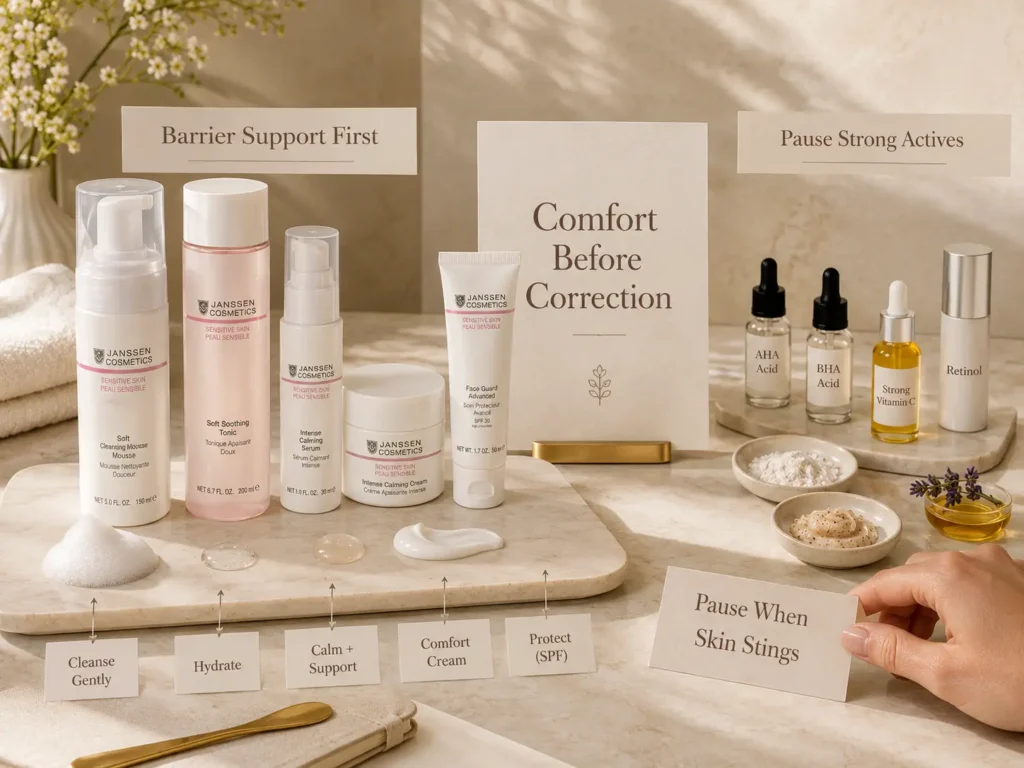
Barrier support does not have to be complicated.
It usually means:
For ingredient choices, focus on the best ingredients for sensitive skin before adding stronger actives.
The goal is to help the skin feel safe again.
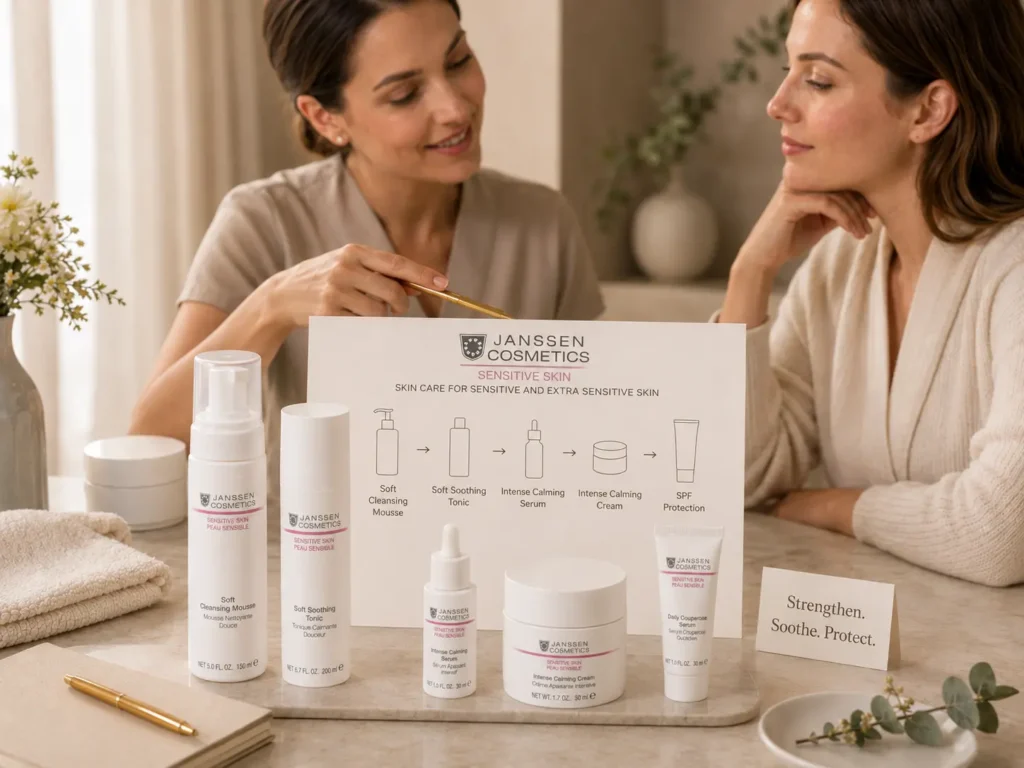
Step 1: Gentle cleanser
Use a cleanser that does not leave the skin tight.
Step 2: Soothing tonic
Choose a tonic that feels calming and alcohol-free.
Step 3: Calming serum
Use a serum focused on comfort if needed.
Step 4: Lotion or cream
Choose the texture based on your skin’s dryness level.
Step 5: SPF
Protect the skin during the day.
Step 1: Gentle cleanse
Remove makeup, sunscreen, and buildup without scrubbing.
Step 2: Soothing tonic
Prepare the skin for comfort care.
Step 3: Calming serum
Support sensitive-feeling skin.
Step 4: Comfort cream
Help the skin feel soft and supported overnight.
Products that may be discussed during a sensitive skin consultation include:
These products should be chosen based on your skin’s tolerance, dryness level, redness-prone appearance, and routine history.
Do not scrub sensitive skin to make it smooth.
Do not keep using a product that repeatedly burns.
Do not layer retinol with acids when your skin feels stressed.
Do not use hot water on reactive skin.
Do not skip moisturizer because your skin feels oily.
Do not change your entire routine every few days.
Do not ignore cracked, bleeding, painful, or rash-like skin.
The skin barrier is the outer protective layer of the skin. It helps keep moisture in and supports protection from outside stress.
Your skin may feel tight, dry, stingy, warm, itchy, rough, or more reactive than usual.
Moisturizer may burn if your skin barrier feels stressed, if the formula is not right for you, or if the skin is irritated.
Usually no. If the skin feels stingy, tight, or irritated, focus on comfort before exfoliation.
It depends on the skin and the cause of irritation. Consistency and avoiding triggers are important.
Yes. Oily skin can still become dehydrated, irritated, or barrier-stressed.

Zendevie is guided by Haby Diallo, a licensed esthetician with more than 20 years of professional skincare experience. Her approach is rooted in education, professional judgment, and personal care.
years of experience