


It can feel confusing when your skin suddenly changes. A cleanser that used to feel fine may start leaving your face tight. A moisturizer may sting. Your cheeks may look more flushed than usual. Even products you trusted before may begin to feel uncomfortable.
When this happens, many people panic and start adding more products to “fix” the problem. But sudden sensitivity usually needs the opposite: a calmer, simpler routine.
At Zendevie, we look at sudden sensitivity carefully. The goal is not to push the skin or force it to tolerate more. The goal is to understand what may have changed and help the skin feel more comfortable again.
Your skin may suddenly feel sensitive because of over-exfoliation, harsh cleansing, weather changes, fragrance, too many new products, retinol or acid overuse, dryness, stress, sun exposure, or a stressed skin barrier.
When skin suddenly becomes reactive, the best first step is to simplify your routine. Use gentle cleansing, calming hydration, a comforting moisturizer, and SPF during the day.
If the skin is painful, swollen, blistering, bleeding, infected-looking, rash-like, or not improving, it is best to speak with a dermatologist or healthcare professional.
If you are unsure whether this pattern matches your skin, start with the guide on how to know if you have sensitive skin.
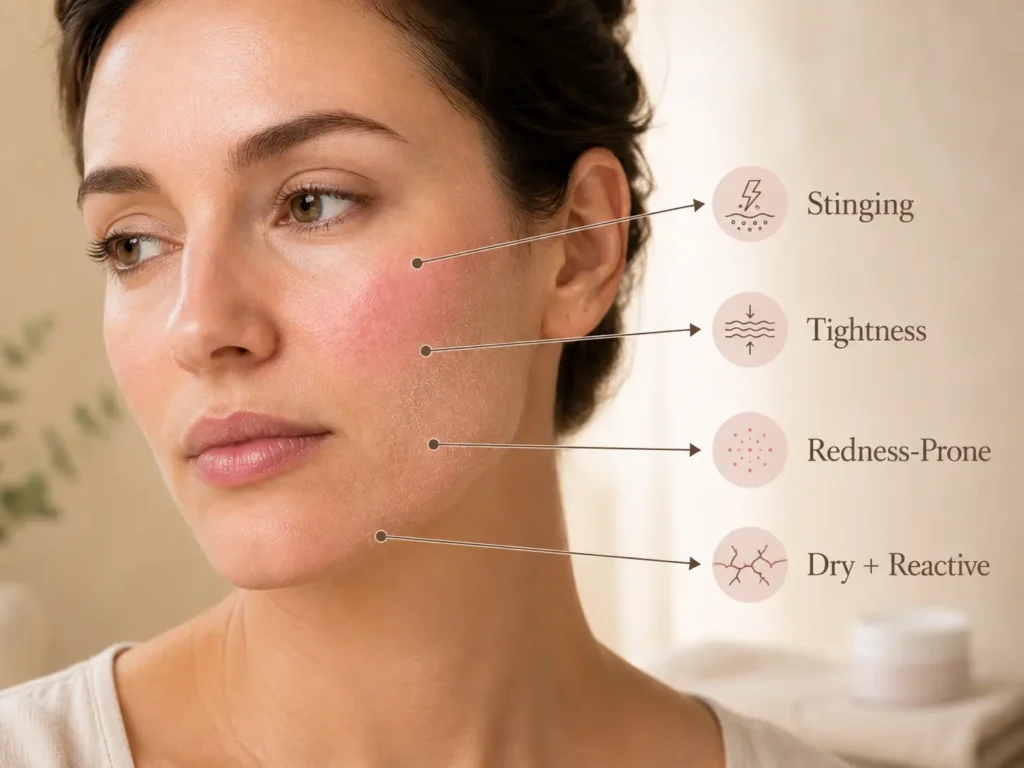
Sudden sensitive skin does not always look dramatic. Sometimes the signs are small at first.
You may notice:
The pattern matters. If your skin keeps reacting, it is time to slow down.
One of the most common reasons skin becomes sensitive suddenly is product overload.
Maybe you started a new serum, added an exfoliant, changed your cleanser, tried a new mask, and added a retinol-style product all within the same week. Even if each product is good on its own, the skin may not tolerate everything together.
Sensitive skin often needs time.
A better approach is to introduce one new product at a time and watch how the skin responds.
Exfoliation can help some skin look smoother, but too much exfoliation can make the skin feel raw, tight, or stingy.
Over-exfoliation may happen from:
If your skin feels sensitive after exfoliating, stop strong active products and focus on comfort first.
A cleanser can make or break a sensitive skin routine.
If your face feels squeaky clean, pulled, or tight after washing, your cleanser may be too strong. Sensitive skin needs cleansing that removes buildup without stripping the skin.
The skin should feel clean, soft, and calm after cleansing. It should not feel like it needs rescue right away.
Skin can become more sensitive during seasonal changes.
Cold weather, wind, indoor heating, air conditioning, dry air, heat, humidity shifts, and sun exposure can all affect how the skin feels.
If your skin becomes more reactive in winter or during travel, your routine may need more comfort and barrier support.
Fragrance can be a trigger for some sensitive-feeling skin. This includes perfume-like fragrance, essential oils, and strongly scented “natural” products.
Natural does not always mean gentle.
If your skin suddenly stings or turns red after a new product, fragrance may be one possible reason.
Retinol, acids, strong brightening products, and active serums can be helpful for some routines, but they can also irritate the skin if introduced too quickly or combined with too many other active products.
If your skin becomes suddenly sensitive after starting retinol, acids, or a new active serum, simplify the routine and give the skin time to recover.
Dry skin can become sensitive when it loses comfort. When the skin feels dry, tight, or rough, products may sting more easily.
A stressed skin barrier can make the skin feel less protected. This is why hydration and comfort are important for sensitive skin.
When the skin feels dry, tight, or rough, choosing the best ingredients for sensitive skin can help keep the routine calmer and more supportive.
When the skin suddenly becomes reactive, do not rush into more active products.
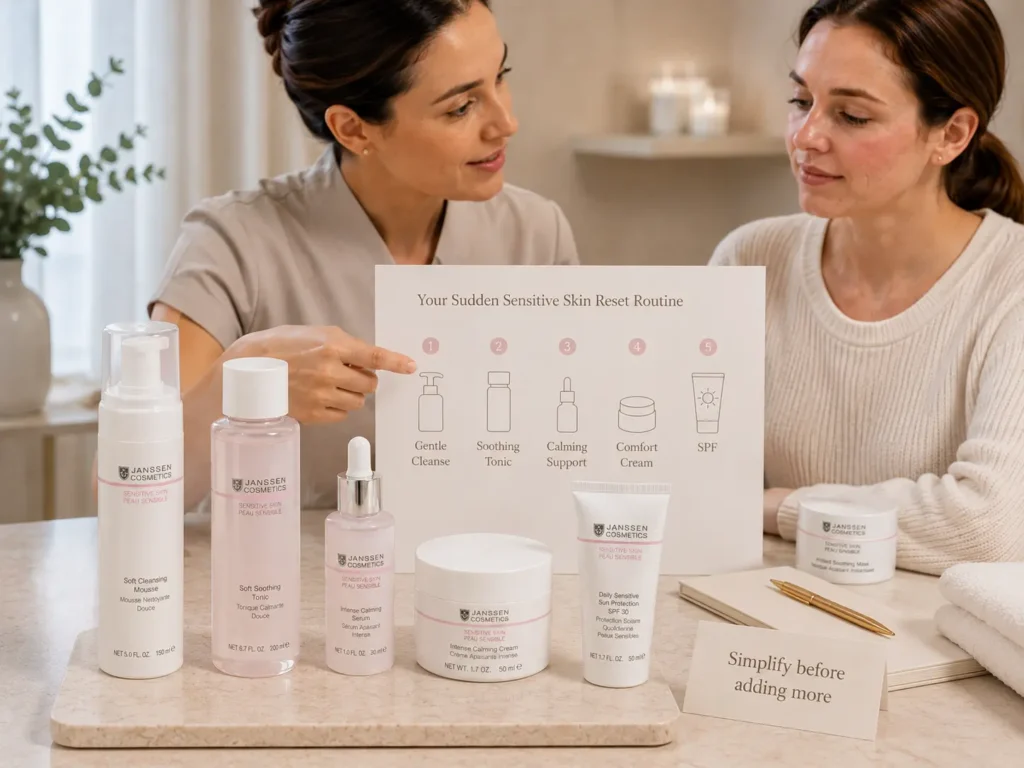
Start with a simple reset:
Gentle cleanser → Calming serum or lotion → Comfort cream → SPF during the day
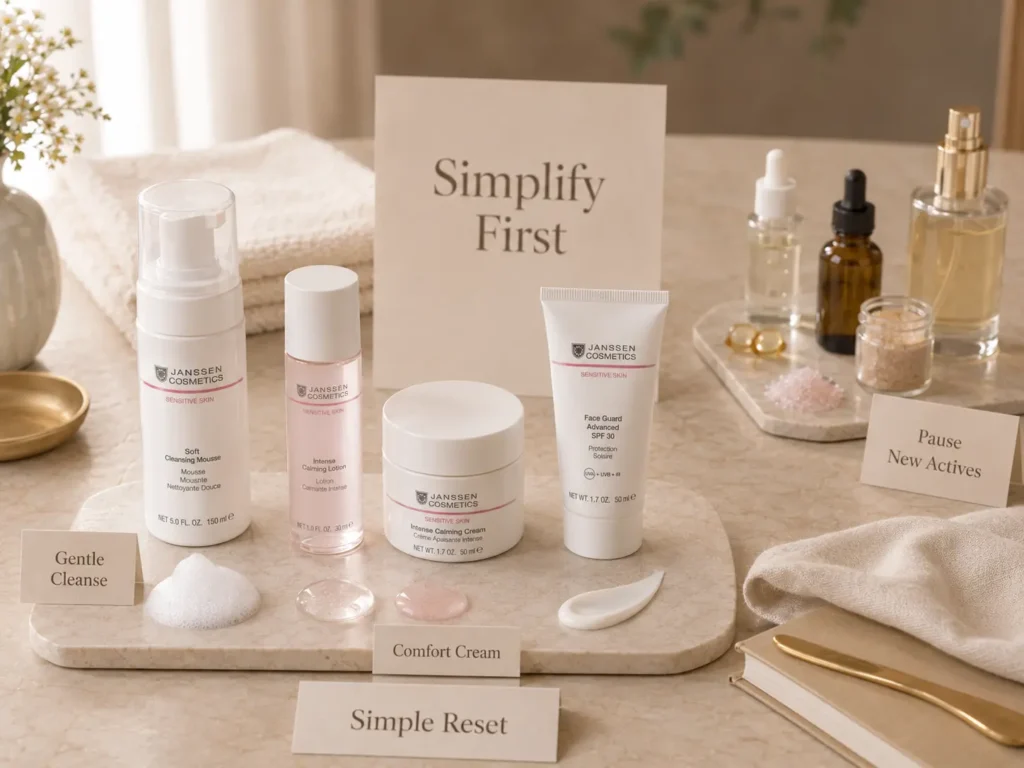
Pause products that may be too active, such as:
The goal is to help the skin feel comfortable again before rebuilding the routine.
Zendevie carries Janssen Cosmetics through a consultation-first model. Sensitive skin should never be matched blindly because the wrong texture or active product can make discomfort worse.
Products that may be discussed during a sensitive skin consultation include:
These are examples, not automatic recommendations. A consultation helps decide what belongs in your routine and what should wait.
Do not keep testing new products every day.
Do not exfoliate when the skin is already stingy or tight.
Do not use hot water to “calm” the skin.
Do not layer retinol, acids, and brightening serums when your skin feels reactive.
Do not ignore repeated burning.
Do not assume every natural product is gentle.
Do not try to diagnose a rash or allergic reaction through skincare alone.
Your skin may have become sensitive because of over-exfoliation, harsh cleansing, weather changes, product overload, fragrance, retinol, acids, dryness, or barrier stress.
Yes. If the skin barrier feels stressed, even familiar products may sting temporarily.
You do not always need to stop everything, but simplifying the routine is usually helpful. Keep gentle cleansing, moisturizer, and SPF.
Yes. Too much exfoliation can make the skin feel raw, tight, stingy, or reactive.
Sometimes sensitivity improves when triggers are removed and the routine becomes gentler. Persistent or worsening symptoms should be checked by a professional.
If your skin is painful, swollen, blistering, bleeding, infected-looking, rash-like, severely itchy, or not improving, speak with a dermatologist or healthcare professional.

Zendevie is guided by Haby Diallo, a licensed esthetician with more than 20 years of professional skincare experience. Her approach is rooted in education, professional judgment, and personal care.
years of experience