

Mature skin often feels drier because the skin changes over time.
The face may feel tighter after cleansing. Moisturizer may not feel like it lasts as long. Makeup may settle into lines or cling to dry areas. The skin may look dull, thinner-looking, less smooth, or less comfortable than it used to.
This does not mean the skin is “bad.” It means the skin may need a different type of support.
At Zendevie, our licensed esthetician looks at mature skin with care and respect. Mature skin does not need fear-based skincare. It needs hydration, comfort, barrier support, texture awareness, and daily protection.
Mature skin often feels drier because it may naturally feel less comfortable, less hydrated, and less supported over time.
A mature dry skin routine should focus on:
Gentle Cleanser → Hydrating Tonic → Moisture Serum → Comfort Cream → SPF in the morning
Mature skin may also need richer moisturizer textures, more consistent night care, and fewer harsh or aggressive products.

As skin matures, it may feel different than it did years before.
It may feel:
These changes can make mature skin feel like it needs more support from the routine.
The goal is not to fight age. The goal is to care for the skin in a way that feels respectful, nourishing, and realistic.
Mature skin can be dry, dehydrated, or both.
Dry skin lacks oil or lipid comfort. It may feel rough, tight, flaky, or undernourished.
Dehydrated skin lacks water. It may feel tight, dull, or less plump-looking, even if it does not look flaky.
Mature skin often needs both:
This is why moisturizer alone may not always feel like enough.
Many people with mature skin say, “I moisturize, but my skin still feels dry.”
This can happen when the routine is missing hydration before cream, or when the moisturizer texture is too light for the skin’s current needs.
Moisturizer may not feel like enough if:
In this case, the routine may need a hydrating serum, richer cream, or gentler cleansing.
A cleanser can make mature dry skin feel better or worse.
If the cleanser leaves the skin squeaky, tight, or uncomfortable, it may be too harsh. Mature dry skin usually needs a gentle cleanser that removes makeup, sunscreen, oil, and buildup without stripping comfort.
Your cleanser may be too strong if:
Cleansing should leave mature skin clean but comfortable.
A hydrating serum can be helpful for mature dry skin because it adds a moisture-support step before cream.
Serum may help when the skin feels:
A serum does not replace moisturizer. It supports the routine before cream.
A helpful order may be:
Cleanser → Tonic → Hydrating Serum → Moisturizer
In the morning, SPF should come after moisturizer.
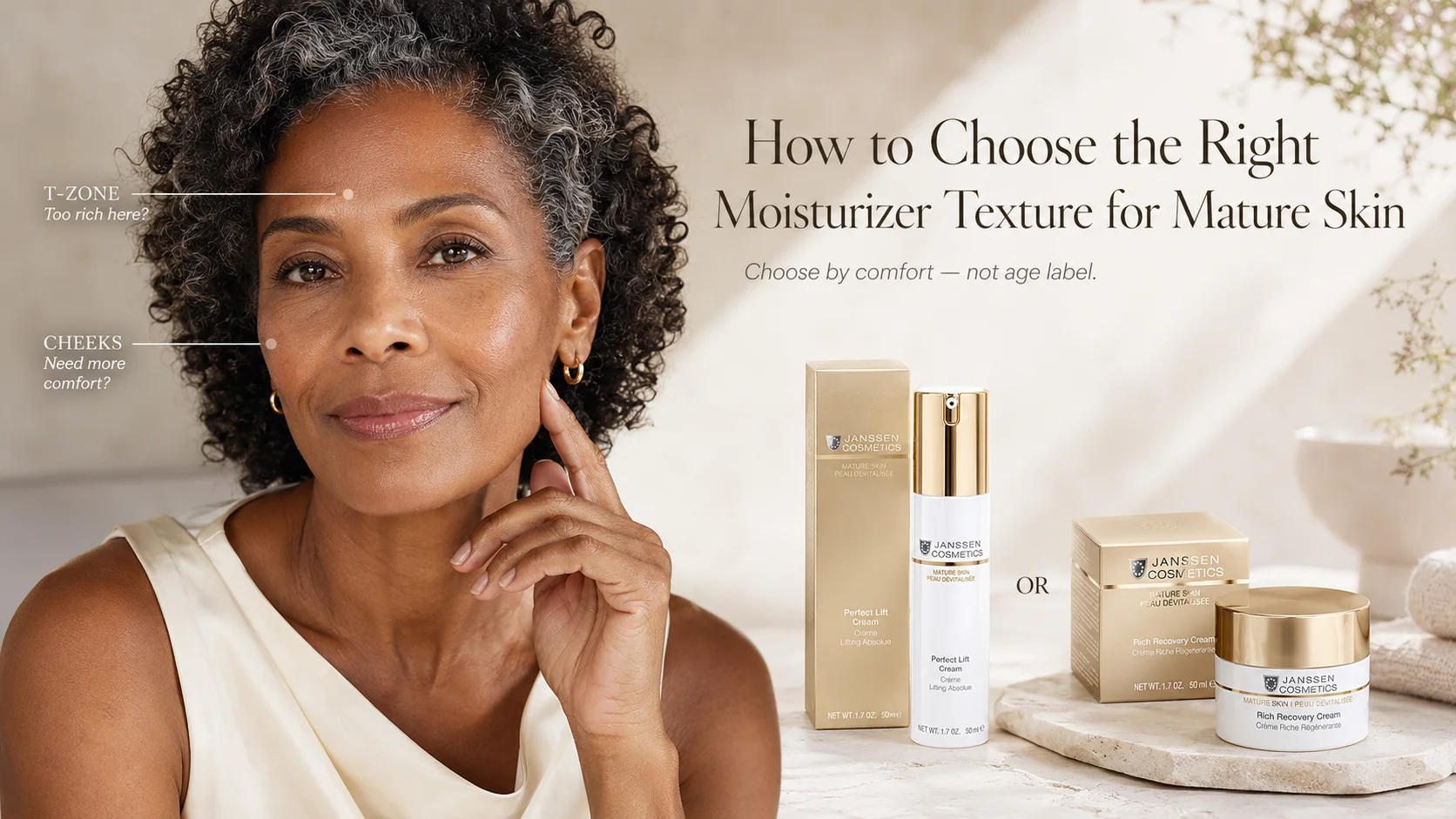
Mature skin often benefits from richer textures, but not every mature skin type needs the heaviest cream.
The right moisturizer texture depends on how the skin feels.
A mature dry skin routine may need:
The goal is comfort without heaviness.
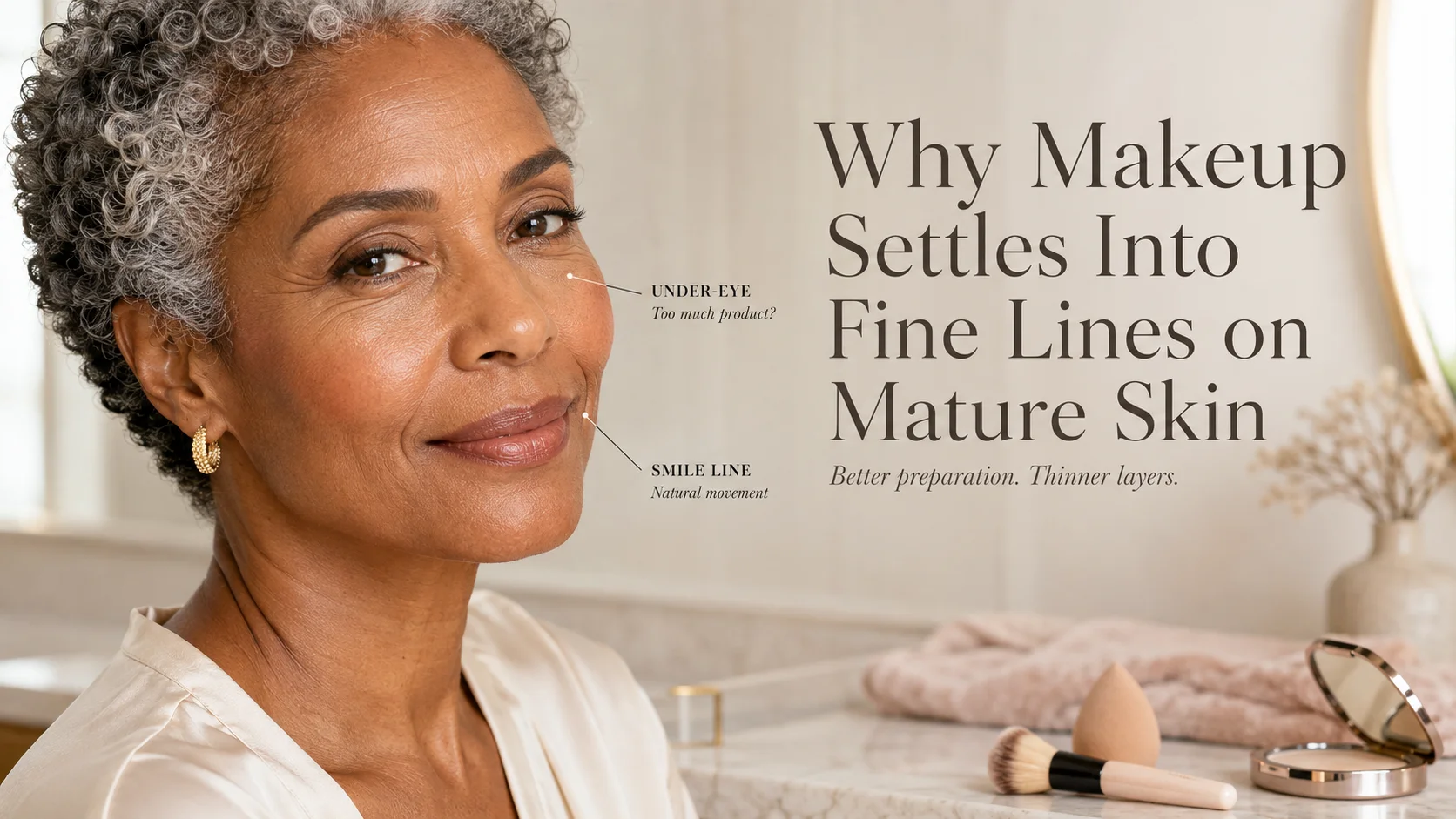
Makeup can reveal dryness, dehydration, and texture.
Foundation may cling to dry patches, settle into fine-looking lines, or look uneven when the skin underneath is not hydrated or comfortable.
This does not always mean the makeup is wrong. It may mean the skin prep needs adjustment.
Mature skin may need:
Smooth-looking makeup begins with comfortable skin.
Mature dry skin may also feel more sensitive over time.
Products that once felt fine may start to feel too strong. Strong exfoliation, retinol used too quickly, acids, harsh toners, and fragrance-heavy products may make the skin feel dry, tight, or reactive.
Signs mature skin may need a gentler routine include:
When this happens, comfort comes before correction.
Mature skin may benefit from gentle exfoliation when the skin is stable and dullness or rough surface buildup is part of the concern.
But exfoliation should be used carefully.
Avoid exfoliating if the skin feels:
Mature dry skin does not need aggressive exfoliation to look fresh. It needs consistent support.
Some mature skin routines may include retinol-style support, but dry skin must use it carefully.
Retinol can feel too strong if the skin is already dry, sensitive, or barrier-stressed. It should not be layered with too many acids, scrubs, or strong active products at once.
Before using retinol-style support, mature dry skin should have a strong basic routine:
Active products should be introduced slowly and only when the skin can tolerate them.
SPF is important for mature dry skin every day.
Sun exposure can contribute to dullness, uneven-looking tone, rough-looking texture, dark spot appearance, and visible signs of aging over time.
A mature dry skin routine should not stop at moisturizer.
Morning care should end with SPF.
A simple morning routine:
Gentle Cleanser → Hydrating Tonic → Serum → Moisturizer → SPF
Use a cleanser that does not leave the skin tight.
Prepare the skin for moisture support.
Support hydration before cream.
Choose a cream texture based on dryness level.
Finish with daytime protection.
Morning structure:
Gentle Cleanser → Hydrating Tonic → Serum → Moisturizer → SPF

Remove sunscreen, makeup, oil, and daily buildup without stripping.
Refresh and prepare the skin gently.
Use a hydrating or comfort-support serum if needed.
Use a more comforting cream if the skin feels dry overnight.
Evening structure:
Gentle Cleanser → Tonic → Serum → Comfort Cream
Mature dry skin may change with the weather.
In winter, the skin may need:
In summer, the skin may need:
Mature dry skin routines should be flexible.
The eye area may look dry or dehydrated because the skin is delicate and can show texture more easily.
This area may need:
Avoid applying strong active products too close to the eye area unless directed.
Dryness around the mouth may happen from weather, cleansing, wiping, talking, eating, toothpaste irritation, or barrier stress.
Support this area with:
If the area is painful, cracked, swollen, rash-like, or not improving, it should be checked by a dermatologist or healthcare professional.
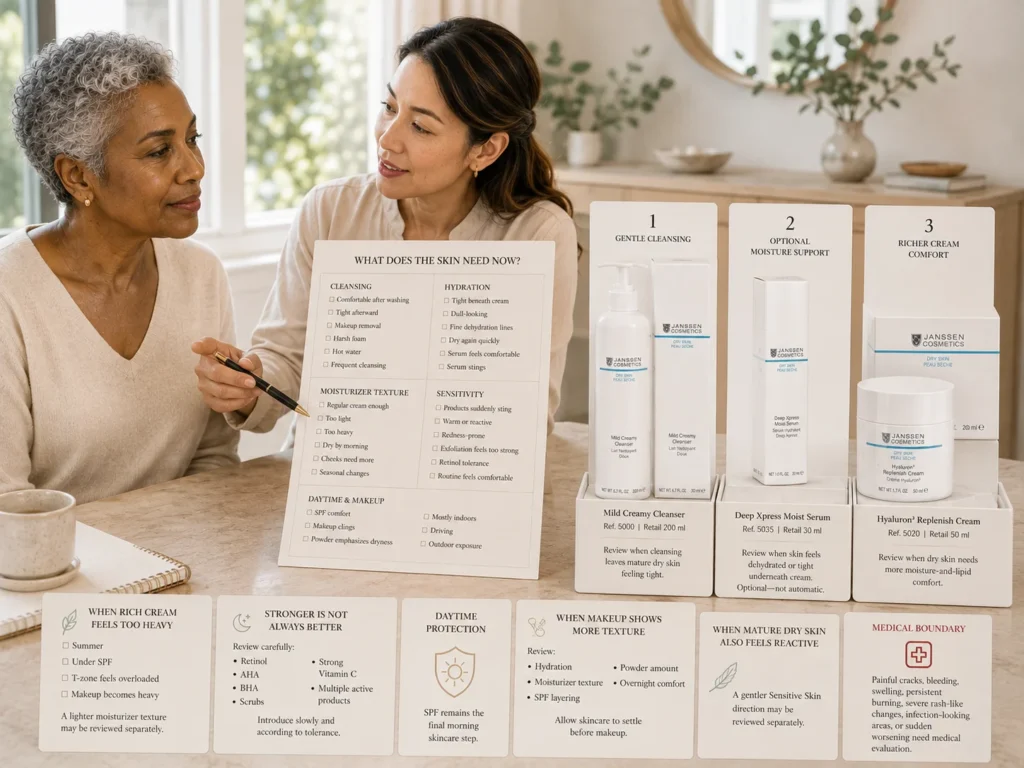
Products that may be discussed during a Zendevie consultation for mature dry skin include:
If the skin is dry, mature, and sensitive-feeling, sensitive skin support may also be discussed, such as:
These are examples only. A consultation helps decide whether mature dry skin needs hydration, richer cream, comfort support, SPF adjustment, or a calmer routine before active products.
Do not assume mature skin needs the strongest products.
Do not skip moisturizer because serum feels enough.
Do not skip SPF.
Do not use harsh cleansers that leave skin tight.
Do not over-exfoliate dry or delicate-looking skin.
Do not layer retinol, acids, strong vitamin C, and scrubs all at once.
Do not ignore products that repeatedly sting or burn.
Do not ignore painful, cracked, bleeding, swollen, or rash-like skin.
Mature skin may feel drier because the skin can become less comfortable, less hydrated-looking, and more easily affected by cleansing, weather, and routine changes over time.
A gentle routine with cleanser, hydrating tonic, serum, moisturizer, and SPF during the day is often a strong starting point.
Many mature dry skin routines benefit from a hydrating or moisture-support serum before cream, especially when the skin feels tight or dull.
Some mature dry skin benefits from richer cream, especially at night. The right texture depends on how dry and comfortable the skin feels.
Yes, but carefully. Avoid exfoliation when the skin feels tight, burning, stingy, cracked, or sensitive.
Makeup may settle when the skin is dry, dehydrated, textured, or not prepared with enough hydration and moisture.
Yes. SPF is important for daytime protection and helps support a healthier-looking complexion over time.

Zendevie is guided by Haby Diallo, a licensed esthetician with more than 20 years of professional skincare experience. Her approach is rooted in education, professional judgment, and personal care.
years of experience