

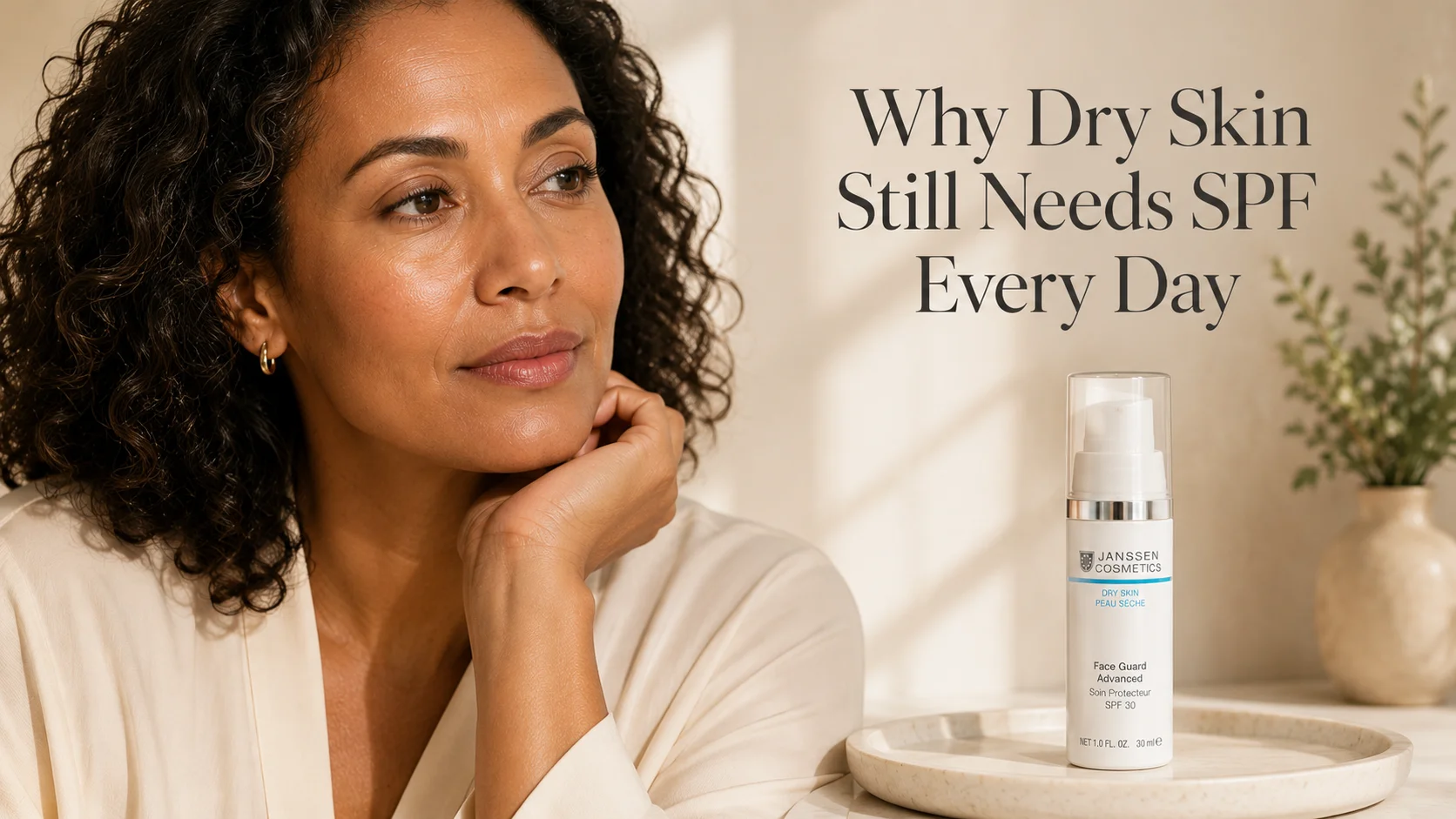
Dry skin needs moisture, comfort, and protection. Many people focus on cleanser, serum, and moisturizer, but forget that SPF is also part of a dry skin routine.
SPF is not only for oily skin, acne-prone skin, or uneven tone. Dry skin still needs daytime protection because sun exposure can make the skin look duller, rougher, more uneven, and less comfortable over time.
Even if your skin feels dry, even if you are mostly indoors, and even if the weather is cloudy, SPF still matters during the day.
At Zendevie, our licensed esthetician looks at dry skin care as a complete routine. Moisturizer helps support comfort, but SPF helps protect the skin during the day.
Dry skin still needs SPF every day because sun exposure can contribute to a drier-looking, duller, rougher, more uneven, and more aged-looking appearance over time.
A good dry skin morning routine should usually include:
Gentle Cleanser → Hydrating Tonic → Hydrating Serum → Moisturizer → SPF
SPF should be the final skincare step in the morning. It does not replace moisturizer unless the SPF formula is moisturizing enough for your skin.

Dry skin often feels tight, rough, or undernourished. When sun exposure is added, the skin may look even less smooth or comfortable.
Daily SPF helps protect the skin from UV exposure that can contribute to:
Dry skin routines should not focus only on moisture. They should also protect the skin from daytime stress.
Sun exposure can make dry skin look and feel worse.
After spending time outside, dry skin may feel:
This does not mean the skin only needs more cream. It may also need better daytime protection.
Moisturizer supports comfort. SPF supports protection.
Many people want dry skin to look fresh, smooth, and glowing. But glow is not only about using hydrating products.
If the skin is exposed to sun without consistent protection, it may look dull, uneven, or tired-looking over time.
A dry skin glow routine should include:
SPF helps protect the work your skincare routine is already trying to support.
Dry skin can make uneven tone look more noticeable because rough texture reflects light unevenly. Sun exposure can also make dark spot appearance and uneven-looking tone more visible over time.
This is why SPF is important if your dry skin also has:
Brightening-support routines should always include SPF during the day.
Dry skin is common in mature-looking skin because the skin may feel less comfortable, less firm-looking, or more dehydrated over time.
SPF is important for mature dry skin because UV exposure can contribute to visible signs of aging, including:
A mature dry skin routine should not rely only on rich cream. It should also include daily protection.
Some SPF formulas may feel drying, tight, chalky, or uncomfortable on dry skin. This is one reason some people avoid sunscreen.
But the problem is usually not SPF itself. The problem may be the texture, formula, or routine underneath.
SPF may feel dry if:
Dry skin usually needs moisturizer before SPF unless the SPF is already rich enough for your skin.

Most dry skin should use moisturizer before SPF.
Moisturizer helps the skin feel softer and more comfortable. SPF helps protect the skin during the day.
A simple order is:
Cleanser → Tonic → Serum → Moisturizer → SPF
If your SPF feels comfortable and moisturizing enough, your routine may be adjusted. But if your skin feels tight after SPF, you likely need more hydration or moisturizer underneath.
A moisturizer with SPF may work for some dry skin routines, especially for simple daytime care.
However, some dry skin still needs a separate moisturizer before SPF, especially if the skin feels very dry, tight, or rough.
The key question is not only whether the product says “moisturizing SPF.”
The better question is:
Does your skin still feel comfortable after applying it?
If the answer is no, your skin may need a hydrating serum or cream underneath.
Dry skin often does better with SPF textures that feel comfortable, flexible, and not overly matte.
Look for SPF that feels:
If your SPF pills, separates, feels heavy, or makes makeup look rough, your layering routine may need adjustment.
Dry skin can feel overloaded if too many rich products are layered in the morning.
A balanced morning routine may use:
If the routine feels too heavy, reduce the amount of moisturizer or choose a lighter daytime texture. If the skin still feels dry, use more hydration before cream.
The goal is comfort, not heaviness.
Use a cleanser that does not leave the skin tight.
Prepare the skin for serum and moisturizer.
Use if the skin feels tight, dull, or dehydrated.
Choose a texture based on your dryness level.
Apply SPF as the final morning skincare step.
Morning structure:
Gentle Cleanser → Hydrating Tonic → Hydrating Serum → Moisturizer → SPF
If makeup looks patchy over SPF, the issue may be layering.
Makeup may cling or separate if:
Try letting skincare settle before makeup and using a moisturizer texture that supports dry areas without feeling greasy.
Dry skin still benefits from daytime SPF when there is daylight exposure, windows, errands, driving, or outdoor time.
If you are near windows, driving, or stepping outside, SPF is still part of a thoughtful morning routine.
A simple rule is: if it is daytime and your skin will be exposed to light, SPF belongs in the routine.
Yes. Dry skin still needs SPF in winter.
Cold weather does not remove the need for daytime protection. Winter dry skin may already feel tight from indoor heating and cold air, so SPF should be layered over hydration and moisturizer.
The texture may need adjustment in winter. Some dry skin may prefer a more moisturizing SPF or richer moisturizer underneath.
Yes. Summer often increases sun exposure, sweating, swimming, travel, and outdoor time.
Dry skin may need a lightweight hydrating routine under SPF so the skin feels protected without feeling greasy.
In summer, dry skin may prefer:
Do not skip moisturizer just because the weather is hot.
If SPF stings, the skin may be sensitive, barrier-stressed, or reacting to the formula.
Stinging can happen when:
If SPF repeatedly burns or stings, the routine should be reviewed. If the skin is painful, swollen, rash-like, cracked, bleeding, or worsening, it should be checked by a dermatologist or healthcare professional.

Products that may be discussed during a Zendevie dry skin consultation include:
If the skin is dry and sensitive, products from the sensitive skin support direction may also be discussed, such as:
These are examples only. A consultation helps decide how to layer moisturizer and SPF so the skin feels comfortable, protected, and not overloaded.
Do not skip SPF because your skin is dry.
Do not rely on moisturizer alone for daytime protection.
Do not use a drying SPF texture if it leaves your skin tight.
Do not skip moisturizer under SPF if your skin needs comfort.
Do not apply makeup over tight, unprepared skin.
Do not over-exfoliate to make SPF or makeup look smoother.
Do not ignore SPF that repeatedly burns, stings, or irritates the skin.
Yes. Dry skin still needs daily SPF because sun exposure can contribute to dullness, rough-looking texture, uneven-looking tone, and visible signs of aging over time.
Most dry skin should use moisturizer before SPF. Moisturizer supports comfort, while SPF supports daytime protection.
Some SPF formulas may feel drying or uncomfortable, but that usually means the formula or layering routine is not the right match.
Dry skin usually does best with an SPF texture that feels comfortable, non-stripping, and easy to layer over moisturizer.
Sometimes, if it gives enough protection and comfort for your routine. Very dry skin may still need moisturizer underneath.
Your skin may need more hydration, a different moisturizer texture, a different SPF texture, or more time for skincare to settle before makeup.
Yes. SPF is still important in winter, especially when the skin is exposed to daylight, windows, driving, or outdoor time.
Yes. SPF is still important in winter, especially when the skin is exposed to daylight, windows, driving, or outdoor time.

Zendevie is guided by Haby Diallo, a licensed esthetician with more than 20 years of professional skincare experience. Her approach is rooted in education, professional judgment, and personal care.
years of experience