

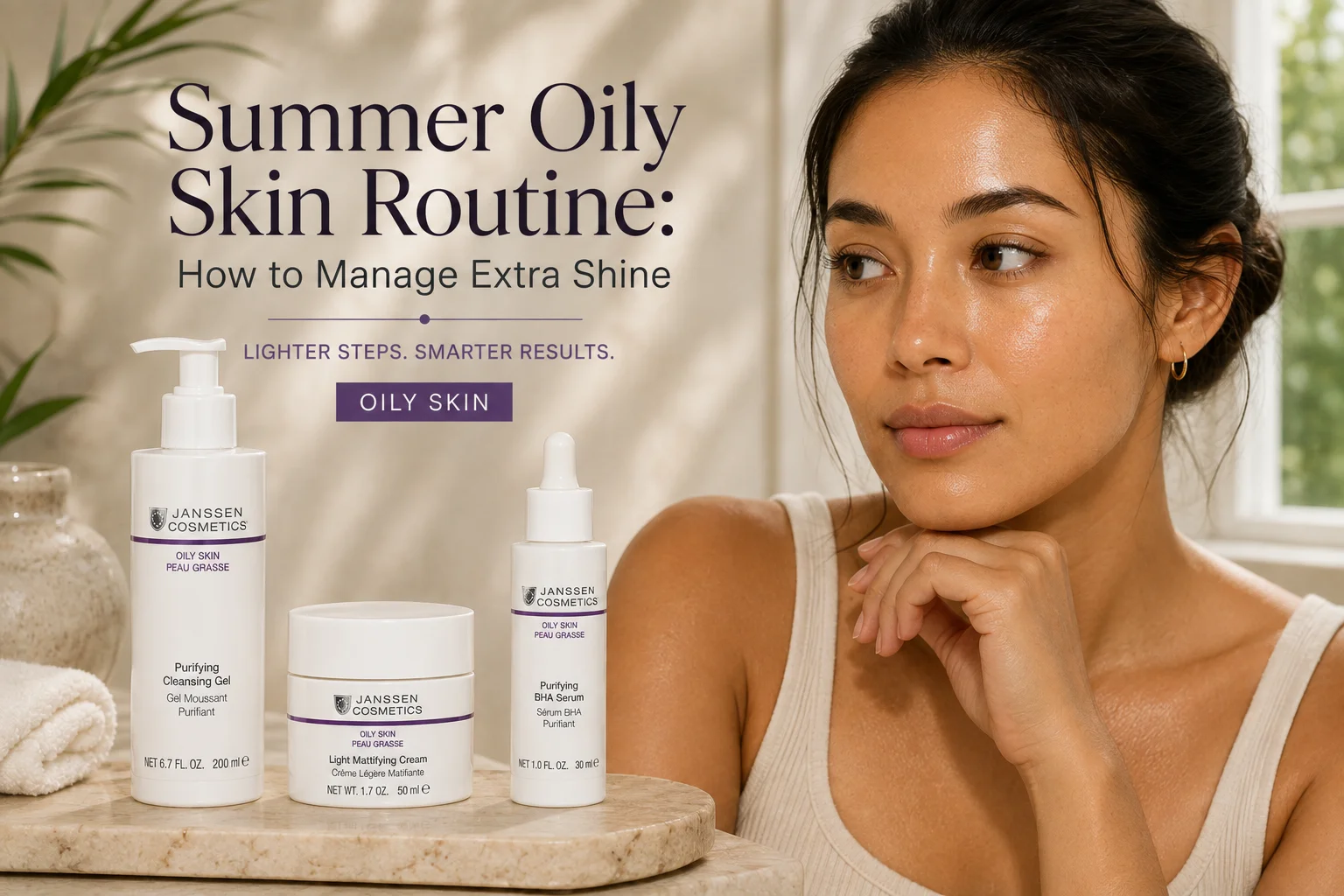
Summer can make oily skin feel louder.
The forehead gets shiny faster. The nose feels greasy by midday. Makeup separates sooner. Sunscreen may feel heavy. Sweat mixes with oil, and the T-zone can feel uncomfortable even when the skin was manageable in cooler weather.
It is tempting to respond with stronger cleansing, more toner, more exfoliation, more powder, and more masks.
But summer oily skin does not always need a harsher routine.
Often, it needs a smarter one.
Heat, humidity, sweat, SPF layers, makeup, travel, and more outdoor time can all change how oily skin behaves. The goal is not to remove every bit of oil. The goal is to keep the skin feeling clean, protected, and less overloaded without making it tight or irritated.
In consultation, our licensed esthetician looks at what changed in summer before changing the products. Sometimes the issue is oil. Sometimes it is sweat. Sometimes it is SPF texture. Sometimes it is over-cleansing. Sometimes it is dehydration under the shine.
A summer oily skin routine should feel lighter, cleaner, and easier to wear during the day.
A simple morning plan may look like:
Cleanser → Toner if appropriate → Lightweight moisturizer → SPF
A simple evening plan may look like:
Cleanser → Toner if appropriate → Targeted serum if needed → Lightweight moisturizer
For summer, the biggest adjustments are:
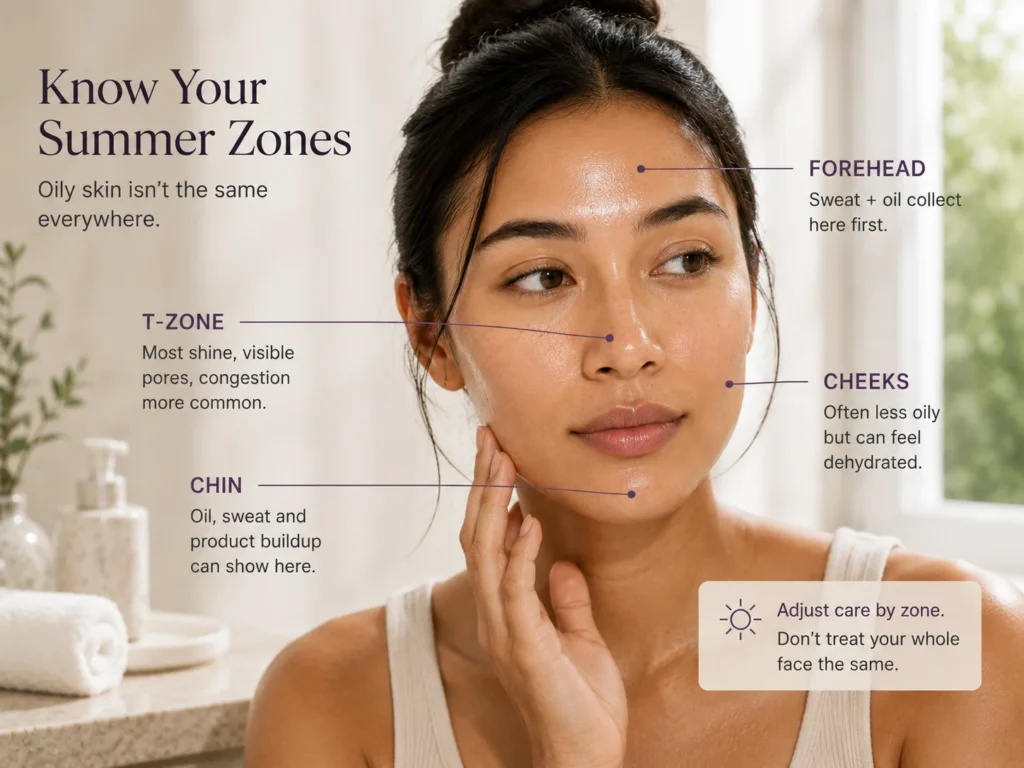
Summer brings more heat, sweat, sun exposure, and humidity.
That can make oily skin look shinier even if the skin type itself has not changed. The skin may feel slick because oil and sweat are sitting together on the surface.
You may notice:
Summer does not always mean the skin needs stronger products. It often means the routine needs lighter textures and better placement.
Oil and sweat can mix on the face, but they are not the same.
Oil comes from the skin’s sebaceous glands. Sweat comes from sweat glands and increases with heat, exercise, humidity, and outdoor activity.
In summer, the face may feel greasy because oil and sweat are sitting together. If you respond by cleansing aggressively every time the face feels wet or shiny, the skin may become tight and reactive.
Instead of treating every summer shine moment as oil, ask what is happening:
That difference helps prevent over-treatment.
When oily skin feels sweaty and shiny, washing more often feels logical.
But repeated washing can make oily skin feel tight, irritated, and harder to manage.
Most oily skin does well with cleansing in the morning and evening. After exercise, heavy sweating, or heavy sunscreen, another gentle cleanse may make sense. But washing many times a day can create a stripped feeling.
If the skin feels tight after cleansing but becomes shiny again quickly, the cleanser or cleansing frequency may be too much.
Clean summer skin should feel fresh, not raw.
Morning cleansing can help remove overnight oil, sweat, and residue from nighttime products.
For summer oily skin, the cleanser should leave the face fresh without creating that squeaky, stretched feeling.
A good morning cleanse should help the skin feel ready for SPF and makeup.
If your cheeks feel tight after cleansing while the T-zone still gets oily later, use a lighter touch. The face may need oil control in the center but less cleansing intensity on the outer areas.
Evening cleansing becomes especially important in summer because more sits on the skin during the day.
This may include:
The evening cleanse should remove the day thoroughly, but not aggressively.
If SPF or makeup is heavy, cleansing needs to be effective. But scrubbing harder is not the answer. The right cleanser and enough massage time usually matter more than pressure.
Oily skin still needs SPF in summer.
Many people skip SPF because it feels greasy or makes makeup separate. But summer sun exposure makes SPF even more important, especially if the skin is using exfoliating products or dealing with post-blemish marks, uneven-looking tone, or texture concerns.
The solution is not skipping SPF.
The solution is choosing a texture and layering style that works better for oily skin.
If SPF feels heavy, review:
SPF should protect the skin without making the whole routine feel overloaded.

In summer, oily skin often does better with fewer heavy layers.
A winter routine may feel too rich once the weather becomes hot and humid.
You may need:
This does not mean the skin needs no moisturizer. It means the texture and amount may need to change.
Oily skin can still need moisturizer in summer, especially after cleansing, toner, BHA, masks, or sun exposure.
But the texture should fit the season.
Summer oily skin may prefer:
A rich cream may feel too heavy across the T-zone in summer. If the cheeks feel dry, apply a little more there instead of using the same amount everywhere.
Moisturizer should help the skin feel comfortable, not coated.
Oily but tight skin can happen in summer too.
This may come from:
If the face looks shiny but feels stretched, do not add more drying products right away.
The skin may need a lighter hydrating step, a gentler cleanser, or fewer active products.
Toner can be useful in summer if it helps the skin feel fresh after cleansing without making it tight.
For oily skin, a toner may help remove light residue and prepare the skin for the next steps. But it should not sting or leave the face stretched.
If toner feels refreshing on the T-zone but drying on the cheeks, use it more selectively.
If toner burns after summer sun exposure or exfoliation, pause it and simplify.
A toner should not be used to force the skin into a matte finish.
BHA may be considered when summer oily skin has clogged-looking pores, blackheads, whiteheads, or a congested T-zone.
It may help when oil and buildup make the skin look bumpy or uneven.
But BHA still needs caution in summer.
If the skin is exposed to more sun, sweat, heat, and SPF layers, it may become more reactive. Using BHA too often, especially with an active cleanser, clay masks, and other exfoliating products, can make oily skin feel tight.
Use BHA because the skin shows clogged-looking pores, not simply because the weather is hot.
AHA may be considered when oily skin looks dull or has rough surface buildup.
But summer is not the time to casually layer every exfoliating product.
If the skin is getting more sun exposure, becoming stingy, or feeling tight from heat and cleansing, AHA should be used carefully.
If the skin is already using BHA, active cleanser, retinol-style products, or masks, adding AHA may be too much.
Exfoliation should help the surface look smoother, not make the face feel raw.
Clay masks can be helpful in summer when the T-zone feels heavy or greasy.
They may make sense for:
But masks should not be used every time the face gets shiny.
If a clay mask leaves the cheeks tight or makes moisturizer sting, use it less often, leave it on for less time, or apply it only to oily zones.
In summer, clay masks work best as occasional T-zone care, not daily full-face stripping.
There is no perfect schedule for every oily skin type.
Some people need less exfoliation in summer because heat, sweat, and sun exposure make the skin more reactive. Others may need careful BHA use because clogged-looking pores become more visible.
Start by looking at the skin’s response.
Exfoliation may be too much if the skin becomes:
If these signs appear, reduce active products and keep the routine simple.
Makeup separation is common with oily skin in summer.
Foundation may slide around the nose, separate on the forehead, or collect around pores. Powder may become patchy. Primer may pill over sunscreen.
Before blaming the makeup, look at the skincare underneath.
Summer makeup may separate because of:
A lighter morning routine often helps makeup sit better.
Morning care should be simple and wearable.
A practical order may be:
Cleanser → Toner if appropriate → Lightweight moisturizer → SPF
If the skin is oily but tight, use a light hydrating layer or a slightly more comfortable moisturizer texture.
If the T-zone gets oily quickly, apply less moisturizer there and a little more where the skin feels tight.
SPF should be the final skincare step. Let it settle before makeup.
Evening care should remove the day.
A practical order may be:
Cleanser → Toner if appropriate → Targeted serum if needed → Lightweight moisturizer
If the day included heavy SPF, makeup, outdoor sweating, or travel, cleansing becomes especially important.
If clogged-looking pores are present and the skin feels stable, BHA may be considered. If the skin feels tight or stingy, skip active products for the night and keep the plan simple.
After exercise or heavy sweating, avoid letting sweat, sunscreen, and oil sit on the face for too long.
If possible, cleanse gently after a workout.
If you cannot cleanse right away, avoid rubbing the face repeatedly. Blot gently and cleanse properly when you can.
Do not scrub the face just because you sweated.
Sweat is not dirt, but it can mix with SPF, makeup, and oil in a way that makes the skin feel uncomfortable.
Blotting can help manage visible shine without adding more product.
Use blotting paper or a soft tissue to press oil away gently.
Do not rub aggressively.
Blotting is different from washing repeatedly. It can reduce visible shine while keeping the skin’s routine stable.
If you are blotting constantly, review the morning layers and SPF texture. The routine may be too heavy for summer.
Powder can help reduce shine, but too much powder can make texture look heavier.
If powder cakes around the nose or separates by midday, the issue may be the skincare underneath, not just the powder.
A better approach may be:
Powder should refine the look, not build a thick layer over oil and sweat.
SPF reapplication matters during sun exposure, sweating, outdoor activity, and long days outside.
For oily skin, reapplication can feel challenging because the face is already shiny.
Before reapplying, blot gently if needed. Avoid rubbing harshly.
If you wear makeup, choose a reapplication method that works for your day and your skin. The key is not to skip protection because the skin is oily.
If your SPF makes the face feel heavy every time, the texture may need to be reviewed.
Pool, beach, and outdoor days can make oily skin feel different.
The skin may deal with:
After outdoor days, cleanse well but gently. Do not use a harsh scrub to “remove everything.”
If the skin feels tight after swimming or sun exposure, skip strong active products that night and use a simple moisturizer step.
Travel can make oily skin unpredictable.
Changes in climate, air conditioning, long flights, stress, different water, new SPF, and different routines can all affect the skin.
During travel, keep the plan simple.
Bring the basics:
Do not introduce several new active products while traveling. If the skin reacts, it becomes harder to know what caused it.
Whiteheads may become more noticeable in summer when sweat, oil, SPF, makeup, and heavy product layers build up.
If whiteheads appear, review:
BHA may be considered, but do not jump into daily acid use if the skin is already reactive.
Blackheads often look more noticeable in summer because the nose and chin can become oilier.
BHA may be considered for blackhead-prone areas, especially the T-zone.
But blackheads should not be scrubbed aggressively. Rough friction can make the surface look more irritated.
A steady plan works better:
Cleanse well → use BHA if appropriate → moisturize lightly → protect with SPF
Pores can look larger when the face is shiny.
Oil reflects light, and makeup may settle into texture. Sweat and SPF can also make the surface look heavier.
Skincare cannot erase pores, but summer routine adjustments may help them look less noticeable.
Focus on:
The goal is a cleaner-looking surface, not poreless skin.
Summer can make oily skin feel more sensitive.
Heat, sun exposure, sweat, SPF, extra cleansing, and exfoliation can all add up.
If the skin starts to sting, burn, or feel warm after products, simplify.
A very basic plan may be:
Morning: Cleanser → Lightweight moisturizer → SPF
Evening: Cleanser → Lightweight moisturizer
Pause acids, scrubs, masks, and retinol-style products until the skin feels easier to tolerate.
Some people notice clogged-looking bumps after switching SPF.
This does not mean SPF should be skipped. It means the formula, texture, cleansing, or layering may need to be reviewed.
Look at:
SPF is essential, but oily skin needs a wearable texture and proper evening cleansing.
If shine returns quickly, do not automatically wash again.
First ask:
Sometimes the solution is lighter layering, not stronger cleansing.
The moisturizer may be too rich for summer, or too much product may be applied.
Try using less through the T-zone and more only where the skin feels tight.
If the whole face feels greasy, consider a gel, gel-cream, light lotion, or mattifying cream texture.
Do not remove moisturizer completely if the skin feels tight after cleansing. Adjust texture first.
A mattifying product should reduce the look of shine without making the skin feel stretched.
If the skin feels dry, tight, or uncomfortable after using matte products, the formula may be too drying or the skin may be dehydrated.
In that case, the plan may need lightweight hydration under the moisturizer, less active use, or a different SPF texture.
Matte should not mean uncomfortable.
Common summer oily skin mistakes include:
Summer skin often needs more strategy, not more force.
A simple weekly plan may look like this:
Daily morning:
Cleanser → Toner if appropriate → Lightweight moisturizer → SPF
Daily evening:
Cleanser → Toner if appropriate → Lightweight moisturizer
Selected nights if needed:
BHA on clogged-looking areas or T-zone
Occasional:
Clay or clarifying mask on oily zones
Pause active products:
When skin feels tight, stingy, flaky, sun-stressed, or irritated
This plan can be adjusted based on skin tolerance, climate, travel, makeup use, and SPF texture.
After consultation, our licensed esthetician may consider Janssen Cosmetics options depending on whether summer oily skin is shiny, clogged-looking, oily-dehydrated, sensitive from over-cleansing, or overloaded from SPF and makeup layers.

Possible options may include:
These options are not automatic recommendations. In summer, the right match depends on heat, humidity, SPF texture, makeup habits, sweating, cleansing frequency, and whether the skin feels oily, tight, congested, or irritated.
Do not wash repeatedly every time shine appears.
Do not skip SPF because the skin is oily.
Do not skip moisturizer if the skin feels tight.
Do not use a clay mask daily to control summer shine.
Do not layer BHA, AHA, retinol-style products, scrubs, and masks all at once.
Do not apply drying products over the whole face if only the T-zone is oily.
Do not try several new products before a summer trip or event.
Do not ignore painful, deep, swollen, infected-looking, scarring, rash-like, or persistent blemishes.
Heat, humidity, sweat, SPF, makeup, and outdoor activity can make oily skin look shinier and feel heavier. The skin may need lighter layers and better cleansing, not necessarily harsher products.
Not usually. Most oily skin does well with morning and evening cleansing. After heavy sweating or exercise, an extra gentle cleanse may make sense, but repeated washing can make the skin tight.
Yes. SPF is important for daytime protection. If SPF feels greasy, review the texture, moisturizer underneath, and how your layers are applied.
BHA may be considered when summer oily skin has clogged-looking pores, blackheads, whiteheads, or a congested T-zone. It should be used carefully if the skin feels tight or sensitive.
Not automatically. A clay mask may help oily zones occasionally, but using it too often can leave the skin tight or irritated.
Makeup may separate because of heat, sweat, oil, heavy SPF, too much moisturizer, over-layering, or dehydrated skin underneath the shine.
A dermatologist should evaluate painful, deep, swollen, cystic-looking, infected-looking, scarring, rash-like, suddenly worsening, or persistent blemishes.
If your oily skin feels harder to manage in summer, a free virtual consultation can help you adjust without guessing.
At Zendevie, we look at your shine pattern, SPF texture, sweat habits, makeup behavior, clogged-looking pores, and current products before recommending a summer plan. The goal is to help your skin feel clean, protected, and less overloaded without stripping it.

Zendevie is guided by Haby Diallo, a licensed esthetician with more than 20 years of professional skincare experience. Her approach is rooted in education, professional judgment, and personal care.
years of experience