
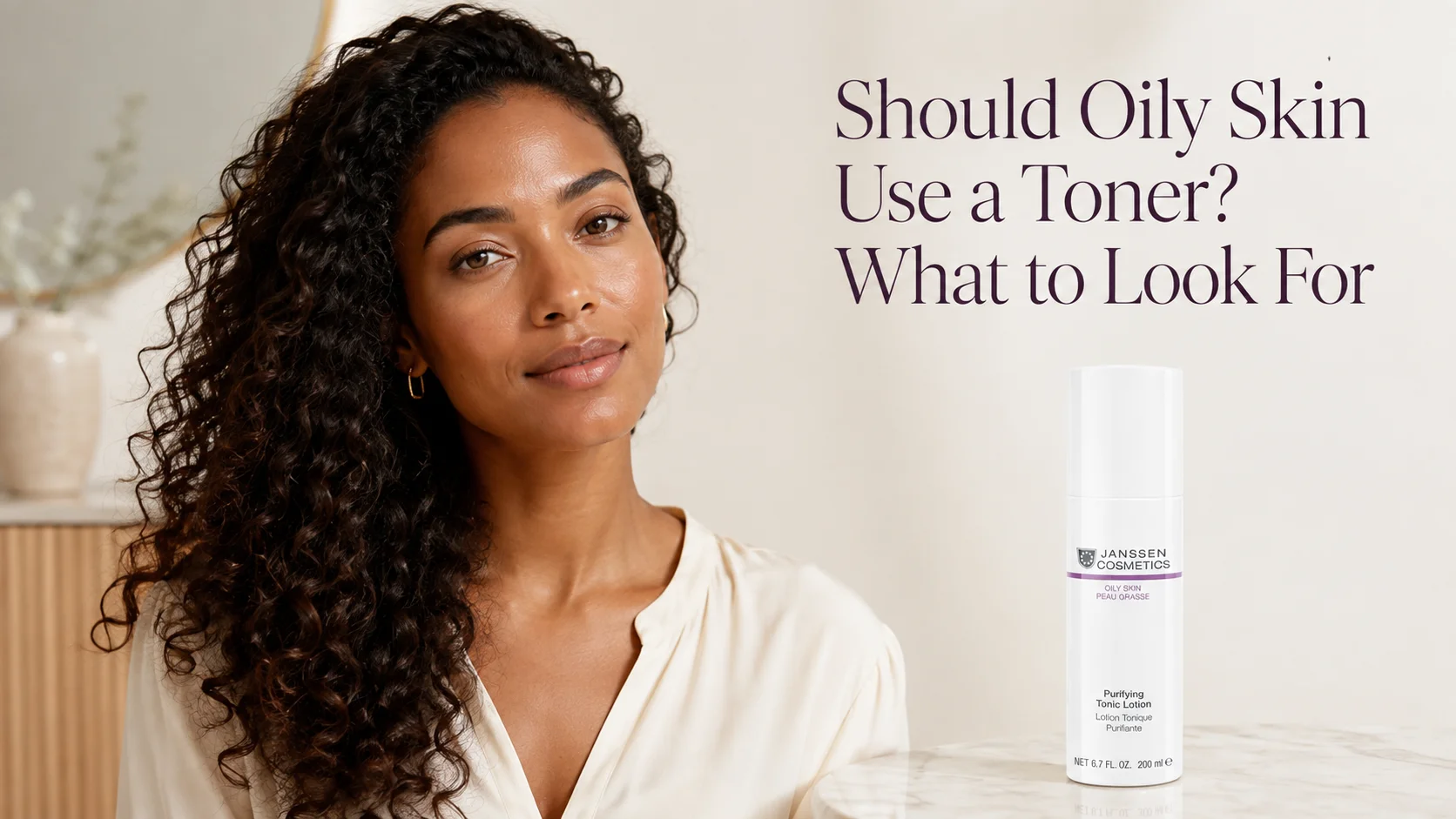
Toner can be helpful for oily skin, but it should not feel like punishment.
Many people with oily skin have been taught that toner should “dry out” the face, remove every trace of oil, or leave the skin feeling extremely matte. That type of toner may feel satisfying for a few minutes, especially when the forehead and nose look shiny.
But if your skin feels tight, stingy, or dry after toner, that is not a good sign.
Oily skin needs a toner that fits what the skin is actually showing. Shine, clogged-looking pores, makeup separation, and an oily T-zone do not always call for the same formula. Some oily skin needs mild clarifying care. Some needs lightweight hydration. Some needs fewer active products, not another drying step.
In consultation, our licensed esthetician looks at how the skin feels after cleansing before deciding whether toner belongs in the plan.
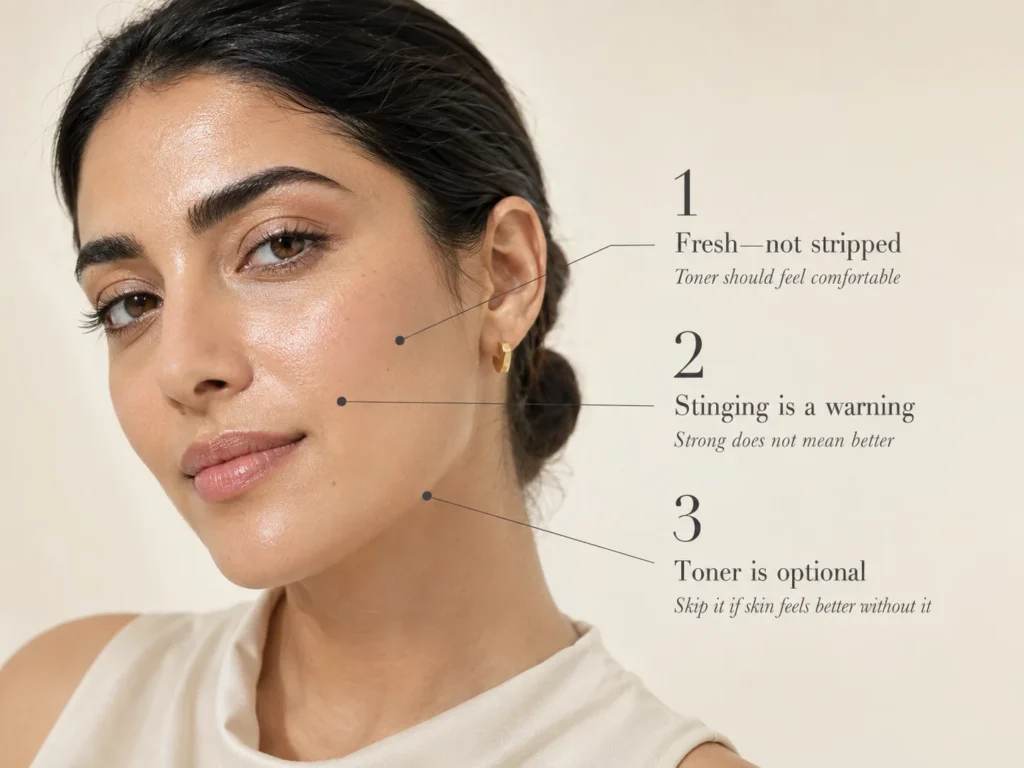
Yes, oily skin can use toner, but the toner should feel fresh, clean, and non-stripping.
A good toner for oily skin may help remove leftover residue after cleansing, prepare the skin for the next steps, reduce a heavy feel, and make the skin feel less greasy without making it tight.
Oily skin should usually avoid toners that burn, sting, feel alcohol-heavy, or leave the face squeaky and dry.
A simple order may be:
Cleanser → Toner → Serum if needed → Lightweight Moisturizer → SPF in the morning
Toner comes after cleansing and before serum or moisturizer.
For oily skin, toner may help with:
Toner should not replace cleansing. It should also not replace moisturizer.
Think of toner as a middle step. It helps refine the feel of the skin after washing, but it should not make the face feel stripped.
Toner should not burn.
It should not make your face feel stretched, raw, or dry. It should not leave the skin feeling like every drop of oil has been removed.
That extremely tight feeling can be a warning sign, especially for oily skin that already feels dehydrated.
If toner makes your skin feel sharp or uncomfortable, it may be too harsh, used too often, or not matched to your current skin condition.
Oily skin is often treated too aggressively.
Because shine is visible, many people think the answer is to dry the skin as much as possible. This is why some oily skin routines include strong cleanser, drying toner, exfoliating serum, clay mask, and mattifying product all at once.
The problem is that oily skin can still become dehydrated or irritated.
When that happens, the face may look shiny but feel tight underneath. Makeup may separate in the T-zone and cling around the mouth or cheeks. Toner may sting after cleansing.
That is usually a sign to slow down, not add more harsh products.
Your toner may be too drying if you notice:
These signs do not mean toner is bad for oily skin. They mean that toner may not be the right formula for your face.
A toner may be working well if your skin feels:
For oily skin, the best toner is not the strongest one. It is the one that helps the skin feel clearer without making it reactive.
Many oily skin types do better with an alcohol-free toner, especially if the skin feels tight, dehydrated, mature, or easily irritated.
Alcohol-heavy toners can feel very matte at first, but they may leave the skin uncomfortable afterward.
A toner for oily skin should help the face feel fresh without creating that dry, stretched feeling.
If your skin becomes oily again quickly after a drying toner, the toner may not be solving the real issue.
Oily-dehydrated skin is one of the most common toner challenges.
This skin may look shiny but feel tight after cleansing. It may need a toner that feels light and fresh, but not harsh.
For oily-dehydrated skin, look for a toner that helps the skin feel hydrated and clean at the same time. Avoid formulas that make the skin feel squeaky, especially if you already use an active cleanser or exfoliating serum.
If your face feels tight before moisturizer, toner should not make that feeling worse.
Blemish-prone oily skin may benefit from a clarifying toner when the skin can tolerate it.
This may make sense when the skin shows:
But a clarifying toner should not be layered blindly with every other active product.
If you already use a BHA cleanser, BHA serum, exfoliating mask, or retinol-style product, toner needs to be chosen carefully.
Oily skin can also be sensitive.
If your skin stings easily, turns red-prone, or reacts to products quickly, toner should be simple and low-irritation.
In this case, the toner should not be chosen only for oil control. It should be chosen for how well the skin tolerates it.
If toner burns every time, pause it and simplify the plan.
A toner is optional. Healthy-looking oily skin does not require a toner if the skin does better without one.
Combination skin often needs a different approach.
The T-zone may look shiny, while the cheeks feel normal, dry, or tight. A toner that feels perfect on the nose may be too much for the cheeks.
If this sounds familiar, you may not need to apply toner the same way everywhere.
You may use more toner in the T-zone and a lighter touch on the cheeks. Or you may choose a milder toner that the whole face can tolerate.
The face does not always need one identical treatment across every zone.
No.
Toner should not be used as a replacement for cleansing when the skin has sunscreen, makeup, sweat, or daily buildup.
In the evening, oily skin usually needs proper cleansing first. Toner can follow, but it should not be expected to do all the work.
If you use toner on unwashed oily skin, it may move oil around rather than properly cleaning the face.
No.
This is a common mistake with oily skin.
Some people use toner and skip moisturizer because they want a lighter feel. But if the skin feels tight, toner alone is not enough.
Oily skin still needs a moisturizer texture that fits the skin. That may be a gel, gel-cream, light lotion, or mattifying cream depending on the skin pattern.
Toner refreshes. Moisturizer helps the skin feel less bare after cleansing.
The right ingredients depend on what your skin shows.
These may make sense when oily skin feels heavy, congested-looking, or shiny through the T-zone.
Ingredients such as glycerin or other water-binding ingredients may be useful when skin feels oily but tight.
If the skin becomes easily reactive, calming ingredients may help the toner feel less sharp.
BHA may be considered when clogged-looking pores, blackheads, whiteheads, or oily congestion are part of the concern. It should be introduced with caution if the skin already feels dry or tight.
AHA may be considered when rough surface buildup or dullness is part of the pattern, but it should not be layered with too many other active steps.
A toner should not become a place where every active ingredient is added at once.
Toner is not mandatory for every oily skin routine.
You may skip toner if:
A shorter routine can be better when the skin is reactive or difficult to read.
If you are adding toner for the first time, introduce it slowly.
Do not add a new toner, new serum, new exfoliant, and new mask at the same time. If the skin reacts, you will not know which product caused the problem.
A better approach:
The skin will tell you if the toner fits.
In the morning, toner can help oily skin feel fresh before moisturizer and SPF.
A simple order may be:
Cleanser → Toner → Lightweight Moisturizer → SPF
If your skin feels tight, add light hydration before moisturizer or choose a moisturizer that gives more hydration without a greasy finish.
If your SPF pills or makeup separates, look at how much toner and moisturizer you are layering.

In the evening, toner can be used after cleansing and before serum or moisturizer.
A simple order may be:
Cleanser → Toner → Serum if needed → Lightweight Moisturizer
If you are using an active serum, such as a BHA product, be careful with using a very active toner at the same time.
One clear active step is often easier for the skin than several competing ones.
Not always.
If your toner already has clarifying activity and you also use a BHA serum, the combination may be too much for some skin types.
This is especially true if your skin feels:
If clogged-looking pores are the main concern, our licensed esthetician may consider where BHA belongs: cleanser, toner, serum, or occasional treatment. It does not need to appear in every step.
Clay masks can be useful for excess shine, especially in the T-zone. But toner and mask use should be coordinated.
If you use a drying toner every day and a clay mask too often, your skin may feel tight even if it still looks oily.
A better approach may be:
The goal is to manage shine without making the skin feel dry underneath.
Your toner may be helping if:
The improvement should feel steady, not harsh.
Your toner may not be right if:
If this happens, pause the toner and review the full plan.
After consultation, our licensed esthetician may consider Janssen Cosmetics options depending on whether the skin is oily, oily-dehydrated, blemish-prone, or sensitive from over-cleansing.
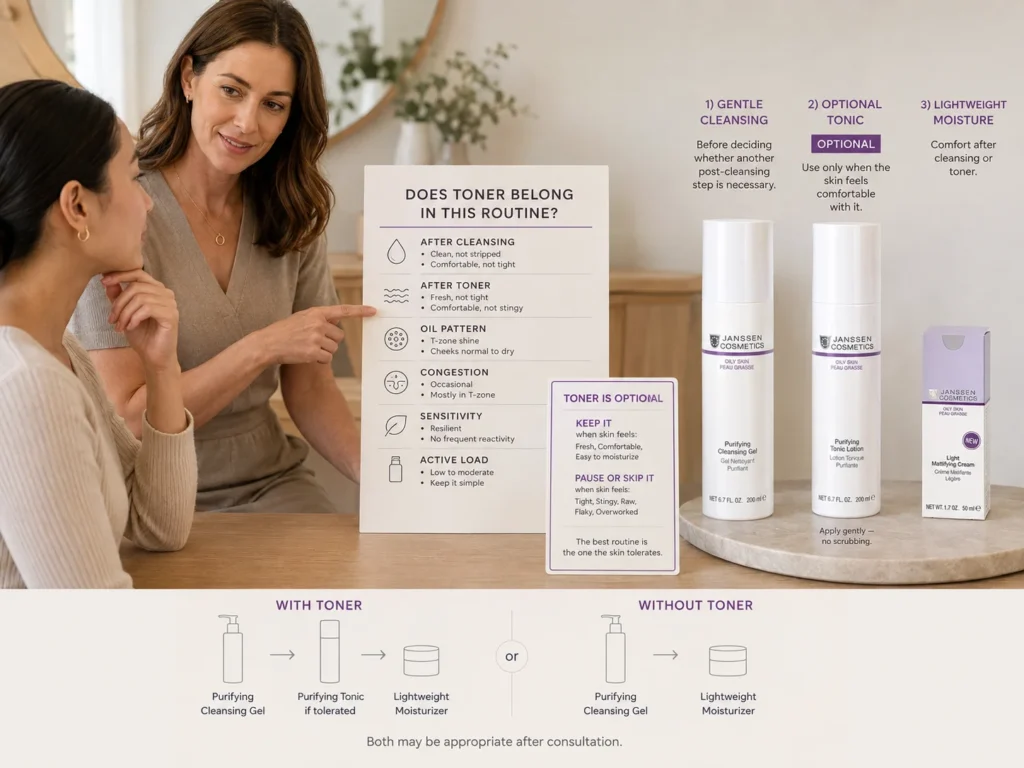
Possible options may include:
These options are not automatic recommendations. The right toner choice depends on how your skin feels after cleansing, whether it is tight or dehydrated, and how many active products are already in your plan.
Do not choose toner because it burns and feels “strong.”
Do not use alcohol-heavy toner just to chase a matte finish.
Do not skip moisturizer after toner if the skin feels tight.
Do not layer active toner, active cleanser, BHA serum, AHA products, retinol, and clay masks all at once.
Do not apply the same drying toner heavily on cheeks if only the T-zone is oily.
Do not keep using toner if your skin becomes raw, flaky, or stingy.
Do not ignore painful, swollen, cystic-looking, infected-looking, or persistent blemishes.
Oily skin can use toner if it helps the face feel fresh after cleansing without leaving it tight or irritated. Toner is helpful for some people, but it is not mandatory for everyone.
A toner for oily skin should feel fresh, non-stripping, and appropriate for the skin’s tolerance. Alcohol-free or low-irritation formulas are often better for oily skin that also feels tight or dehydrated.
For many people, yes. Alcohol-heavy toners can feel matte at first but may leave the skin tight, dry, or reactive.
A toner may help if it includes clarifying ingredients and the skin tolerates it. If clogged-looking pores are more noticeable, BHA may be considered, but it should not be layered too aggressively.
Not always. Some oily skin can use toner daily. Other skin does better a few times a week or not at all. It depends on how your skin feels after use.
The toner may be too drying, too active, or not matched to your skin. Your cleanser may also be stripping the skin before toner is applied.
Yes. Toner does not replace moisturizer. Oily skin usually needs a light moisturizer texture so the skin does not feel bare after cleansing.
If you are unsure whether toner belongs in your oily skin plan, a free virtual consultation can help.
At Zendevie, we look at how your skin feels after cleansing, where shine appears, whether clogged-looking pores are present, and whether your current products are making the skin tight. Then we help you decide if toner makes sense and what kind of texture your skin may tolerate best.

Zendevie is guided by Haby Diallo, a licensed esthetician with more than 20 years of professional skincare experience. Her approach is rooted in education, professional judgment, and personal care.
years of experience