

Some skin looks oily by lunchtime but still feels tight after washing. The forehead may shine, the nose may look greasy, and makeup may separate in the center of the face. At the same time, the cheeks may feel stretched, the skin may look dull, or moisturizer may feel like it disappears too quickly.
That combination is confusing because most people assume oily skin has “too much moisture.”
It does not work that way.
Oil and water are different. Skin can produce visible oil and still lack water-based hydration. That is why some people say, “My skin is oily, but it feels dry underneath.”
At Zendevie, this is one of the first things we look for in consultation. Before choosing a clarifying cleanser, toner, serum, mask, or moisturizer, we need to understand whether the skin is truly oily, dehydrated, over-cleansed, or a mix of these patterns.
Oily skin produces more visible sebum. Dehydrated skin lacks water.
You may have oily skin if your face becomes shiny, makeup separates, and the T-zone feels greasy throughout the day.
You may have dehydrated skin if your face feels tight, looks dull, shows fine dehydration lines, or feels dry after cleansing even when it looks shiny.
You can also have both at the same time: oily on the surface, tight underneath.

Oily skin is easy to see. Shine is visible. Makeup moves. Pores may look more noticeable. The T-zone may feel slick.
Dehydration is easier to feel than see. The skin may feel stretched after washing, look flat under makeup, or feel uncomfortable even when oil is present.
This is why people often treat dehydration like oiliness. They wash more, use stronger toners, skip moisturizer, or exfoliate more often. For some skin, that makes the problem worse.
When oily skin is stripped, it may look shiny again quickly but feel less comfortable underneath.
Oily skin often has a visible pattern.
You may notice:
Oily skin does not automatically mean unhealthy skin. Some people naturally produce more sebum. The concern is how that oil behaves with makeup, congestion, texture, and product tolerance.
Dehydrated skin often feels tight, even if the face looks shiny.
You may notice:
Dehydration can happen to any skin type, including oily skin.
Many clients describe this pattern clearly: the skin feels greasy, but after washing it feels tight.
That often points to one of three possibilities.
First, the skin may be oily but dehydrated. Second, the cleanser may be too strong. Third, exfoliating or oil-control products may be used too often.
In consultation, we do not assume shine means the skin needs stronger products. We look at the full pattern: how the skin feels after cleansing, where the shine appears, whether makeup separates, and whether products sting or feel drying.
This is one of the easiest ways to read the skin.
If your face feels fresh and clean without tightness, your cleanser may be a good match.
If your face feels stretched, squeaky, or dry within minutes, the cleansing step may be too aggressive.
Oily skin should not feel stripped after washing. That tight feeling is not proof that the cleanser worked better. It may mean the skin lost too much surface comfort during cleansing.
Shine that appears mostly in the T-zone may be natural oil production or combination skin.
Shine that appears all over the face but comes with tightness, dullness, or dehydration lines may be a sign the skin needs lighter hydration, not more stripping.
The location matters.
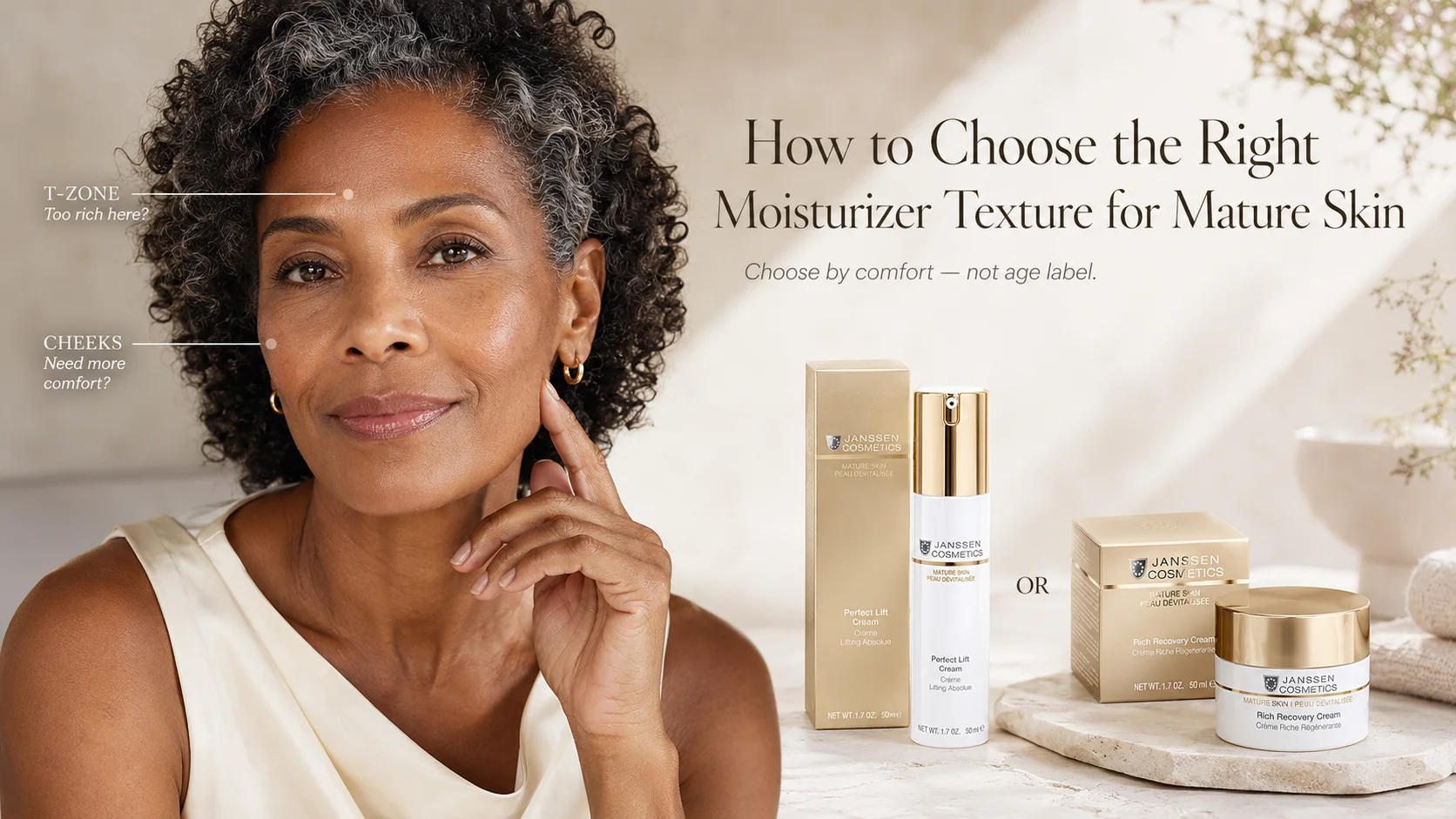
A shiny nose does not always need the same care as tight cheeks. The center of the face may need clarifying steps, while the outer face may need softer textures and less active product.
Dehydrated oily skin often has trouble with moisturizer.
A rich cream may feel too heavy, but skipping moisturizer makes the skin feel tight. A matte lotion may reduce shine for a little while, but the skin may still feel dry underneath.
That means the texture may be wrong, not that moisturizer is unnecessary.
Oily-dehydrated skin usually does better with lightweight hydration and a non-heavy moisturizer. Think gel, gel-cream, or light mattifying cream, depending on the skin’s tolerance.
Makeup can reveal the difference between oil and dehydration.
Oily skin may make foundation separate around the nose, forehead, and chin.
Dehydrated skin may make makeup look patchy, flat, or textured. Sometimes foundation separates in the T-zone and clings to the cheeks at the same time.
That mixed behavior is a clue. The skin may need different care by zone instead of one strong oil-control plan for the whole face.
When shine feels frustrating, it is easy to wash more often.
But repeated cleansing can leave the skin feeling tighter and less predictable. The face may feel clean for a short time, then shine returns quickly.
That does not always mean you need a stronger cleanser. It may mean the skin is being pushed too hard.
Most oily skin does well with cleansing morning and evening. After exercise or heavy sweating, cleansing can make sense, but washing many times a day usually creates more tightness.
Oily skin can benefit from active ingredients when they match the skin. But too many active steps can create a dehydrated, irritated feeling.
Be careful with layering:
Any one of these may have a place. All of them together can be too much.
If the skin feels oily, tight, stingy, or rough, the first move is usually to simplify and watch how the skin responds.
Oily skin usually needs a plan that helps reduce the look of excess shine without making the face feel stripped.
That may include:
The goal is not to stop oil completely. The goal is to make the skin easier to manage.
Dehydrated oily skin needs a different approach.

The skin may still need oil-control steps, but it also needs water-based hydration and less stripping.
A good starting point may include:
If the skin feels oily and tight, do not build the whole plan around drying the face out. That usually makes the skin harder to read.
For oily skin, morning care should remove overnight oil and prepare the skin for the day without making it feel tight.
A simple morning order may be:
Cleanser → Toner → Lightweight Moisturizer → SPF
If the skin is oily but dehydrated, add a light hydration step before moisturizer:
Cleanser → Toner → Lightweight Hydration → Light Moisturizer → SPF
The difference is subtle, but it matters. Hydration helps the skin feel less tight. Moisturizer helps the face feel less bare after cleansing.
Evening cleansing matters because sunscreen, makeup, oil, sweat, and daily buildup need to be removed.
A simple evening order may be:
Cleanser → Toner → Targeted Serum if Appropriate → Lightweight Moisturizer
If the skin feels tight or irritated, skip strong active products for a short period and focus on making the skin feel easier to tolerate.
If clogged-looking pores are the main issue and the skin is not irritated, BHA may be considered. But it should not be layered with every other exfoliating step at once.
BHA, often known as salicylic acid, may be considered when oily skin has clogged-looking pores, blackheads, or whiteheads. It works well in oil-prone areas, but it should be introduced with care if the skin already feels tight.
AHA may be considered when surface texture or dull buildup is part of the concern. For oily-dehydrated skin, it should not be used too often, especially if the face already feels stingy after cleansing.
Hydrating ingredients such as glycerin can be helpful when the skin feels tight but still looks shiny. They help the skin feel less dry without relying on heavy creams.
Niacinamide may be helpful in some oily skin routines because it is often used in products designed for uneven-looking texture, visible shine, and a more refined-looking surface. The full formula still matters.
Ingredients should be chosen based on what the skin shows, not because they are trending.
After consultation, our licensed esthetician may consider Janssen Cosmetics options depending on whether the skin is truly oily, oily-dehydrated, blemish-prone, or sensitive from over-cleansing.

Possible options may include:
These are not automatic recommendations. The right match depends on cleansing habits, dehydration signs, sensitivity, makeup behavior, and how much active care the skin can tolerate.
Do not wash the face repeatedly just because shine returns.
Do not use a cleanser that leaves the skin squeaky and stretched.
Do not skip moisturizer if the skin feels tight.
Do not layer BHA, AHA, retinol, exfoliating masks, and drying products all at once.
Do not assume a shiny face cannot be dehydrated.
Do not use heavy cream everywhere if only the cheeks feel tight.
Do not ignore burning, swelling, painful blemishes, infected-looking areas, or rash-like irritation.
Yes. Oily skin can produce visible oil and still lack water-based hydration. This is why the skin may look shiny but feel tight underneath.
Oily skin usually looks shiny and feels greasy. Dehydrated skin often feels tight, dull, or rough, even when oil is present.
The cleanser may be too strong, the skin may be dehydrated, or active products may be drying the skin out. Tightness after cleansing is a sign to reassess the washing step.
Yes, but the texture matters. A gel, gel-cream, light lotion, or mattifying moisturizer may work better than a heavy cream.
It can be helpful for clogged-looking pores, but it should be introduced slowly if the skin feels tight or sensitive. Too much exfoliation can make dehydration more noticeable.
The T-zone may be oily while other areas are dehydrated or dry. This usually means the face needs zone-specific care instead of one product strategy everywhere.
A dermatologist should evaluate painful, deep, swollen, cystic-looking, infected-looking, scarring, suddenly worsening, or persistent blemishes.
If your skin looks oily but feels tight, a free virtual consultation can help clarify what is really happening before you buy products.
At Zendevie, we review your skin pattern, cleansing habits, moisturizer texture, makeup behavior, and current products first. Then we help you choose the steps that make sense for your skin.

Zendevie is guided by Haby Diallo, a licensed esthetician with more than 20 years of professional skincare experience. Her approach is rooted in education, professional judgment, and personal care.
years of experience