
Pores are normal. Everyone has them.
But on oily skin, pores can look more noticeable, especially around the nose, inner cheeks, forehead, and chin. They may look larger when the skin is shiny, when makeup settles into texture, or when buildup makes the surface look uneven.
This can be frustrating because many products promise to “shrink” pores. That wording is misleading.
Skincare cannot permanently erase pores or make them disappear. What skincare can do is help the skin surface look cleaner, smoother, and less congested when oil, buildup, dehydration, or product texture is making pores look more visible.
In consultation, our licensed esthetician first looks at why the pores appear enlarged. Are they oil-related? Clogged-looking? Dehydrated? Made more visible by makeup? Or is the skin being over-cleansed and over-exfoliated?
That answer changes the plan.
Oily skin can make pores look larger because excess oil, surface buildup, blackheads, whiteheads, and makeup separation can make texture more visible.
What helps the appearance:
Non-stripping cleanser → Toner if appropriate → BHA when clogged-looking pores are present → Lightweight moisturizer → SPF in the morning
The goal is not to erase pores. The goal is to help the skin look cleaner, smoother, and less congested without making it tight or irritated.

Pores are openings in the skin. On oilier areas, they may look more visible because sebum collects more easily.
You may notice enlarged-looking pores most on:
When oil sits on the surface, it reflects light. That shine can make texture look more obvious. If makeup separates over the same areas, pores may look even more noticeable.
This is why pore appearance is often connected to oil management, but oil is not the only factor.
A common myth is that hot water opens pores and cold water closes them.
Pores do not work that way.
Hot water may make the skin feel cleaner temporarily, but it can also leave oily skin tight or irritated. Cold water may feel refreshing, but it does not erase pore appearance.
The better approach is consistent cleansing, appropriate exfoliation when needed, lightweight moisture, and SPF.
The skin surface looks better when the plan is steady, not harsh.
Pores may look more noticeable when the skin has:
This is why the same “pore product” does not work for everyone. The reason behind the visible pores matters.
These two concerns are related, but not identical.
Enlarged-looking pores may simply look more visible because of oil, shine, skin texture, or natural pore structure.
Clogged-looking pores may look like blackheads, whiteheads, small bumps, or congestion under the surface.
If pores are visible but not clogged-looking, the plan may focus on oil control, lighter textures, and makeup compatibility.
If clogged-looking pores are present, BHA may be considered.
Blackheads often appear around the nose and chin, where oil is more visible.
When blackheads are present, pores can look darker and more noticeable. This can make the skin surface look uneven even if the rest of the face is not very oily.
BHA may be considered when blackheads are part of the concern, but it should not be used aggressively if the skin already feels tight or sensitive.
Pore appearance improves best when the whole plan makes sense: cleanser, toner, exfoliation frequency, moisturizer texture, SPF, and makeup removal.
Whiteheads or closed comedones may look like small bumps under the skin.
They can make oily skin look textured, especially on the forehead, chin, and cheeks.
If whiteheads are present, look at more than exfoliation. Heavy moisturizer, rich SPF, hair products, makeup, incomplete cleansing, and product buildup can all contribute to a congested-looking surface.
The answer is not always stronger acid. Sometimes it is better product texture and better removal at night.
When oily skin feels tight, the skin may be dehydrated or over-cleansed.
This can make pores look more visible because the skin surface may appear less smooth. Makeup may cling in some areas and separate in others.
If the skin looks shiny but feels stretched, do not rush into stronger pore products.
First, check:
If the face feels tight, the plan may need hydration and fewer strong steps before pore appearance can improve.
Oily skin needs cleansing, especially at night.
But a cleanser that leaves the face squeaky can make the skin feel dry and still not improve pore appearance in a lasting way.
The cleanser should remove oil, SPF, makeup, sweat, and daily buildup without leaving the face raw.
If your skin feels tight after cleansing but looks shiny again quickly, the cleanser may be too aggressive or the rest of the plan may be missing lightweight moisture.
Toner may help oily skin feel fresher after cleansing. It can also prepare the skin for the next steps.
But toner should not burn, sting, or leave the face stretched.
For enlarged-looking pores, toner is not about forcing the skin to become matte. It is about refining the feel of the skin after cleansing and helping the next steps layer better.
If toner makes your skin tight, it may make pore appearance look worse over time because the skin surface becomes less comfortable and less smooth.
BHA, often known as salicylic acid, may be considered when enlarged-looking pores are connected to clogged-looking pores, blackheads, whiteheads, or oily congestion.
It may make sense for:
BHA does not permanently shrink pores. It may help the appearance of clogged-looking areas when buildup is part of the issue.
If the cheeks are dry or sensitive, BHA may not need to be applied everywhere.
AHA may be considered when the skin surface looks rough, dull, or uneven.
For oily skin, this may matter when pores look more obvious because the surface is not smooth.
However, AHA and BHA should not be layered casually. If the skin already feels tight, stingy, or flaky, too much exfoliation can make the face look more textured.
Choose exfoliation based on the concern, not because pores are visible.
Clay masks can help reduce the look of excess shine temporarily, especially in the T-zone.
They may be useful when the nose, forehead, or chin feels heavy or greasy.
But clay masks should not leave the whole face tight. If the cheeks feel dry, apply the mask only where oil is visible.
A mask is not a daily punishment for pores. It is an occasional step when the skin shows a reason for it.
A heavy moisturizer can make oily areas look greasier and cause makeup to slide. No moisturizer can leave the skin feeling tight and uneven.
The right texture matters.
Oily skin often does better with:
If pores look more visible under makeup, review what is layered underneath. Too much product or the wrong texture can make pores look more obvious.
SPF is important, especially when using exfoliating products.
But some SPF textures can feel heavy on oily skin. When SPF sits thickly or mixes poorly with moisturizer, pores may look more noticeable and makeup may separate faster.
Do not skip SPF. Instead, look for a texture that layers well with your oily skin plan.
If your SPF pills, feels greasy, or settles into pores, the issue may be the SPF itself, the moisturizer underneath, or applying too much product at once.
Makeup can exaggerate pore appearance when the skin is oily, dehydrated, or overloaded with product.
Foundation may separate around the nose. Powder may sit in texture. Primer may pill over moisturizer. Heavy layers may make pores look more visible instead of smoother.
Before blaming the makeup, look at skin prep:
Cleanser → Toner if appropriate → Lightweight moisturizer → SPF → Makeup
Let skincare settle before applying makeup.
If the cheeks are dry but the T-zone is oily, prep may need to be different by zone.
Before buying another pore product, review the basics.
Ask:
These answers help decide whether you need BHA, better cleansing, lighter moisturizer, less exfoliation, or better product placement.
Morning care should help the skin look fresh without overloading the surface.
A simple order may be:
Cleanser → Toner if appropriate → Lightweight moisturizer → SPF
If the skin feels oily but tight, add light hydration before moisturizer or choose a moisturizer with a more hydrating feel.
If makeup follows, use thinner layers and allow SPF to settle.
Evening care is important because buildup from the day can make pores look more noticeable.
A simple order may be:
Cleanser → Toner if appropriate → BHA if appropriate → Lightweight moisturizer
If you use an active cleanser, you may not need a BHA serum the same night.
If your skin feels tight or stingy, skip active steps temporarily and focus on cleansing and moisture texture.

There is no perfect number for every person.
Some oily skin tolerates exfoliating products more often. Other skin becomes tight quickly.
Signs you may be exfoliating too much include:
If that happens, reduce exfoliation. The skin surface usually looks better when it is not overworked.
A good plan may help pores look less noticeable by making the skin surface look cleaner and less congested.
You may notice:
But pores will still exist. That is normal.
The goal is healthier-looking texture, not poreless skin.
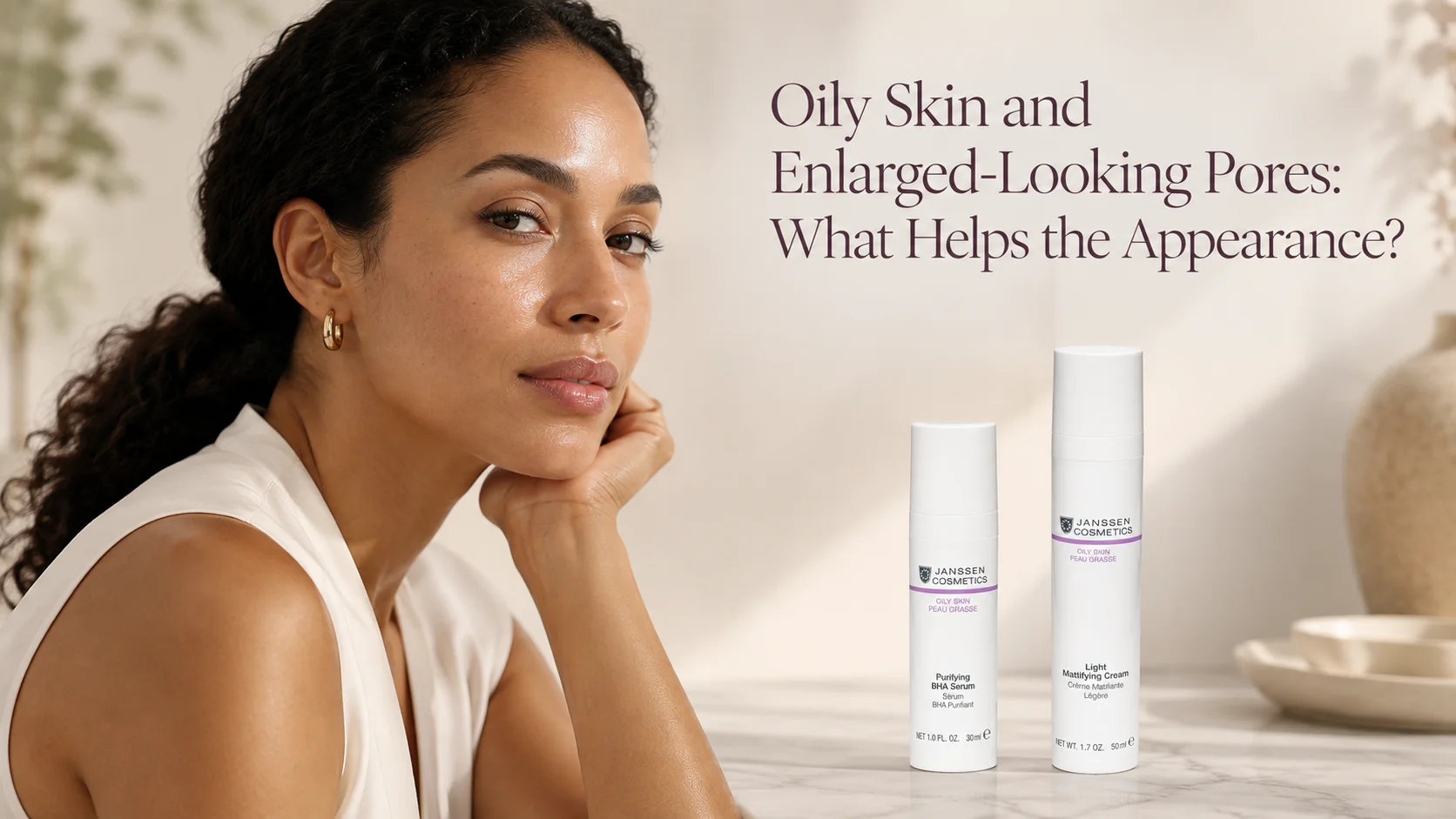
After consultation, our licensed esthetician may consider Janssen Cosmetics options depending on whether enlarged-looking pores are connected to shine, clogged-looking pores, blackheads, whiteheads, makeup separation, or dehydration.

Possible options may include:
These options are not automatic recommendations. The right choice depends on whether the pores look more visible because of oil, buildup, texture, dehydration, or product layering.
Do not believe products can permanently erase pores.
Do not use hot water to “open” pores.
Do not scrub pores aggressively.
Do not layer BHA, AHA, retinol, scrub, and clay mask all at once.
Do not skip moisturizer if the skin feels tight.
Do not use heavy cream everywhere if only the cheeks need more moisture.
Do not use clay mask all over if only the nose and forehead are oily.
Do not ignore painful, deep, swollen, infected-looking, scarring, or persistent blemishes.
Skincare cannot permanently shrink or erase pores. It can help pores look less noticeable when oil, buildup, texture, or makeup are making them stand out.
Oil and surface buildup can make pores look more visible. Shine also reflects light, which can make texture stand out more.
BHA may be helpful when enlarged-looking pores are connected to clogged-looking pores, blackheads, whiteheads, or oily buildup.
A clay mask may help reduce the look of shine temporarily, especially in the T-zone. Use it occasionally and avoid applying it heavily on dry or tight areas.
A moisturizer that is too heavy for oily areas can make pores look more noticeable under makeup. But skipping moisturizer can also make the skin feel tight and uneven. Texture matters.
Makeup can settle into texture when the skin is oily, dehydrated, over-layered, or not properly prepped. Lighter layers and better skin prep can help.
Toner may help if it feels fresh and non-stripping. If it burns or makes the skin tight, it may make the surface look worse.
A dermatologist should evaluate painful, deep, swollen, cystic-looking, infected-looking, scarring, suddenly worsening, or persistent blemishes.If your pores look larger and your skin also feels oily, tight, or congested, a free virtual consultation can help clarify what is making the texture more visible.
At Zendevie, we look at shine pattern, clogged-looking pores, makeup behavior, dehydration signs, and current product use before recommending products. The goal is to help your skin look cleaner and smoother without over-stripping it.

Zendevie is guided by Haby Diallo, a licensed esthetician with more than 20 years of professional skincare experience. Her approach is rooted in education, professional judgment, and personal care.
years of experience