
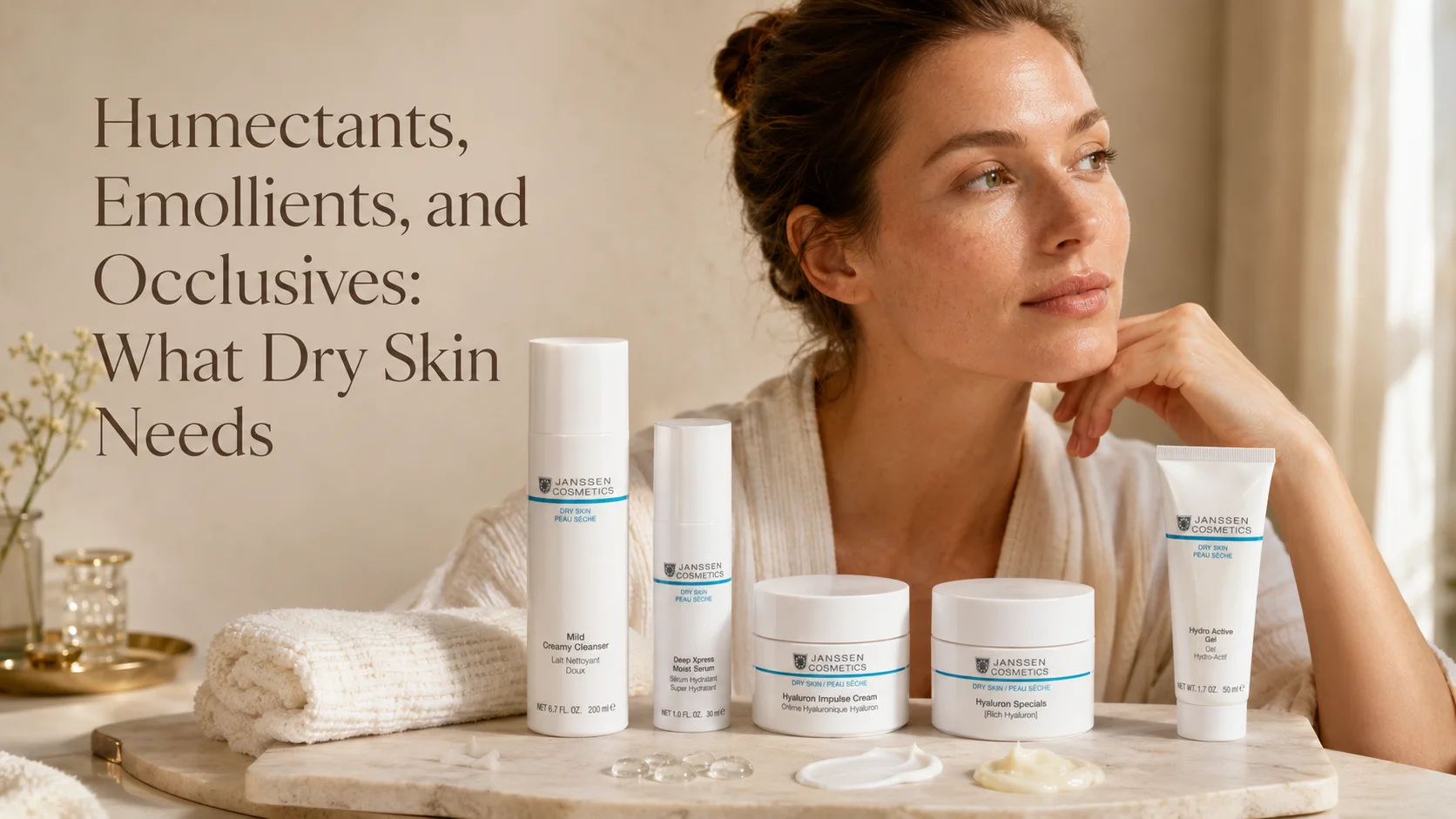
Dry skin often needs more than one type of ingredient. Sometimes the skin needs water. Sometimes it needs softness. Sometimes it needs a richer layer that helps reduce moisture loss.
This is why one lightweight serum may not feel like enough. It may hydrate, but the skin still feels tight. A rich cream may feel comforting, but if the skin lacks hydration underneath, it may still look dull or rough.
To understand dry skin care better, it helps to understand three ingredient categories: humectants, emollients, and occlusives.
At Zendevie, we do not look at dry skin as one simple concern. We look at whether the skin needs hydration, lipids, comfort, barrier support, or a better routine order.
Dry skin often benefits from a combination of humectants, emollients, and occlusives.
Humectants help attract and hold water in the skin’s surface layers.
Emollients help soften and smooth the skin.
Occlusives help reduce moisture loss by creating a protective-feeling layer.
A dry skin routine usually works best when hydration comes first, comfort follows, and daytime protection is included with SPF.
Many people say, “I use moisturizer, but my skin still feels dry.”
This can happen when the moisturizer is not giving the skin the right balance.
Dry skin may need:
A moisturizer is not only about how thick it feels. It is about what the formula is helping the skin do.
Humectants are ingredients that help attract and hold water in the skin’s surface layers.
They are especially helpful when the skin feels dehydrated, tight, dull, or less plump-looking.
Common humectant-style ingredients include:
Humectants can make the skin feel fresher and more hydrated, but they usually work best when followed with a cream or lotion.
Humectants help dry skin by supporting hydration.
They may help the skin look:
If your skin feels tight even after cleansing, humectant support may be helpful.
However, humectants alone may not be enough for very dry or lipid-deficient skin. The skin may still need emollients and richer comfort.
Emollients are ingredients that help soften and smooth the skin.
They help improve the feel of rough, dry, or uneven skin texture. When dry skin feels flaky, tight, or uncomfortable, emollients can help the surface feel more flexible and comfortable.
Common emollient-style ingredients may include:
Emollients are important because dry skin often needs more than water. It also needs comfort and softness.
Emollients help dry skin feel more comfortable.
They may support:
If your skin feels rough, flaky, or uncomfortable, emollients may be an important part of your routine.
Occlusives are ingredients that help reduce moisture loss from the skin’s surface.
They create a protective-feeling layer that helps keep hydration and comfort from disappearing too quickly.
Common occlusive-style ingredients may include:
Occlusives are especially helpful when skin loses moisture quickly or feels dry again soon after applying moisturizer.
Occlusives help support dry skin by helping moisture stay longer.
They may be helpful when the skin:
Occlusives can be very helpful, but texture matters. Some people need a rich cream, while others only need a slightly more comforting layer.
The best dry skin care often uses all three categories in a thoughtful way.

A simple way to understand it:
Humectants hydrate.
Emollients soften.
Occlusives help protect the moisture feeling.
For example, a dry skin routine may use a hydrating serum first, then a softening cream, then SPF during the day.
At night, a richer cream may help the skin feel more comfortable while you sleep.
Dry skin products should be layered in a way that makes sense.
A general order is:
Cleanser → Tonic → Hydrating serum → Cream → SPF in the morning
If you apply only a rich cream without hydration underneath, the skin may still feel tight.
If you apply only a hydrating serum without cream afterward, the hydration may not feel lasting enough.
This is why dry skin often needs both hydration and comfort.

Use a cleanser that does not leave the skin tight or stripped.
A gentle tonic can prepare the skin for serum and cream.
Use a hydrating serum or moisture-support product if the skin feels dehydrated or dull.
Apply a cream that helps soften and comfort dry skin.
Finish with daytime protection.
Morning structure:
Cleanser → Tonic → Hydrating Support → Cream → SPF
Remove makeup, sunscreen, and daily buildup without harsh scrubbing.
Prepare the skin for night care.
Support water-binding comfort if the skin feels tight.
Use a comforting cream that supports softness and helps the skin feel nourished overnight.
Evening structure:
Cleanser → Tonic → Hydrating Serum → Comfort Cream
Your skin may need more humectant support if it feels:
In this case, a hydrating serum or gel-cream texture may help before cream.
Your skin may need more emollient support if it feels:
In this case, the routine may need a more comforting cream texture.
Your skin may need more occlusive-style support if it:
This does not always mean using a heavy balm. Sometimes it simply means choosing a richer cream or applying a little more to dry areas.

Products that may be discussed during a Zendevie dry skin consultation include:
These are examples only. A consultation helps decide whether your skin needs more hydration, more lipid comfort, a richer cream texture, or a simpler routine.
Do not use only a serum and skip moisturizer if your skin feels dry.
Do not use a heavy cream without understanding whether your skin also needs hydration.
Do not over-exfoliate dry skin to make it smooth.
Do not use hot water on dry skin.
Do not skip SPF.
Do not keep changing products without observing what your skin actually needs.
Do not assume all dry skin needs the same cream.
Humectants help attract and hold water. Emollients help soften and smooth the skin. Occlusives help reduce moisture loss from the skin’s surface.
Many dry skin routines benefit from all three, but the balance depends on the skin. Some skin needs more hydration, while very dry skin may need richer comfort.
Yes. Hyaluronic acid is a humectant-style ingredient that supports hydration in the skin’s surface layers.
Most oils are considered emollient or occlusive-style ingredients. They help soften the skin and may help reduce moisture loss, but they do not replace water-binding hydration.
Your skin may need more hydration underneath, a richer cream, gentler cleansing, or better barrier support.
Often, yes. A hydrating serum can support moisture before a cream helps soften and comfort the skin.
Yes. Oily skin can still be dehydrated. Humectants can support hydration without always feeling heavy

Zendevie is guided by Haby Diallo, a licensed esthetician with more than 20 years of professional skincare experience. Her approach is rooted in education, professional judgment, and personal care.
years of experience