



Oily skin needs cleansing, but it does not need to be punished.
When the skin feels greasy, shiny, or congested, it can be tempting to wash more often, scrub harder, or choose a strong cleanser that leaves the face squeaky clean. But oily skin can still become over-cleansed, dehydrated, tight, irritated, or more reactive.
Clean skin should feel fresh and comfortable, not stripped.
At Zendevie, our licensed esthetician looks at oily skin carefully before recommending products. The goal is to reduce excess shine and buildup while keeping the skin comfortable enough to stay balanced.
To wash oily skin without over-cleansing, use a gentle cleanser, lukewarm water, light pressure, and avoid washing too many times a day.
A simple oily skin cleansing routine may look like:
Morning: Gentle cleanse → toner if appropriate → lightweight moisturizer → SPF
Evening: Gentle cleanse → toner → targeted serum if needed → lightweight moisturizer
If the skin feels tight, burning, stingy, or dry after washing, the cleansing step may be too strong.

Oily skin produces more visible oil, but that does not mean the skin can tolerate harsh cleansing.
Oily skin may need cleansing to remove:
But if cleansing removes too much, the skin can feel tight, uncomfortable, or dehydrated. That can make the routine feel like it is helping at first, but hurting the skin’s comfort over time.
Oily skin may be over-cleansed if it feels:
The goal is not to remove every trace of oil. The goal is to cleanse excess oil while respecting the skin.
Many people with oily skin believe the face should feel squeaky clean after washing. But that feeling can be a warning sign.
A squeaky-clean feeling often means the skin has been stripped too aggressively. When oily skin is stripped, it may feel dry underneath while still producing oil on the surface.
This can lead to the confusing feeling of being oily and tight at the same time.
Oily skin should feel clean, refreshed, and comfortable after washing.
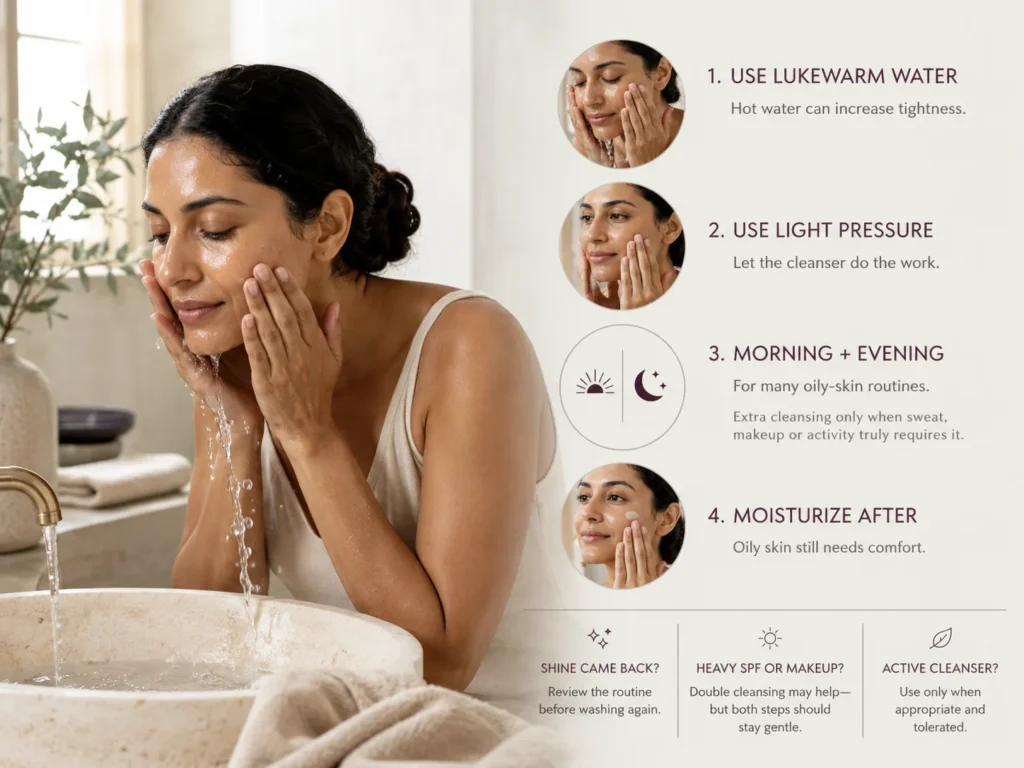
Most oily skin routines do well with cleansing twice a day:
The evening cleanse is especially important because it removes sunscreen, makeup, sweat, oil, and buildup from the day.
If you sweat heavily, work out, or wear heavy makeup, you may need to cleanse after that activity. But repeatedly washing throughout the day can make oily skin feel more dehydrated and irritated.
If your skin feels tight after every wash, reduce harshness before adding more products.
Many oily skin types benefit from a morning cleanse because oil can build up overnight.
However, the morning cleanse should not be aggressive. It should refresh the skin and prepare it for toner, moisturizer, and SPF.
If your skin is oily but also tight or sensitive, morning cleansing may need to be very gentle.
The key is how your skin feels afterward.
Evening cleansing is important for oily skin because the skin collects buildup during the day.
At night, cleanse to remove:
If sunscreen or makeup is heavy, a proper evening cleanse helps prevent buildup from sitting on the skin overnight.
But even at night, avoid scrubbing aggressively.
Hot water can make oily skin feel tight and uncomfortable.
Cold water may feel refreshing, but it does not replace proper cleansing. Lukewarm water is usually the best choice because it helps cleanse without shocking or stripping the skin.
If your face looks red-prone or feels tight after washing, the water may be too hot or the cleanser may be too strong.
Oily skin does not need rough scrubbing.
Use light circular movements and let the cleanser do the work. Scrubbing harder does not make the skin cleaner in a healthier way. It can irritate the skin and make texture look worse.
Be especially gentle around:
More pressure does not mean better cleansing.
The right cleanser depends on how oily, congested, sensitive, or dehydrated the skin feels.
Oily skin may do well with:
The cleanser should remove excess oil without leaving the skin dry, raw, or uncomfortable.
Some oily skin may benefit from a cleanser with active support, such as AHA or BHA-style ingredients.
This can be helpful when oily skin also has:
However, active cleansers should be used carefully. If the skin feels tight, stingy, or irritated, an active cleanser may be too much for daily use or may need to be alternated with a gentler option.
A gentle cleanser may be better when oily skin feels:
Oily skin does not always need the strongest cleanser. Sometimes it needs a cleanser that removes excess oil while preserving comfort.
Double cleansing may be helpful if you wear sunscreen, makeup, or long-wear products.
But double cleansing should not mean over-cleansing.
If you double cleanse, both steps should be gentle. The skin should not feel tight, dry, or irritated afterward.
If your skin feels stripped after double cleansing, simplify the routine or use a gentler cleanser.
Face brushes can feel satisfying, but they are not always necessary.
If oily skin is inflamed-looking, sensitive, irritated, or over-exfoliated, a brush may make the skin feel worse. Manual friction can irritate the skin even if the cleanser is gentle.
If you use a brush, use it carefully and not aggressively. The skin should not feel raw afterward.
Cleansing is only the first step.
After washing oily skin, the routine should support balance and comfort.
A simple order may be:
Cleanser → Toner → Serum if needed → Lightweight Moisturizer → SPF in the morning
Do not leave oily skin bare after cleansing. Oily skin still needs hydration and moisture support.
Skipping moisturizer can make oily skin feel tight, dehydrated, or unbalanced.
A lightweight moisturizer can help the skin feel comfortable without feeling greasy.
Oily skin may prefer textures like:
The moisturizer should help the skin feel balanced, not coated.
Use a cleanser that refreshes the skin without leaving it tight.
Use a gentle, alcohol-free, balancing toner if your skin tolerates it.
Use targeted support only where appropriate, especially if the skin has clogged-looking pores or blemish-prone areas.
Choose a texture that supports comfort without heaviness.
Finish with daytime protection.
Morning structure:
Cleanser → Toner → Targeted Support → Lightweight Moisturizer → SPF
Remove makeup, sunscreen, oil, and buildup without scrubbing.
Use a gentle toner to prepare the skin if it does not sting or dry the skin.
Use active support carefully and not all at once.
Finish with a moisturizer texture that keeps the skin comfortable.
Evening structure:
Cleanser → Toner → Targeted Support → Lightweight Moisturizer
If your skin feels oily but tight, it may be dehydrated or over-cleansed.
This can happen when the skin has oil on the surface but lacks water-based hydration. It may also happen when the cleanser is too strong.
Try:
Oil and hydration are not the same.
If shine returns quickly, do not automatically wash again.
Instead, look at the full routine.
Shine may return quickly because:
A better routine balances oil without stripping comfort.
To avoid over-cleansing:
The skin should feel clean, not punished.
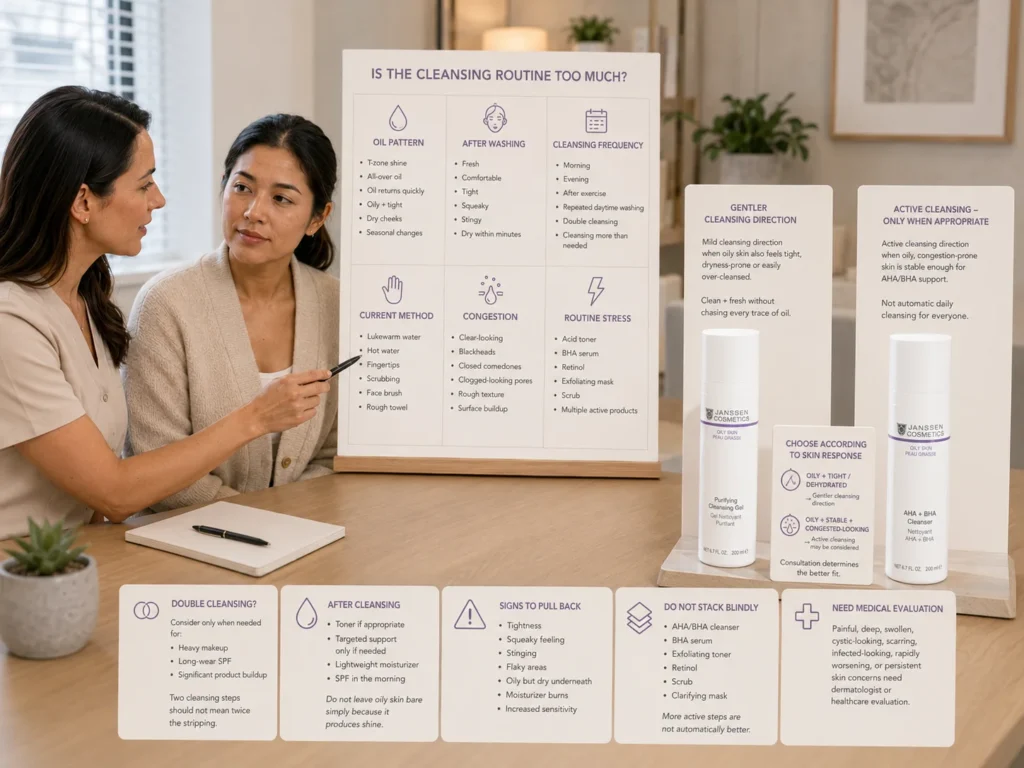
Products that may be discussed during a Zendevie oily skin consultation include:
These are examples only. A consultation helps decide whether your oily skin needs gentle cleansing, active cleansing, targeted BHA support, a mattifying moisturizer, or a simpler routine first.
Do not wash oily skin aggressively.
Do not use hot water to remove oil.
Do not scrub until the skin feels squeaky.
Do not wash your face many times a day because shine returns.
Do not skip moisturizer after cleansing.
Do not use alcohol-heavy toner if your skin feels tight.
Do not use exfoliating cleanser, BHA serum, retinol, and mask all at once.
Do not ignore burning, painful, swollen, cystic-looking, infected-looking, or rash-like skin.
Most oily skin routines do well with cleansing morning and evening. If you sweat heavily or wear heavy makeup, cleanse after that activity, but avoid repeatedly washing all day.
Yes. Over-cleansing can make oily skin feel tight, dehydrated, irritated, or more uncomfortable.
Your cleanser may be too strong, the water may be too hot, or your skin may be dehydrated.
No. Squeaky clean often means the skin has been stripped. Oily skin should feel fresh and comfortable.
Yes. Oily skin still needs lightweight moisture support after cleansing.
A BHA cleanser may help some oily, blemish-prone skin, but it should be used carefully if the skin feels tight, sensitive, or over-cleansed.
See a dermatologist if blemishes are painful, deep, swollen, cystic-looking, scarring, infected-looking, suddenly worsening, or not improving.

Zendevie is guided by Haby Diallo, a licensed esthetician with more than 20 years of professional skincare experience. Her approach is rooted in education, professional judgment, and personal care.
years of experience