

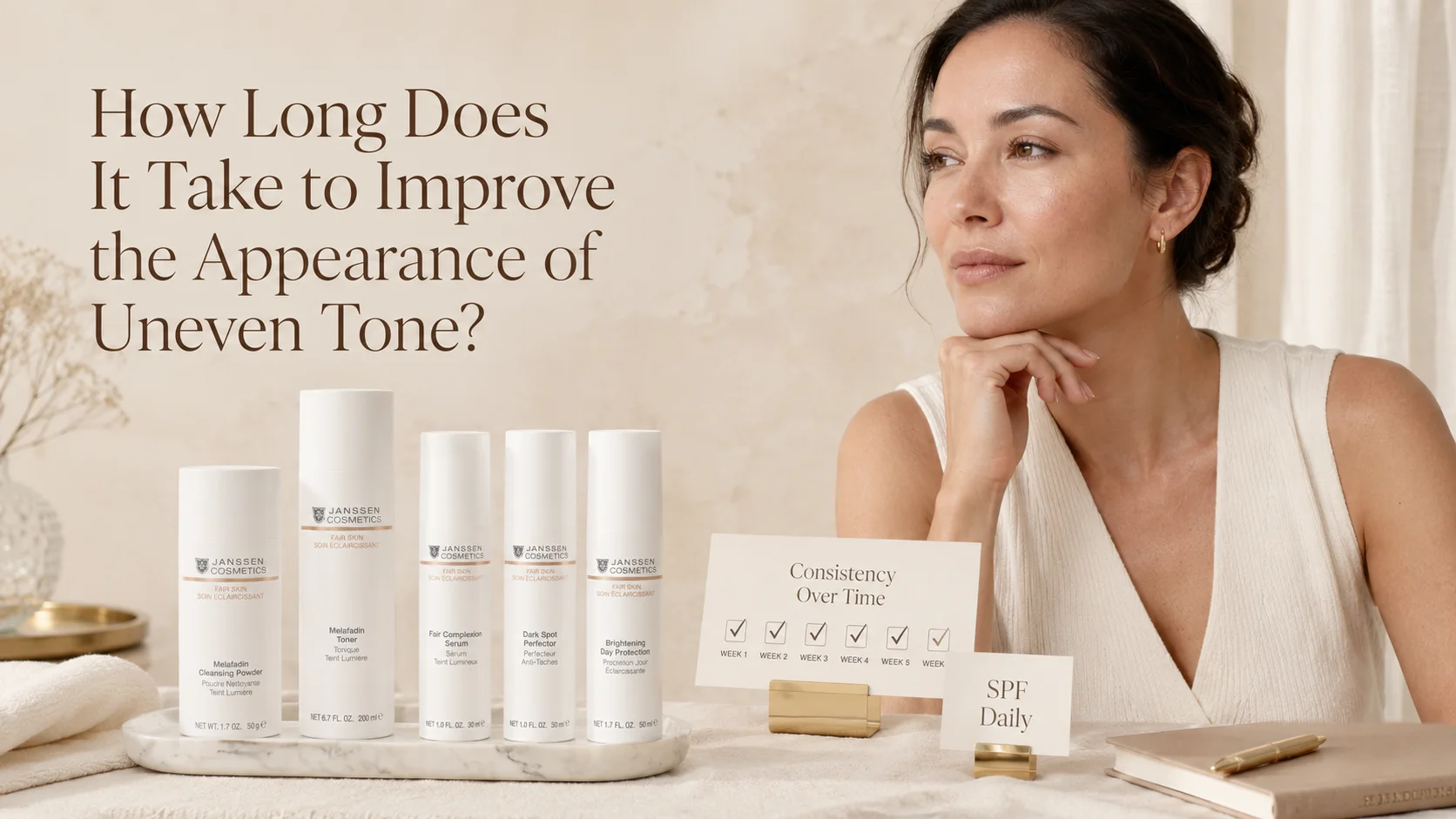
Uneven-looking tone usually does not change overnight.
Dark spot appearance, post-blemish marks, dull uneven skin, sun-related unevenness appearance, and patchy-looking tone can take time to look more balanced. This is because uneven tone is influenced by many things at once: sun exposure, SPF habits, skin type, dryness, dehydration, sensitivity, picking, exfoliation, product tolerance, and the routine being used.
This is why a good uneven-tone routine should not be built around pressure.
It should be built around consistency.
At Zendevie, we do not promise a fixed number of days for uneven-looking tone to improve. In consultation, our licensed esthetician reviews skin type, SPF habits, cleanser, moisturizer, toner, serum, exfoliation, sensitivity, hydration level, dark spot appearance, post-blemish marks, and whether a dermatologist should evaluate any changing or concerning spots.
The goal is not overnight change.
The goal is steady support for a more even-looking complexion.
There is no guaranteed timeline for improving the appearance of uneven tone.
Some people may notice the skin looks fresher or more comfortable once hydration, moisturizer, and SPF are consistent. Dark spot appearance and post-blemish marks often take longer to look less noticeable because they are influenced by sun exposure, irritation, picking habits, and skin response.
Visible progress depends on:
A supportive routine may look like:
Morning: Gentle cleanser → serum if appropriate → moisturizer → SPF
Evening: Gentle cleanser → moisturizer or targeted support if appropriate
The most important rule is this:
Do not rush the skin into irritation.
Uneven-looking tone can take time because it is not always one simple concern.
It may include:
Each concern may need a slightly different routine focus.
This is why one product cannot guarantee the same timeline for everyone.

Before tone looks more even, the skin may first feel more comfortable.
This may happen when the routine becomes gentler and more consistent.
Early signs of support may include:
These changes matter.
Comfort is often the foundation before visible tone support.
Dull uneven skin may look fresher before dark spot appearance changes.
Dullness can be influenced by:
When cleansing, hydration, moisturizer, and SPF become more consistent, dull uneven skin may begin to look fresher.
But dullness and dark spot appearance are not the same.
Dark spot appearance usually needs patience.
It may look slow because daylight exposure, irritation, and inconsistent SPF can make spots appear more noticeable.
A dark spot appearance routine should focus on:
Dark spot appearance should never be scrubbed aggressively.
Post-blemish marks can linger visually after a blemish calms down.
They may look slower to improve if the skin is:
Post-blemish marks need low irritation and SPF.
A strong product on irritated skin can make the area look more noticeable.
SPF is one of the biggest factors in uneven-tone progress.
If SPF is inconsistent, dark spot appearance and post-blemish marks may continue to look more noticeable after daylight exposure.
A morning routine should include:
Cleanser → serum if appropriate → moisturizer → SPF
SPF should be the final morning skincare step before makeup.
If SPF is skipped often, visible progress can feel much slower.
Sun exposure can make uneven-looking tone look more noticeable.
This is especially true for:
Even a good routine can look slower if the skin is repeatedly exposed without consistent protection.
Brightening support and SPF belong together.
Dry skin can make uneven-looking tone look more visible.
When the skin is dry, rough, or flaky, dark spot appearance and post-blemish marks may stand out more because the skin surface reflects light unevenly.
Dry skin may need:
If dryness is not addressed, the skin may continue to look patchy.
Dehydrated skin can look dull, tight, flat, oily but uncomfortable, or patchy.
Some people think their uneven tone is not improving, but the skin may be dehydrated.
Dehydrated skin may need:
Hydration can help the skin look fresher and more comfortable, even before tone appearance changes.
Sensitive skin often needs a slower routine.
If sensitive skin is pushed too quickly, it may become more irritated and patchy-looking.
Sensitive skin may need to start with:
Morning: Mild cleanser → moisturizer → SPF
Evening: Mild cleanser → moisturizer
Only after the skin feels calm should brightening-support products, exfoliation, vitamin C, or targeted serums be reviewed.
Sensitive skin should not be rushed.
Over-exfoliation can make uneven-looking tone look worse.
Signs include:
If this happens, pause exfoliation and simplify.
A damaged-looking routine can slow visible progress.
Picking blemishes can make post-blemish mark appearance more noticeable.
It can also make the skin look more uneven for longer.
Avoid:
Post-blemish marks need patience.
Low irritation matters.
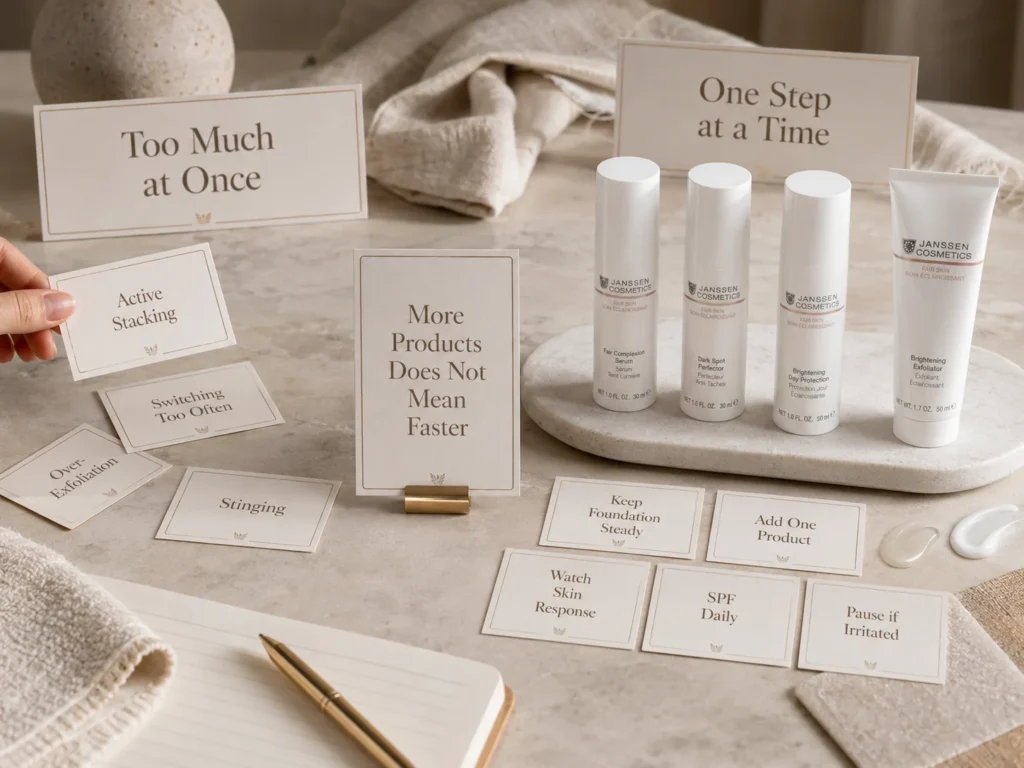
Changing products too often can make it hard to see progress.
It can also irritate the skin.
If you change your cleanser, toner, serum, moisturizer, exfoliant, and SPF all at once, it becomes difficult to know what is helping and what is hurting.
A safer approach is:
A routine needs enough consistency to be evaluated.
Using too many active products can irritate the skin and slow the look of progress.
Be careful combining:
More active products do not always mean faster visible results.
Sometimes they create more patchiness.
The timeline can change depending on skin type.
Dry skin may need comfort first.
Oily skin may need balance and post-blemish mark support.
Sensitive skin may need calming before brightening support.
Mature skin may need hydration, comfort, radiance support, and SPF.
Combination skin may need different support by zone.
If the routine does not match the skin type, visible progress may feel slower.
Dry uneven skin may begin to look more comfortable once hydration and moisturizer are consistent.
The first changes may be:
Dark spot appearance may still take longer.
Dry skin should not be rushed with strong brightening products before comfort is restored.
Dehydrated uneven skin may look fresher when hydration is added consistently.
Early improvements may include:
If dark spot appearance or post-blemish marks are also present, those may take longer.
Hydration supports the surface, but SPF and patience still matter.
Oily uneven skin may need time to balance.
The first goal may be reducing stripping and improving comfort.
Early signs of improvement may include:
If clogged-looking pores are present, BHA may be reviewed only when the skin is stable.
Oily skin should not be dried aggressively.
Sensitive uneven skin usually needs patience.
The first goal is calm.
Early signs of support may include:
Brightening support should wait until the skin is stable.
If sensitivity is persistent, rash-like, swollen, painful, or worsening, dermatologist guidance may be needed.
Mature uneven-looking skin may need steady support with hydration, comfort, radiance support, and SPF.
Early signs may include:
Dark spot appearance and sun-related unevenness appearance may take longer to look less noticeable.
Mature skin should not be over-exfoliated.
There is no guaranteed timeline for post-blemish marks.
They may look slower to improve when the skin is picked, irritated, over-exfoliated, or exposed to sun without SPF.
Helpful habits include:
Post-blemish marks need low irritation.
Dark spot appearance can be slow to look less noticeable.
Visible progress depends heavily on:
Dark spot appearance should be supported gently.
Do not scrub.
Around-mouth unevenness can take time because the area can be sensitive.
This area may be affected by:
A routine may need moisturizer, SPF, and less irritation before brightening-support products are added.
Forehead unevenness may be affected by:
Progress may depend on better cleansing, SPF placement, oil-balance support if appropriate, and avoiding picking or over-exfoliation.
The forehead may need a different strategy than the cheeks.
The neck and décolleté can take time because they are often exposed but not protected consistently.
These areas may need:
Do not treat the neck and décolleté aggressively.
These areas can be more delicate than the face.
Some changes may help the skin look better more quickly in appearance, without making unsafe promises.
These include:
The skin often looks better when irritation is reduced.
Progress may look slower when:
Before adding more products, review these habits.
Instead of only looking at marks, track the full skin response.
Ask:
Progress is not only one measurement.
Photos can help you see changes more clearly.
Use the same:
Photos should not create pressure.
They should help guide the routine.
If photos show worsening irritation, the routine may need to be simplified.
Sometimes a product seems to work quickly because it makes the skin feel smoother or brighter-looking at first.
Then the skin may become irritated if the product is too strong or used too often.
This can happen with:
If early glow turns into tightness, flaking, or stinging, the routine may be too aggressive.
Trying to speed up uneven-tone progress can backfire.
Aggressive routines may cause:
A more even-looking complexion should not come from irritation.
The skin needs support it can tolerate.
A consultation helps create realistic expectations.
It can help identify:
The timeline depends on what the skin is actually showing.
The first stage is stability.
This may include:
Morning: Mild cleanser → moisturizer → SPF
Evening: Mild cleanser → moisturizer
This stage is important if the skin is:
Stability comes before brightening support.
The second stage may include hydration and moisturizer support.
This can help if the skin feels:
A routine may include:
Morning: Gentle cleanser → hydrating serum if appropriate → moisturizer → SPF
Evening: Gentle cleanser → hydrating serum if appropriate → moisturizer
Comfort helps the routine become sustainable.
Brightening support may be added once the skin is stable and SPF is consistent.
A routine may look like:
Morning: Gentle cleanser → brightening-support serum if appropriate → moisturizer → SPF
or:
Evening: Gentle cleanser → brightening-support serum if appropriate → moisturizer
Add one product at a time.
Do not stack multiple brightening products immediately.
Exfoliation may be reviewed only if rough surface buildup, dullness, or clogged-looking texture is part of the concern.
A gentle exfoliation night may be:
Cleanser → exfoliation if appropriate → moisturizer
Recovery night:
Cleanser → moisturizer
Do not exfoliate irritated, broken, crusted, bleeding, painful, rash-like, or over-exfoliated skin.
Morning:
Gentle cleanser → brightening-support serum if appropriate → moisturizer → SPF
Evening:
Gentle cleanser → moisturizer or targeted support if appropriate
Avoid:
Dark spot appearance needs a steady routine.
Morning:
Gentle cleanser → serum if appropriate → moisturizer → SPF
Evening:
Gentle cleanser → moisturizer
Optional targeted support may be reviewed when the skin is calm.
Avoid:
Post-blemish marks need patience and low irritation.
Morning:
Gentle cleanser → hydrating serum if needed → moisturizer or cream → SPF
Evening:
Gentle cleanser → hydrating serum if needed → cream
Avoid:
Dry uneven skin needs comfort before active support.
Morning:
Gentle gel cleanser → lightweight moisturizer → SPF
Evening:
Gentle cleanser → lightweight moisturizer
Optional:
BHA only when clogged-looking pores, blackheads, whiteheads, or T-zone buildup are present and skin is stable
Avoid:
Oily skin needs balance.
Morning:
Mild cleanser → moisturizer → SPF
Evening:
Mild cleanser → moisturizer
Optional later:
Calming or hydration serum if tolerated
Brightening-support products should wait until the skin is calm.
Sensitive skin needs a slower timeline and careful routine building.
Morning:
Gentle cleanser → hydration or radiance-support serum if tolerated → moisturizer or cream → SPF
Evening:
Gentle cleanser → serum if appropriate → cream
Do not forget:
Mature skin often benefits from steady hydration, comfort, radiance support, and SPF.
Pause brightening-support products, exfoliation, vitamin C, acids, or retinol-style products if the skin becomes:
Return to a simple routine and seek guidance if symptoms persist or worsen.
Adjust the routine if:
A routine should be realistic enough to repeat consistently.
Professional guidance may help if:
A consultation can help decide what your skin needs first and what should wait.
A dermatologist should evaluate uneven-looking tone, marks, or irritation if there are warning signs such as:
Cosmetic skincare can support appearance, but changing or concerning marks need medical evaluation.
After consultation, our licensed esthetician may consider Janssen Cosmetics options depending on whether the skin needs consistency with SPF, hydration, calming support, radiance support, oil balance, or routine simplification first.

For a brightening-support routine when the skin is stable, possible options may include:
For dry or dehydrated skin that needs consistent comfort first, possible options may include:
For sensitive or overworked skin that needs calm before brightening support, possible options may include:
For oily uneven-looking skin or clogged-looking areas, possible options may include:
For exfoliation support, options should only be reviewed after routine stability and tolerance are understood, such as:
For morning routines, Face Guard Advanced SPF 30 may be considered as the final daytime protection step when appropriate and tolerated.
These are not automatic recommendations. Timeline expectations depend on skin type, sensitivity, SPF habits, hydration, irritation level, and whether the skin can tolerate active support.
Do not expect overnight results.
Do not skip SPF.
Do not scrub dark spot appearance.
Do not pick post-blemish marks.
Do not over-exfoliate to speed up progress.
Do not use every brightening product at once.
Do not use vitamin C on irritated skin.
Do not apply active products to broken, crusted, bleeding, painful, or irritated skin.
Do not switch products every few days.
Do not skip moisturizer because you use serum.
Do not treat oily skin harshly.
Do not ignore dry, dehydrated, or sensitive skin.
Do not use professional-only products at home.
Do not ignore changing, sudden, bleeding, crusting, painful, or unusual marks.
There is no guaranteed timeline. The appearance of uneven tone depends on SPF consistency, skin type, sun exposure, sensitivity, dryness, hydration, post-blemish marks, dark spot appearance, and product tolerance.
Progress may feel slow if SPF is inconsistent, skin is irritated, products are too strong, post-blemish marks are being picked, or the concern needs dermatologist evaluation.
Dark spot appearance usually needs patience. Daily SPF, low irritation, and consistent support are important, but there is no guaranteed timeline.
Post-blemish marks vary. They may look slower to improve if the skin is picked, scrubbed, irritated, or exposed to sun without SPF.
SPF, gentle cleansing, moisturizer, hydration when needed, low irritation, no picking, and a consistent routine may help the skin look more supported.
Yes. Over-exfoliation can irritate the skin and make uneven-looking tone, dark spot appearance, and post-blemish marks look more noticeable.
Not immediately. Changing products too often can irritate the skin and make it harder to know what is helping.
Yes. SPF is essential for uneven-looking tone routines, especially when dark spot appearance or post-blemish marks are present.
Sensitive skin can support a more even-looking complexion, but it usually needs a slower, calmer routine before active brightening support.
See a dermatologist if a spot changes in size, shape, or color; bleeds; crusts; hurts; itches severely; appears suddenly; looks unusual; has irregular-looking borders; or worsens quickly.
If you feel like your uneven-tone routine is taking too long, the answer may not be stronger products.
It may be better SPF consistency, less irritation, better hydration, a gentler cleanser, or a routine that fits your skin more clearly.
At Zendevie, a free virtual consultation helps us review your skin type, cleanser, toner, serum, moisturizer, SPF habits, exfoliation, sensitivity, hydration level, dark spot appearance, post-blemish marks, and current products before recommending anything.
The goal is to understand what is slowing the visible progress.
Then we build a routine that supports your skin with care, consistency, and patience.

Zendevie is guided by Haby Diallo, a licensed esthetician with more than 20 years of professional skincare experience. Her approach is rooted in education, professional judgment, and personal care.
years of experience