

Dry skin does not always need a serum, but many dry skin routines can benefit from one.
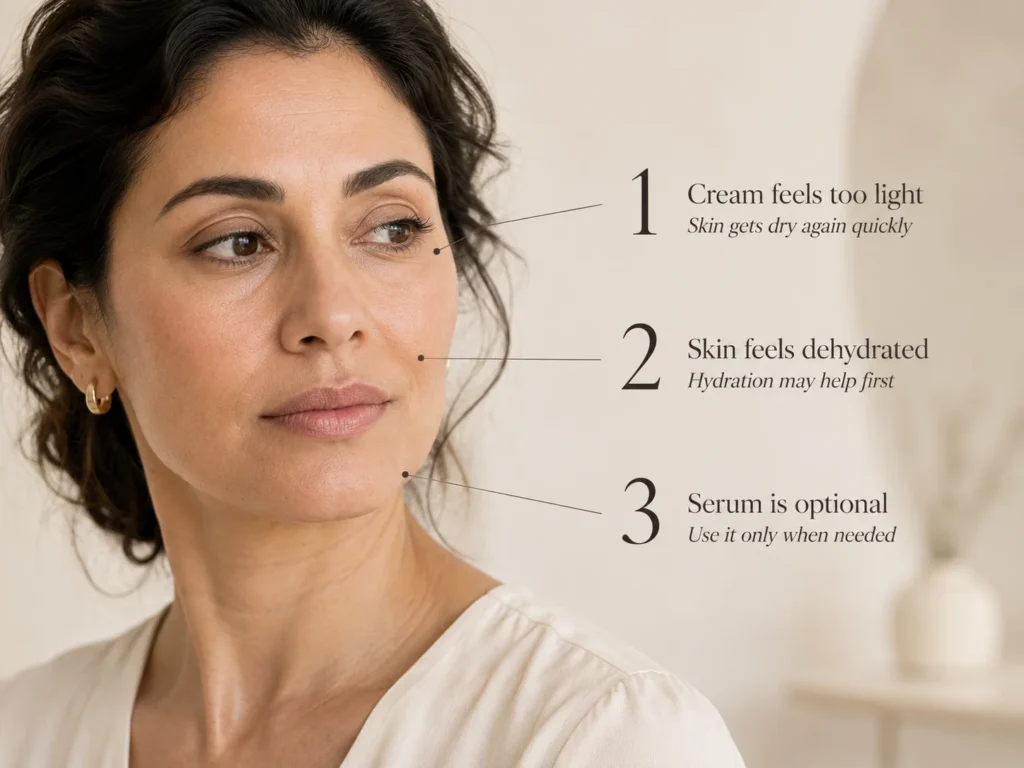
If your skin still feels tight after moisturizer, looks dull, feels dehydrated, or becomes dry again quickly, a serum before moisturizer may help. The right serum can add hydration or targeted support before cream helps soften and comfort the skin.
But serum is not a replacement for moisturizer.
At Zendevie, our licensed esthetician looks at what the skin is missing before adding more steps. Some dry skin needs a hydrating serum. Some needs a richer cream. Some needs a gentler cleanser first. The goal is not to make the routine longer. The goal is to make the routine work better.
Dry skin may benefit from serum before moisturizer when the skin feels tight, dehydrated, dull, rough, or dry again quickly after cream.
A hydrating serum can support water-based moisture, while moisturizer helps soften the skin and support comfort.
A simple dry skin order is:
Cleanser → Tonic → Hydrating Serum → Moisturizer → SPF in the morning
If your dry skin is sensitive, irritated, burning, or reactive, choose calming hydration and avoid strong active serums until the skin feels more comfortable.
A serum is usually a lightweight product used before moisturizer. It is often designed to deliver hydration-support ingredients, comfort ingredients, or targeted cosmetic support.
For dry skin, serum can help when the skin needs more than cream alone.
A serum may support:
The serum step should make dry skin feel more supported, not more irritated.
Many people with dry skin use moisturizer every day and still feel dry.
This can happen when the skin needs hydration underneath the cream. A moisturizer may help soften and comfort the skin, but if the skin lacks water-based hydration, it may still feel tight.
This is especially common when skin feels:
In this case, a hydrating serum before moisturizer may be helpful.

Serum and moisturizer have different roles.
A serum is usually lighter and more targeted. It may focus on hydration, comfort, radiance, or specific appearance concerns.
A moisturizer usually helps soften, comfort, and support the skin’s surface. It may have a richer texture and help the skin feel more protected.
For dry skin, the two often work best together.
Think of it this way:
Serum supports hydration or targeted care.
Moisturizer supports comfort and softness.
Dry skin often needs both hydration and comfort.
Dry skin may benefit from a serum if you notice:
These signs may suggest your routine needs a hydration step before cream.
Not every dry skin routine needs serum.
You may not need a serum if:
A good routine does not have to be complicated. If your skin feels comfortable, serum may be optional.
For dry skin, the best starting point is usually a hydrating serum.
Hydrating serum ingredients may include:
These types of ingredients can help the skin feel fresher and less tight before moisturizer.
Dry skin should usually focus on hydration and comfort before stronger active serums.
Not all serums are the same.
A hydrating serum helps support moisture and comfort. This is often a good choice for dry skin.
An active serum may focus on radiance, exfoliation, retinol-style support, or visible signs of aging. These can be useful for some skin types, but dry skin must use them carefully.
If your skin is dry, tight, or sensitive, start with hydration first.
Be careful with active serums such as:
Dry skin should not be overwhelmed in the name of results.
Serum usually goes before moisturizer.
A simple order is:
Cleanser → Tonic → Serum → Moisturizer
In the morning, SPF comes after moisturizer:
Cleanser → Tonic → Serum → Moisturizer → SPF
Serum is usually lighter, so it is applied before cream. Moisturizer helps complete the routine and support comfort.
More serum does not always mean better results.
Use a small amount and apply it evenly. The skin should feel lightly hydrated, not sticky or overloaded.
If the serum pills, feels tacky, or makes your moisturizer sit strangely, you may be using too much or layering too many products.
Dry skin usually responds better to consistent, balanced use than heavy layering.
Some hydrating serums may feel better when applied after a tonic or while the skin is slightly comfortable and hydrated.
The goal is not to apply products onto dry, tight skin and expect them to work alone. A gentle routine flow can help.
A dry skin routine may feel better when you apply:
Cleanser → Tonic → Hydrating Serum → Cream
The toner or tonic step can help prepare the skin for serum, but it should be gentle and non-drying.
If a serum stings every time, it may not be the right match.
Stinging can happen when:
If the skin feels burning, hot, stingy, or reactive, pause strong products and focus on comfort first.
Yes, but the serum should be gentle.
Dry and sensitive skin usually does better with a calming hydrating serum rather than a strong active serum.
Look for serum support that feels:
Avoid layering several serums if the skin is already reactive.
Some dry skin can use vitamin C serum, especially if the skin also looks dull or tired. But vitamin C should be chosen carefully.
If your skin is dry and sensitive, strong vitamin C may feel too active. You may need hydration and barrier comfort before adding vitamin C.
Vitamin C does not replace moisturizer or SPF.
If vitamin C is used in the morning, SPF should still be the final step.
Yes, many dry skin routines can benefit from hyaluronic acid-style hydration.
Hyaluronic acid helps support moisture in the skin’s surface layers. It usually works best when followed with moisturizer.
If you use a hydrating serum and skip cream, the skin may still feel dry later.
Hydration and cream comfort work together.
Use a cleanser that does not leave the skin tight.
Prepare the skin for serum and cream.
Support moisture if the skin feels tight, dull, or dehydrated.
Use a cream or lotion texture based on your dryness level.
Finish with daytime protection.
Morning structure:
Cleanser → Tonic → Hydrating Serum → Moisturizer → SPF
Remove makeup, sunscreen, oil, and daily buildup without stripping.
Refresh and prepare the skin.
Use serum support if the skin feels tight or needs extra moisture.
Apply moisturizer to help the skin feel soft and supported overnight.
Evening structure:
Cleanser → Tonic → Serum → Comfort Cream
Some dry skin does not need serum morning and night.
You may use serum once a day if:
Dry skin routines should be adjusted based on tolerance.
Serum may help, but it may not solve dry skin alone.
If your skin still feels dry after serum, you may need:
Dry skin is rarely solved by one product. The routine structure matters.
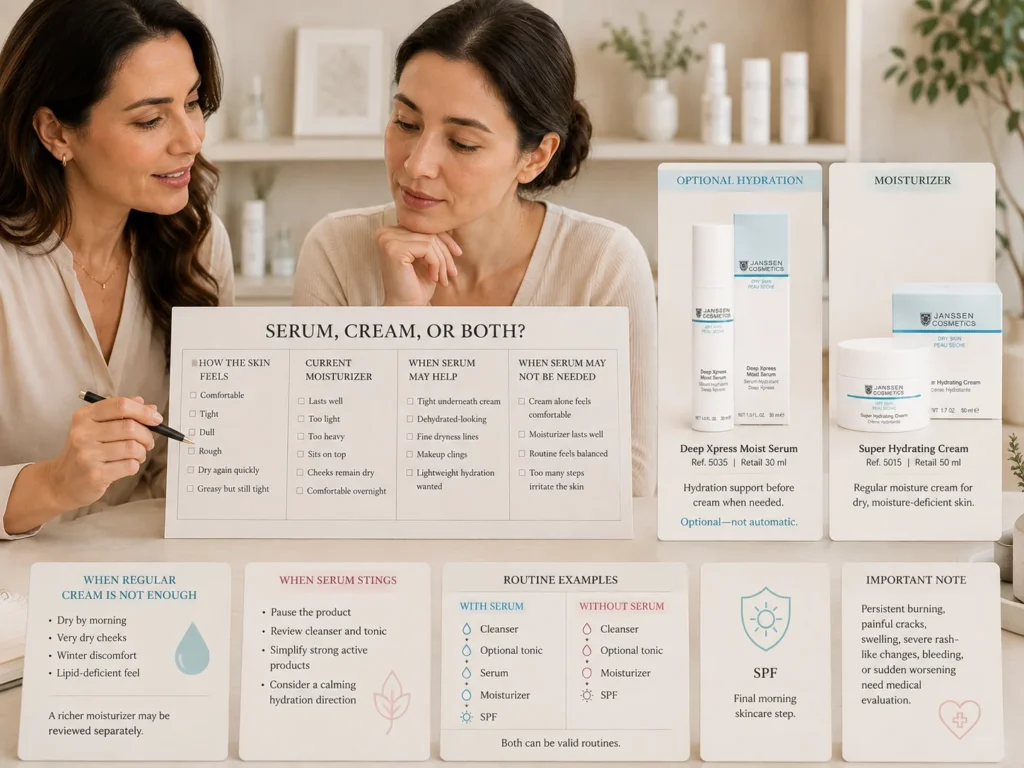
Products that may be discussed during a Zendevie dry skin consultation include:
If the skin is dry and sensitive, products from the sensitive skin support direction may also be discussed, such as:
These are examples only. A consultation helps decide whether your dry skin needs serum, cream, both, or a simpler routine first.
Do not use serum as a replacement for moisturizer if your skin is dry.
Do not layer multiple active serums when your skin feels tight or sensitive.
Do not keep using a serum that repeatedly burns.
Do not apply strong active serums to irritated skin.
Do not skip SPF in the morning.
Do not assume every dry skin routine needs the same serum.
Do not add serum just to make the routine longer.
Dry skin may benefit from serum before moisturizer if the skin feels tight, dehydrated, dull, or dry again quickly after cream.
A hydrating serum is often a good choice for dry skin. Look for moisture-support ingredients such as hyaluronic acid, glycerin, panthenol, or other comfort-support ingredients.
Yes. If your skin feels comfortable with moisturizer alone, serum may not be necessary.
Yes. Serum usually goes after cleansing and tonic, before moisturizer.
Usually no. Dry skin often still needs moisturizer to support softness and comfort after serum.
Your skin may need moisturizer over the serum, a richer cream, gentler cleansing, or barrier support.
Yes, but choose a gentle hydrating or calming serum and avoid strong active serums if the skin feels reactive.

Zendevie is guided by Haby Diallo, a licensed esthetician with more than 20 years of professional skincare experience. Her approach is rooted in education, professional judgment, and personal care.
years of experience