
An oily T-zone with dry or tight cheeks is one of the most common skin patterns people describe.
The forehead shines. The nose gets greasy. Makeup separates around the center of the face. Pores may look more noticeable near the nose or chin.
But the cheeks feel different.
They may feel normal, tight, dry, sensitive, or rough under makeup. Sometimes the cheeks even sting after toner or feel uncomfortable after a clay mask.
This is why treating the entire face like oily skin can backfire.
In consultation, our licensed esthetician looks at the face by zones. The T-zone may need help with visible shine and clogged-looking pores, while the cheeks may need a softer touch, lighter product placement, or fewer active ingredients.
To control an oily T-zone without drying your cheeks, avoid applying every oil-control product over the whole face.
Use a cleanser that does not leave the cheeks tight, apply clarifying products mainly where the oil appears, choose lightweight moisturizer, and use masks or BHA more selectively.
A simple structure may be:
Cleanser → Toner if appropriate → T-zone product if needed → Lightweight moisturizer → SPF in the morning
The key is zone-specific care: the center of the face and the cheeks may not need the same intensity.
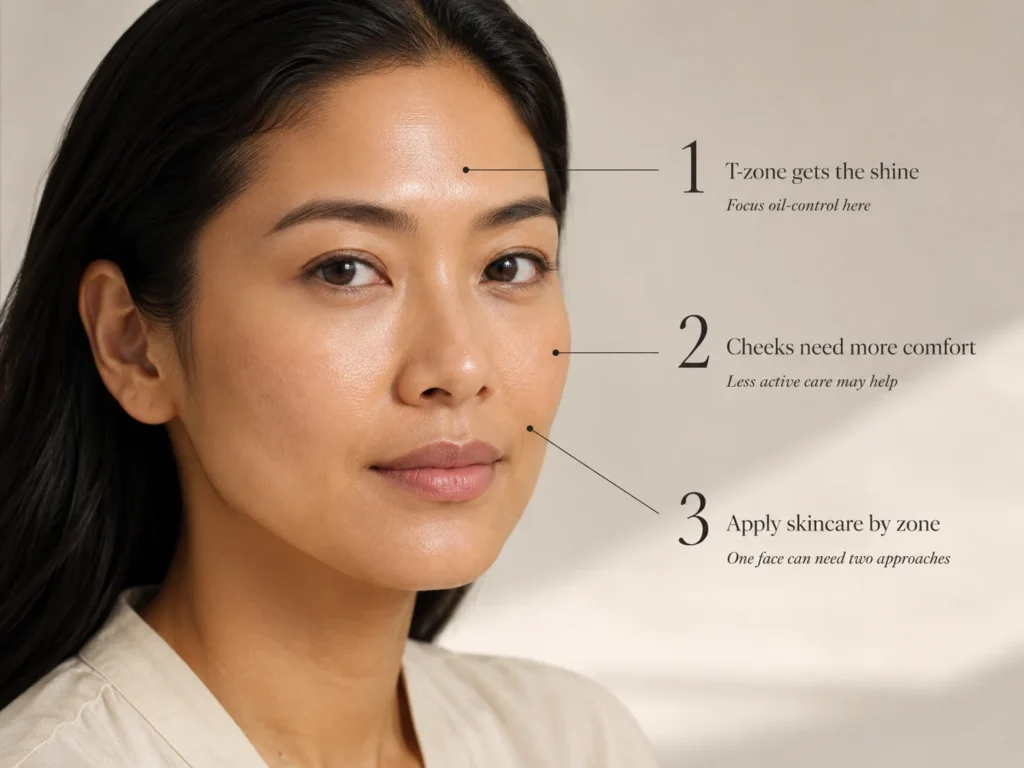
The T-zone includes the forehead, nose, and chin. This area often produces more visible oil than the cheeks.
You may notice:
This does not mean the whole face is oily. It means the center of the face is behaving differently from the outer areas.
That difference matters when choosing products.
Cheeks often have a different pattern than the T-zone.
They may feel dry because of:
The cheeks may not need the same oil-control steps as the nose or forehead.
If your cheeks feel tight after washing while the T-zone becomes oily later, your plan needs adjustment by area.
An oily T-zone with normal or dry cheeks often points to combination skin.
Combination skin does not mean the face is confused. It means different zones behave differently.
The mistake is using one strong oily-skin plan everywhere.
A better approach is to ask:
Those answers help decide where clarifying products belong and where the skin needs a calmer approach.
The nose is often the oiliest part of the face.
But if you treat the cheeks like the nose, the cheeks may become dry, tight, or irritated.
This often happens with:
The T-zone may need oil management. The cheeks may need less.
That is the difference.
The cleanser needs to work for the whole face.
If the cleanser feels good on the T-zone but leaves the cheeks tight, it may be too harsh for daily use.
A cleanser for oily T-zone and dry cheeks should remove oil, SPF, makeup, and buildup without making the outer face feel stretched.
If the skin feels tight within minutes after washing, do not ignore that clue.
You may need a milder cleanser, less hot water, less rubbing, or less frequent use of an active cleanser.
An active cleanser, such as an AHA/BHA-style cleanser, may make sense when the T-zone has clogged-looking pores, rough buildup, blackheads, or whiteheads.
But if the cheeks are dry, the active cleanser may need to be used carefully.
Possible approaches include:
The cleanser should not make the cheeks pay for what the nose needs.
Toner can be useful for an oily T-zone, but it should not leave the cheeks feeling tight.
If toner feels fresh on the forehead and nose but sharp on the cheeks, apply it with more intention.
You may use a lighter amount on the cheeks, focus more on the T-zone, or choose a milder toner overall.
If toner burns, stings, or makes the skin feel stretched, it may not belong in the plan right now.
Toner should refine the feel of the skin after cleansing, not strip the dry areas.
BHA may be considered when the T-zone has clogged-looking pores, blackheads, whiteheads, or congestion.
But that does not mean it has to go everywhere.
If the cheeks are dry or easily irritated, BHA may be better focused on:
Applying BHA only where the concern appears can make more sense than treating the entire face like it has the same problem.
Clay masks can be helpful for oily areas, but they can dry the cheeks if used too often or applied everywhere.
If your T-zone is oily but cheeks feel tight, try thinking of a clay mask as a zone product.
It may belong on:
It may not belong on:
Masking should match the zone, not the label on the product.
Many people with an oily T-zone skip moisturizer because the center of the face feels greasy.
Then the cheeks become tight, makeup clings, and the skin feels uneven.
A better approach is to use a lightweight moisturizer and adjust how much you apply by area.
You may need:
Moisturizer does not have to be heavy to be useful.
SPF is important, but texture matters.
If your T-zone gets oily under SPF, look at the full morning layering.
The issue may be:
This does not mean oily or combination skin should skip SPF. It means the textures need to be chosen more carefully.
If foundation separates on the nose but clings to the cheeks, your skin is showing two different needs.
The T-zone may need lighter layers and oil-aware textures.
The cheeks may need better hydration or a softer moisturizer texture before makeup.
Using only mattifying products everywhere can make the cheeks look dry. Using only rich products everywhere can make the T-zone slide.
This is why one face may need two placement strategies.
Morning care should prepare the face without making the cheeks tight or the T-zone greasy.
A simple order may be:
Cleanser → Toner if appropriate → Lightweight moisturizer → SPF
If needed, apply toner more through the T-zone and less on the cheeks.
Use moisturizer in a thin layer through the T-zone and a little more on the cheeks if they feel tight.
SPF should be the final step. If makeup follows, allow skincare to settle first.
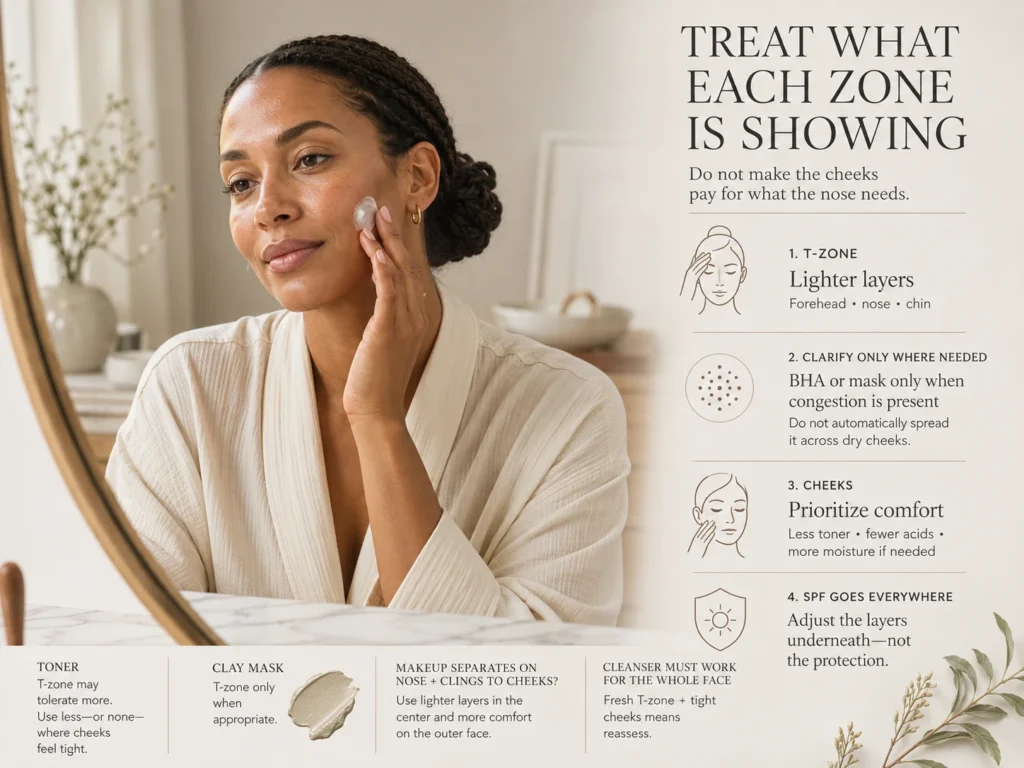
Evening care should remove the day without over-cleansing.
A simple order may be:
Cleanser → Toner if appropriate → T-zone serum if needed → Lightweight moisturizer
If using BHA, apply it mainly to clogged-looking or oily areas unless your skin tolerates all-over use.
If the cheeks feel dry, do not apply every active product there.
Evening care is where zone-specific thinking can make a big difference.
Try reading the face in sections.
May need oil control, lightweight layers, and selective exfoliation if bumps or shine appear.
May need focused BHA, occasional mask use, and careful cleansing because blackheads often appear here.
May need attention if whiteheads, congestion, or makeup buildup appear.
May need less toner, less acid, no clay mask, and slightly more moisturizer.
Often becomes dry or irritated from over-cleansing, toothpaste, active products, or friction. Avoid applying strong oil-control steps here unless there is a clear reason.
Tight cheeks may be dehydrated rather than truly dry.
This can happen when the skin lacks water-based hydration, even if it does not need a heavy cream.
Signs of dehydration include:
In this case, a lightweight hydrating step may help the cheeks feel less stretched without making the T-zone greasy.
Whiteheads or closed comedones in the T-zone may point to clogged-looking pores, product buildup, or oil mixed with dead surface cells.
BHA may be considered, but product texture also matters.
Heavy SPF, thick makeup, rich moisturizers, hair products, and incomplete cleansing can all contribute to a congested-looking T-zone.
Before adding more exfoliation, look at what is sitting on the skin every day.
If the T-zone is oily and sensitive, go slowly.
The skin may not tolerate strong toner, daily BHA, frequent clay masks, or active cleanser every day.
A simpler plan may work better:
Cleanser → Lightweight moisturizer → SPF
Then add toner or BHA only if the skin can tolerate the basics without stinging.
Sensitive oily skin needs fewer variables so the reaction pattern becomes clearer.
If the cheeks burn, sting, or feel raw, pause active products on those areas.
Avoid applying:
Focus on making the cheeks feel less reactive before adding more.
If the skin is painful, swollen, crusting, infected-looking, rash-like, or not improving, it should be evaluated by a dermatologist or healthcare professional.
Most days, keep the plan simple.
Daily morning:
Cleanser → Light moisturizer → SPF
Daily evening:
Cleanser → Light moisturizer
Then add optional steps only where needed:
This keeps the face from being treated as one identical skin type everywhere.
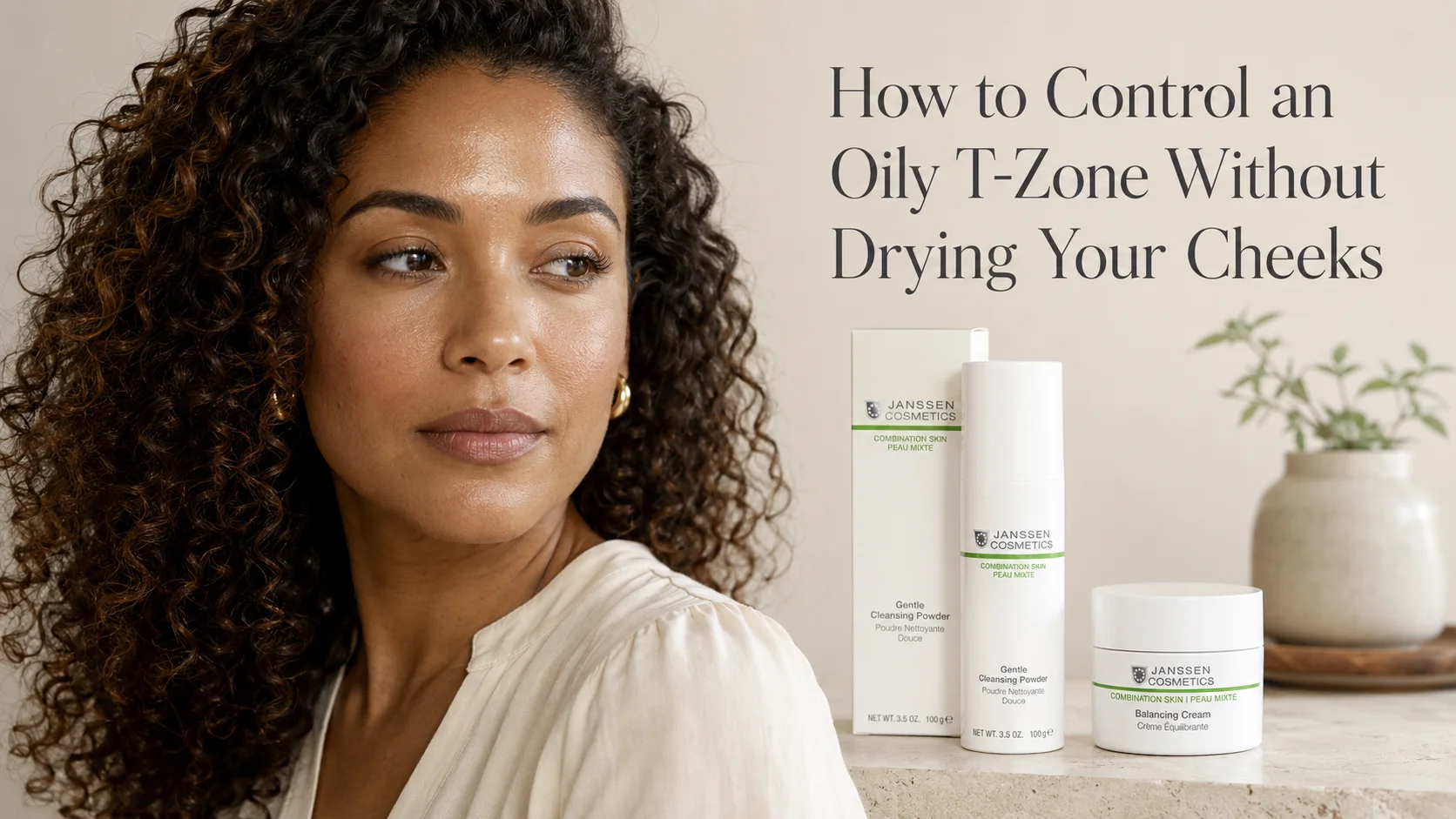
After consultation, our licensed esthetician may consider Janssen Cosmetics options depending on whether the skin is oily, combination-oily, oily-dehydrated, or sensitive from overuse.
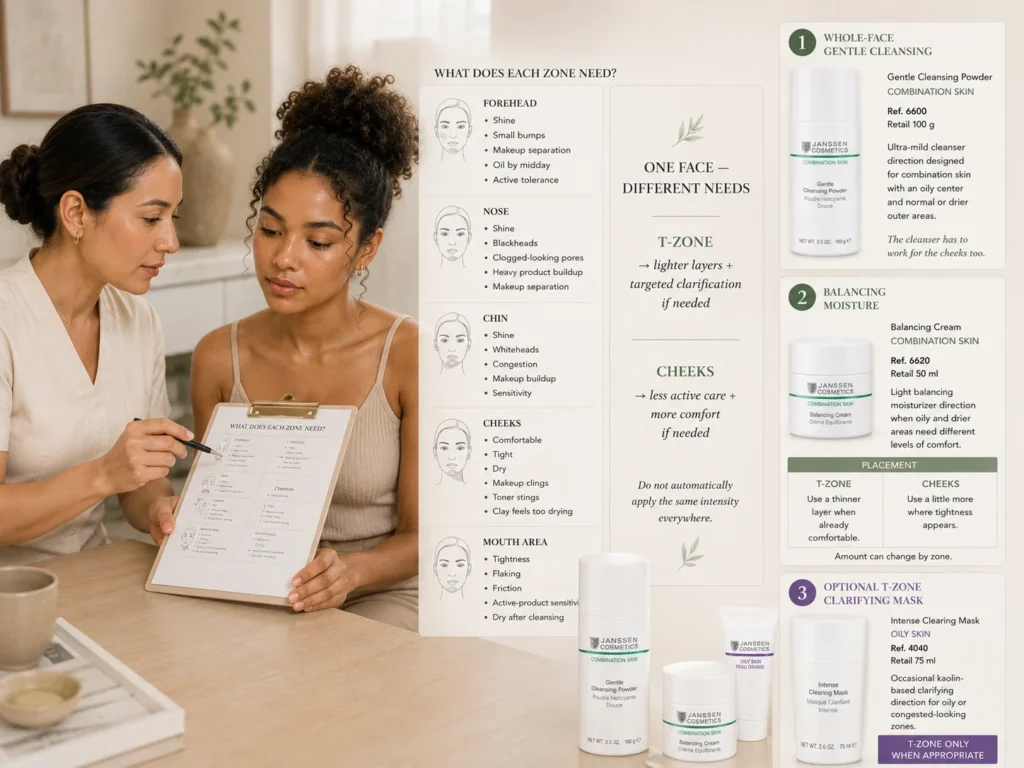
Possible options may include:
These options are not automatic recommendations. The right placement depends on where the skin is oily, where it feels tight, and which areas can tolerate clarifying products.
Do not apply every oily-skin product heavily over the whole face.
Do not use clay masks on dry cheeks just because the nose is oily.
Do not scrub the T-zone aggressively.
Do not skip moisturizer because the forehead shines.
Do not use BHA everywhere if only the nose and chin are congested.
Do not choose SPF only by matte finish if it makes the cheeks tight.
Do not ignore burning, painful, swollen, infected-looking, or persistent blemishes.
This often happens with combination skin. The forehead, nose, and chin may produce more visible oil, while the cheeks may need fewer clarifying products and a softer moisturizer texture.
Use oil-control products mainly where the oil appears. Avoid applying clay masks, BHA, strong toner, or mattifying products heavily over dry cheek areas.
Sometimes, yes. You may use toner, BHA, or mask mainly on the T-zone and apply more moisturizer on the cheeks.
Not always. An oily T-zone with normal or dry cheeks is often combination skin, not fully oily skin.
BHA may be considered when the T-zone has clogged-looking pores, blackheads, whiteheads, or congestion. It does not always need to be applied over the whole face.
Only if the cheeks are oily and tolerate it. If your cheeks feel dry, tight, or sensitive, apply clay mask mainly on the T-zone.
Your T-zone may be oily while your cheeks are dry or dehydrated. This usually means the face needs different product placement by zone.
A dermatologist should evaluate painful, deep, swollen, cystic-looking, infected-looking, scarring, suddenly worsening, or persistent blemishes.
If your T-zone is oily but your cheeks feel tight or dry, a free virtual consultation can help clarify what each area of your face needs.
At Zendevie, we look at shine, tightness, clogged-looking pores, makeup behavior, and product placement before recommending a plan. That way, the T-zone can be managed without making the cheeks feel stripped.
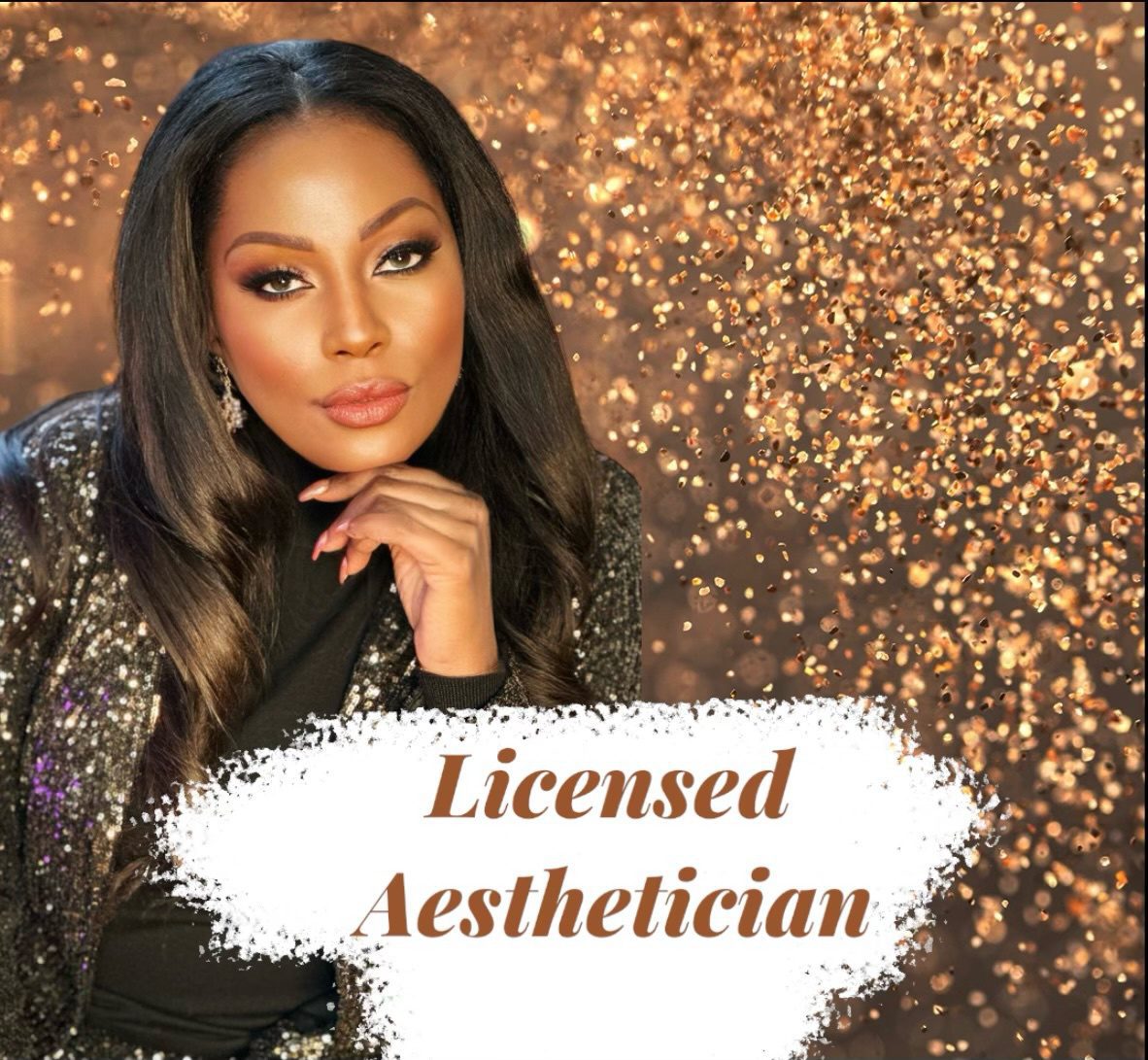
Zendevie is guided by Haby Diallo, a licensed esthetician with more than 20 years of professional skincare experience. Her approach is rooted in education, professional judgment, and personal care.
years of experience