

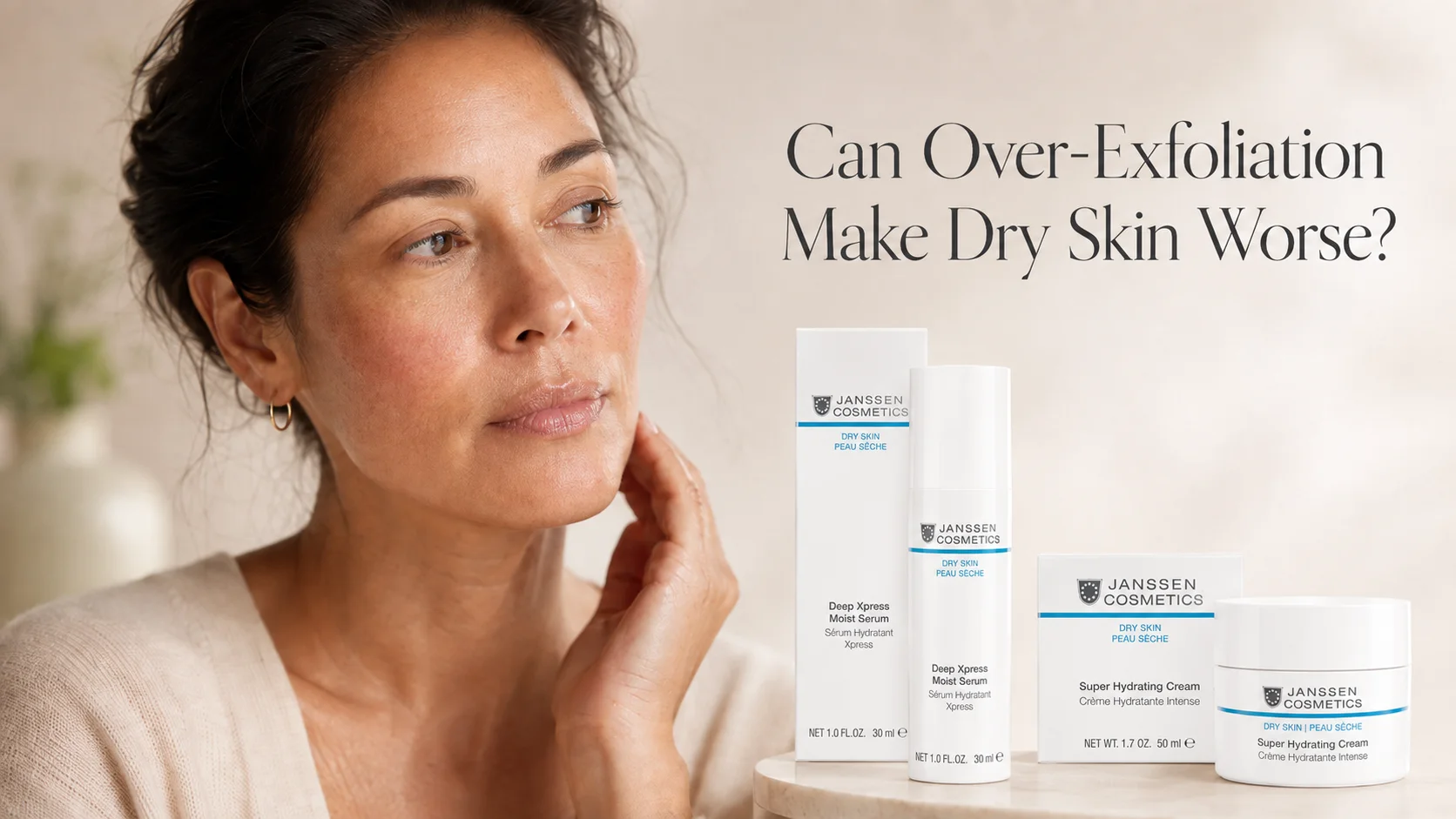
Yes, over-exfoliation can make dry skin worse.
When skin looks flaky, rough, dull, or textured, it is tempting to exfoliate more. Many people think that if they remove the dry surface, the skin will automatically look smooth and glowing. But dry skin does not always need more exfoliation. Sometimes it needs more hydration, comfort, and barrier support.
If exfoliation is used too often or too aggressively, dry skin may become tighter, stingier, rougher, or more sensitive than before.
At Zendevie, our licensed esthetician looks at why the skin feels dry before recommending exfoliation. The goal is not to polish the skin until it feels raw. The goal is to support a smoother, healthier-looking surface without overwhelming the skin.
Over-exfoliation can make dry skin worse by leaving the skin feeling tight, dry, stingy, warm, rough, red-prone, flaky, or more reactive.
Dry skin may need gentle exfoliation only when the skin barrier feels comfortable and the dryness is connected to surface buildup.
If the skin feels irritated, burning, cracked, painful, swollen, rash-like, or unusually sensitive, exfoliation should be paused and the skin should be checked by a dermatologist or healthcare professional when needed.

Dry skin often looks rough or flaky. Makeup may cling to patches. The skin may look dull or less smooth. Because of this, exfoliation can feel like the obvious solution.
Exfoliation may help when dullness comes from surface buildup, but it is not the answer for every dry skin concern.
Dry skin may also be caused by:
If the real issue is dryness or barrier stress, exfoliating more may make the skin feel worse.
Over-exfoliated dry skin may look or feel different from normal dryness.
You may notice:
This is a sign that the routine may be too active.
Exfoliation removes dead surface cells. When used appropriately, it can help the skin look smoother. But when used too often, it can disturb the skin’s comfort.
Dry skin already needs moisture and barrier support. If exfoliation is too strong, the skin may lose comfort faster and react more easily.
Instead of looking smooth, the skin may look:
A healthy-looking glow should not come from irritation.
Physical scrubs use particles or texture to manually polish the skin.
Some skin types may tolerate gentle physical exfoliation, but dry or sensitive skin can become irritated if scrubs are too rough or used too often.
Be careful if your scrub leaves your skin feeling:
Dry skin should never be scrubbed aggressively to remove flakes.
AHA and BHA exfoliating products may be useful for some skin types, but dry skin must use them carefully.
AHA-style exfoliation is often discussed for dullness or texture. BHA-style support is often discussed for oily or clogged-looking areas. But dry skin does not always need frequent acid use.
Too much acid exfoliation can leave dry skin feeling:
If the skin feels uncomfortable, pause and focus on comfort first.
Retinol is not the same as exfoliation, but it can be too much when combined with exfoliating products in a dry skin routine.
If dry skin is already using retinol, adding acids, scrubs, peels, or exfoliating masks too often can make the skin feel overwhelmed.
Be careful with combining:
These products may have a place in some routines, but dry skin needs timing, spacing, and tolerance.
Pause exfoliation if your skin feels:
During this time, keep the routine simple.
Focus on gentle cleansing, hydration, comfort cream, and SPF during the day.
Gentle exfoliation may help dry skin when the skin barrier feels comfortable and the dryness is mostly from surface buildup.
It may be considered if:
Even then, exfoliation should be gentle and not used too often.
There is no one schedule for everyone.
Some dry skin may tolerate gentle exfoliation once a week. Some may need less. Some sensitive dry skin may need to avoid exfoliation until the skin feels more stable.
The better question is not, “How often should I exfoliate?”
The better question is:
How does my skin feel afterward?
If your skin feels smoother and comfortable, the routine may be working. If it feels tight, stingy, or dry, the exfoliation may be too much.
If dry skin looks flaky or dull, do not automatically scrub it.
Try supporting the skin with:
Sometimes skin looks rough because it is under-supported, not because it needs more exfoliation.
Step 1: Gentle Cleanser
Use a mild cleanser that does not leave the skin tight.
Step 2: Hydrating Tonic
Prepare the skin gently if tolerated.
Step 3: Hydration Support
Use a simple hydrating serum if the skin does not sting.
Step 4: Comfort Cream
Choose a moisturizer that helps the skin feel soft and supported.
Step 5: SPF
Protect the skin during the day.

Step 1: Gentle Cleanse
Remove makeup, sunscreen, and daily buildup without scrubbing.
Step 2: Hydration Support
Use gentle hydration if tolerated.
Step 3: Comfort Cream
Support the skin overnight with a calming, comforting texture.
Recovery structure:
Gentle Cleanser → Hydration → Comfort Cream → SPF in the morning
Do not reintroduce exfoliation while the skin still feels irritated.
Wait until the skin feels:
When you restart, use only one exfoliating product at a time. Avoid combining exfoliation with retinol, strong vitamin C, or other active products on the same night unless guided.
Start slowly and observe the skin.
To avoid repeating the cycle:
Dry skin needs respect and timing.

Products that may be discussed during a Zendevie dry skin consultation include:
If the skin feels dry and reactive after over-exfoliation, sensitive skin support may also be discussed, such as:
Exfoliation products, peels, or stronger active options should be discussed carefully and only when the skin feels ready.
These are examples only. A consultation helps decide whether your skin needs exfoliation, hydration, barrier comfort, or a pause from active products.
Do not scrub dry patches aggressively.
Do not exfoliate skin that feels burning, stingy, raw, or irritated.
Do not combine acids, retinol, scrubs, and strong vitamin C without guidance.
Do not use exfoliation every day just because the skin looks dull.
Do not skip moisturizer after exfoliation.
Do not skip SPF.
Do not keep using a product that repeatedly burns.
Do not ignore painful, cracked, bleeding, swollen, or rash-like skin.
Yes. Over-exfoliation can make dry skin feel tighter, stingier, rougher, flakier, and more sensitive.
Signs may include burning, stinging, tightness, redness-prone areas, warmth, increased dryness, roughness, or products suddenly feeling uncomfortable.
Not always. If the skin is irritated or sensitive, exfoliation may make it worse. Focus on hydration and comfort first.
It depends on tolerance. Some dry skin may tolerate gentle exfoliation occasionally, while sensitive dry skin may need to pause.
Pause exfoliation and strong active products. Use gentle cleansing, hydration, comfort cream, and SPF. Seek professional care if the skin is painful, cracked, swollen, bleeding, or rash-like.
Moisturizer can support comfort, but the routine may also need fewer active products, gentler cleansing, hydration, and time.
Not always. Gentle exfoliation may help some dry skin, but it should be used carefully and only when the skin barrier feels comfortable.

Zendevie is guided by Haby Diallo, a licensed esthetician with more than 20 years of professional skincare experience. Her approach is rooted in education, professional judgment, and personal care.
years of experience