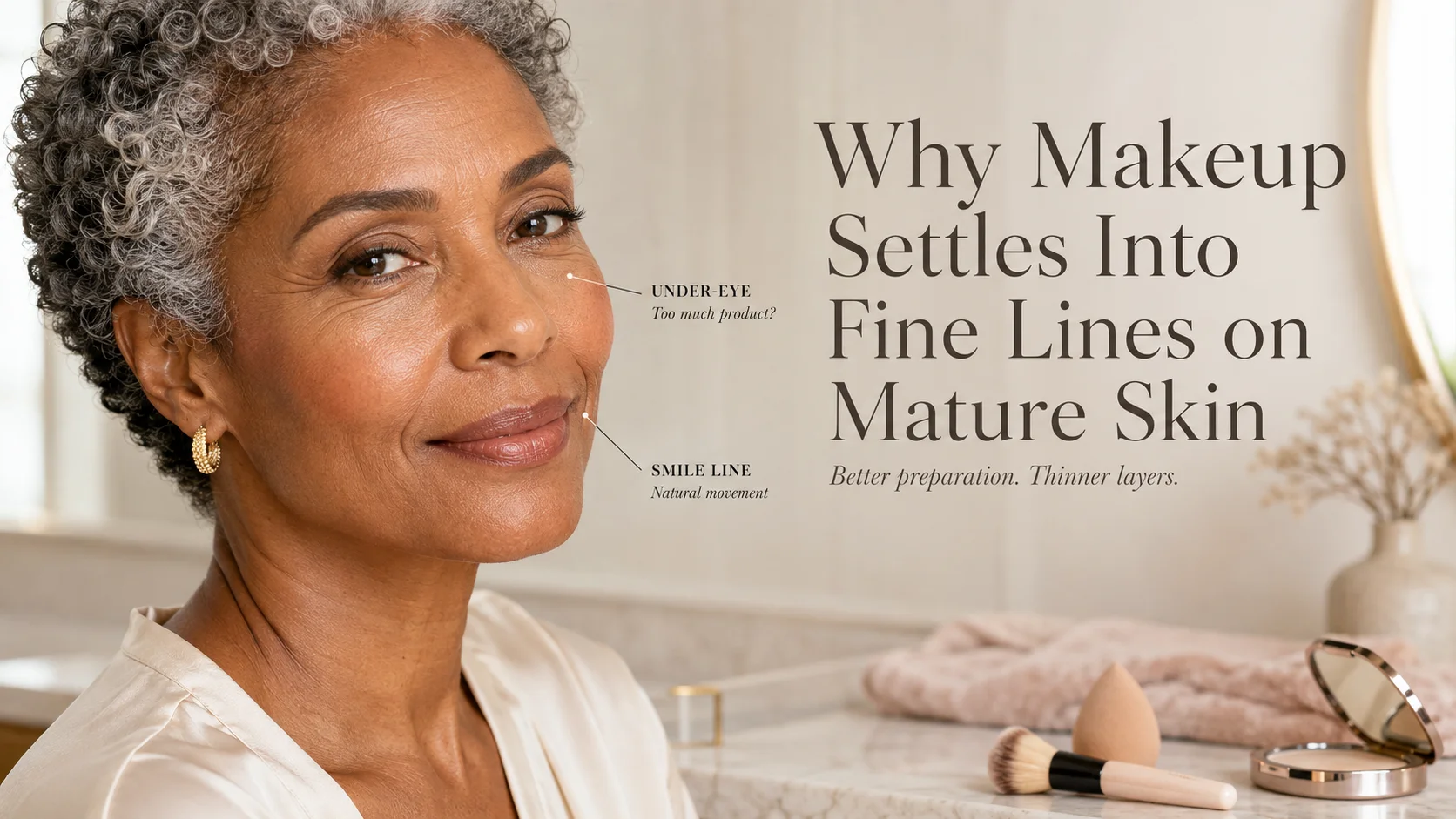



You do not need to scrub your skin harshly to make it look fresh.
When skin looks dull, tired, flat, rough, or uneven, many people reach for a scrub. It feels like the fastest way to make the skin smoother. But harsh scrubbing can make dull-looking skin worse, especially if the skin is dry, dehydrated, sensitive, mature, oily-but-tight, or already using active products.
A fresher-looking complexion usually comes from rhythm, not force.
The skin needs proper cleansing, hydration, moisturizer, SPF, and carefully chosen support steps. Exfoliation can be helpful when surface buildup is truly present, but it should not be aggressive, daily, or used as punishment for dullness.
At Zendevie, we do not recommend harsh scrubs just because skin looks dull. In consultation, our licensed esthetician first looks at the skin type, sensitivity, hydration level, cleanser choice, SPF habits, makeup wear, exfoliation history, and whether the skin is irritated or product-overloaded.
Fresh-looking skin should still feel comfortable.
You can support a fresher-looking complexion without harsh scrubs by focusing on gentle cleansing, hydration, moisturizer, SPF, and careful exfoliation only when your skin can tolerate it.
A simple routine may include:
Harsh scrubs are not the only way to support dull-looking skin. In many cases, they are not the best first step.
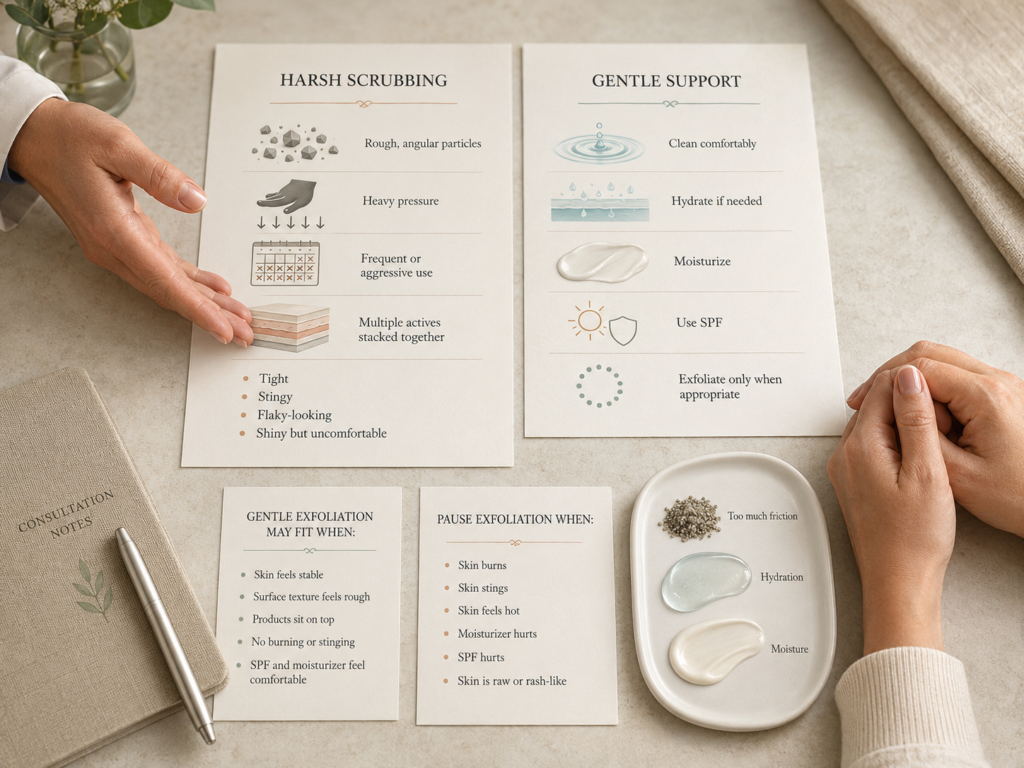
Harsh scrubs may make the skin feel smooth for a short time, but they can also create irritation.
When scrubbing is too rough or too frequent, the skin may become:
That duller look may be irritation, not buildup.
If your skin looks dull after scrubbing, it may need rest, hydration, and moisturizer rather than more scrubbing.
Fresh-looking skin usually looks comfortable, balanced, smooth, and well supported.
Scrubbed skin may look shiny or smooth for a moment, but if it feels raw, tight, or irritated, that is not a healthy-looking routine result.
A fresher-looking complexion comes from:
The skin does not need to be forced into radiance.
It needs to be supported into balance.
Dull-looking skin can come from many causes.
It may be caused by:
Only some dullness is related to surface buildup that may benefit from exfoliation.
If the dullness is from dehydration or irritation, scrubbing can make the skin look worse.
A fresher-looking complexion begins with cleansing.
The cleanser should remove the day without leaving the skin tight or raw.
A good cleanser helps remove:
But it should not make the skin feel stripped.
If your cleanser leaves the skin uncomfortable, harsh scrubs are not the next step. The cleanser may need review first.
Evening cleansing is especially important for dull-looking skin.
By evening, the skin may have layers of SPF, makeup, oil, sweat, powder, primer, and environmental residue.
If those layers are not removed properly, the skin may look dull the next morning.
A good evening routine should remove the day while keeping the skin comfortable.
Do not scrub harder to remove makeup or SPF. Use a cleansing method that works for your skin.
Over-cleansing can make the skin look dull too.
If you cleanse too often or use a cleanser that is too strong, the skin may feel tight, dry, or irritated.
Signs of over-cleansing include:
Clean skin should feel comfortable.
Not squeaky.
Hydration is one of the most important steps for dull-looking skin.
When skin lacks water, it can look flat, tired, tight, less smooth, or patchy under makeup.
Hydration may help support the look of:
Hydration is especially important before exfoliation if the skin feels tight or dehydrated.
Hydration and moisturizer are not the same, but they work together.
A serum may support hydration, but moisturizer helps the skin feel finished and comfortable.
Dull-looking skin may need moisturizer if it feels:
Oily skin still needs moisturizer too.
The texture should match the skin type.
SPF is essential in a routine for dull-looking skin.
Sun exposure can make uneven-looking tone, dryness, texture, and tired-looking skin appear more noticeable over time.
SPF is especially important if the routine includes:
SPF should be the final morning skincare step.
If SPF makes skin look dull, greasy, or patchy, adjust the formula and layering. Do not simply skip it.
Exfoliation is not bad.
It can be helpful when dullness is caused by surface buildup or rough-looking texture.
But the exfoliation should be gentle and appropriate for the skin.
Gentle exfoliation may help when:
The goal is smooth support, not aggressive removal.
A harsh scrub usually relies on aggressive friction or rough particles.
Gentle exfoliation focuses on controlled smoothing.
A gentle approach may include:
Exfoliation should leave the skin feeling smoother and comfortable.
Not raw.
Physical exfoliation can be used carefully by some people, but pressure matters.
If using a scrub, avoid:
A scrub should be gentle, occasional, and appropriate.
Chemical exfoliation uses ingredients such as AHA or BHA.
AHA may be considered for rough surface texture or dullness.
BHA may be considered for oily areas, clogged-looking pores, blackheads, whiteheads, or T-zone buildup.
But chemical exfoliation should be introduced slowly.
Do not combine acid cleanser, acid toner, AHA serum, BHA serum, scrub, clay mask, and retinol-style products all together.
More active steps do not mean better skin.
Enzyme exfoliation may be a gentler-feeling option for some dull-looking skin.
It may help loosen surface buildup without rough scrub particles.
But enzyme exfoliation can still irritate some sensitive skin.
Start slowly and watch how the skin responds.
Gentle does not mean impossible to overuse.
Some exfoliation belongs in professional treatment settings.
Professional peels and stronger exfoliation systems should not be treated like home routines.
Professional exfoliation may require:
Professional-only products should not be used as at-home scrubs.
If skin is already irritated, exfoliation should wait.
Avoid scrubs, acids, or peeling products when skin is:
Irritated skin needs a calm routine first.
Skin that feels uncomfortable often does not look fresh.
If the skin is tight, stingy, or flaky, the complexion may look dull even after exfoliation.
Barrier comfort is supported by:
Comfort is part of radiance.
A fresher-looking complexion usually comes from consistency.
Changing products every few days can make it hard to know what is helping.
A consistent routine helps you see whether the skin responds to:
Do not confuse frequent product changes with progress.
A simple morning routine may look like:
Gentle cleanser → toner if tolerated → hydration or serum if needed → moisturizer → SPF
For oily skin, keep textures light.
For dry skin, use more comfort.
For sensitive skin, keep steps simple.
For mature skin, include hydration and moisturizer before SPF.
The morning routine should prepare the skin for the day, not overload it.
A simple evening routine may look like:
Cleanser → toner if tolerated → serum or moisturizer → moisturizer if needed
If wearing makeup or heavy SPF:
Makeup/SPF removal step if needed → gentle cleanser → moisturizer
Evening is when the skin should be freed from the day.
Do not sleep in SPF, makeup, or product buildup.
Dry dull skin may need more comfort before exfoliation.
Dry dull skin may show:
A routine may focus on:
Do not scrub dry flakes aggressively.
Dehydrated skin lacks water.
It may look dull, flat, shiny but tight, or patchy under makeup.
A routine may focus on:
Dehydrated skin often needs hydration before exfoliation.
Oily dull skin can look shiny but not fresh.
This may happen because oil mixes with SPF, makeup, sweat, and product buildup.
A routine may focus on:
Oily skin should not be dried out to look fresh.
Combination dull skin may need different support in different areas.
The T-zone may look oily and heavy.
The cheeks may look dry or tired.
The nose may look textured.
A routine may focus on:
Combination skin needs precision.
Sensitive dull skin should avoid harsh scrubs.
If the skin reacts easily, a fresher look begins with reducing irritation.
A routine may focus on:
Sensitive skin should feel calmer before adding radiance-focused steps.
Mature dull skin may look less fresh because of dryness, dehydration, texture, makeup settling, and tired-looking eye areas.
A routine may focus on:
Mature skin should not be treated aggressively just because it looks dull.
Makeup often looks fresher when the skin underneath is hydrated and comfortable.
A makeup-friendly skincare routine may include:
If makeup looks flat or patchy, do not rush into a scrub.
Review skin prep first.
SPF is necessary, but it should layer well.
If SPF makes your skin look dull or heavy, check:
The solution may be better layering, not removing SPF.
Travel can make skin look dull because of dryness, sun exposure, climate changes, different water, stress, and lack of sleep.
After travel, avoid aggressive scrubbing.
A simple reset may include:
Travel skin often needs recovery, not intensity.
Stress and lack of sleep can make the face look tired.
A harsh scrub will not replace rest.
Support the skin with:
Skincare can support the appearance of tired skin, but the body still needs care.
Winter dullness often comes from cold air, wind, and indoor heating.
The skin may look dry, tight, flaky, or less radiant.
A winter routine may include:
Winter dullness often needs moisture, not aggressive polishing.
Summer dullness can happen from heat, sweat, SPF, oil, and buildup.
A summer routine may include:
Summer skin may feel oily and dehydrated at the same time.
Do not strip it.
Ingredients often discussed for a fresher-looking complexion may include:
The full formula and the skin’s tolerance matter more than one ingredient.
If the skin feels tight, flat, or dehydrated, hydration-support ingredients may be more helpful than scrubbing.
Hydration-support products may help the skin look smoother and more flexible without friction.
This is especially helpful for:
Hydration is often the gentler first step.
Antioxidants may support the look of dull, tired, or environmentally stressed skin.
Vitamin C and other antioxidant-support ingredients may be useful when the skin can tolerate them.
But antioxidants should not be layered onto irritated skin.
If the skin is burning, over-exfoliated, or sensitive, calming and hydration should come first.
Radiance support should not create discomfort.
If the goal is a fresher-looking or more even-looking complexion, SPF is essential.
Without SPF, the routine is incomplete.
SPF supports routines that include:
Do not focus on brightening-support products while skipping protection.
A fresher-looking complexion can be blocked by too many products.
Product overload may make skin look:
To avoid overload:
More products do not always mean better skin.
Active-product overload can make skin look duller.
Be careful when combining:
If the skin stings, flakes, burns, or looks shiny but tight, pause active products.
A calm routine may restore a fresher-looking appearance better than more actives.
There is no universal answer.
Many people should start with once weekly if they are new to exfoliation.
Some oily skin may tolerate more later.
Some sensitive or dry skin may need less.
Some over-exfoliated skin should pause completely until stable.
Your skin’s response matters more than a strict schedule.
Your skin may need less scrubbing if:
These are signs to slow down.
Your skin may need gentle exfoliation if:
Gentle exfoliation should be added slowly.
Your skin may need hydration first if:
Hydration can support freshness without friction.
Your skin may need calming before radiance support if:
Do not scrub or add brightening-support products to irritated skin.

A beginner routine may look like:
Morning: Gentle cleanser → moisturizer → SPF
Evening: Gentle cleanser → moisturizer
If hydration is needed:
Morning: Gentle cleanser → hydrating serum → moisturizer → SPF
Evening: Gentle cleanser → hydrating serum → moisturizer
If exfoliation is needed:
Add gentle exfoliation once weekly only if the skin is stable.
This keeps the routine simple and easier to understand.
Morning:
Gentle cleanser → hydrating serum if needed → moisturizer → SPF
Evening:
Gentle cleanser → moisturizer or cream
Add:
Gentle exfoliation occasionally only if tolerated
Avoid harsh scrubs, hot water, and over-powdering makeup.
Morning:
Gentle cleanser → lightweight moisturizer → SPF
Evening:
Gentle cleanser → lightweight moisturizer
Add:
Targeted BHA or gentle exfoliation only if clogged-looking pores or buildup are present and skin is stable
Avoid stripping, drying toner, and skipping moisturizer.
Morning:
Mild cleanser → moisturizer → SPF
Evening:
Mild cleanser → moisturizer
Add:
Only gentle support after the skin is stable
Avoid scrubs, acids, retinol-style products, fragrance-heavy products if reactive, and multiple new products at once.
Morning:
Gentle cleanser → hydration support if needed → moisturizer → SPF
Evening:
Gentle cleanser → serum or moisturizer → cream if needed
Add:
Gentle exfoliation only when tolerated
Avoid aggressive scrubbing and heavy powder that emphasizes texture.
A mask may be a better option than a scrub when the skin needs comfort or hydration.
A hydrating mask may help when skin looks:
A clay or clearing mask may be considered for oily areas, but it should not be overused or applied to dry zones unnecessarily.
Masks should support the skin, not stress it.
A serum may be better than a scrub when dullness is related to hydration, tired-looking skin, antioxidant support, or uneven-looking tone.
A serum may support:
But serum should not overload the routine.
If the skin is sensitive, introduce it slowly.
A toner may be helpful when the skin needs a refreshing step after cleansing.
It may support a cleaner-feeling surface without friction.
But toner should not burn, sting, or dry the skin.
For dull skin, toner is optional.
If your toner is harsh, it may create the same problem as a scrub: irritation disguised as freshness.
If dullness is connected to uneven-looking tone, sun exposure, or brightening-support routines, SPF is more important than adding another active product.
SPF helps protect the skin during the day.
If you are using vitamin C, exfoliation, or brightening-support products, SPF should be consistent.
Do not chase radiance while skipping protection.
Professional guidance may help if your dullness keeps returning no matter what you use.
This is especially helpful if:
A consultation can help identify the cause before products are added.
A dermatologist should evaluate the skin if dullness comes with:
Cosmetic skincare can help with appearance and routine structure, but medical-looking changes need medical evaluation.
After consultation, our licensed esthetician may consider Janssen Cosmetics options depending on why the skin looks dull and whether the skin needs hydration, radiance support, calming support, oil-balance support, or careful exfoliation.
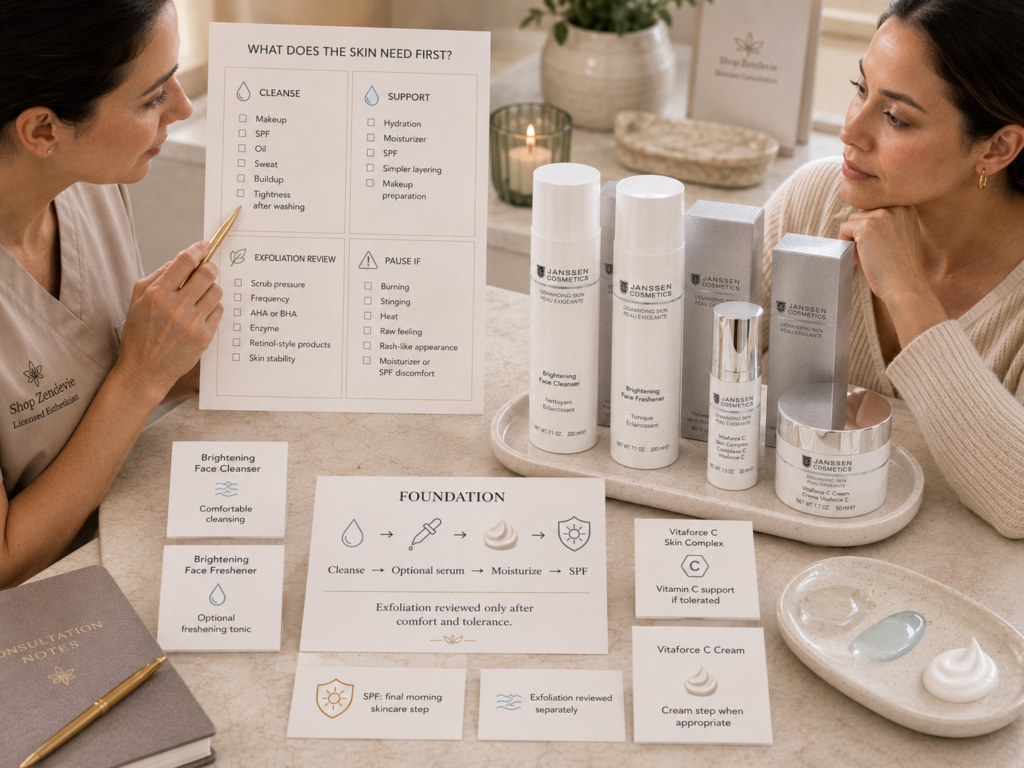
For tired-looking dull skin, possible options may include:
For dry or dehydrated dull skin, hydration-focused options may be reviewed, such as:
For sensitive dull skin, comfort-focused options may come first, such as:
For oily dull skin, options may include:
For careful exfoliation support, options such as Mild Face Rub, Enzyme Peeling Powder, Skin Refining Enzyme Peel, AHA + BHA Exfoliator, or Brightening Exfoliator should only be reviewed after skin type, sensitivity, SPF habits, and current active products are understood.
Professional exfoliation systems should remain in professional treatment settings and should not be treated as home-use routines.
For morning routines, Face Guard Advanced SPF 30 may be considered as the final daytime protection step when appropriate.
These are not automatic recommendations. The correct routine depends on whether the skin is dry, dehydrated, oily, sensitive, mature, product-overloaded, over-exfoliated, or in need of radiance support.
Do not scrub the skin aggressively because it looks dull.
Do not exfoliate every day without skin tolerance.
Do not use acids, scrubs, retinol-style products, and active cleansers all together.
Do not skip moisturizer after exfoliation.
Do not skip SPF.
Do not use professional peels at home.
Do not apply exfoliating products close to irritated eyes.
Do not keep using a product that burns, stings, or makes skin feel raw.
Do not mistake tight, shiny skin for a healthy-looking glow.
Do not ignore swelling, rash-like irritation, pain, crusting, bleeding, severe itching, eye-area irritation, or persistent worsening.
Yes. A fresher-looking complexion can be supported with gentle cleansing, hydration, moisturizer, SPF, proper evening cleansing, and careful exfoliation only when appropriate.
Not always, but harsh scrubs or aggressive pressure can make dull-looking skin worse by causing tightness, irritation, flaking, or sensitivity.
Yes. Hydration can help dull-looking skin appear smoother, less flat, and more comfortable, especially when the skin is dehydrated.
Yes. Oily skin can look fresher with gentle cleansing, lightweight hydration, lightweight moisturizer, SPF, and targeted support only when needed.
Sensitive skin should be very careful with scrubs. If the skin burns, stings, feels hot, or reacts easily, scrubs should be avoided until the skin is stable.
Yes. SPF is important every morning, especially when exfoliation, vitamin C, brightening-support products, or uneven tone routines are part of the plan.
Your dullness may be from dehydration, over-exfoliation, dryness, product buildup, oil, SPF residue, makeup, or sensitivity. More exfoliation is not always the answer.
See a dermatologist if dullness comes with persistent rash-like irritation, swelling, pain, crusting, bleeding, infection-looking areas, severe itching, eye-area irritation, sudden changes, burning that does not settle, or worsening symptoms.
If your skin looks dull and you feel tempted to scrub harder, a free virtual consultation can help you understand what your skin actually needs.
At Zendevie, we review your cleanser, moisturizer, SPF, exfoliation habits, makeup wear, skin type, sensitivity, hydration level, and current products before recommending a routine. The goal is to support a fresher-looking complexion without overwhelming your skin.
Fresh-looking skin should feel calm, comfortable, and cared for.
Not scrubbed raw.

Zendevie is guided by Haby Diallo, a licensed esthetician with more than 20 years of professional skincare experience. Her approach is rooted in education, professional judgment, and personal care.
years of experience