


Best Moisturizer Texture for Combination Skin
The best moisturizer texture for combination skin is usually not the richest cream or the most mattifying product.
It is the texture that helps the oily areas feel comfortable without making the dry areas feel neglected.
Combination skin often has two different needs at the same time. The T-zone may become shiny, while the cheeks may feel dry, tight, or sensitive. This is why moisturizer texture matters so much.
A moisturizer that is too heavy may make the forehead, nose, and chin feel greasy.
A moisturizer that is too light may leave the cheeks feeling dry.
At Zendevie, we do not choose moisturizer by guessing. In consultation, our licensed esthetician looks at your T-zone, cheeks, sensitivity, hydration level, makeup behavior, SPF layering, climate, cleanser, toner use, and whether your skin feels oily, dry, tight, or uncomfortable during the day.
Combination skin needs texture balance. Before comparing textures, it helps to understand why combination skin still needs moisturizer even when the T-zone looks shiny
Not one extreme.
Quick Answer
The best moisturizer texture for combination skin is usually lightweight, comfortable, and easy to adjust by zone.
Good options may include:
- Lightweight lotion
- Gel-cream
- Light balancing cream
- Hydrating gel layered with moisturizer if needed
- Lightweight cream on dry zones
- Mattifying texture only on oily zones if appropriate
- Richer texture only where the skin feels truly dry
A simple routine may look like:
Morning: Gentle cleanser → lightweight moisturizer by zone → SPF
Evening: Gentle cleanser → moisturizer by zone
The T-zone may need less product.
The cheeks may need a little more comfort.
Why Texture Matters for Combination Skin
Combination skin is not the same everywhere.
The forehead, nose, and chin may need a lighter finish.
The cheeks may need comfort.
The mouth area may need extra care.
The skin may also change by season, stress, travel, makeup use, or weather.
This means moisturizer texture should not be chosen based only on oiliness or dryness.
It should be chosen based on how the full face responds.
Lightweight Does Not Mean Weak
A lightweight moisturizer can still support combination skin.
Many people think lightweight means not enough, but that is not always true.
A good lightweight texture can help the skin feel:
- Comfortable
- Smooth
- Fresh
- Less tight
- Less greasy
- Easier under SPF
- Easier under makeup
- More balanced by midday
For combination skin, lightweight often means wearable.
Not ineffective.
Heavy Does Not Always Mean Better
A heavy moisturizer can feel comforting on dry cheeks, but it may be too much for the T-zone.
If a moisturizer is too heavy, you may notice:
- Greasy forehead
- Makeup sliding
- SPF pilling
- Coated feeling
- Shiny nose
- Heavy chin
- Clogged-looking texture
- Need to blot quickly
- Skin feeling suffocated
Heavy cream is not always wrong.
It just may not belong everywhere.
Gel Moisturizer for Combination Skin
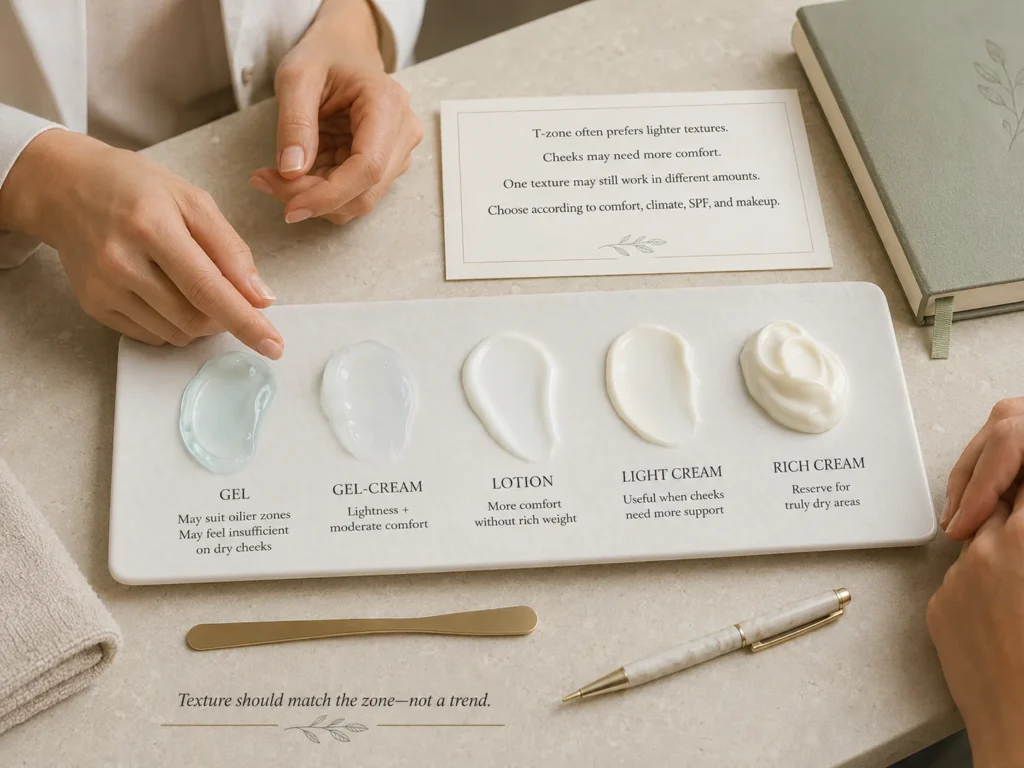
A gel moisturizer may feel refreshing and lightweight.
It may work well if:
- The T-zone gets shiny quickly
- The skin feels oily but tight
- Makeup separates with richer creams
- SPF pills over heavy moisturizer
- The cheeks are not very dry
- The skin prefers light layers
Gel textures can be helpful for oily zones.
But if the cheeks still feel dry, a gel alone may not be enough.
Gel-Cream Moisturizer for Combination Skin
A gel-cream texture can be a helpful middle ground.
It may feel lighter than a cream but more comforting than a pure gel.
Gel-cream may work well if:
- T-zone gets oily
- Cheeks need moderate comfort
- Skin feels dehydrated
- Makeup needs smoother prep
- SPF needs a better base
- The skin feels oily and dry at the same time
For many combination skin routines, gel-cream is one of the easiest textures to work with.
Lotion Texture for Combination Skin
A lotion can be a strong option for combination skin because it often feels balanced.
It may provide more comfort than a gel but less heaviness than a cream.
A lotion may work well if:
- Cheeks feel slightly dry
- T-zone needs a light finish
- Skin feels normal in some areas
- SPF layers well over it
- Makeup looks smoother
- The routine needs daily comfort without heaviness
A lotion texture can be especially helpful when the skin does not need extreme oil control or rich moisture.
Light Cream for Combination Skin
A light cream may work well if the cheeks need comfort but the T-zone does not tolerate richness.
It may be useful when:
- Cheeks feel dry
- Skin feels tight after cleansing
- Winter makes dry zones worse
- Makeup clings to cheeks
- The T-zone can tolerate a small amount
- The skin needs comfort without a heavy finish
A light cream can be applied more generously on the cheeks and more lightly on the T-zone.
Rich Cream for Combination Skin
A rich cream may be helpful only in certain areas or certain seasons.
It may fit:
- Very dry cheeks
- Winter dryness
- Mature combination skin
- Dry patches
- Nighttime comfort
- Areas that feel tight or rough
But rich cream may be too much for oily zones.
Use it carefully.
Combination skin often does better when richer textures are placed only where needed.
Mattifying Moisturizer for Combination Skin
A mattifying moisturizer may help if the T-zone becomes shiny quickly.
But it should be used with care.
It may be useful for:
- Oily forehead
- Shiny nose
- Oily chin
- Makeup separation
- Midday shine
- Lightweight daytime routines
But it may be too drying for cheeks.
If a mattifying texture makes the cheeks tight, apply it only to the T-zone or choose a more balanced moisturizer.
Balancing Moisturizer Texture
A balancing moisturizer should help the skin feel comfortable across zones.
It should not be too heavy for oily areas.
It should not be too light for dry areas.
A balancing texture may feel:
- Lightweight
- Soft
- Comfortable
- Smooth
- Non-greasy
- Non-drying
- Easy under SPF
- Easy under makeup
For combination skin, the best moisturizer often feels quietly balanced.
It should not make the skin feel extreme in either direction.
Moisturizer Texture for Oily T-Zone
The T-zone usually prefers lighter textures.
Good texture qualities for the T-zone may include:
- Lightweight
- Fast-feeling absorption
- Non-heavy finish
- Smooth under SPF
- Low-grease feel
- Comfortable without tightness
- Easy under makeup
Use less moisturizer on the T-zone if it gets shiny quickly.
But do not skip it completely if the skin feels tight or dehydrated.
Moisturizer Texture for Dry Cheeks
Dry cheeks may need more comfort than the T-zone.
Good texture qualities for cheeks may include:
- Creamier feel
- Soft finish
- Comfortable layer
- Hydration support
- Less tightness
- Better makeup smoothness
- Reduced dry-looking patches
If the cheeks feel dry after a lightweight moisturizer, use more on that area or choose a more comforting texture there.
Moisturizer Texture for Dehydrated Combination Skin
Dehydrated combination skin can feel oily and tight at the same time.
This skin may benefit from a texture that feels light but hydrating.
Look for textures that help the skin feel:
- Less tight
- Less dull
- More comfortable
- Less patchy under makeup
- Less rough under SPF
- Fresh without greasiness
A hydrating serum may also be used under moisturizer if appropriate.
But serum does not replace moisturizer.
Moisturizer Texture for Sensitive Combination Skin
Sensitive combination skin needs a gentle texture.
The moisturizer should not sting, burn, or make the cheeks feel hot.
A good texture for sensitive combination skin may feel:
- Calm
- Soft
- Lightweight to medium
- Non-stinging
- Non-drying
- Comfortable on cheeks
- Not heavy on T-zone
If even basic moisturizer stings, pause active products and simplify the routine.
If irritation continues, seek dermatologist guidance.
Moisturizer Texture for Makeup Wearers
Makeup wearers with combination skin often need a texture that helps both zones.
The T-zone may separate.
The cheeks may cling.
A moisturizer under makeup should:
- Smooth dry areas
- Avoid heaviness on oily zones
- Layer well under SPF
- Avoid pilling
- Help makeup sit evenly
- Not feel greasy
- Not leave cheeks tight
If makeup separates, the moisturizer may be too heavy on the T-zone.
If makeup clings, the moisturizer may be too light on the cheeks.
Moisturizer Texture Under SPF
SPF should be the final morning skincare step.
The moisturizer underneath SPF matters.
If moisturizer is too rich, SPF may pill or slide.
If moisturizer is too light, SPF may cling to dry patches.
A good SPF base for combination skin should feel:
- Smooth
- Lightweight
- Comfortable
- Not greasy
- Not dry
- Easy to layer
- Balanced by zone
Morning routine:
Gentle cleanser → moisturizer by zone → SPF
Moisturizer Texture for Summer
In summer, combination skin often needs lighter textures.
Heat, humidity, sweat, and SPF can make the T-zone feel heavy.
Summer-friendly textures may include:
- Lightweight lotion
- Gel-cream
- Light balancing cream
- Mattifying texture only on oily zones if appropriate
- Hydrating gel under a light moisturizer if needed
Do not skip moisturizer completely in summer.
Use less where the skin gets oily and more where the skin still feels dry.
Moisturizer Texture for Winter
In winter, the cheeks may need more comfort.
Cold air, indoor heat, wind, scarves, and hot water may make dry areas worse.
Winter-friendly textures may include:
- Light cream
- Lotion with more comfort
- Gel-cream plus extra cheek layer
- Richer cream only on dry patches
- Hydration support under moisturizer
The T-zone may still need a lighter amount.
Winter does not always mean heavy cream everywhere.
Moisturizer Texture for Mature Combination Skin
Mature combination skin may still have T-zone shine, but it may also need more comfort, hydration, and smoother-looking texture support.
A good moisturizer texture may feel:
- Comforting without heaviness
- Smooth under SPF
- Supportive on cheeks
- Light enough for T-zone
- Helpful for dry-looking texture
- Good under makeup
Mature skin should not be stripped to control shine.
It should be supported by zone.
Moisturizer Texture for Combination Skin With Enlarged-Looking Pores
If the T-zone has enlarged-looking pores, a lightweight texture may feel better.
Heavy cream on the nose or forehead may make pores look more noticeable because the skin appears coated or shiny.
A better approach may be:
- Gentle cleanser
- Lightweight moisturizer on T-zone
- More comfort on cheeks
- SPF
- Targeted support only if needed
- Avoid over-stripping
Moisturizer cannot erase pores.
But the right texture can support a more balanced-looking finish.
Moisturizer Texture for Combination Skin With Post-Blemish Marks
Post-blemish marks may appear on the chin, forehead, or T-zone.
A moisturizer should support comfort while the skin stays protected with SPF.
Avoid drying out the entire face to address marks in one area.
A simple routine may be:
Morning: Gentle cleanser → moisturizer by zone → SPF
Evening: Gentle cleanser → moisturizer by zone
Targeted support can be reviewed once the skin is calm.
Should You Use One Moisturizer or Two?
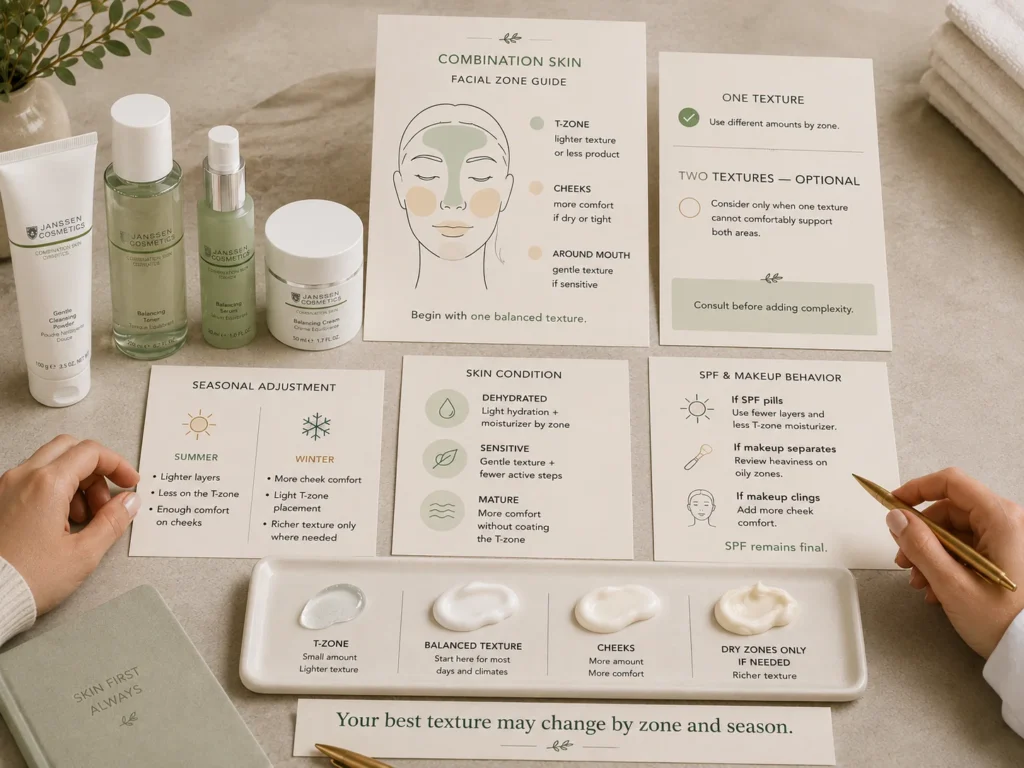
Some combination skin can use one moisturizer across the whole face.
Others may benefit from two textures.
One moisturizer may work if it feels:
- Light enough for T-zone
- Comfortable enough for cheeks
- Smooth under SPF
- Not greasy
- Not drying
- Stable by midday
Two moisturizers may help if:
- T-zone gets greasy quickly
- Cheeks stay dry
- Makeup separates in one area and clings in another
- Winter dryness affects cheeks
- Oily zones and dry zones need very different textures
Zone care can be simple.
It does not need to become complicated.
How to Apply Moisturizer by Zone
Start with a small amount.
Apply a light layer to the full face if appropriate.
Then adjust:
- Less on forehead, nose, and chin if oily
- More on cheeks if dry
- Extra comfort around dry mouth areas
- Avoid heavy layers where makeup separates
- Avoid active products on irritated areas
- Let moisturizer settle before SPF
The amount can make a big difference.
How Much Moisturizer Should You Use?
Combination skin often needs less product than people think on the T-zone and more than they think on the cheeks.
Use enough to make the skin feel comfortable.
Do not apply so much that the T-zone feels coated.
Do not apply so little that the cheeks stay tight.
Your skin should feel soft and supported.
Not slippery.
Not dry.
Signs Your Moisturizer Texture Is Too Heavy
Your moisturizer may be too heavy if:
- T-zone gets greasy quickly
- SPF pills
- Makeup slides
- Nose feels coated
- Forehead looks shiny fast
- Chin feels heavy
- Pores look more noticeable from shine
- Skin feels sticky
- You need to blot soon after applying
Try using less on the T-zone or switching to a lighter texture there.
Signs Your Moisturizer Texture Is Too Light
Your moisturizer may be too light if:
- Cheeks feel tight
- Dry patches remain
- Makeup clings
- SPF clings
- Around-mouth area feels dry
- Skin feels rough
- Skin feels uncomfortable by midday
- Fine dehydration lines look more visible
- Moisturizer disappears quickly
Try using more on dry zones or choosing a more comforting texture for those areas.
Signs Your Moisturizer Texture Is Right
Your moisturizer texture may be right if:
- T-zone feels comfortable, not greasy
- Cheeks feel soft, not tight
- SPF applies smoothly
- Makeup sits better
- Skin feels less oily and dry at the same time
- No burning or stinging occurs
- Dry patches look less noticeable
- Skin feels balanced by midday
- The routine feels easy to repeat
The best moisturizer texture should make your skin easier to manage.
What to Do If Every Moisturizer Feels Greasy
If every moisturizer feels greasy, review:
- Are you using too much?
- Is the texture too rich?
- Are you layering too many products?
- Is the serum too heavy?
- Is SPF contributing to heaviness?
- Are you applying cream heavily on the T-zone?
- Is the skin actually oily or oily but dehydrated?
- Are you cleansing well at night?
Try less product and lighter placement before giving up on moisturizer.
What to Do If Every Moisturizer Feels Too Light
If every moisturizer feels too light, review:
- Is your cleanser too stripping?
- Are you using drying toner?
- Are you over-exfoliating?
- Is the weather dry?
- Are cheeks dehydrated?
- Are you using enough product?
- Are you applying moisturizer while skin is very dry?
- Do you need more comfort only on cheeks?
The issue may not be moisturizer alone.
The full routine matters.
What to Do If Moisturizer Pills
Moisturizer may pill because of:
- Too much product
- Too many layers
- Product textures not working together
- Heavy moisturizer under SPF
- Dry flakes
- Applying SPF too quickly
- Rubbing instead of pressing
- Incompatible serum and moisturizer
- Product buildup
Simplify the routine:
Gentle cleanser → moisturizer by zone → SPF
Use less product and let layers settle.
What to Do If Moisturizer Stings
If moisturizer stings, the skin may be irritated or overworked.
Possible reasons include:
- Harsh cleanser
- Exfoliation too often
- Strong toner
- Active products
- Broken skin
- Dryness
- Sensitivity
- Recent hair removal
- Skin reacting to fragrance or actives
Pause active products and simplify.
If stinging continues, seek guidance.
Beginner Moisturizer Texture Routine
A beginner combination skin routine should stay simple.
Morning:
Gentle cleanser → lightweight moisturizer by zone → SPF
Evening:
Gentle cleanser → moisturizer by zone
Start with one moisturizer texture if possible.
Then adjust by zone only if needed.
Routine With Gel Moisturizer
A gel-based routine may look like:
Morning:
Gentle cleanser → gel moisturizer → SPF
Evening:
Gentle cleanser → gel moisturizer
If cheeks feel dry, add more comfort to cheeks or switch to a gel-cream or lotion texture.
Gel may be better for T-zone than dry zones.
Routine With Lotion Moisturizer
A lotion-based routine may look like:
Morning:
Gentle cleanser → lotion moisturizer by zone → SPF
Evening:
Gentle cleanser → lotion moisturizer by zone
Use less on the T-zone and more on the cheeks if needed.
This can be a practical daily approach for many combination skin routines.
Routine With Gel-Cream Moisturizer
A gel-cream routine may look like:
Morning:
Gentle cleanser → gel-cream moisturizer → SPF
Evening:
Gentle cleanser → gel-cream moisturizer
If the T-zone gets greasy, use less there.
If cheeks feel dry, add a little more there.
Gel-cream can be a flexible middle texture.
Routine With Cream on Dry Zones
If cheeks need more comfort:
Morning:
Gentle cleanser → light moisturizer on T-zone → cream only on dry cheeks → SPF
Evening:
Gentle cleanser → moisturizer by zone
This approach keeps the T-zone lighter while giving dry areas more support.
Routine With Mattifying Texture on T-Zone
If the T-zone gets shiny quickly:
Morning:
Gentle cleanser → light moisturizer on cheeks → mattifying texture on T-zone if appropriate → SPF
Evening:
Gentle cleanser → moisturizer by zone
Do not use mattifying texture on dry cheeks if it makes them tight.
Routine With Hydrating Serum and Moisturizer
If combination skin is dehydrated:
Morning:
Gentle cleanser → hydrating serum if appropriate → moisturizer by zone → SPF
Evening:
Gentle cleanser → hydrating serum if appropriate → moisturizer by zone
Hydration support can help oily-but-tight skin feel more comfortable.
Moisturizer still matters after serum.
Routine With BHA and Moisturizer
If BHA is appropriate for clogged-looking T-zone:
Evening:
Gentle cleanser → BHA only on stable clogged-looking areas → moisturizer
Avoid BHA on dry, sensitive, broken, crusted, bleeding, painful, or freshly picked skin.
Moisturizer helps support comfort after targeted products.
Routine With Clay Mask and Moisturizer
If using a clay mask:
Gentle cleanser → clay mask on oily T-zone only if appropriate → rinse → moisturizer by zone
Do not use clay mask on dry cheeks if it makes them tight.
Do not leave clay mask on until the skin feels uncomfortable.
Moisturizer should follow masking.
What Not to Do
Do not skip moisturizer because the T-zone is oily.
Do not use heavy cream everywhere if it makes the T-zone greasy.
Do not use mattifying moisturizer everywhere if it dries the cheeks.
Do not leave dry cheeks without comfort.
Do not choose texture based only on one part of the face.
Do not layer too many products under SPF.
Do not apply active products to broken, crusted, bleeding, painful, or freshly picked skin.
Do not keep using a moisturizer that burns or causes a strong reaction.
Do not assume combination skin needs the same texture year-round.
When Professional Guidance Helps
Professional guidance may help if:
- Gel moisturizer feels too light
- Cream feels too heavy
- Lotion still leaves cheeks dry
- T-zone gets greasy quickly
- Makeup separates
- SPF pills
- Cheeks stay tight
- Skin feels oily and dry at the same time
- Moisturizer stings
- You do not know whether to use one moisturizer or two
- Your skin changes by season
A consultation can help match moisturizer texture to each zone.
When to See a Dermatologist
A dermatologist should evaluate the skin if there are warning signs such as:
- Persistent rash-like irritation
- Swelling
- Pain
- Severe itching
- Burning that does not settle
- Crusting
- Bleeding
- Oozing
- Infection-looking areas
- Blistering
- Sudden discoloration
- A spot changing in size, shape, or color
- A spot that looks very different from others
- Rapid worsening
- Skin reacting strongly to basic products
Cosmetic skincare can support comfort and appearance, but medical-looking changes need medical evaluation.
Where Janssen Cosmetics Fits
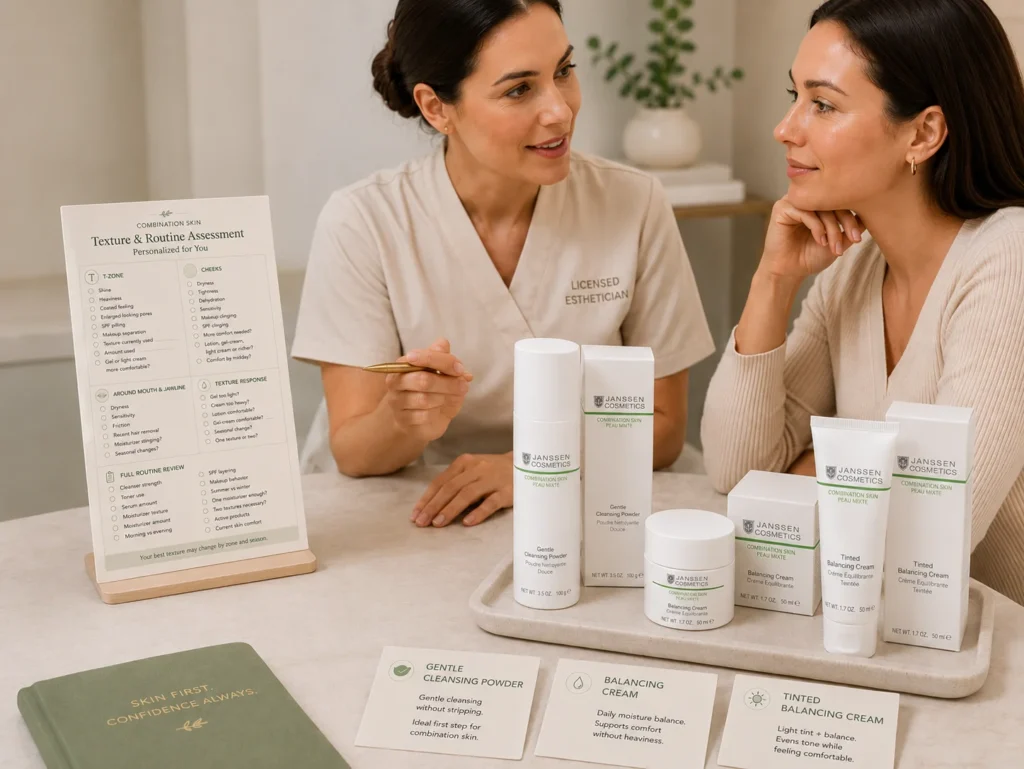
After consultation, our licensed esthetician may consider Janssen Cosmetics options depending on which moisturizer texture and zone support the skin needs.
For combination skin balance, possible options may include:
- Balancing Cream when a light balancing moisturizer fits both dry and oily zones
- Tinted Balancing Cream when a low-lipid tinted moisturizer may support a more even-looking finish
- Gentle Cleansing Powder as a mild cleansing step before moisturizer when appropriate
For oily T-zone support, possible options may include:
- Light Mattifying Cream when oily zones need a lighter finish
- Purifying Cleansing Gel
- Purifying Tonic only if tolerated
- Purifying BHA Serum only when clogged-looking pores, blackheads, whiteheads, or T-zone buildup are present and the skin is stable enough
For dry or dehydrated cheeks, possible options may include:
- Hydro Active Gel when a light hydration-support texture is appropriate
- Deep Xpress Moist Serum
- Super Hydrating Cream
- Hyaluron³ Replenish Cream
- Mild Creamy Cleanser
- Radiant Firming Tonic if tolerated
For sensitive or overworked cheeks, comfort-focused options may include:
- Intense Calming Cream or Intense Calming Lotion
- Intense Calming Serum
- Soft Cleansing Mousse
- Soft Soothing Tonic
- Instant Soothing Mask
For morning routines, Face Guard Advanced SPF 30 may be considered as the final daytime protection step when appropriate and tolerated.
These are not automatic recommendations. Moisturizer texture should be chosen based on T-zone shine, cheek dryness, sensitivity, hydration, SPF layering, makeup behavior, season, and routine comfort.
Frequently Asked Questions
What moisturizer texture is best for combination skin?
A lightweight lotion, gel-cream, or light balancing cream often works well. Some people may need richer texture only on dry zones.
Is gel moisturizer good for combination skin?
Gel moisturizer may work well for oily areas, but dry cheeks may need more comfort.
Is cream too heavy for combination skin?
Not always. Cream may be helpful on dry cheeks, but it may be too heavy for the T-zone.
Should combination skin use a mattifying moisturizer?
A mattifying moisturizer may help oily zones, but it should not dry out the cheeks.
Can I use two moisturizers on combination skin?
Yes. Some people use a lighter texture on the T-zone and a more comforting texture on the cheeks.
Why does moisturizer make my T-zone greasy?
The texture may be too rich, the amount may be too much, or there may be too many layers underneath SPF.
Why do my cheeks still feel dry after moisturizer?
The texture may be too light, the cleanser may be stripping, or the skin may need more hydration and comfort on the cheeks.
Should combination skin use moisturizer before SPF?
Yes. Moisturizer usually comes before SPF, and SPF should be the final morning skincare step.
What if moisturizer pills under SPF?
Use less product, simplify layers, let moisturizer settle, and review whether the texture is too heavy for the T-zone.
What is the safest moisturizer routine for combination skin?
Use gentle cleanser, lightweight moisturizer by zone, and SPF in the morning. At night, cleanse and moisturize by zone.
If every moisturizer feels either too greasy or not enough, your skin may not need one perfect product everywhere.
It may need the right texture in the right zone.
At Zendevie, a free virtual consultation helps us review your T-zone, cheeks, sensitivity, hydration level, moisturizer texture, SPF layering, makeup behavior, season, and current routine before recommending anything.
Combination skin needs balance.
And the right moisturizer texture can make that balance much easier.
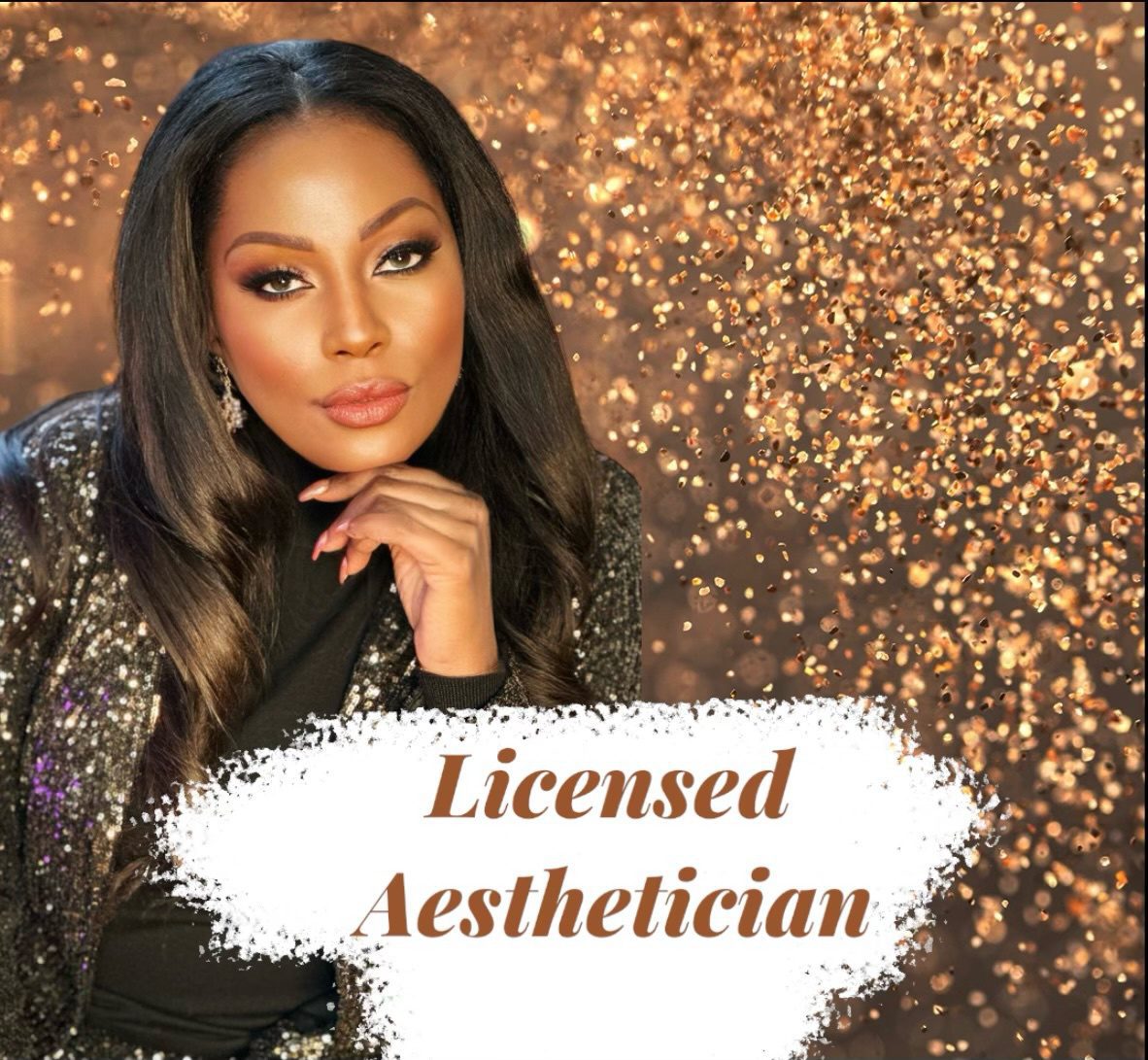
About the Esthetician Behind Zendevie
Zendevie is guided by Haby Diallo, a licensed esthetician with more than 20 years of professional skincare experience. Her approach is rooted in education, professional judgment, and personal care.
20+
years of experience