
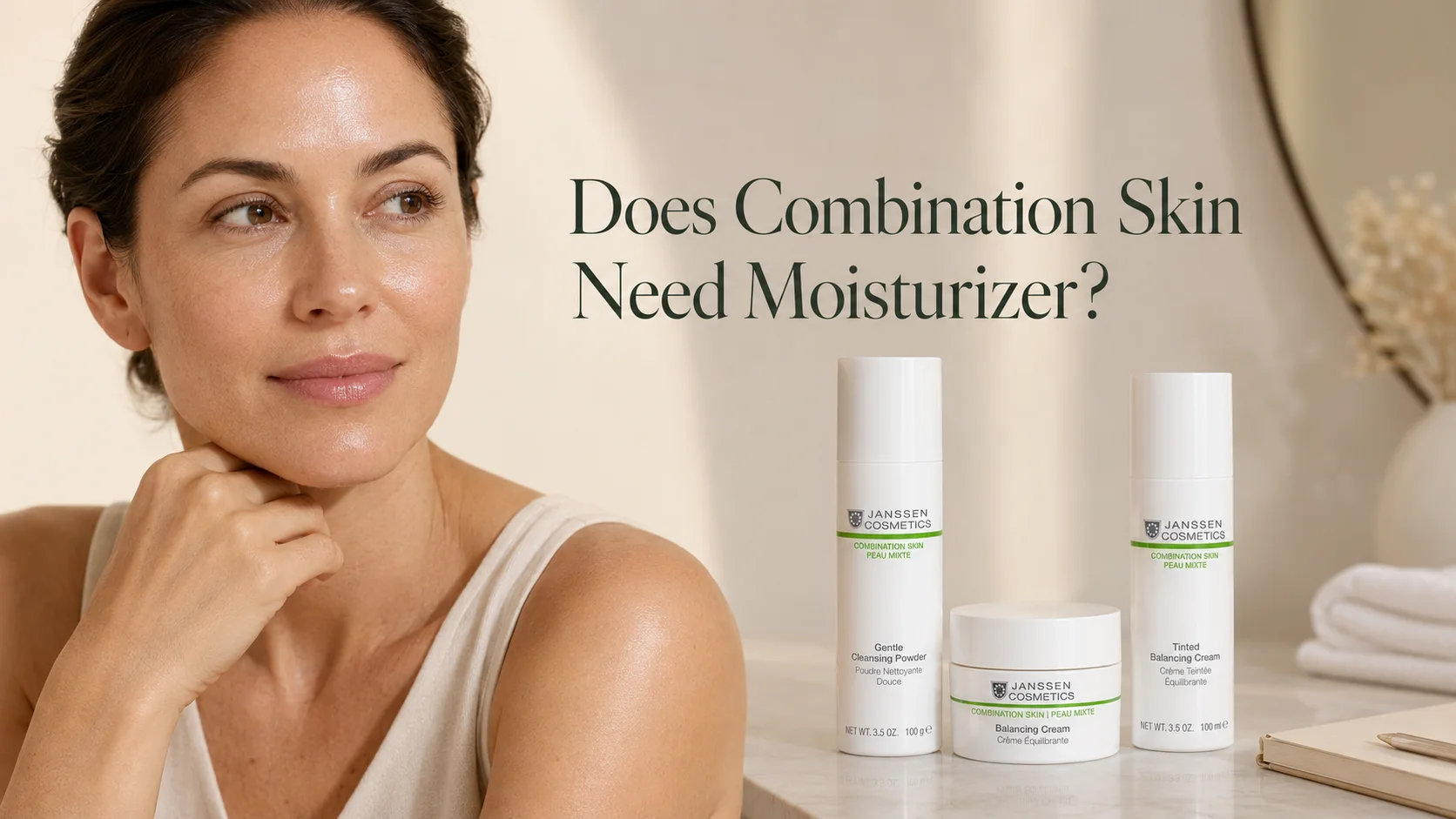
Yes, combination skin needs moisturizer.
The confusion usually happens because one part of the face feels oily while another part feels dry or tight. The forehead, nose, and chin may become shiny by midday, while the cheeks may feel uncomfortable, dull, or patchy.
So many people with combination skin skip moisturizer.
They worry moisturizer will make the T-zone greasy.
But skipping moisturizer can make the skin feel even more unbalanced.
At Zendevie, we do not recommend moisturizer based only on whether the skin looks oily in one area. In consultation, our licensed esthetician looks at the full face: the T-zone, cheeks, around-mouth area, hydration level, sensitivity, cleanser, SPF habits, makeup behavior, and how the skin feels throughout the day.
Combination skin does not need no moisturizer.
It needs the right moisturizer strategy.
Combination skin usually needs moisturizer because the skin still needs comfort, hydration support, and a smoother-looking barrier feel, even if the T-zone gets oily.
Moisturizer can help support:
The key is to choose the right texture and apply it by zone.
A simple routine may look like:
Morning: Gentle cleanser → lightweight moisturizer by zone → SPF
Evening: Gentle cleanser → moisturizer by zone
The T-zone may need a lighter layer.
The cheeks may need a little more comfort.
Combination skin has different needs in different zones.
The T-zone may produce more oil.
The cheeks may produce less oil.
The mouth area may feel dry or sensitive.
The skin may also be dehydrated, which means it can feel oily and tight at the same time.
Moisturizer helps support the skin’s comfort and surface feel. It does not have to be heavy. It does not have to be greasy. It does not have to be applied the same way everywhere.
For combination skin, moisturizer should help the face feel balanced.
Not coated.
Not stripped.
Oil and moisture are not the same thing.
The T-zone may have oil, but the skin may still need hydration and comfort.
This is why someone can feel:
Oiliness does not mean the skin has everything it needs.
Moisturizer still matters.
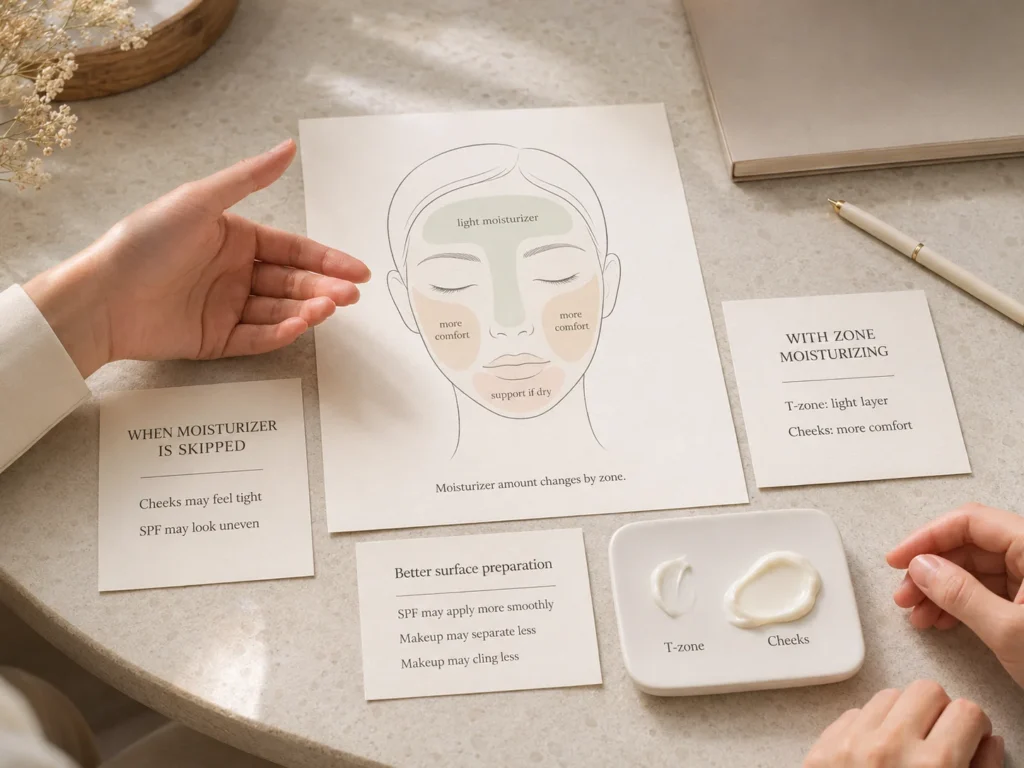
Skipping moisturizer may seem helpful at first because the skin feels less heavy.
But over time, the skin may feel more unbalanced.
You may notice:
Skipping moisturizer can make the dry zones worse and may not truly solve T-zone shine.
The T-zone includes the forehead, nose, and chin.
This area may produce more oil, but it can still become dehydrated or irritated.
A T-zone that needs moisturizer may feel:
The T-zone may not need a rich cream.
But it may need a light moisturizer or a smaller amount of moisturizer.
In combination skin, the cheeks often need more comfort than the T-zone.
The cheeks may feel:
Skipping moisturizer on the cheeks can make the whole face feel uncomfortable.
The cheeks should not be ignored because the nose is oily.
SPF is an important morning step.
But SPF may not sit well if the skin underneath is dry, flaky, or unbalanced.
Moisturizer can help SPF apply more smoothly by supporting a more comfortable surface.
If the skin is too dry, SPF may cling or look patchy.
If the skin is too heavy, SPF may pill or slide.
For combination skin, the moisturizer underneath SPF should be balanced by zone.
Combination skin often has makeup problems.
Makeup may separate on the T-zone and cling to the cheeks.
Moisturizer can help the cheeks look smoother and more comfortable under makeup.
But if too much moisturizer is applied to the T-zone, makeup may slide.
A better approach is:
Makeup texture often improves when the skin is moisturized by zone.
Many people hear “moisturizer” and think of thick cream.
Combination skin may not need that everywhere.
Moisturizer can be:
The best moisturizer for combination skin is not always the richest one.
It is the one that helps the skin feel balanced.
Some combination skin routines do best with a lightweight moisturizer across the face.
This may work well when:
A lightweight moisturizer can still be effective when it is the right match.
Combination skin may need different amounts of moisturizer in different areas.
For example:
This is not complicated.
It is simply listening to the face zone by zone.
Moisturizing by zone means adjusting where and how much moisturizer you apply.
For oily areas:
For dry areas:
For sensitive areas:
Zone care is one of the most helpful habits for combination skin.
A moisturizer for combination skin should feel:
The skin should not feel coated.
The cheeks should not feel neglected.
A moisturizer may not be the right fit if it makes the skin feel:
The wrong moisturizer can make combination skin feel harder to manage.
The right one should make the routine easier.
A heavy cream may comfort dry cheeks, but it may feel too rich on the T-zone.
If heavy cream is applied everywhere, the T-zone may become:
This does not mean cream is bad.
It means placement matters.
Some people use mattifying moisturizers or oil-control products everywhere.
This may help the T-zone look less shiny, but it can make the cheeks feel tight.
Signs of over-mattifying include:
Mattifying products should be used carefully and usually only where needed.
Combination skin can be dehydrated.
Dehydrated skin lacks water, not oil.
This may make the skin feel:
A lightweight hydrating step followed by moisturizer may help some routines.
Moisturizer helps keep the hydration support from disappearing too quickly.
Sensitive combination skin needs gentle moisturizer support.
The cheeks may sting or react more easily than the T-zone.
If the skin is sensitive, moisturizer should feel calming and comfortable.
Avoid moisturizer that causes:
If basic moisturizer burns repeatedly, pause active products and consider dermatologist guidance.
The oily T-zone may need a lightweight moisturizer.
This can help the skin feel comfortable without adding heaviness.
Support the T-zone by:
The T-zone should feel balanced, not dried out.
Dry cheeks often need more moisturizer support.
Support the cheeks by:
Dry cheeks can make the whole face feel unbalanced.
Treat them with care.
The area around the mouth may be dry or sensitive in combination skin.
This area may need extra comfort, especially if it feels tight, flaky, or irritated.
Avoid applying strong actives too close to the mouth if the area reacts.
Support around-mouth dryness with:
If the area is rash-like, painful, swollen, crusted, bleeding, or worsening, seek dermatologist guidance.
The chin may be oily, blemish-prone-looking, or dry depending on the person.
A light moisturizer may help if the chin feels oily but tight.
Avoid:
The chin often needs targeted care.
Not harsh care.
The T-zone may show enlarged-looking pores.
Some people skip moisturizer because they worry it will make pores look bigger.
But dehydration and over-stripping can make texture look more noticeable.
A lightweight moisturizer may help the surface look smoother and more comfortable.
Moisturizer cannot erase pores.
But the right texture can support a more balanced-looking finish.
Post-blemish marks may appear on the chin, forehead, or nose.
Moisturizer helps support comfort while the routine focuses on SPF and gentle care.
Avoid applying drying products repeatedly to post-blemish marks.
Avoid applying active products to broken or freshly picked skin.
A supportive routine may be:
Morning: Gentle cleanser → moisturizer → SPF
Evening: Gentle cleanser → moisturizer
Targeted support can be reviewed when the skin is calm.
If combination skin uses exfoliation, moisturizer becomes even more important.
Exfoliation can make the skin feel smoother when used appropriately, but too much can cause dryness, tightness, and sensitivity.
Moisturizer supports comfort after exfoliation.
Avoid exfoliation if the skin is:
Do not exfoliate instead of moisturizing.
BHA may be reviewed for clogged-looking T-zone areas when appropriate.
But BHA should not replace moisturizer.
A routine may look like:
Cleanser → BHA only where appropriate → moisturizer
BHA should not be used on dry or sensitive cheeks unless specifically appropriate and tolerated.
If the skin becomes tight, flaky, or irritated, pause active products and support the skin with a simpler routine.
Clay masks may help oily T-zone areas when appropriate.
But they can dry the cheeks.
After a clay mask, moisturizer is important.
A zone mask routine may look like:
Clay mask on T-zone only → rinse → moisturizer by zone
Do not use clay mask on dry cheeks if it makes them tight.
Moisturizer helps the routine feel balanced after masking.
Toner does not replace moisturizer.
Even if toner feels hydrating, moisturizer still helps support comfort.
A routine may look like:
Cleanser → toner if appropriate → moisturizer
If toner dries the cheeks, skip it or apply it only where needed.
Moisturizer should make the skin feel more comfortable after toner, not rescue irritation from a harsh toner.
Serum does not replace moisturizer either.
A serum may support hydration, calming, radiance, or targeted concerns.
But moisturizer helps seal comfort into the routine.
A routine may look like:
Cleanser → serum if appropriate → moisturizer
For combination skin, serum and moisturizer can both be applied by zone.
Use only what each area needs.
SPF is the final morning skincare step.
Moisturizer comes before SPF.
A morning routine may look like:
Gentle cleanser → lightweight moisturizer by zone → SPF
If SPF pills, feels greasy, or clings to dry patches, review the moisturizer texture and amount.
Do not skip SPF.
Adjust the layers underneath.
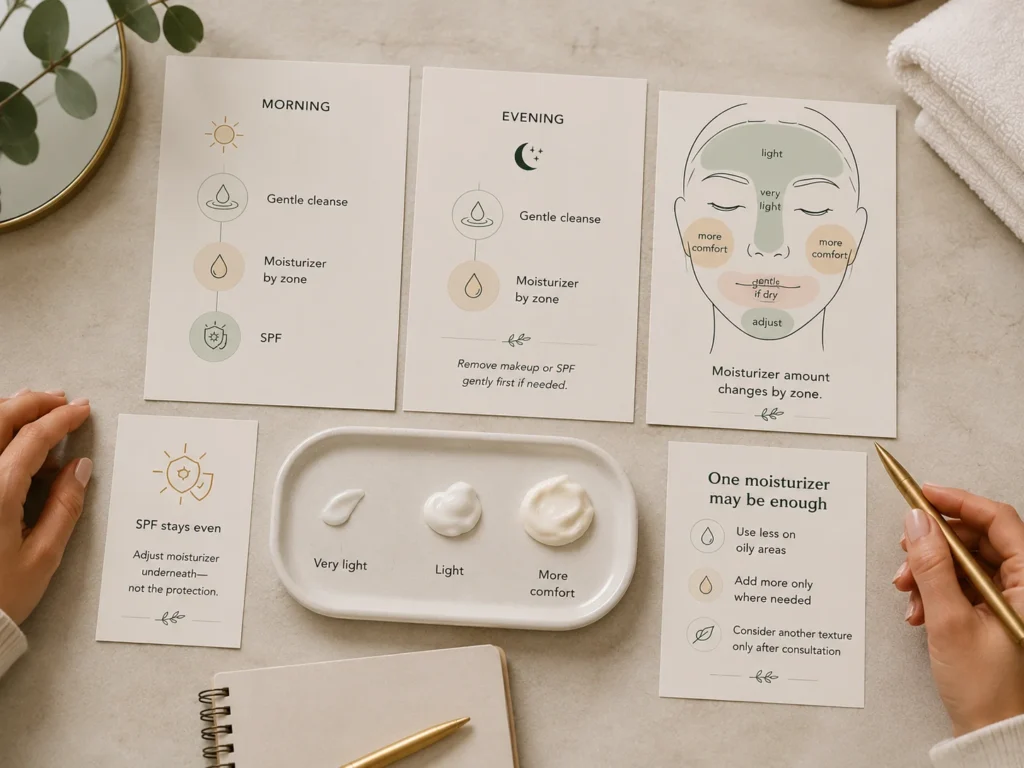
Morning moisturizer should support comfort without making the T-zone heavy.
A simple morning routine:
Gentle cleanser → lightweight moisturizer by zone → SPF
Use a lighter amount on the T-zone.
Use more comfort on the cheeks if needed.
Let moisturizer settle before SPF.
The morning routine should feel wearable.
Evening moisturizer should help the skin feel comfortable after cleansing.
A simple evening routine:
Gentle cleanser → moisturizer by zone
If wearing makeup or SPF:
Makeup/SPF removal step if needed → gentle cleanser → moisturizer by zone
Evening may be the time to give dry cheeks a little more comfort.
The T-zone may still need a lighter amount.
In summer, combination skin may need lighter textures.
Heat, humidity, sweat, and SPF can make the T-zone feel heavier.
Summer moisturizer tips:
Summer does not mean no moisturizer.
It means lighter moisturizer strategy.
In winter, cheeks may become drier.
Cold air, indoor heat, wind, scarves, and hot water may make the skin feel tighter.
Winter moisturizer tips:
Winter combination skin may need more comfort, but not necessarily heavy cream everywhere.
Travel can make combination skin unpredictable.
Airplane air may dry the cheeks.
Heat and sweat may make the T-zone oily.
Different climates may change how moisturizer feels.
During travel, keep the routine simple:
Gentle cleanser → moisturizer by zone → SPF
Avoid testing strong new active products while traveling.
Support comfort first.
Combination skin may not need the same amount everywhere.
Try using:
The amount matters as much as the product.
Gel moisturizer may work well for some combination skin routines.
It may feel light, fresh, and comfortable on oily areas.
It may be helpful when:
If the cheeks still feel tight, they may need more comfort.
A lotion texture may work well because it can feel lighter than cream but more comforting than gel.
It may be helpful when:
Lotion textures can be a good middle ground for combination skin.
Cream may be helpful for dry cheeks, winter dryness, mature skin, or areas that need more comfort.
But cream may not belong heavily on the T-zone if it makes that area greasy.
Use cream by zone when needed:
Cream can be useful when placed thoughtfully.
Facial oils are not always necessary for combination skin.
Some people may find oils too heavy for the T-zone.
If the cheeks are very dry, an oil-like texture may seem tempting, but it should be chosen carefully.
Avoid applying heavy oils to areas that become clogged-looking or greasy.
If the skin is sensitive, reactive, or blemish-prone-looking, get guidance before adding oil.
A mattifying moisturizer may help the T-zone if shine is a major concern.
But it should not dry the cheeks.
A mattifying product may be used:
Do not use mattifying products to avoid moisturizing dry areas.
Some combination skin may use a slightly richer moisturizer at night on dry areas.
This can help cheeks feel more comfortable by morning.
But the T-zone may still need a lighter approach.
Evening moisturizer can be adjusted:
Night care can be zone-specific too.
Your moisturizer may be working if:
Good moisturizer should make the skin easier to manage.
Your moisturizer may be too heavy if:
You may need a lighter texture or less product on oily zones.
Your moisturizer may be too light if:
You may need more moisturizer on dry zones or a more comforting texture there.
Your moisturizer may be irritating if it causes:
Stop using products that cause strong or persistent reactions.
If symptoms continue or look medical, seek dermatologist guidance.
If moisturizer makes the T-zone greasy:
Do not stop moisturizing the entire face automatically.
Adjust by zone.
If cheeks still feel dry:
Dry cheeks often need comfort before active products.
If the skin feels oily and dry at the same time, it may be dehydrated, over-cleansed, under-moisturized, or over-exfoliated.
Return to basics:
Morning: Gentle cleanser → lightweight moisturizer by zone → SPF
Evening: Gentle cleanser → moisturizer by zone
Pause harsh steps.
Watch how the skin responds.
If moisturizer stings, ask why the skin may be reactive.
Possible reasons include:
Pause active products and simplify.
If stinging continues with basic products, seek guidance.
A beginner routine can stay very simple.
Morning:
Gentle cleanser → lightweight moisturizer by zone → SPF
Evening:
Gentle cleanser → moisturizer by zone
Do not begin with too many products.
Learn how the skin responds first.
Then add support only if needed.
If toner is helpful and tolerated:
Morning:
Gentle cleanser → toner if appropriate → moisturizer by zone → SPF
Evening:
Gentle cleanser → toner if appropriate → moisturizer by zone
If toner dries the cheeks, skip it or apply it only to the T-zone.
Moisturizer should keep the skin comfortable after toner.
If serum is appropriate:
Morning:
Gentle cleanser → serum if appropriate → moisturizer by zone → SPF
Evening:
Gentle cleanser → serum if appropriate → moisturizer by zone
Hydrating serum may be used on dry or dehydrated areas.
Targeted serum may be used only where needed.
Moisturizer remains important.
If BHA is appropriate for clogged-looking T-zone:
Evening:
Gentle cleanser → BHA only on stable clogged-looking areas → moisturizer
Do not apply BHA to dry, sensitive, broken, crusted, bleeding, painful, or freshly picked skin.
Do not use BHA just because the face is combination.
Use it only when the concern fits.
If using a clay mask:
Gentle cleanser → clay mask on T-zone only if appropriate → rinse → moisturizer by zone
Use moisturizer afterward.
Avoid clay mask on dry cheeks if it makes them tight.
Combination skin does not need every zone treated the same way.
Professional guidance may help if:
A consultation can help choose the right moisturizer strategy by zone.
A dermatologist should evaluate the skin if there are warning signs such as:
Cosmetic skincare can support comfort and appearance, but medical-looking changes need medical evaluation.
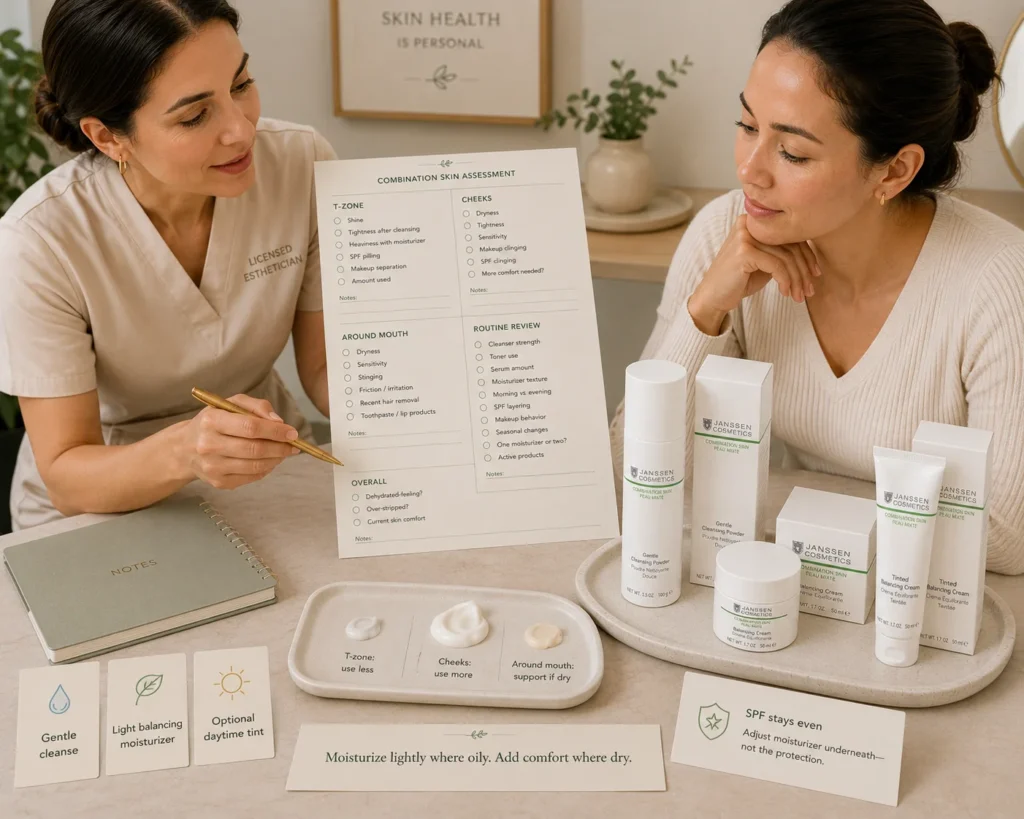
After consultation, our licensed esthetician may consider Janssen Cosmetics moisturizer options depending on whether the skin needs light balance, dry-cheek comfort, hydration support, sensitivity support, or T-zone oil control.
For combination skin balance, possible options may include:
For oily T-zone support, possible options may include:
For dry or dehydrated cheeks, possible options may include:
For sensitive or overworked cheeks, possible comfort-focused options may include:
For morning routines, Face Guard Advanced SPF 30 may be considered as the final daytime protection step when appropriate and tolerated.
These are not automatic recommendations. Combination skin moisturizer should be chosen based on texture, comfort, T-zone shine, cheek dryness, sensitivity, hydration, SPF layering, and makeup behavior.
Do not skip moisturizer because the T-zone is oily.
Do not use heavy cream everywhere if it makes the T-zone greasy.
Do not use mattifying products everywhere if they dry the cheeks.
Do not leave dry cheeks without comfort.
Do not confuse oil with hydration.
Do not apply moisturizer over broken, crusted, bleeding, painful, or infected-looking skin without medical guidance.
Do not use moisturizer to cover up irritation from harsh products.
Do not keep using moisturizer that burns or causes a strong reaction.
Do not skip SPF after moisturizer in the morning.
Do not introduce too many new products at once.
Yes. Combination skin usually needs moisturizer, but the texture and amount should be adjusted by zone.
A moisturizer that is too heavy or applied too generously on the T-zone may feel greasy. A lighter texture or smaller amount may work better.
Yes, but lightly. The T-zone may still need comfort and hydration support, even if it produces oil.
If your cheeks feel dry, tight, or uncomfortable, they may need more moisturizer than the T-zone.
A lightweight lotion, gel-cream, or balancing texture often works well. Some people may need richer comfort only on dry zones.
Yes. Combination skin can feel oily and tight at the same time when it is dehydrated.
Yes. Moisturizer usually comes before SPF, and SPF should be the final morning skincare step.
Stop and simplify. Stinging may be related to irritation, over-exfoliation, harsh cleanser, or sensitivity. Seek guidance if it continues.
Yes. Combination skin often benefits from zone care, such as a lighter texture on the T-zone and more comfort on the cheeks.
Use gentle cleanser, lightweight moisturizer by zone, and SPF in the morning. At night, cleanse and moisturize by zone.
If you have combination skin and moisturizer always feels confusing, you are not alone.
The answer is not to skip moisturizer.
The answer is to choose the right texture and place it where your skin actually needs it.
At Zendevie, a free virtual consultation helps us review your T-zone, cheeks, cleanser, moisturizer texture, SPF habits, makeup behavior, hydration level, sensitivity, and current routine before recommending anything.
Combination skin needs balance.
And moisturizer is often part of that balance.
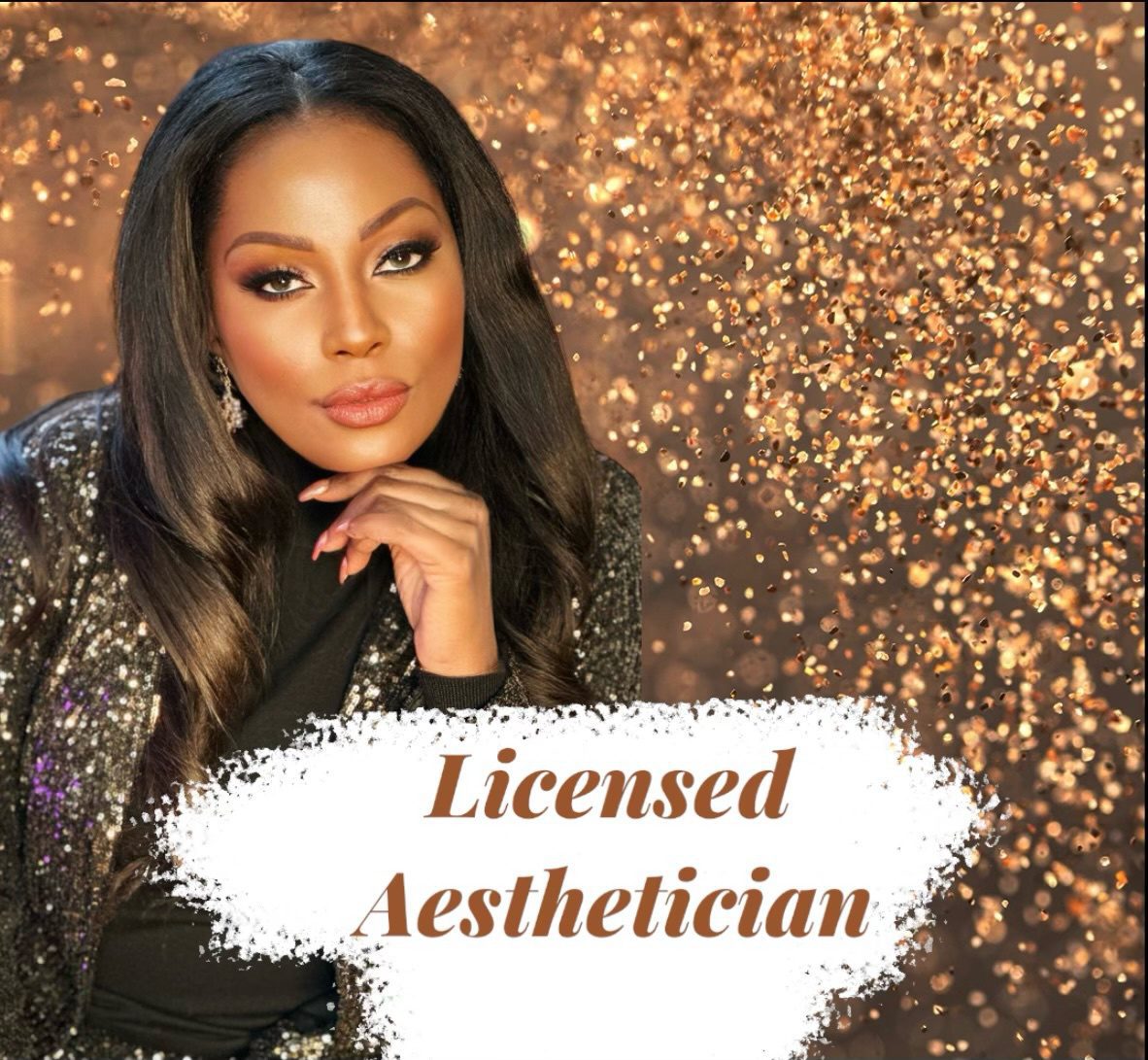
Zendevie is guided by Haby Diallo, a licensed esthetician with more than 20 years of professional skincare experience. Her approach is rooted in education, professional judgment, and personal care.
years of experience