


Combination skin can often be supported with a thoughtful cosmetic skincare routine.
The T-zone may need lighter balance.
The cheeks may need comfort.
Dehydrated areas may need hydration support.
Sensitive areas may need a calmer routine.
But sometimes, what looks like a routine problem may need medical evaluation.
This is important.
At Zendevie, we help clients understand their skin from a cosmetic skincare perspective. In consultation, our licensed esthetician reviews your T-zone, cheeks, cleanser, moisturizer, SPF habits, makeup behavior, hydration level, sensitivity, exfoliation use, and product tolerance before recommending a routine.
But we do not diagnose, treat, cure, or manage medical skin conditions.
If your skin is painful, swollen, infected-looking, rash-like, rapidly worsening, or showing a changing spot, a dermatologist is the right professional to evaluate it.
Combination skin may need a dermatologist if you notice:
The American Academy of Dermatology advises medical attention for rash warning signs such as infection-looking changes, pain, rapid spreading, fever or illness with rash, or rashes involving sensitive areas like the eyes, lips, mouth, or genital skin. It also recommends dermatologist evaluation for moles or spots that look different, itch, bleed, grow, or change.
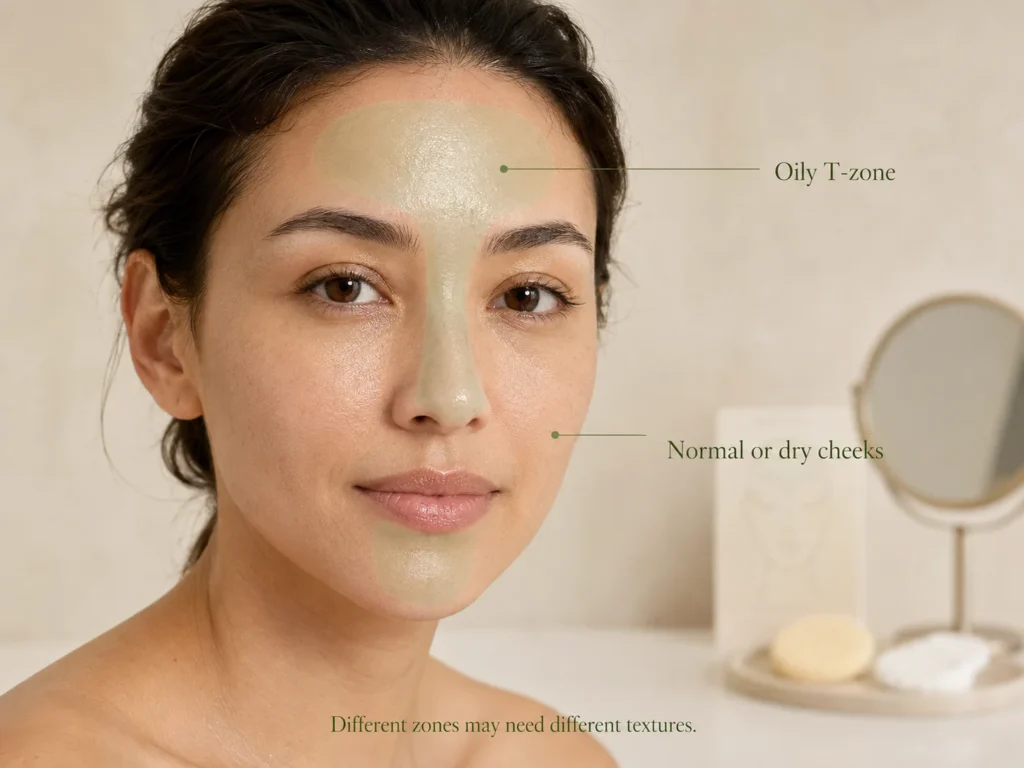
Combination skin is a cosmetic skin type pattern.
It usually means:
These concerns can often be supported with skincare education, better product placement, and a calmer routine.
But combination skin should not be used as a label for every skin concern.
Some symptoms go beyond cosmetic care.
A skincare consultation may help when the concern is routine-related, cosmetic, and not medically concerning.
A consultation can help review:
This is where Shop Zendevie can guide you.
We help you understand what each zone may need before recommending products.
A skincare consultation is not a medical appointment.
It cannot diagnose or treat:
If the concern may be medical, a dermatologist should evaluate it.
Cosmetic skincare can support the look and feel of the skin, but medical concerns need medical care.
An oily T-zone may be a cosmetic routine concern when it appears as:
These concerns may be supported with:
This is a good place for consultation.
An oily T-zone may need dermatologist evaluation if it comes with:
Oiliness alone is usually cosmetic.
Pain, swelling, oozing, crusting, or rapid worsening is different.
That needs medical review.
Dry cheeks may be a cosmetic routine concern when they feel:
A consultation may help adjust:
Dry cheeks often need comfort and better placement.
Dry cheeks may need dermatologist evaluation if they are:
These signs may suggest something beyond ordinary dryness.
A dermatologist can evaluate the cause.
Sensitivity may be routine-related when it appears after:
In this case, a cosmetic reset may help:
Morning: Mild cleanser → moisturizer by zone → SPF
Evening: Mild cleanser → moisturizer by zone
Pause strong active products until the skin feels calm.
Sensitivity may need dermatologist evaluation if it includes:
The AAD notes that rash warning signs can include infection-looking changes such as pus, yellow or golden crusts, pain, swelling, warmth, unpleasant smell, fever, or feeling very hot or cold.
Clogged-looking pores can be a cosmetic concern when they appear as:
These concerns may be reviewed in consultation.
Support may include:
The goal is a cleaner-looking, smoother-looking surface.
Seek dermatologist guidance if clogged-looking areas become:
The AAD notes that deep, painful acne cysts or nodules can be tender and may benefit from dermatologist care; AAD also notes that acne can lead to scarring, which is one reason early professional care may matter.
Some blemish-prone-looking areas may be connected to routine habits.
Examples include:
A consultation may help identify routine triggers and choose safe cosmetic support.
But not all blemishes should be handled with over-the-counter skincare.
A dermatologist may be needed if blemishes are:
Do not pick deep or painful bumps.
Do not apply strong active products to broken, crusted, bleeding, or painful areas.
Post-blemish mark appearance can often be supported cosmetically when the skin is calm.
Support may include:
The goal is to support a more even-looking complexion.
Not to force fast change.
Seek dermatologist guidance if you notice:
A cosmetic routine can support appearance, but it cannot replace medical evaluation.
Pores are normal.
They may look more noticeable on combination skin when the T-zone is oily, coated, dehydrated, or affected by makeup and SPF buildup.
This can often be supported with:
Pores cannot be erased.
The goal is a more refined-looking surface.
Pore concerns may need medical evaluation if they come with:
If something looks unusual or changes over time, do not treat it as “just pores.”
Have it evaluated.
Makeup problems are often routine-related.
Combination skin may show:
A consultation can help review cleanser, moisturizer, SPF, product amount, product placement, and evening cleansing.
Makeup problems may need dermatologist evaluation if makeup clings or burns because the skin is:
Makeup should not be used to cover a skin change that may need medical attention.
A product may sting because the routine is too strong.
Possible causes include:
In this case, pause active products and simplify.
Seek medical guidance if stinging is:
Strong reactions should not be pushed through.
The skin needs evaluation.
A rash-like change should be taken seriously.
Do not assume it is combination skin.
Do not assume it is dryness.
Do not keep adding products to fix it.
A rash-like change may need dermatologist evaluation, especially if it is persistent, painful, spreading, infected-looking, or affecting sensitive areas. AAD guidance recommends medical attention when a rash shows signs of infection, spreads rapidly, is painful, involves eyes/lips/mouth/genital skin, or appears with fever or illness.
A changing spot should not be handled as a skincare concern.
If a mole or spot changes, bleeds, itches, grows, or looks different from others, a dermatologist should evaluate it. The AAD specifically advises seeing a dermatologist for a mole or spot that looks different from others, itches, bleeds, or changes in any way.
Skincare products should not be used to “treat” suspicious spots.
Medical evaluation comes first.
Do not use cosmetic skincare to manage infection-looking skin.
Possible warning signs include:
These signs need medical attention.
Broken or bleeding skin should be treated carefully.
Do not apply:
If broken skin is painful, crusted, swollen, oozing, infected-looking, or not improving, seek medical guidance.
The area around the mouth can become dry or irritated from weather, toothpaste residue, lip products, active products, or friction.
A simple routine may help if it is mild.
But seek dermatologist guidance if the area is:
Do not apply strong active products to irritated around-mouth skin.
The eye area is delicate.
Do not experiment with strong skincare near irritated eyelids or under-eyes.
Seek medical or dermatologist guidance if the eye area has:
Keep active products away from the irritated eye area.
After sun exposure, the skin may feel warm, dry, or sensitive.
A gentle routine can help support comfort.
But seek medical guidance if there is:
Do not use strong exfoliation, acids, retinol-style products, or clay masks on sun-stressed skin.
Winter dryness may be cosmetic when it is mild tightness or flaking.
But seek dermatologist guidance if winter dryness becomes:
Cold-weather discomfort should not be ignored when it becomes severe.
Summer shine is usually cosmetic.
But seek dermatologist guidance if summer oiliness comes with:
Do not keep adding drying products if the skin is becoming painful or irritated.
Travel can make skin oily, dry, dehydrated, or sensitive.
But seek medical guidance if travel-related skin changes include:
Travel can expose skin to new environments, but persistent or severe changes should be evaluated.
Pause cosmetic active products if the skin is:
Return to gentle basics if appropriate, and seek medical guidance when warning signs appear.
If the skin feels overworked but not medically concerning, a gentle reset may help.
Morning:
Mild cleanser → moisturizer by zone → SPF
Evening:
Mild cleanser → moisturizer by zone
Pause:
If the skin does not calm or warning signs appear, contact a dermatologist.
A Zendevie consultation may be helpful when you need help with:
This is where our consultation-first approach can support you.

A dermatologist is the better first step when the concern may be medical.
Choose dermatologist care first if you notice:
Shop Zendevie can help with cosmetic skincare guidance, but medical evaluation comes first when warning signs are present.
A dermatologist can evaluate medical concerns.
A skincare consultation can help support a cosmetic routine once the skin is cleared for cosmetic care.
For example:
The two can work together.
They do not replace each other.
If you see a dermatologist, helpful information may include:
Clear information helps the appointment.
Photos may help show change over time.
Useful photos may include:
Do not use filters.
Do not cover the concern with makeup if the goal is evaluation.
If you think the concern may be medical, avoid:
Keep the area gentle and seek evaluation.
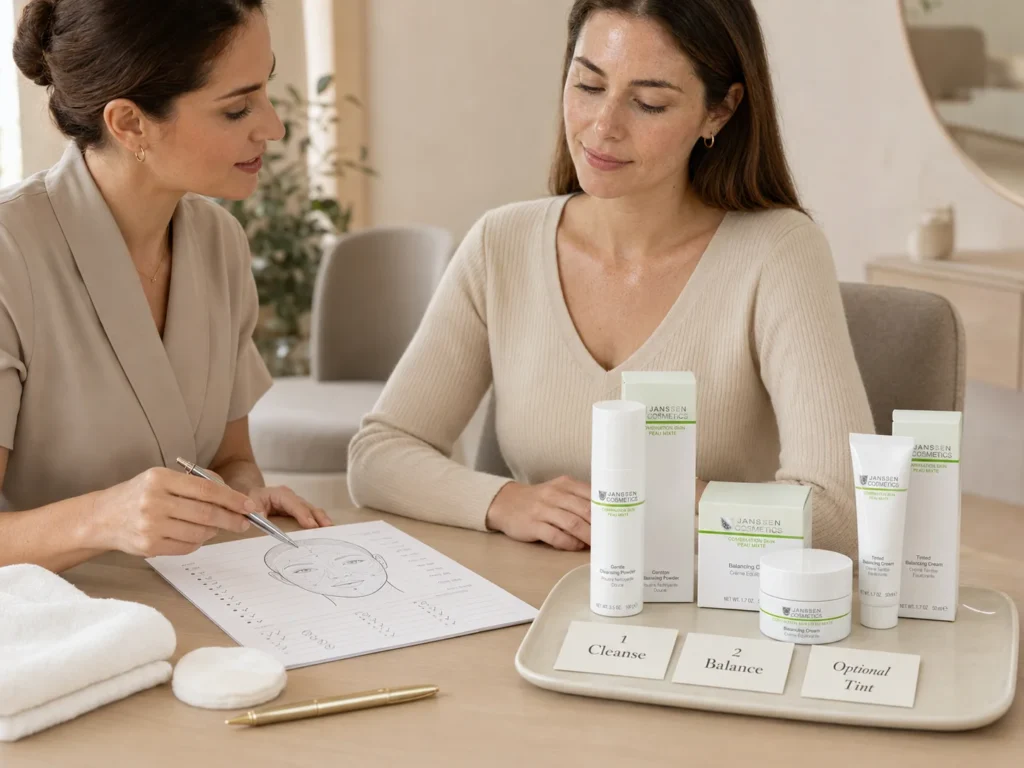
After consultation, our licensed esthetician may consider Janssen Cosmetics options only if the concern is appropriate for cosmetic skincare and does not require medical evaluation first.
For combination skin balance, possible options may include:
For dry or dehydrated-feeling areas, possible options may include:
For sensitive-feeling or overworked areas, possible comfort-focused options may include:
For oily T-zone or clogged-looking areas when the skin is stable, possible options may include:
For dullness, post-blemish mark appearance, or uneven-looking tone when the skin is calm and stable, possible radiance-support options may include:
For morning routines, Face Guard Advanced SPF 30 may be considered as the final daytime protection step when appropriate and tolerated.
These are not automatic recommendations. If a skin concern looks medical, painful, infected-looking, rash-like, or rapidly worsening, dermatologist evaluation should come before cosmetic product selection.
Do not try to diagnose yourself based only on oily T-zone and dry cheeks.
Do not assume every rash is sensitivity.
Do not assume every painful bump is a normal blemish.
Do not apply acids to broken or bleeding skin.
Do not apply clay masks to irritated or rash-like areas.
Do not use brightening products on inflamed or wounded areas.
Do not keep exfoliating if the skin burns, stings, flakes, or feels raw.
Do not use multiple active products to force faster results.
Do not cover a worsening skin concern with makeup instead of seeking care.
Do not ignore a changing mole or spot.
Do not ignore oozing, crusting, swelling, pain, or infection-looking changes.
Combination skin should see a dermatologist when there is persistent rash-like irritation, pain, swelling, oozing, crusting, bleeding, blistering, severe itching, deep painful bumps, or a changing spot.
Many cosmetic combination skin concerns can be supported with skincare guidance, but medical-looking concerns should be evaluated by a dermatologist.
Oily T-zone alone is usually cosmetic. But if it comes with painful, swollen, cyst-like, infected-looking, or rapidly worsening bumps, seek dermatologist guidance.
Dry cheeks may be cosmetic, but see a dermatologist if they are painful, cracked, bleeding, oozing, crusted, swollen, rash-like, or not improving.
If burning is strong, persistent, worsening, or associated with swelling, rash, blistering, oozing, crusting, or pain, seek medical guidance.
Clogged-looking pores may be cosmetic, but deep painful bumps, repeated inflammation, scarring, oozing, bleeding, or rapid worsening should be evaluated.
If bumps are deep, painful, cyst-like, nodular, scarring, repeatedly inflamed, or not improving, dermatologist care may be appropriate.
Yes. A changing, bleeding, itching, growing, or unusual-looking spot should be evaluated by a dermatologist.
No. Zendevie provides cosmetic skincare consultation and product guidance. We do not diagnose, treat, cure, or manage medical skin conditions.
Yes. Once medical concerns are evaluated, a consultation can help support your cosmetic skincare routine, product selection, and routine consistency.
At Zendevie, a free virtual consultation helps us review your cosmetic skincare routine with care, honesty, and professional judgment.
Your skin deserves support.
And when it needs medical care, it deserves the right professional care too

Zendevie is guided by Haby Diallo, a licensed esthetician with more than 20 years of professional skincare experience. Her approach is rooted in education, professional judgment, and personal care.
years of experience