


Sensitive skin may be able to use retinol, but it should not be rushed.
Retinol is one of the most talked-about skincare ingredients for visible aging concerns, texture, uneven-looking tone, and skin that looks less smooth over time. Because of that, many people feel they should add retinol as soon as they notice fine lines, dullness, roughness, or enlarged-looking pores.
But sensitive skin needs a different conversation.
If your skin already stings from moisturizer, burns after toner, feels tight after cleansing, looks redness-prone after exfoliation, or reacts to SPF, retinol is usually not the next step.
At Zendevie, we look at retinol as an active product, not a basic skincare step. Before discussing retinol, our licensed esthetician first looks at the skin’s tolerance: cleanser, moisturizer, SPF, exfoliation habits, dryness, sensitivity, and product history.
Retinol can be considered later. But sensitive skin needs stability first.
Yes, some sensitive skin can use retinol, but only carefully.
Sensitive skin should avoid retinol when the skin is:
A safer starting point is:
Morning: Gentle cleanser → moisturizer → SPF
Evening: Gentle cleanser → moisturizer
Once the skin feels stable, retinol may be introduced slowly, usually at night, with careful spacing and moisturizer.
If retinol causes strong burning, swelling, rash-like irritation, pain, crusting, bleeding, or persistent worsening, stop and seek dermatologist guidance.
Retinol is commonly used in skincare for cosmetic concerns such as:
Retinol is an active ingredient.
That means it can create visible benefits for some skin, but it can also be too much for skin that is already reactive.
Sensitive skin should not treat retinol like a simple moisturizer.

Sensitive skin may react to retinol because retinol can be active-feeling and drying, especially when introduced too quickly.
Retinol may cause problems when the skin is already:
The reaction is not always because retinol is “bad.” It may mean the skin is not ready, the formula is too strong, or the routine around it is too active.
If sensitive skin is already irritated, retinol should wait.
Before retinol, sensitive skin should tolerate:
If moisturizer burns, SPF stings, or toner feels sharp, retinol may make the skin harder to calm.
Skin comfort comes before retinol.
Sensitive skin often reacts more when the skin barrier feels stressed.
Signs the skin may not be ready for retinol include:
If these signs are present, pause active products and simplify before considering retinol.
A mild sensation can happen with active products, but strong burning is different.
Retinol should not cause repeated burning, swelling, rash-like irritation, pain, or discomfort that worsens each time.
If retinol burns strongly, stop.
Do not continue using it because you think burning means it is working.
Sensitive skin should not be forced through irritation to prove a product is effective.
Dry-sensitive skin needs special care with retinol.
Retinol may make dryness, tightness, or flaking more noticeable if the skin is not prepared.
Before retinol, dry-sensitive skin should have a basic routine that feels comfortable:
Morning: Gentle cleanser → moisturizer → SPF
Evening: Gentle cleanser → moisturizer
If the skin is already dry and flaky, retinol should wait.
A dry-sensitive routine should first focus on cleanser comfort, moisturizer texture, and SPF tolerance.
Oily-sensitive skin can still react to retinol.
The skin may be shiny but tight underneath. It may have blackheads or whiteheads, but also sting after toner or burn after moisturizer.
If oily-sensitive skin is already using BHA, clay masks, active cleansers, or drying spot products, adding retinol can overwhelm the skin.
For oily-sensitive skin, review:
Retinol should be considered only after the oily-sensitive routine feels stable.
Redness-prone skin may react to retinol with warmth, stinging, or increased redness-looking areas.
If your skin already looks flushed or feels hot after products, retinol should not be the first active step.
A better starting point is:
Mild cleanser → moisturizer → SPF
Once redness-prone skin feels more stable, retinol may be discussed carefully.
If retinol makes the skin feel hot, swollen, painful, or rash-like, stop and seek guidance.
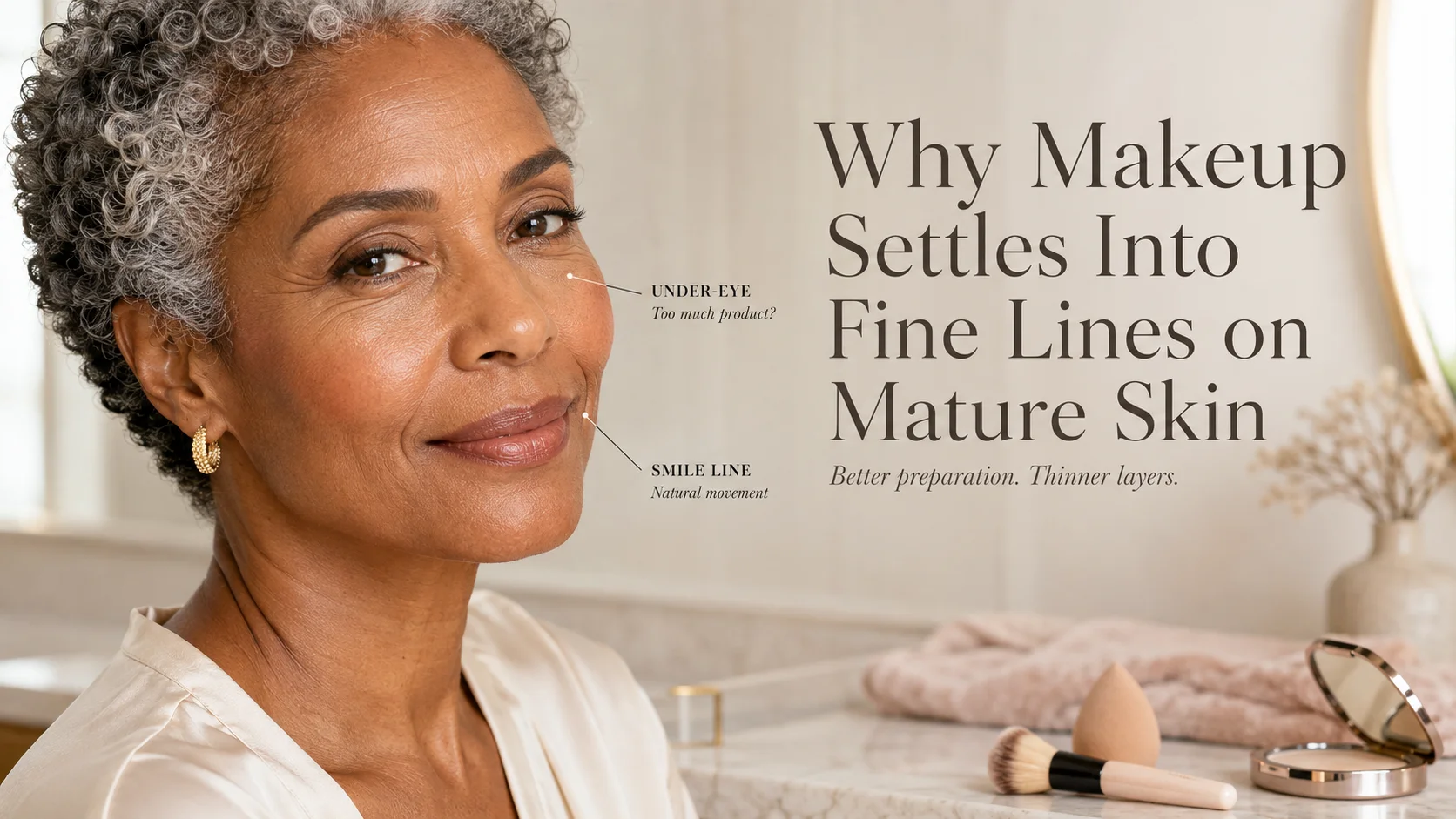
Mature sensitive skin may be interested in retinol because of fine lines, texture, firmness appearance, and uneven-looking tone.
But mature skin may also feel drier or less tolerant of strong products.
This means retinol should be introduced with restraint.
Mature sensitive skin should avoid combining retinol with:
A well-aging routine should not make the skin feel raw, tight, or uncomfortable.
Combination-sensitive skin may have an oily T-zone and dry or reactive cheeks.
Retinol may not need to be applied across the whole face at the same frequency.
If the cheeks are dry or sting easily, they may not tolerate retinol as well as the T-zone.
However, retinol placement should be discussed carefully.
Do not create a complicated retinol routine before understanding the skin’s pattern.
Some blemish-prone skin may consider retinol-style products for texture and clogged-looking concerns.
But sensitive blemish-prone skin needs caution.
If the skin has painful, deep, swollen, cystic-looking, infected-looking, scarring, or persistent blemishes, dermatologist guidance should come first.
Cosmetic skincare can help with product structure, but medical-looking blemishes should not be managed by retinol alone.
Retinol may be discussed for texture and pore appearance in some routines.
But sensitive skin with enlarged-looking pores should not begin retinol if the skin is already burning, flaky, or over-exfoliated.
Sometimes pores look more noticeable because the skin is oily, dehydrated, irritated, or wearing heavy product layers.
Before retinol, review cleanser, moisturizer, SPF, makeup, and exfoliation habits.
Retinol may be discussed in routines for uneven-looking tone or visible signs of skin fatigue.
But sensitive skin should approach this slowly.
Uneven-looking tone can be influenced by sun exposure, irritation, dryness, blemish marks, and over-exfoliation.
If retinol irritates sensitive skin, the skin may look more uneven.
Daily SPF and skin stability should come before active correction.
SPF is very important if retinol is part of the routine.
Retinol is usually used at night, but daytime protection still matters.
A simple structure may be:
Morning: Gentle cleanser → moisturizer → SPF
Evening: Gentle cleanser → retinol if tolerated → moisturizer
If SPF stings, retinol may need to wait because the skin may already be too reactive.
Sensitive skin using retinol should not skip SPF.
Retinol is commonly used in the evening.
A simple evening order may be:
Cleanser → retinol → moisturizer
For sensitive skin, the order may need adjustment depending on tolerance.
Some sensitive skin may do better with moisturizer before and after retinol, often called a buffering approach.
The exact method depends on the product, skin condition, and professional guidance.
Buffering means using moisturizer to reduce the intensity of an active product on sensitive skin.
For example:
Cleanser → moisturizer → retinol → moisturizer
This may help some sensitive skin tolerate retinol more comfortably.
Buffering may also reduce the chance of dryness, stinging, or tightness.
However, buffering does not make retinol risk-free. If the skin is already burning or rash-like, retinol should pause.
Sensitive skin should not start retinol every night.
A slower approach may include:
Retinol is not a product to rush.
There is no universal schedule.
Some sensitive skin may tolerate retinol once or twice weekly at first. Some may tolerate more later. Some may not tolerate it during certain seasons or when the skin is irritated.
Frequency depends on:
The schedule should be built around the skin’s response.
Sensitive skin should use a small amount.
More retinol does not mean better results.
Using too much can increase dryness, peeling, burning, and irritation.
Apply carefully and avoid areas that are more likely to react, such as:
The skin should not feel coated in retinol.
The eye area is delicate.
Facial retinol should not be applied directly under the eyes or on the eyelids unless the product is made for that area and the skin can tolerate it.
If retinol migrates into the eye area, it may cause dryness, burning, watering, or irritation.
If the eye area becomes swollen, painful, or persistently irritated, seek medical guidance.
The mouth area can be sensitive.
Retinol may irritate the corners of the mouth, chin folds, or areas affected by toothpaste, lip products, licking, wiping, or over-cleansing.
Avoid retinol on skin that is already burning, peeling, or rash-like around the mouth.
If mouth-area irritation persists, dermatologist evaluation may be needed.
AHA may be used for dullness and rough surface texture.
Retinol may be used for texture and visible aging concerns.
Sensitive skin may not tolerate both close together.
Do not use AHA and retinol on the same night when the skin is sensitive, dry, flaky, or redness-prone.
If both are part of a larger plan, they should usually be spaced carefully.
If the skin burns, simplify.
BHA may be used for clogged-looking pores, blackheads, whiteheads, or oily T-zone congestion.
Retinol may also be considered for texture.
Sensitive skin should not layer BHA and retinol aggressively.
If you use BHA, avoid adding retinol until the skin clearly tolerates the BHA.
If retinol is introduced, consider separate nights and watch for dryness, flaking, or burning.
Vitamin C and retinol can both be active-feeling for sensitive skin.
Using both too quickly may lead to stinging, dryness, or irritation.
If vitamin C is already part of the morning routine, retinol may need to be introduced very slowly at night.
If the skin becomes tight, flaky, or hot, pause active products and return to basics.
Some cleansers contain AHA, BHA, enzymes, or scrub particles.
If you use an exfoliating cleanser and then apply retinol, sensitive skin may become irritated.
For retinol nights, sensitive skin often does better with a mild cleanser.
A cleanser should not behave like an exfoliating treatment right before retinol unless the skin has been professionally assessed and can tolerate that plan.
Toner can make retinol feel better or worse depending on the formula.
A mild, alcohol-free toner may be tolerated by some skin.
An acid toner, strong toner, fragranced toner, or drying toner may increase the chance of burning.
If toner stings before retinol, skip toner.
Sensitive skin does not need toner on retinol nights if it makes the skin reactive.
Moisturizer is important when using retinol on sensitive skin.
It helps reduce the bare feeling after cleansing and may make the routine easier to tolerate.
A simple evening order may be:
Cleanser → retinol if tolerated → moisturizer
For more reactive skin:
Cleanser → moisturizer → retinol → moisturizer
If moisturizer burns after retinol, the skin may be irritated, the retinol may be too strong, or the frequency may be too high.
Retinol can affect makeup indirectly if it causes dryness or flaking.
If your foundation suddenly clings, separates, or looks rough after starting retinol, the skin may be too dry or irritated.
Do not scrub flakes away.
Reduce retinol frequency, simplify active products, and focus on moisturizer and SPF.
Makeup usually sits better when the skin feels comfortable.
Winter can make retinol harder to tolerate.
Cold air, wind, and indoor heating may leave sensitive skin drier and more reactive.
During winter, sensitive skin may need:
If retinol stings more in winter, the skin may need a slower schedule.
Summer can also affect retinol tolerance.
Heat, sweat, sun exposure, SPF layers, and more frequent cleansing may make sensitive skin more reactive.
If using retinol in summer, be especially consistent with daytime SPF.
Avoid applying retinol to skin that feels sun-stressed, hot, or irritated.
If the skin becomes sensitive after sun exposure, pause retinol.
Travel is not the best time to start retinol.
Sensitive skin may react during travel because of:
If you already tolerate retinol well, you may continue carefully. But starting a new retinol product right before travel can make the skin harder to manage.
Do not apply retinol after strong exfoliation if the skin is sensitive.
This includes:
After exfoliation, sensitive skin may need moisturizer and SPF habits, not another active step.
If retinol burns after exfoliation, the combination may be too much.
Avoid retinol soon after facial waxing, threading, shaving, or hair removal.
The skin may be more reactive after hair removal.
Retinol may sting, burn, or increase irritation in freshly treated areas.
If skin is swollen, bumpy, painful, rash-like, or persistently irritated after hair removal, seek professional guidance.
Do not apply retinol to skin that feels hot, painful, or irritated from sun exposure.
After sun exposure, sensitive skin may need a simple routine:
Gentle cleanser → moisturizer
During the day:
Moisturizer → SPF
If the skin is burned, blistering, painful, or severely irritated, seek medical guidance.
Patch testing is important before sensitive skin uses retinol.
Apply a small amount to a limited area.
Watch for:
Patch testing does not guarantee no reaction, but it helps reduce surprises.

A careful retinol introduction may look like this:
Sensitive skin needs time to respond.
A mild, brief sensation may happen for some people.
But monitor carefully.
Stop retinol if the sensation becomes:
Sensitive skin should not be forced through repeated discomfort.
If retinol burns every time, stop using it.
The formula may be too strong, the frequency may be too high, or the skin may not be ready.
Return to a simple routine:
Morning: Gentle cleanser → moisturizer → SPF
Evening: Gentle cleanser → moisturizer
Once the skin feels stable, retinol can be reconsidered only with a more careful plan.
Flaking can happen when retinol is too frequent, too strong, or layered with other active products.
Do not scrub the flakes.
Instead, reduce or pause retinol.
Review:
Flaking is a sign to slow down, not exfoliate more.
If retinol makes the skin look red, warm, or flushed, pause it.
This may mean the skin is irritated or the formula is not a good match.
If redness-looking changes are persistent, painful, swollen, rash-like, or worsening, seek dermatologist guidance.
Do not keep applying retinol over irritated skin.
If moisturizer burns after retinol, the skin may be irritated.
Pause retinol and simplify.
If moisturizer keeps burning even after stopping retinol, the skin may need more careful evaluation.
Do not add acids, scrubs, or strong masks to “smooth” the skin.
If SPF starts stinging after retinol use, the skin may be more reactive.
This may mean:
Pause retinol and review the full routine.
SPF should remain part of daytime care, but the skin may need a calmer plan.
Some people notice bumps after starting retinol.
Do not assume every bump is normal.
If bumps are painful, deep, swollen, infected-looking, rash-like, scarring, or persistent, a dermatologist should evaluate the skin.
If bumps are mild but the skin is also burning or flaky, the routine may be too aggressive.
Sensitive skin should not push through worsening reactions without guidance.
Skip retinol when the skin is:
Retinol can wait.
Retinol may be considered when sensitive skin is:
This does not guarantee tolerance, but it creates a safer starting point.
A simple retinol night may look like:
Gentle cleanser → moisturizer → retinol if tolerated → moisturizer
Or, if the skin is less reactive:
Gentle cleanser → retinol if tolerated → moisturizer
Avoid:
Retinol night should not be a night with every active step.
The morning after retinol should be calm.
A simple morning routine may be:
Gentle cleanser or rinse if appropriate → moisturizer → SPF
Do not scrub the skin if it feels flaky.
Do not add strong acids because the skin looks uneven.
Let the skin show whether it tolerated retinol.
Sensitive skin does not have to use retinol.
A sensitive-skin routine can still be effective without it.
The foundation is:
Retinol is an optional active step, not a requirement.
A dermatologist should evaluate the skin if retinol use is followed by:
Cosmetic skincare can help with routine structure, but medical-looking reactions need medical evaluation.

After consultation, our licensed esthetician may consider Janssen Cosmetics options depending on whether the skin is sensitive, dry-sensitive, oily-sensitive, mature-sensitive, redness-prone, blemish-prone, or barrier-stressed.
For sensitive skin comfort, possible options may include:
For retinol-related concerns, retinol options from other Janssen lines may be discussed only after sensitivity is assessed. Depending on the skin pattern, this may include options such as Retinol Lift Serum, Retinol Lift Care Capsules, or Refining Retinol Fluid.
These are not automatic recommendations for sensitive skin. If the skin is currently burning, stinging, flaky, hot, rash-like, or reacting to basic products, retinol should wait.
Do not use retinol just because it is popular.
Do not apply retinol to burning, hot, or over-exfoliated skin.
Do not start retinol if moisturizer or SPF already stings.
Do not layer retinol with AHA, BHA, strong vitamin C, scrubs, and masks all at once.
Do not apply facial retinol directly under the eyes or on eyelids unless the product is made for that area.
Do not use retinol after waxing, shaving, sun stress, or strong exfoliation.
Do not scrub flakes caused by retinol.
Do not skip SPF while using retinol.
Do not keep using retinol if it causes swelling, rash-like irritation, pain, or persistent burning.
Yes, some sensitive skin can use retinol, but it should be introduced slowly and only when the skin already tolerates cleanser, moisturizer, and SPF.
Retinol may burn if the formula is too strong, used too often, layered with other active products, or applied to skin that is dry, over-exfoliated, or barrier-stressed.
Yes. If retinol burns strongly, repeatedly, or causes swelling, rash-like irritation, pain, crusting, or persistent discomfort, stop and seek guidance.
Not at first. Sensitive skin should start slowly and increase only if the skin tolerates it well.
Sensitive skin should be careful with this combination. It may be better to use them at different times or avoid combining them if the skin stings easily.
Sensitive skin should avoid layering retinol with AHA, BHA, scrubs, or peeling products unless the skin has been carefully assessed and can tolerate it.
Yes. SPF should be used during the day when retinol is part of the routine.
See a dermatologist if retinol causes persistent burning, swelling, rash-like irritation, pain, crusting, bleeding, infection-looking changes, eye-area irritation, or symptoms that do not improve after stopping retinol.
If you want to use retinol but your skin stings, burns, flakes, or reacts easily, a free virtual consultation can help you decide whether your skin is ready.
At Zendevie, we review your cleanser, moisturizer, SPF, exfoliation habits, current active products, sensitivity signs, and visible aging or texture concerns before recommending next steps. The goal is to help sensitive skin move carefully, not aggressively.

Zendevie is guided by Haby Diallo, a licensed esthetician with more than 20 years of professional skincare experience. Her approach is rooted in education, professional judgment, and personal care.
years of experience