
Makeup separation can make oily skin feel impossible to manage.
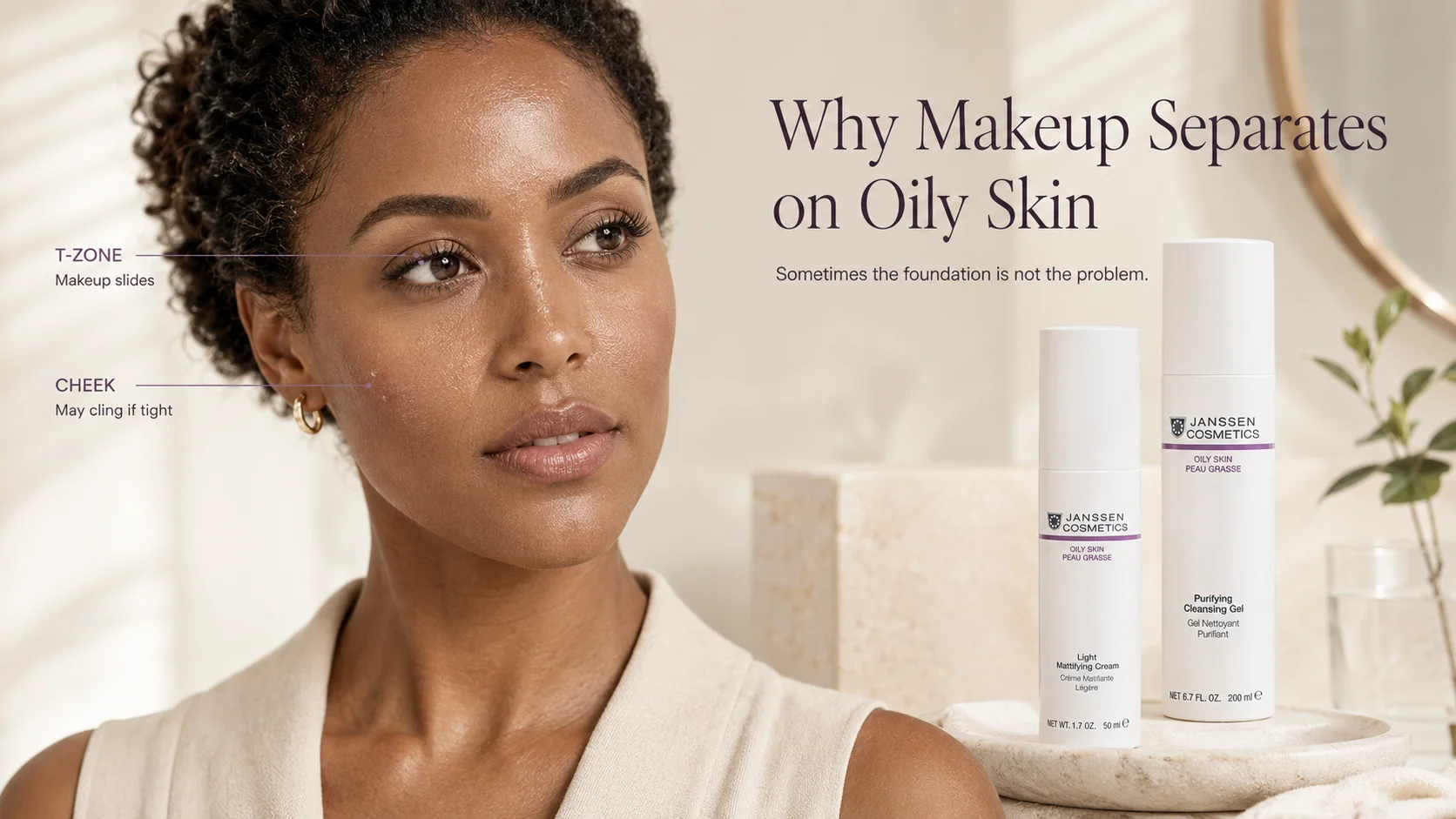
Foundation looks smooth in the morning, then starts breaking apart around the nose. The forehead gets shiny. Powder becomes patchy. Primer pills. SPF feels heavy. Concealer settles into texture. By midday, the T-zone looks oily, but the cheeks may look dry or rough.
It is easy to blame the foundation.
But makeup separation is often not caused by makeup alone.
For oily skin, makeup wear depends on the full routine underneath it: cleanser, toner, moisturizer, SPF, exfoliation, active products, and how each layer settles before makeup is applied.
In consultation, our licensed esthetician looks at how the skin behaves before makeup, not only what makeup is used. A foundation can separate because the skin is oily, but it can also separate because the skin is dehydrated, over-exfoliated, over-layered, or wearing products with textures that do not work well together.
Makeup separates on oily skin when oil, sweat, heavy moisturizer, rich SPF, product buildup, over-layering, dehydration, or over-exfoliation interfere with how makeup sits on the skin.
Common causes include:
The solution is not always more powder. Often, the first step is better skin prep.
Oily skin produces more visible sebum.
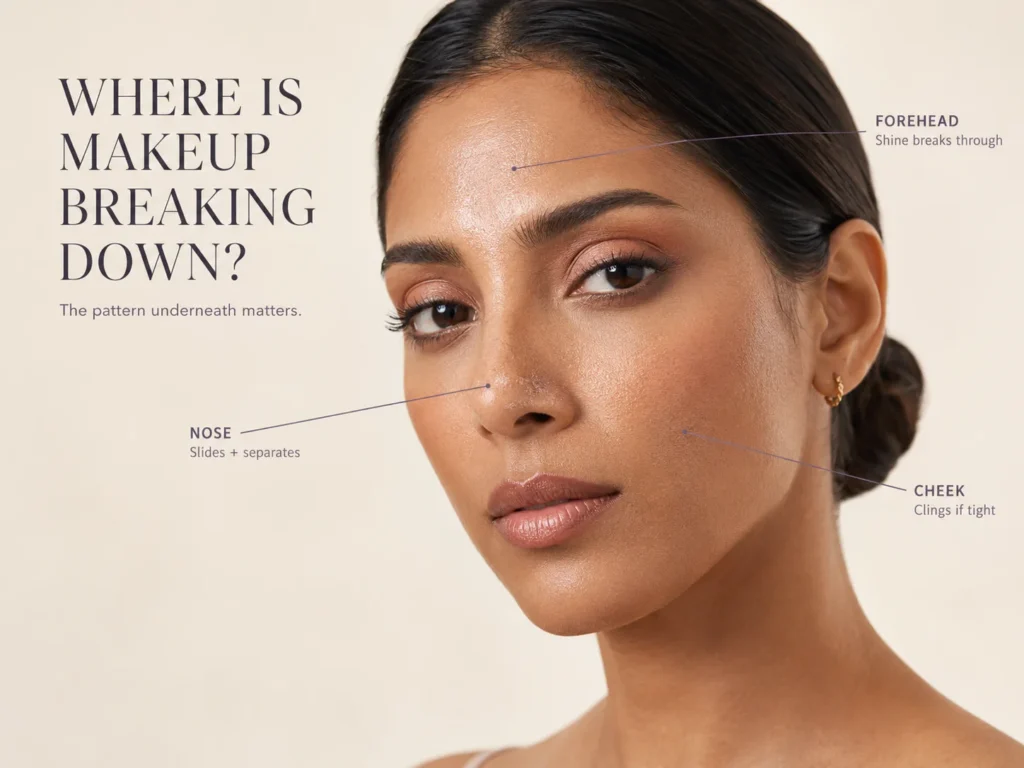
When oil rises through makeup during the day, it can disturb foundation, concealer, powder, and primer. This is especially common in the T-zone, where oil production is usually more visible.
You may notice separation around:
Oil can make makeup slide, break apart, or collect in pores. But oil is only one part of the story.
Sweat and oil are not the same, but they can mix on the skin.
This often happens in summer, during exercise, while wearing SPF, or in humid weather.
When sweat, oil, SPF, primer, and foundation mix together, makeup may separate faster. The skin may look greasy, but washing more often or applying more powder may not solve the problem.
The morning layers may need to be lighter and more compatible.
A moisturizer that is too rich for oily areas can make makeup separate quickly.
This is common when the same cream is applied heavily over the whole face, even though only the cheeks feel dry.
Heavy moisturizer may cause:
Oily skin can still need moisturizer, but the texture and amount matter.
Some people skip moisturizer because their skin is oily.
That can also make makeup separate.
When oily skin is left bare after cleansing, the skin may feel tight, dehydrated, or uneven. Foundation may cling to dry patches while still sliding on oily zones. Powder may look rough. The surface may look less smooth.
This is why the answer is not always less moisturizer.
The answer is the right texture, used in the right amount.
SPF is important, but SPF texture can affect makeup wear.
If SPF feels too rich, greasy, sticky, or heavy, makeup may break apart faster. If SPF is too matte or drying, makeup may cling or look rough.
SPF can also pill when layered over incompatible moisturizer, serum, or primer.
If your makeup separates after SPF, review:
Do not skip SPF because makeup separates. Adjust the layering instead.
Oily skin often needs thinner layers and a little time between steps.
If moisturizer, SPF, primer, and foundation are applied too quickly, they may mix instead of layering smoothly.
This can lead to:
Allow each step to settle before the next one.
The routine does not need to be complicated. It needs to be patient enough for layers to sit properly.

More skincare does not always mean better makeup.
Too many layers can make oily skin feel overloaded.
For example:
Toner → serum → oil → moisturizer → SPF → primer → foundation → powder
This may be too much for oily skin, especially in warm weather.
A lighter morning routine may work better:
Cleanser → Toner if appropriate → Lightweight moisturizer → SPF → Makeup
If a targeted serum is needed, it should be chosen carefully and layered lightly.
Oily but tight skin is one of the biggest reasons makeup looks uneven.
The skin may produce oil, but the surface may feel dehydrated or over-cleansed. Makeup then behaves in two opposite ways:
This can make the face look patchy even when the makeup product is good.
If the skin feels shiny but stretched, focus on correcting the skincare prep before changing foundation.
Cleansing is important for oily skin, especially at night.
But over-cleansing can leave the skin tight and uncomfortable. Makeup may then sit poorly because the surface is not balanced.
Signs your cleanser may be too strong include:
Makeup usually looks better when the skin feels clean but not stripped.
Exfoliation may help oily skin when clogged-looking pores, blackheads, whiteheads, or rough buildup are present.
But too much exfoliation can make makeup look worse.
Over-exfoliated oily skin may show:
If makeup looked better before adding several active products, the skin may need fewer exfoliating steps.
BHA may be considered when oily skin has clogged-looking pores, blackheads, whiteheads, or congestion.
When used appropriately, BHA may help the appearance of clogged-looking areas that make makeup look uneven.
But if BHA is used too often or layered with AHA, retinol-style products, scrubs, and clay masks, the skin may become tight and patchy.
If makeup separates and the skin also stings or flakes, reduce active products before adding more.
A clay mask can make the T-zone look less shiny temporarily.
Some people use a clay mask before makeup for a smoother-looking finish.
But if the mask leaves the skin tight, makeup may look worse. Foundation may cling, powder may look dry, and the skin may become shiny again quickly.
Clay masks should be occasional and used mainly on oily zones.
Do not apply a drying mask over dry cheeks just to control nose shine.
Primer can help makeup sit better, but primer cannot fix every skin-prep issue.
If moisturizer is too heavy, SPF is pilling, skin is over-exfoliated, or oil is breaking through quickly, primer may not solve the problem.
Primer may even make things worse if it does not work well with SPF or foundation.
Before adding more primer, review the layers underneath.
Good makeup starts with compatible skincare.
Powder can reduce shine, but powder layered repeatedly over oil can look heavy.
If the face is oily, blot first.
Then apply powder only where needed.
Too much powder can make pores look more obvious, especially around the nose and inner cheeks.
Powder should refine the look. It should not become a thick layer sitting on top of oil, sweat, and foundation.
Blotting can help oily skin without disturbing the whole makeup look.
Press gently with blotting paper or soft tissue. Do not rub.
After blotting, apply a small amount of powder only where needed.
This is often better than adding powder directly onto oil.
If you need to blot constantly, the morning skincare layers may be too heavy or the SPF texture may not be working well.
The nose is one of the most common areas for makeup separation.
This can happen because the nose often has:
Use lighter skincare on the nose and avoid applying too much moisturizer in that area.
If blackheads or clogged-looking pores are present, BHA may be considered carefully.
Forehead separation may be connected to oil, sweat, hair products, SPF, or product buildup.
It may also happen when hair touches the forehead or when hats and scarves create friction.
Review:
The forehead may need a lighter texture and better evening cleansing.
If foundation separates in the T-zone but clings to the cheeks, the skin may be combination or oily-dehydrated.
The cheeks may need a slightly more comfortable moisturizer texture, while the T-zone needs lighter layers.
Do not treat the whole face like the nose.
A zone-specific approach often works better:
Concealer can separate when the under-eye area is over-layered or when the skin underneath is too dry.
Even if the rest of the face is oily, the under-eye area may need a different approach.
Avoid applying strong oily-skin products near the eyes.
If concealer creases or separates, review:
Oily skin does not mean every area needs mattifying care.
Pilling happens when products roll up on the skin instead of blending smoothly.
This may happen because:
Pilling is often a layering issue, not a skin type issue alone.
Makeup separation the next day can begin the night before.
If SPF, makeup, oil, and powder are not removed well, the next morning’s products may sit on leftover residue.
This can make skin look dull, congested, or uneven.
Evening cleansing should remove the day thoroughly without stripping.
If long-wear makeup or heavy SPF is used, cleansing needs to be effective and gentle.
A simple morning routine for oily skin may be:
Cleanser → Toner if appropriate → Lightweight moisturizer → SPF → Makeup
Keep layers thin.
Use less moisturizer on the T-zone if it gets oily quickly.
Use a little more moisturizer on cheeks if they feel tight.
Let SPF settle before makeup.
The goal is a smooth, comfortable base, not a heavy skincare stack.
A simple evening routine may be:
Cleanser → Toner if appropriate → Targeted serum if needed → Lightweight moisturizer
If clogged-looking pores are present, BHA may be considered.
If the skin feels tight, stingy, or flaky, pause active products and simplify.
Better evening care can improve how makeup sits the next day.
Whiteheads can make makeup look bumpy or uneven.
If whiteheads appear in areas where makeup separates, review:
Do not scrub whiteheads before makeup. That may make the surface more irritated and harder to cover.
Blackheads around the nose can make foundation look textured or broken.
BHA may be considered when blackheads and oily buildup are present.
But do not use rough scrubs aggressively before makeup. That can make the skin look more red-prone or flaky.
Steady skincare usually works better than last-minute harsh prep.
Pores may look more visible when foundation settles into them or separates around them.
This can happen when the skin is oily, dehydrated, over-powdered, or wearing incompatible layers.
Skincare cannot erase pores, but it can help the surface look smoother.
Focus on:
Summer makes makeup separation more common.
Heat, sweat, humidity, SPF reapplication, and oil can all affect wear.
Summer oily skin may need:
Do not respond to summer shine by stripping the skin all day.
Winter can also cause makeup problems.
Oily skin may still get shiny, but cheeks may feel dry from cold air or indoor heating.
Foundation may slide on the T-zone and cling to dry cheeks.
In winter, oily skin may need:
The best makeup prep may change by season.
Mature oily skin can be especially tricky.
The T-zone may still get oily, but makeup may also settle into fine lines or cling to drier areas.
A heavy anti-aging cream may make the T-zone greasy, while a matte moisturizer may make fine lines look more noticeable.
Mature oily skin often needs a more balanced prep:
The skin should look smoother, not more coated.
Combination skin often needs different prep by zone.
The T-zone may separate, while cheeks may look dry.
A simple approach:
Treating the whole face like one skin type often makes combination makeup problems worse.
Before buying a new foundation, review the routine.

Ask:
Sometimes the foundation is not the main problem.
Makeup separation itself is cosmetic.
But if makeup separates over painful, deep, swollen, infected-looking, rash-like, scarring, or persistent blemishes, the skin may need dermatologist evaluation.
Do not keep covering worsening skin with more layers without understanding what is happening.
If skin is painful or worsening, seek medical guidance before increasing active skincare.
After consultation, our licensed esthetician may consider Janssen Cosmetics options depending on whether makeup separation is connected to oil, dehydration, clogged-looking pores, heavy product texture, or over-exfoliation.
Possible oily-skin options may include:
If makeup selection is also part of the concern, Perfect Radiance Make Up may be discussed when a lighter, non-greasy cosmetic finish fits the client’s needs.
These options are not automatic recommendations. The right plan depends on what is causing the separation: oil, SPF texture, moisturizer heaviness, dehydration, product buildup, or active-product irritation.
Do not blame foundation before reviewing skincare prep.
Do not apply heavy moisturizer across the T-zone if makeup separates there.
Do not skip moisturizer if the skin feels tight.
Do not apply makeup immediately after wet skincare layers.
Do not add powder repeatedly over oil without blotting.
Do not use clay mask daily to make makeup last.
Do not over-exfoliate before makeup.
Do not layer BHA, AHA, retinol-style products, scrubs, and masks all at once.
Do not ignore painful, deep, swollen, infected-looking, rash-like, scarring, or persistent blemishes.
Makeup may separate because oil, sweat, SPF, heavy moisturizer, product buildup, dehydration, or incompatible layers interfere with how foundation sits on the skin.
The nose often produces more visible oil and may have clogged-looking pores or blackheads. Too much moisturizer, SPF, primer, or powder can also make foundation separate there.
Yes, but the texture should be lightweight. Skipping moisturizer can make oily skin feel tight and cause makeup to cling or look patchy.
Yes. SPF texture can affect makeup wear. If SPF feels heavy, pills, or makes foundation slide, review moisturizer underneath, application amount, and layer timing.
Primer may help, but it cannot fix every issue. If skincare layers are too heavy, over-exfoliated, or incompatible, primer may pill or separate too.
Powder can help, but blot first. Repeatedly adding powder over oil can make makeup look cakey or textured.
Yes. Over-exfoliation can make oily skin feel tight, flaky, and rough, causing foundation to cling, separate, or look patchy.
A dermatologist should evaluate painful, deep, swollen, cystic-looking, infected-looking, scarring, rash-like, suddenly worsening, or persistent blemishes.
If your makeup separates on oily skin and you are not sure whether the problem is foundation, SPF, moisturizer, or skin prep, a free virtual consultation can help.
At Zendevie, we look at your shine pattern, moisturizer texture, SPF behavior, makeup wear, clogged-looking pores, exfoliation habits, and current product layers before recommending next steps. The goal is to help your makeup sit better by improving the routine underneath it.

Zendevie is guided by Haby Diallo, a licensed esthetician with more than 20 years of professional skincare experience. Her approach is rooted in education, professional judgment, and personal care.
years of experience