

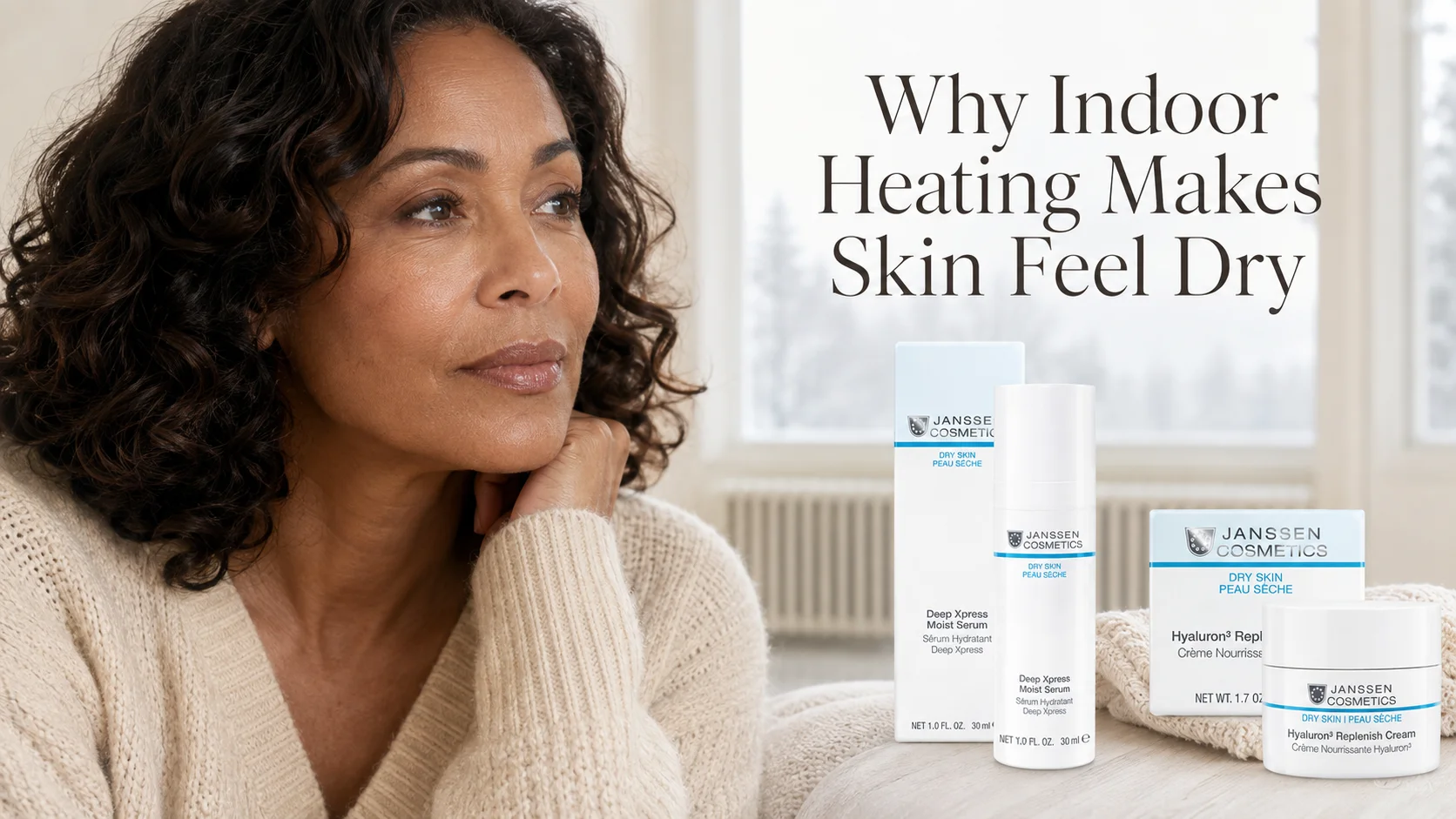
Indoor heating can make skin feel dry, tight, rough, or uncomfortable, especially during colder months.
You may notice that your skin feels fine in the morning but becomes tight after spending hours indoors. Your cheeks may feel dry by the afternoon. Your forehead may feel flaky. Your makeup may cling to dry patches. Even your usual moisturizer may not feel like enough.
This happens because heated indoor air can make the environment feel drier. When the air around you feels dry, your skin may lose comfort more quickly, especially if your routine is too light, your cleanser is too strong, or your skin barrier already feels stressed.
At Zendevie, our licensed esthetician looks at environmental triggers as part of the skincare routine. Dry skin is not only about products. Your daily surroundings can affect how your skin feels.
Indoor heating can make skin feel dry because heated air can create a drier indoor environment, leaving the skin feeling tight, rough, flaky, dull, or dehydrated.
A winter routine for indoor-heating dryness should focus on:
Gentle Cleanser → Hydrating Tonic → Hydrating Serum → Comfort Moisturizer → SPF in the morning
If the skin is painful, cracked, bleeding, swollen, rash-like, severely itchy, or not improving, it should be checked by a dermatologist or healthcare professional.
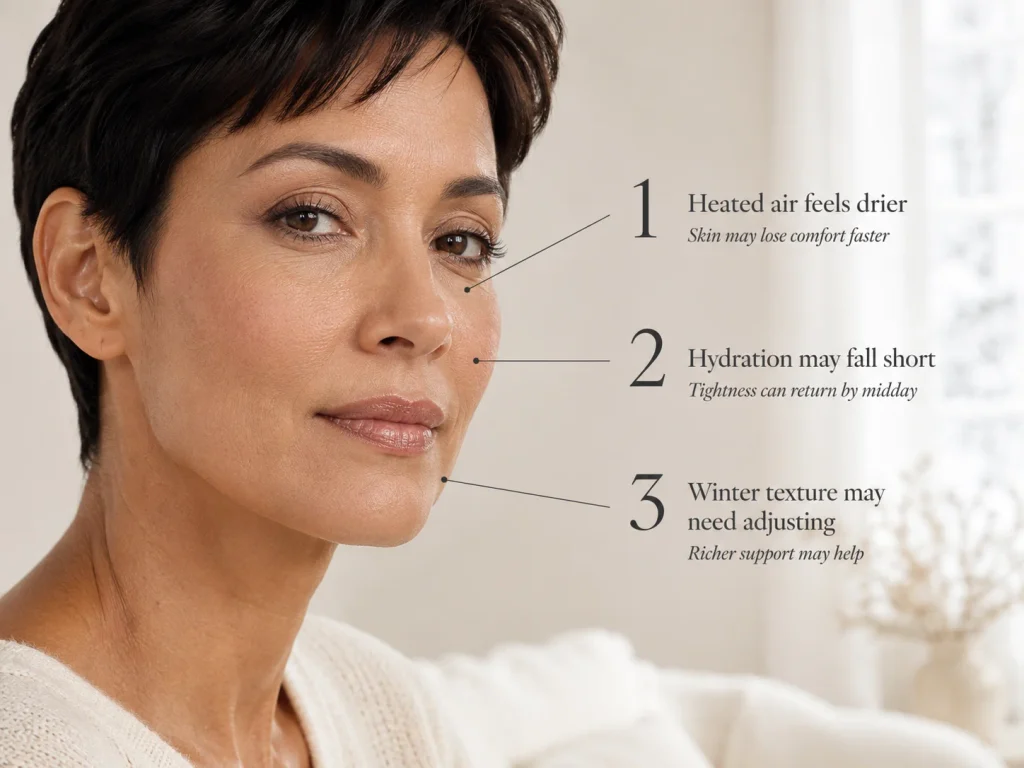
Indoor heating is common in winter, but it can make the air feel less comfortable for the skin.
When the skin is exposed to dry indoor air for many hours, it may start to feel:
This can happen at home, in offices, in cars, in schools, in stores, or anywhere heating is running for long periods.
Tightness is one of the most common signs that dry skin needs more support.
Indoor heating may make tightness feel worse because the skin may not hold comfort as well throughout the day. If your cleanser is harsh or your moisturizer is too light, the tight feeling may become more noticeable.
Your skin may feel tight indoors if:
Indoor dryness often needs routine adjustment, not aggressive treatment.
Winter dryness often comes from more than one source.
Outside, cold air and wind can make the skin feel exposed. Inside, heating can make the air feel dry. If you move between both environments throughout the day, your skin may feel even more uncomfortable.
This combination can make skin feel:
Winter dry skin usually needs more hydration, more comfort, and less irritation.
A moisturizer that works in warmer months may not feel like enough during heated indoor months.
Your moisturizer may be too light if:
In this case, your skin may need a creamier texture, a richer night cream, or more targeted comfort on dry areas.
Indoor heating can make skin feel dehydrated, not just dry.
Dehydrated skin lacks water-based moisture. It may feel tight, dull, or less smooth, even if it does not look very flaky.
Signs your skin may need hydration before cream include:
A hydrating serum before moisturizer may help the routine feel more supportive.
In winter, hot showers and indoor heating often happen together.
A hot shower may feel comforting, but it can leave dry skin feeling tighter afterward. Then, spending the day in heated indoor air can make the skin feel even drier.
A better winter habit is:
Small habit changes can help reduce tightness.
If your cleanser strips the skin, indoor heating may make the dryness more noticeable.
A cleanser may be too harsh if:
Dry skin needs a cleanser that removes makeup, SPF, oil, and buildup without leaving the skin stripped.
When skin feels rough or flaky in winter, it can be tempting to exfoliate more. But over-exfoliation can make dry skin feel tighter and more sensitive.
Be careful with:
If the skin feels stingy, raw, warm, red-prone, or irritated, pause exfoliation and focus on comfort.
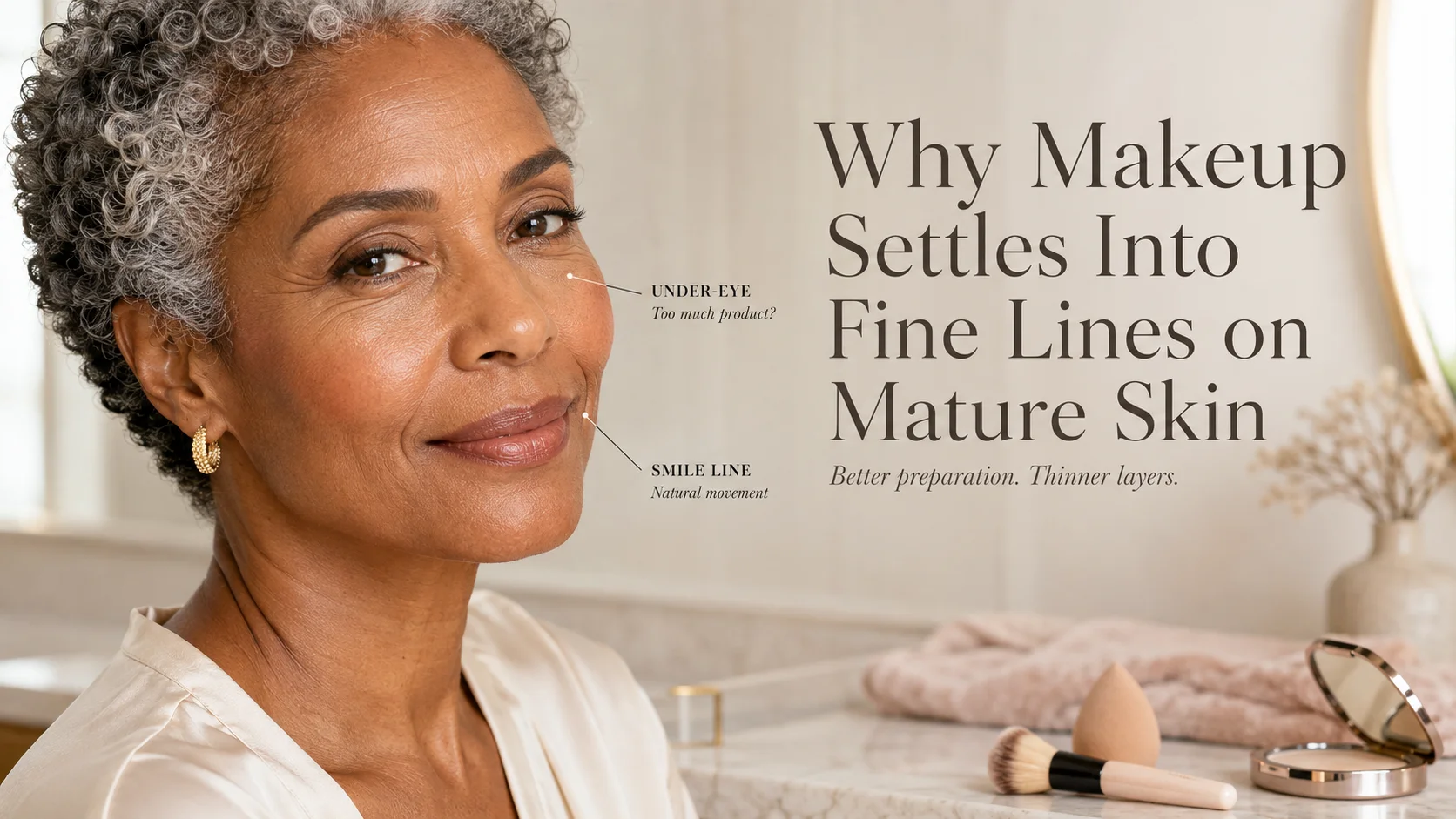
Indoor heating can make makeup and SPF textures behave differently.
Foundation may cling to dry patches. Powder may look heavier. Matte SPF may feel tighter. Concealer may settle more around the eyes.
If your makeup looks dry indoors, your skin may need better prep:
Hydration → Moisturizer → SPF → Makeup
Let skincare settle before applying makeup, and avoid too much powder on dry areas.
Indoor heating may be part of the issue if your skin:
If this pattern sounds familiar, your routine may need more seasonal support.
Your routine does not need to become complicated.
Focus on the basics:
The goal is to support comfort consistently.
Use a cleanser that does not leave the skin tight.
Prepare the skin for serum and moisturizer.
Support water-based hydration if the skin feels tight or dull.
Choose a cream texture that supports softness without feeling too heavy.
Finish with daytime protection.
Morning structure:
Gentle Cleanser → Hydrating Tonic → Hydrating Serum → Comfort Moisturizer → SPF
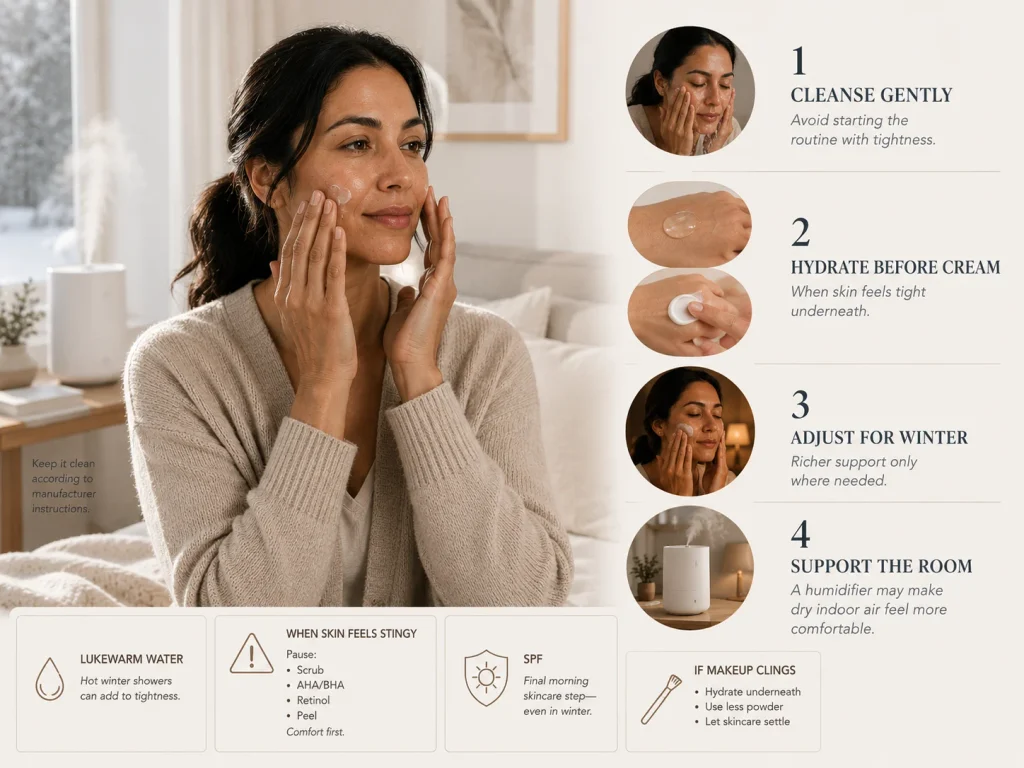
Remove makeup, sunscreen, oil, and daily buildup without stripping.
Use a hydrating tonic or serum if the skin feels tight.
Apply a moisturizer that supports overnight comfort.
Use a richer texture on dry areas if the skin feels dry by morning.
Evening structure:
Gentle Cleanser → Hydration Support → Comfort Cream
Sometimes, yes.
If indoor heating makes your skin feel tight or dry again quickly, a richer moisturizer may help, especially at night.
You may need richer support if:
You do not have to use rich cream everywhere. You can apply more support only where the skin feels dry.
A hydrating serum can be helpful when indoor heating makes the skin feel dehydrated.
It may help if:
Serum should go before moisturizer. It supports hydration, while moisturizer supports comfort.
Be careful.
If flakes are caused by dryness or barrier stress, exfoliating more may make the skin worse.
Gentle exfoliation may be considered only when the skin feels stable and not irritated. If the skin feels tight, burning, stingy, cracked, or raw, pause exfoliation.
Dry winter skin usually needs hydration and comfort first.
A humidifier may help some people feel more comfortable in dry indoor environments.
It is not a replacement for skincare, but it may support a less drying environment, especially in bedrooms during winter.
If you use a humidifier, keep it clean according to the manufacturer’s instructions.
If your skin feels dry during the day in heated indoor air, look at your morning routine first.
You may need:
Try not to keep washing your face during the day, because repeated cleansing can make dryness worse.
Nighttime is important for indoor-heating dryness.
Before bed:
If you wake up dry every morning, your evening routine may need richer support.
Indoor heating can make dry skin worse, but if the skin becomes painful or rash-like, it may need evaluation.
See a dermatologist or healthcare professional if your skin is:
Skincare can support comfort, but it cannot diagnose or treat medical skin conditions.
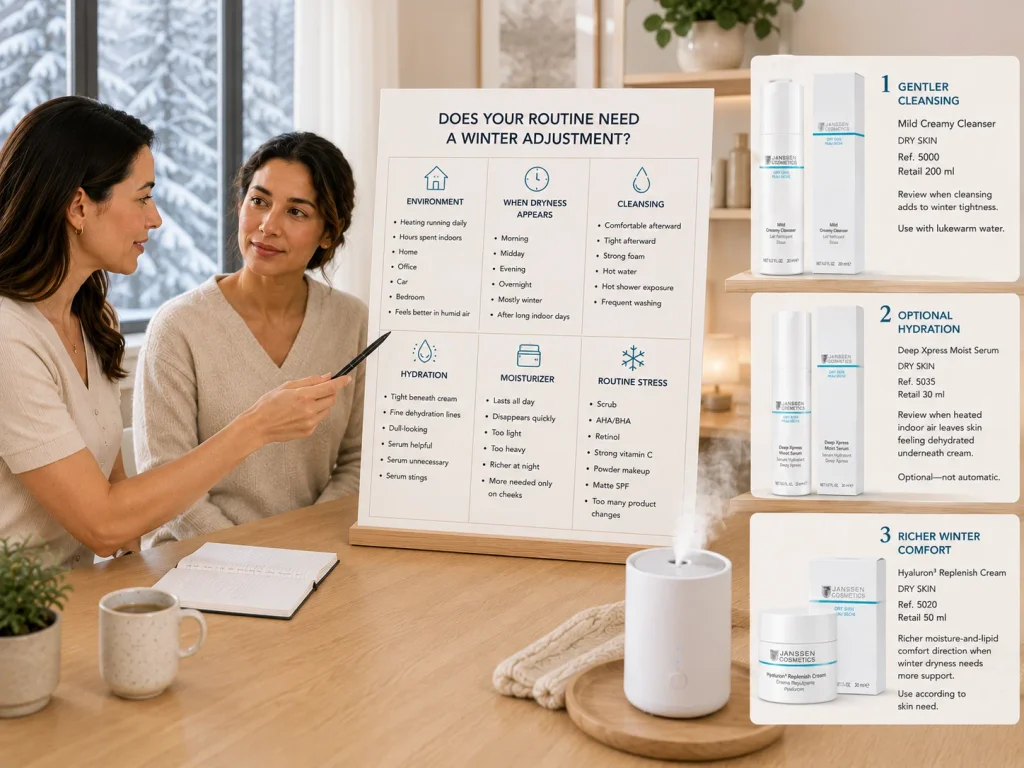
Products that may be discussed during a Zendevie consultation for indoor-heating dryness include:
If the skin feels dry and sensitive from winter conditions, sensitive skin support may also be discussed, such as:
These are examples only. A consultation helps decide whether your skin needs more hydration, richer night care, barrier comfort, less exfoliation, or a seasonal routine adjustment.
Do not ignore indoor heating as a dry skin trigger.
Do not use hot showers to “soften” dry skin.
Do not scrub flakes aggressively.
Do not keep using a cleanser that leaves skin tight.
Do not skip moisturizer because the skin feels irritated.
Do not rely on serum alone if your skin needs cream comfort.
Do not skip SPF in winter.
Do not ignore painful, cracked, bleeding, swollen, crusting, or rash-like skin.
Indoor heating can make the air feel dry, which may leave the skin feeling tight, rough, flaky, dull, or dehydrated.
Winter dryness can come from cold air, wind, indoor heating, hot showers, and heavier time spent indoors.
Use gentle cleansing, lukewarm water, hydrating serum, comfort moisturizer, richer night care if needed, and SPF in the morning.
You may need a richer moisturizer, especially at night, if your skin feels dry again quickly or tight by morning.
Yes. Heated indoor air can make dry patches more noticeable, especially if the skin is not hydrated and moisturized before makeup.
A humidifier may help some people feel more comfortable in dry indoor environments, but it should be used with proper cleaning and does not replace skincare.
See a dermatologist if dry skin is painful, cracked, bleeding, swollen, crusting, rash-like, severely itchy, infected-looking, or not improving.

Zendevie is guided by Haby Diallo, a licensed esthetician with more than 20 years of professional skincare experience. Her approach is rooted in education, professional judgment, and personal care.
years of experience