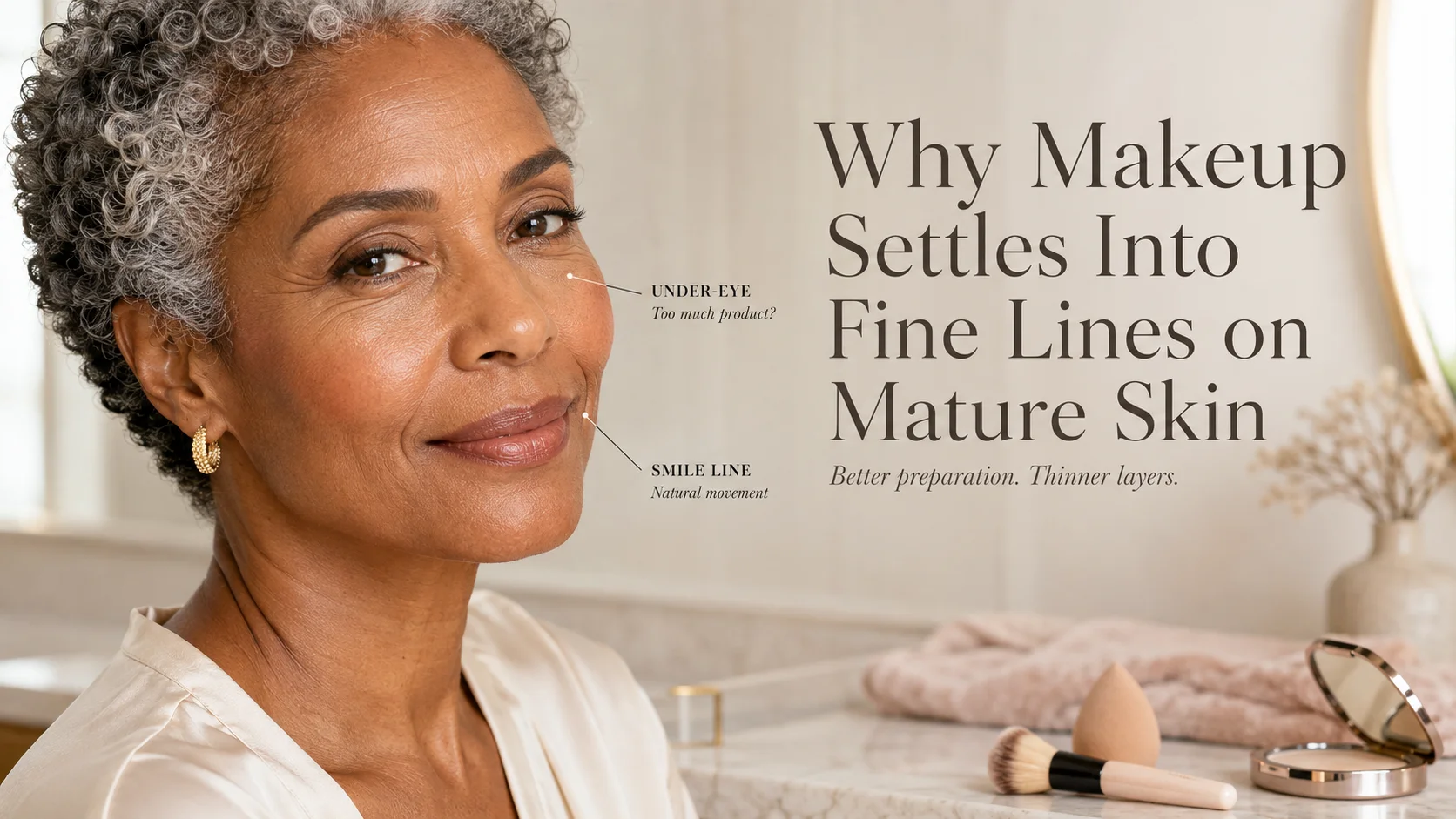

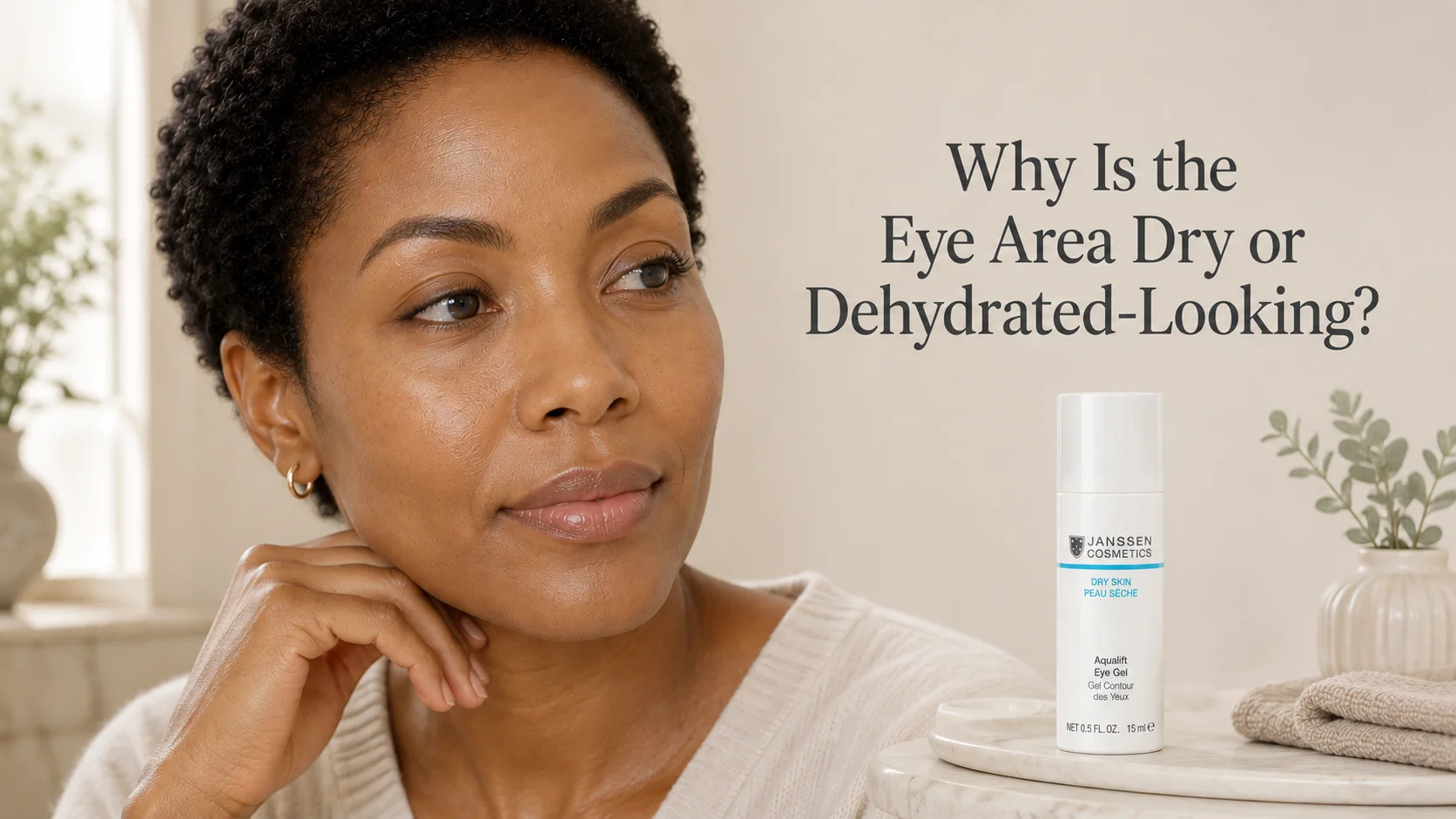
The eye area is one of the first places where dryness, dehydration, and texture can show. The skin may look crepey, dull, tired, tight, or less smooth. Makeup may settle into fine-looking lines, concealer may crease, or the area may feel dry even when the rest of the face feels comfortable.
This area is delicate, so it should not be treated aggressively. Dryness around the eyes can happen from cleansing habits, makeup removal, rubbing, weather, dehydration, sun exposure, air conditioning, aging-related changes, or using active products too close to the eye area.
At Zendevie, our licensed esthetician looks at the eye area gently. The goal is not to overload it with strong products. The goal is to support hydration, comfort, and protection while respecting how delicate this area can be.
The eye area may look dry or dehydrated because of gentle moisture loss, dehydration, harsh cleansing, rubbing, makeup removal, weather, air conditioning, sun exposure, aging-related skin changes, or strong active products used too close to the eyes.
A gentle eye-area routine may include:
Gentle Cleanser → Hydrating Support → Eye-Area Comfort Product if Appropriate → Moisturizer → SPF in the morning
If the eye area is painful, swollen, itchy, crusting, infected-looking, rash-like, suddenly changing, or affecting the eyes themselves, it should be checked by a dermatologist, eye doctor, or healthcare professional.
The eye area is delicate and expressive. It moves when you smile, blink, squint, talk, apply makeup, or remove makeup. Because of this, dryness and dehydration can become noticeable quickly.
Dry or dehydrated-looking eyes may appear as:
This area often needs gentle support, not heavy rubbing or strong active products.
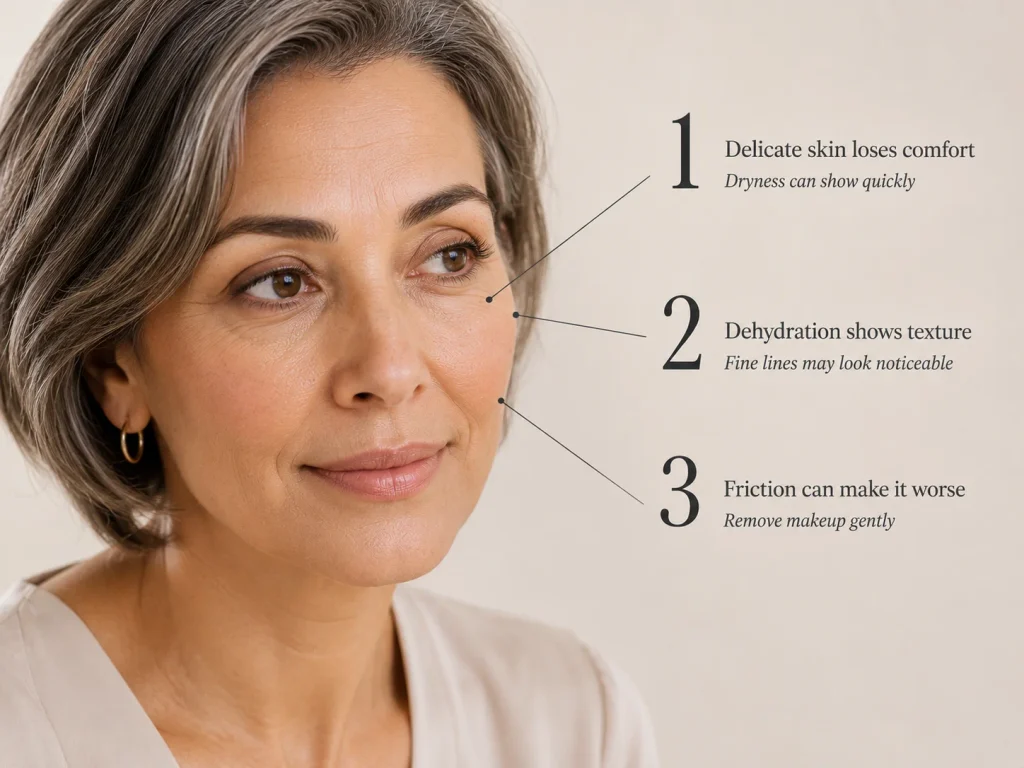
The eye area can be dry, dehydrated-looking, or both.
Dryness usually means the area lacks comfort, softness, or oil support. It may feel tight, rough, or flaky.
Dehydrated-looking skin usually means the area lacks water-based moisture. It may look crepey, tired, or fine-lined even if it is not visibly flaky.
This is why the eye area often benefits from both hydration and comfort.
A helpful approach may be:
Hydration first, comfort second, protection during the day.
If your cleanser leaves your face tight, the eye area may feel even drier.
The skin around the eyes is more delicate than many other areas of the face. A cleanser that feels acceptable on the forehead or nose may still feel too strong around the eyes.
Your cleanser may be too harsh if:
A gentle cleanser should clean the skin without leaving the eye area stripped.
Eye makeup removal is a common reason the eye area becomes dry or irritated-looking.
Rubbing to remove mascara, eyeliner, concealer, or long-wear makeup can create friction. Over time, the area may feel dry, sensitive, or rough.
Try to avoid:
Be gentle. Press, soften, and remove carefully instead of rubbing.
Concealer can make the eye area look drier if the skin underneath is not hydrated or comfortable.
Powder can also make under-eye dryness look more noticeable, especially if the area already looks crepey or dehydrated.
Makeup may make the eye area look dry when:
The solution is not always more makeup. Often, the skin prep needs adjustment.
The eye area can look dehydrated even if the rest of the face does not feel very dry.
Dehydrated-looking under-eyes may show:
A hydrating step can help support the look of the skin before moisturizer or eye-area comfort care.
Cold weather, wind, indoor heating, and air conditioning can all make the eye area feel dry or dehydrated-looking.
This may be more noticeable in winter, during travel, after flights, or after long days in air-conditioned rooms.
The eye area may need extra comfort when the environment is dry.
Sun exposure can make the eye area look drier, duller, and more tired over time.
The eye area is often exposed to sunlight, and people sometimes avoid applying SPF near the eyes because they worry about stinging. But this area still needs daytime protection.
Choose SPF carefully and avoid getting product into the eyes.
Sunglasses and shade can also support daytime protection around the eye area.
Many active products are not meant to be applied close to the eyes unless they are specifically designed for that area.
The eye area may become dry or irritated-looking if you apply these too close:
These ingredients may have a place in some routines, but the eye area needs caution.
If the area feels stingy, burning, or irritated, pause strong products and focus on comfort.
The eye area may look drier or more crepey as skin matures.
This can happen because the eye area is delicate and shows texture, dehydration, and movement more easily. Mature skin may need more hydration, comfort, and SPF consistency.
A mature eye-area routine should be gentle, not aggressive.
It may need:
The eye area can look more dehydrated after poor sleep, stress, travel, flights, or schedule changes.
Skincare cannot replace rest, but a gentle routine can help the eye area feel more supported.
After travel or poor sleep, keep the routine simple:
Start with gentle support.
A simple approach may include:
The eye area should feel comfortable, not overloaded.
Use a cleanser that does not leave the face tight.
Apply a gentle hydrating serum to the face if tolerated, avoiding direct contact with the eyes.
Use a small amount of eye-area product if your skin tolerates it.
Apply moisturizer to the face, being careful around the eye area.
Apply SPF carefully as the final daytime step. Avoid getting product into the eyes.
Morning structure:
Gentle Cleanser → Hydrating Support → Eye-Area Comfort → Moisturizer → SPF
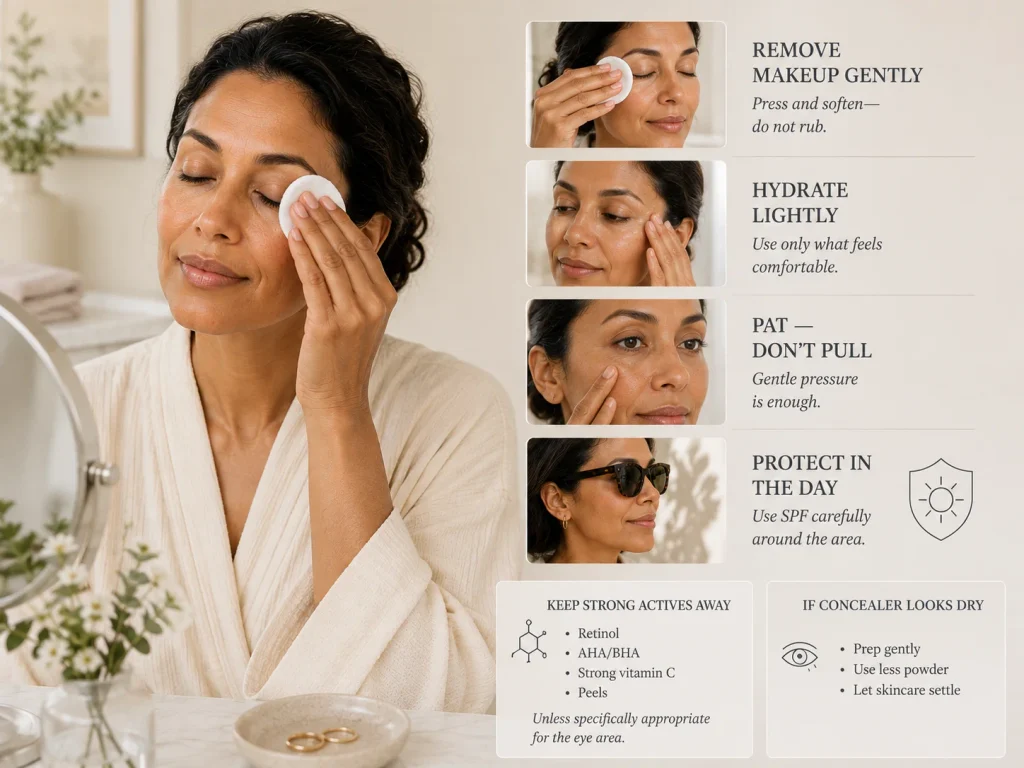
Remove eye makeup without rubbing or pulling.
Cleanse the face without stripping the skin.
Use gentle hydration if tolerated.
Apply a small amount to support comfort.
Use a comfort moisturizer on the face to support the rest of the routine.
Evening structure:
Gentle Makeup Removal → Gentle Cleanser → Hydration → Eye-Area Comfort → Moisturizer
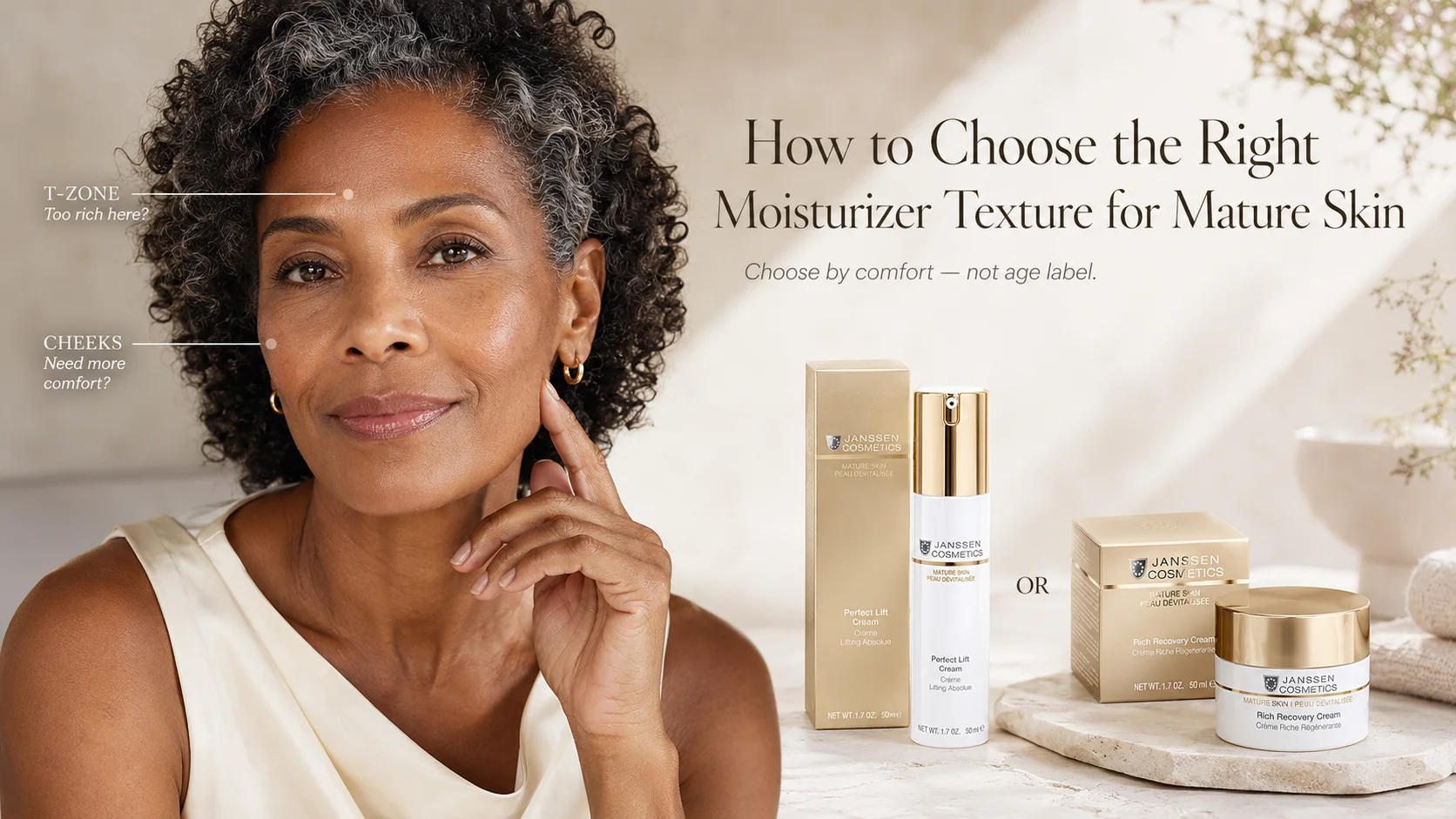
Some face moisturizers may be tolerated near the orbital area, but not every face cream is right for the eye area.
Be careful with moisturizers that contain strong actives, fragrance-heavy formulas, exfoliating ingredients, or rich textures that may migrate into the eyes.
If the eye area reacts easily, use products designed for sensitive-feeling or eye-area care when appropriate.
Do not apply product directly into the eyes.
An eye cream or eye-area product may be helpful when the area feels dry, tight, or uncomfortable, but it is not magic.
Eye-area products can support comfort and hydration, but they should still be part of a full routine that includes gentle cleansing, moisturizer, and SPF during the day.
An eye-area product may help if:
The right product depends on tolerance.
Usually, be very careful.
The eye area is delicate and should not be scrubbed. Strong exfoliating products should not be applied close to the eyes unless they are specifically made for that area and used appropriately.
If the eye area looks dry or crepey, focus on hydration and comfort first.
Do not scrub under-eye dryness.
If eye cream stings every time, stop using it and review the routine.
Stinging may happen because:
If stinging continues, or if there is swelling, rash-like irritation, pain, or eye involvement, seek professional evaluation.
Use a gentle touch.
Helpful habits include:
Gentleness matters as much as the product.
Your routine may be helping if:
The eye area often needs consistency and patience.
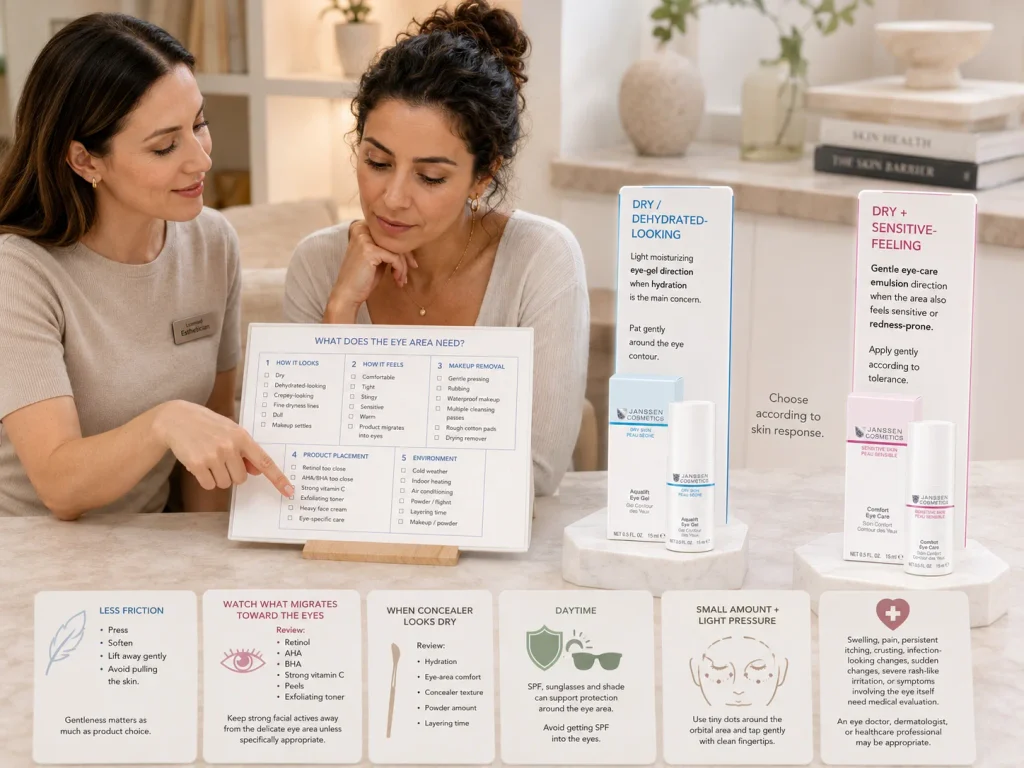
Products that may be discussed during a Zendevie consultation for dry or dehydrated-looking eye area include:
If the skin around the eyes feels dry and sensitive, sensitive skin support may also be discussed, such as:
These are examples only. A consultation helps decide whether the eye area needs hydration, gentler makeup removal, barrier comfort, eye-area support, or fewer active products near the eyes.
Do not scrub the eye area.
Do not rub aggressively when removing makeup.
Do not apply strong active products too close to the eyes.
Do not use products that repeatedly sting or burn.
Do not overload the eye area with heavy layers.
Do not use too much powder if the area looks dry.
Do not skip SPF during the day.
Do not ignore swelling, pain, rash-like irritation, crusting, infection signs, or eye discomfort.
The eye area may look dry or dehydrated because of cleansing, rubbing, makeup removal, weather, air conditioning, sun exposure, mature skin changes, dehydration, or strong active products used too close to the eyes.
Concealer may look dry when the skin underneath is dehydrated, rough, not moisturized enough, or when too much powder is used.
Some face moisturizers may be tolerated around the orbital area, but avoid strong actives, fragrance-heavy products, and applying product directly into the eyes.
An eye-area product may help support comfort and hydration, but it should be used gently and as part of a complete routine.
Yes. Retinol-style products can make the eye area feel dry or irritated if used too close or too often.
Be very careful. The eye area should not be scrubbed, and strong exfoliating products should not be used close to the eyes unless designed for that area and appropriate for your skin.
Seek professional care if the eye area is swollen, painful, itchy, crusting, infected-looking, rash-like, suddenly changing, or if your eyes themselves feel irritated.

Zendevie is guided by Haby Diallo, a licensed esthetician with more than 20 years of professional skincare experience. Her approach is rooted in education, professional judgment, and personal care.
years of experience