

A dry or flaky forehead can feel confusing, especially if the forehead also gets shiny or oily during the day. You may notice flakes near the hairline, rough patches between the brows, tightness after cleansing, or makeup clinging to the area.
Sometimes the forehead is truly dry. Sometimes it is dehydrated. Sometimes it is irritated from cleansing, exfoliation, hair products, weather, or a stressed skin barrier.
At Zendevie, our licensed esthetician looks at where the dryness appears and what may be triggering it. A dry forehead does not always need scrubbing. It may need gentler cleansing, hydration, moisturizer texture adjustment, or fewer active products.
Your forehead may be dry or flaky because of harsh cleansing, dehydration, over-exfoliation, hair products, weather, indoor heating, sun exposure, hot water, or a stressed skin barrier.
A simple supportive routine may look like:
Gentle Cleanser → Hydrating Tonic → Hydrating Serum → Moisturizer → SPF in the morning
If the forehead is painful, itchy, cracked, bleeding, swollen, crusting, rash-like, infected-looking, or not improving, it should be checked by a dermatologist or healthcare professional.

The forehead is part of the T-zone, so many people expect it to be oily. But the forehead can still feel dry, tight, or flaky.
This can happen when the skin lacks hydration, when the cleanser is too harsh, or when the area is irritated by products, weather, or exfoliation.
A dry forehead may feel:
The key is to understand whether the forehead is dry, dehydrated, irritated, or reacting to something nearby.
A cleanser that strips the skin can make the forehead feel tight or flaky.
This may happen if the cleanser is designed mainly for oil control, acne-prone skin, or a squeaky-clean finish. Even if your T-zone gets shiny, the forehead may still become dehydrated or irritated from harsh cleansing.
Your cleanser may be too strong if:
The forehead should feel clean, not stripped.
A dehydrated forehead may look shiny but still feel tight. This is because oil and water are not the same.
The forehead can produce oil while still lacking water-based hydration.
Signs of a dehydrated forehead include:
A hydrating serum before moisturizer may help when dehydration is part of the concern.
Many people exfoliate the forehead because it feels rough, textured, or congested. But too much exfoliation can make the skin flaky and sensitive.
Be careful with:
Over-exfoliated forehead skin may feel tight, stingy, warm, rough, or dry even after moisturizer.
If the skin feels irritated, pause exfoliation and focus on comfort first.
Hair products can touch the forehead, especially near the hairline.
Leave-in conditioners, oils, gels, sprays, edge control products, dry shampoo, fragrance-heavy products, or styling creams may sit on the skin and cause dryness, irritation, or clogged-looking texture for some people.
This may be more noticeable if dryness appears:
Try keeping hair products away from the forehead and cleanse the hairline gently.
Cold weather, wind, and indoor heating can make the forehead feel dry or flaky.
In winter, the forehead may feel tight after cleansing or rough by the end of the day. Indoor heating can also make the skin feel dehydrated.
The routine may need:
Seasonal dryness often needs routine adjustment, not aggressive scrubbing.
Sun exposure can make the forehead look dull, rough, or dry.
The forehead is often exposed to the sun, especially when hair is pulled back or when SPF is applied unevenly.
If the forehead looks dry after sun exposure, focus on hydration, moisturizer, and SPF consistency. Avoid strong exfoliation if the area feels sensitive or warm.
If the skin is burned, painful, blistering, swollen, or concerning, seek healthcare advice.
Hot water can make forehead dryness worse.
This may happen if hot shower water runs over the face, or if you wash your face with water that is too warm. The forehead may feel tight afterward, especially between the brows or near the hairline.
Use lukewarm water and cleanse gently.
The goal is to clean the skin without removing comfort.
The forehead can become dry-looking when makeup, SPF, primer, or powder does not layer well.
This may happen when:
If makeup clings to forehead flakes, skincare prep may need adjustment.
If the forehead is dry and sensitive at the same time, the skin barrier may feel stressed.
Signs may include:
When this happens, simplify the routine and pause strong active products.
Comfort comes before correction.
Start with gentle care.
A simple approach may include:
The goal is to support the forehead without over-treating it.
Use a cleanser that does not leave the forehead tight.
Prepare the skin for serum and moisturizer.
Use if the forehead feels tight, dull, or dehydrated.
Apply a comfortable moisturizer. Use a lighter amount if the forehead gets oily, but do not skip it if the area feels dry.
Finish with daytime protection.
Morning structure:
Gentle Cleanser → Hydrating Tonic → Hydrating Serum → Moisturizer → SPF

Remove sunscreen, makeup, hair product residue, oil, and buildup without stripping.
Use a gentle tonic only if it does not sting.
Use hydrating serum if the forehead feels dehydrated.
Apply moisturizer to support the skin overnight.
Evening structure:
Gentle Cleanser → Hydrating Support → Comfort Moisturizer
Be careful.
If flakes are caused by surface buildup and the skin feels stable, gentle exfoliation may be considered. But if the forehead feels stingy, warm, raw, cracked, or irritated, exfoliation can make it worse.
Do not scrub forehead flakes aggressively.
A flaky forehead often needs hydration and comfort before exfoliation.
The forehead can be oily and flaky at the same time.
This may happen when the skin is dehydrated, over-cleansed, over-exfoliated, or irritated. The skin may produce oil on the surface while still feeling tight underneath.
A balanced routine may include:
Do not assume oily-looking skin does not need moisture.
Flakes near the hairline may be connected to hair products, cleansing residue, sweat, scalp dryness, or irritation.
Try:
If flakes are persistent, itchy, thick, crusting, spreading, or uncomfortable, seek professional evaluation.
Your forehead routine may be helping if:
Consistency matters. Avoid changing too many products at once.

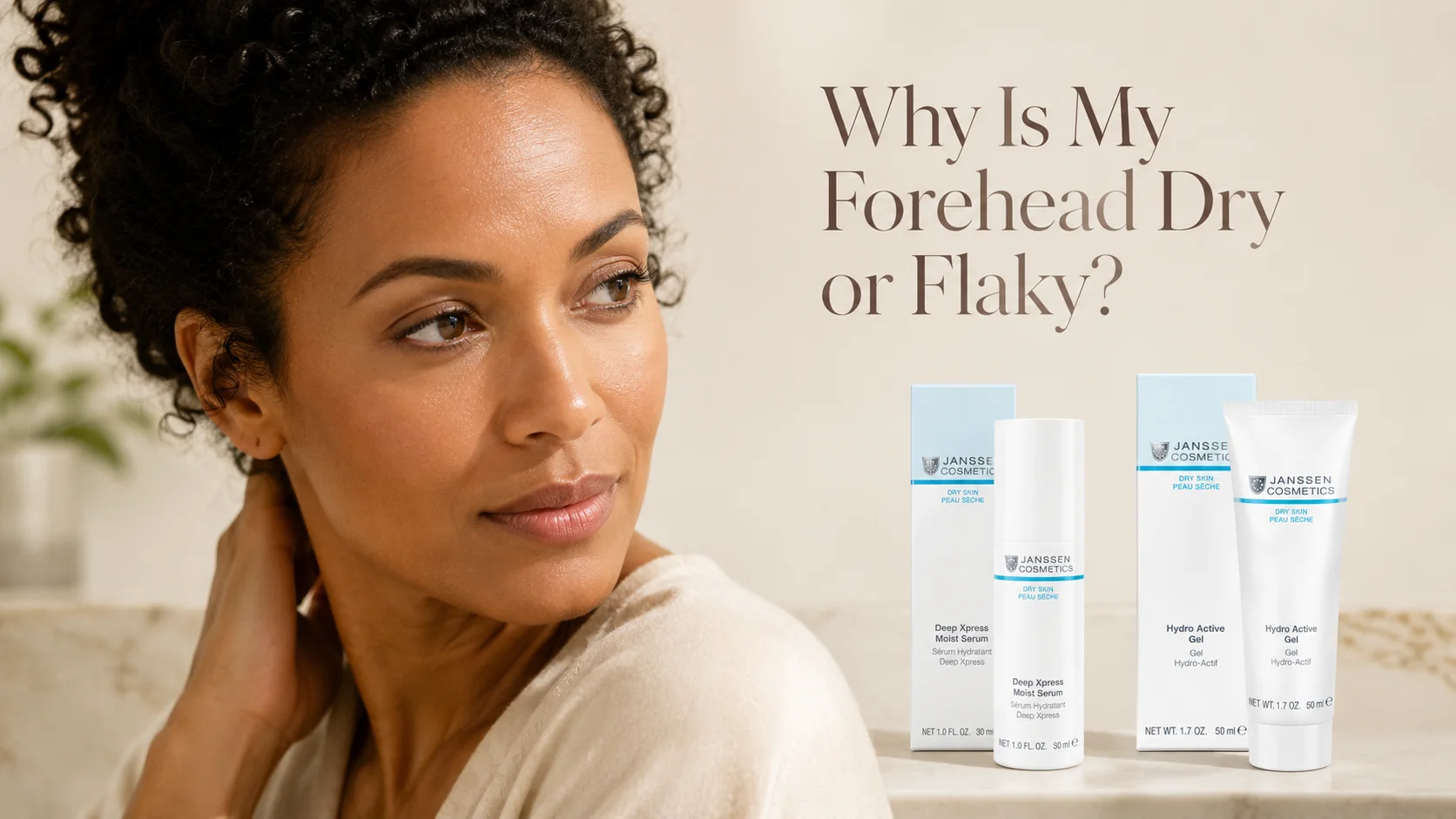
Products that may be discussed during a Zendevie consultation for a dry or flaky forehead include:
If the forehead feels dry and sensitive, sensitive skin support may also be discussed, such as:
These are examples only. A consultation helps decide whether the forehead needs lightweight hydration, moisturizer texture adjustment, barrier support, hair-product review, or fewer active products.
Do not scrub forehead flakes aggressively.
Do not use a harsh cleanser that leaves the forehead tight.
Do not skip moisturizer because the forehead gets shiny.
Do not use strong exfoliating products if the area feels stingy or irritated.
Do not apply hair products onto the forehead skin.
Do not skip SPF.
Do not ignore painful, itchy, cracked, bleeding, swollen, crusting, or rash-like skin.
Your forehead may be dry or flaky because of harsh cleansing, dehydration, over-exfoliation, hair products, weather, sun exposure, hot water, or barrier stress.
Yes. The forehead can look oily but still feel dehydrated or tight underneath.
Yes, but choose the right texture and amount. A lightweight moisturizer or hydrating serum may help without feeling heavy.
Hair products may affect the forehead, especially near the hairline, if they irritate the skin or leave residue.
Only if the skin feels stable. If the forehead feels stingy, burning, raw, or irritated, pause exfoliation and focus on comfort.
Makeup may cling because the forehead is dry, dehydrated, rough, flaky, over-cleansed, or not moisturized properly.
See a dermatologist if the forehead is painful, itchy, cracked, bleeding, swollen, crusting, rash-like, infected-looking, spreading, or not improving.

Zendevie is guided by Haby Diallo, a licensed esthetician with more than 20 years of professional skincare experience. Her approach is rooted in education, professional judgment, and personal care.
years of experience