



Dry and sensitive skin can be difficult to manage because the skin needs moisture, but it may also react easily.
A cream may feel too heavy. A cleanser may leave the face tight. A serum may sting. A product that works for someone else may make your skin feel warm, red-prone, or uncomfortable.
This is why dry and sensitive skin should not be treated with a harsh or complicated routine. It needs a gentle structure that supports hydration, comfort, and barrier care without overwhelming the skin.
At Zendevie, our licensed esthetician looks at both sides of the concern: the dryness and the sensitivity. The goal is not to force the skin into a strong routine. The goal is to help the skin feel calmer, softer, and more supported.
A gentle routine for dry and sensitive skin should include mild cleansing, soothing hydration, a comforting moisturizer, barrier-support care, and SPF during the day.
The routine should avoid harsh scrubs, strong acids, aggressive exfoliation, fragrance-heavy products, and too many active ingredients at once.
If the skin is painful, cracked, bleeding, swollen, infected-looking, rash-like, or suddenly changing, it should be checked by a dermatologist or healthcare professional.
Dry and sensitive skin may feel different from regular dry skin.
Dry skin often feels tight, rough, flaky, or undernourished. Sensitive skin may sting, burn, flush, or react easily.
When the two happen together, the skin may feel:
This skin type often needs patience and consistency.
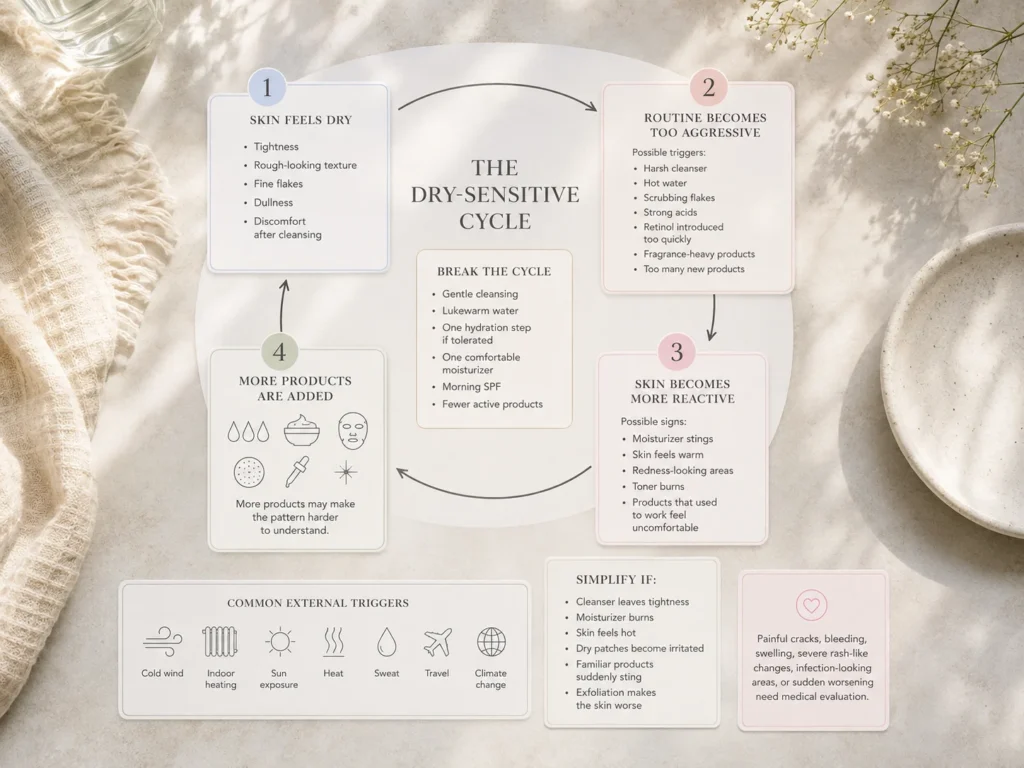
Dry skin can become more sensitive when the skin barrier feels stressed.
The skin barrier helps keep moisture in and helps protect the skin from outside stress. When the skin is dry, over-cleansed, over-exfoliated, or exposed to harsh weather, the barrier may feel less comfortable.
This can make the skin react more easily to products.
Common triggers include:
Dry and sensitive skin usually needs a calmer routine before active correction.
Cleansing is important, but dry and sensitive skin should not feel stripped after washing.
If your cleanser leaves your face tight, squeaky, or uncomfortable, it may be too strong. A cleanser should remove makeup, sunscreen, oil, and daily buildup without making the skin feel raw.
A gentle cleanser should leave the skin feeling:
For dry and sensitive skin, cleansing once in the evening may be the most important step. Morning cleansing can be lighter depending on how the skin feels.
Water temperature matters.
Hot water can make dry and sensitive skin feel tighter and more uncomfortable. It may also make the skin feel warm or reactive after cleansing.
Use lukewarm water instead.
The goal is to cleanse the skin gently, not shock it.
Dry and sensitive skin often needs hydration before cream.
Hydration-support ingredients can help the skin feel fresher and less tight. This step should feel calming, not active or stingy.
Helpful hydration-support categories may include:
If the skin stings easily, keep this step simple. Do not layer multiple serums at once.
Dry and sensitive skin usually needs a moisturizer that supports softness and comfort.
The texture should be chosen carefully. A moisturizer that is too light may not give enough comfort. A moisturizer that is too rich may feel heavy or irritating if the skin does not tolerate it.
A good comfort cream should help the skin feel:
If your skin is very sensitive, avoid switching creams too often. Give the skin a simple routine to follow.
Dry and sensitive skin still needs daytime protection.
Sun exposure can make the skin look duller, drier, more uneven, and more stressed over time. If you are using any radiance-support, exfoliating, or renewal-support ingredients, SPF becomes even more important.
Choose an SPF texture your skin can tolerate.
The best SPF is the one your skin can use consistently without feeling overly greasy, drying, or irritating.
If the skin feels very dry or sensitive in the morning, keep cleansing gentle.
Use a gentle tonic only if the skin tolerates it well. It should not burn or leave the skin tight.
Use a calming hydrating serum if the skin feels tight, dull, or dehydrated.
Apply a moisturizer that supports softness and comfort.
Finish with daytime protection.
Morning structure:
Gentle Cleanse → Soothing Tonic → Hydration Support → Comfort Cream → SPF

Remove sunscreen, makeup, and daily buildup without scrubbing.
Prepare the skin gently if tolerated.
Use one calming or hydrating serum if the skin needs support.
Apply a cream that helps the skin feel supported overnight.
Evening structure:
Gentle Cleanser → Soothing Tonic → Calming Serum → Comfort Cream
Dry and sensitive skin should avoid aggressive routines.
Be careful with:
These ingredients and steps may have a place for some skin types, but dry and sensitive skin needs timing and tolerance.
If the skin feels irritated, do not push it.
If your skin feels stingy, burning, warm, tight, or more reactive than usual, pause strong active products.
This may include:
During this time, focus on gentle cleansing, hydration, comfort cream, and SPF.
Comfort comes before correction.
Dry and sensitive skin should introduce new products slowly.
A safer approach is:
This helps you understand what your skin tolerates.
Your routine may be too strong if:
When this happens, simplify the routine.
A gentle routine may be supporting your skin if:
Dry and sensitive skin may need time. Consistency matters.
Products that may be discussed during a Zendevie consultation depend on whether the skin is more dry, more sensitive, or both.

For dry skin support, products that may be discussed include:
For sensitive-feeling skin support, products that may be discussed include:
These are examples only. A consultation helps decide which direction should come first: dry skin hydration, sensitive skin comfort, or barrier-focused support.
Do not use a harsh cleanser because your skin feels flaky.
Do not scrub dry patches aggressively.
Do not layer retinol, acids, vitamin C, and exfoliation together.
Do not keep using a product that repeatedly burns.
Do not skip moisturizer because your skin feels irritated.
Do not skip SPF.
Do not change your entire routine every few days.
Do not ignore painful, cracked, bleeding, swollen, or rash-like skin.
A gentle routine with mild cleansing, soothing hydration, comfort cream, and SPF during the day is often best.
Dry skin can become sensitive when the skin barrier feels stressed, especially from harsh cleansing, over-exfoliation, weather, or strong active products.
Only carefully. If the skin feels stingy, tight, burning, or irritated, exfoliation should wait.
Yes, but choose hydrating or calming serums and avoid layering too many active products at once.
It depends on the skin. Some dry-sensitive skin needs a comforting cream, while very dry areas may need richer support. The texture should not sting or feel heavy in an uncomfortable way.
If the skin feels irritated, tight, burning, or reactive, retinol may need to be paused and reintroduced carefully later if appropriate.
See a dermatologist if the skin is painful, cracked, bleeding, swollen, infected-looking, rash-like, suddenly changing, or not improving.

Zendevie is guided by Haby Diallo, a licensed esthetician with more than 20 years of professional skincare experience. Her approach is rooted in education, professional judgment, and personal care.
years of experience