


Best Ingredients for Dry Skin: What to Look for in a Hydrating Routine
When your skin feels dry, it is easy to think you just need a thicker cream. Sometimes you do. But many times, dry skin needs a thoughtful mix of ingredients that support hydration, softness, comfort, and barrier feel.
The best dry skin routine is not about using the heaviest product you can find. It is about understanding what each ingredient category does.
Some ingredients help attract water. Some help soften the skin. Some help support the barrier. Some help comfort tightness. When they work together, the skin can feel smoother, softer, and more supported.
At Zendevie, dry skin care is never about guessing. It is about matching the routine to what your skin is showing.
Quick Answer
The best ingredients for dry skin often include hyaluronic acid, glycerin, saccharide isomerate, shea butter, avocado oil, macadamia oil, panthenol, allantoin, and barrier-supporting lipids.
Dry skin usually benefits from both hydration and comfort. A hydrating serum can support water, while a moisturizer can help the skin feel softer and more protected.
If moisturizer alone has not been enough, it may help to understand why your skin still feels dry after moisturizing before choosing new products.
Why Ingredients Matter for Dry Skin
Dry skin can happen when the skin does not have enough moisture, enough oil, or enough barrier comfort. That means one ingredient usually cannot do everything.
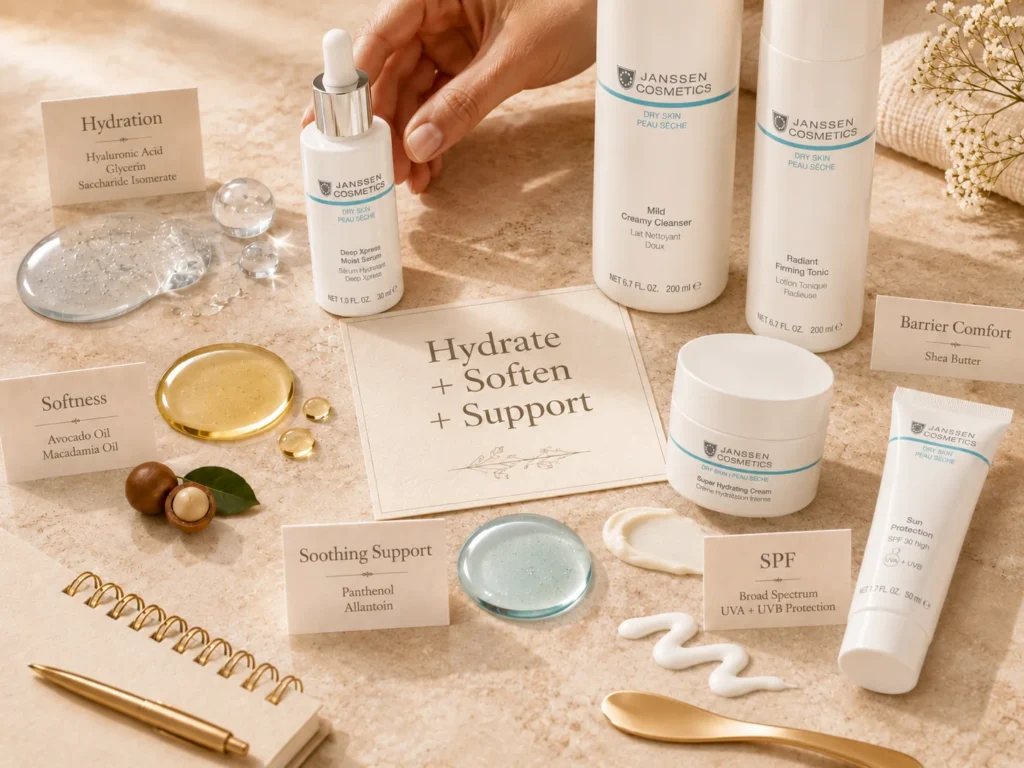
A strong dry skin routine often includes:
- Humectants to support hydration
- Emollients to soften the skin
- Lipid-support ingredients to improve comfort
- Soothing ingredients to help the skin feel calmer
- SPF to protect during the day
When the skin feels very dry, the routine should work in layers.
Hyaluronic Acid
Hyaluronic acid is one of the most popular ingredients for dry and dehydrated-looking skin. It helps support the appearance of hydration and can make the skin look smoother and fresher.
It is especially helpful when the skin looks dull or when fine-looking lines appear more noticeable because the skin is dehydrated.
For dry skin, hyaluronic acid works best when followed by moisturizer. If you apply a hydrating serum but do not seal it with cream, your skin may still feel dry later.
Best for: dehydrated-looking skin, tightness, dullness, fine-looking dryness lines.
Glycerin
Glycerin is a classic hydration-support ingredient. It helps the skin feel more moisturized and comfortable.
It is often found in cleansers, tonics, serums, and creams because it supports the skin’s water balance.
Best for: everyday hydration, tight-feeling skin, dry skin routines.
Saccharide Isomerate
Saccharide isomerate is a moisture-support ingredient used in some skincare formulas to help the skin feel hydrated for longer.
For dry skin, this type of ingredient can be helpful when the skin feels dry again quickly after applying moisturizer.
Best for: skin that loses comfort quickly, moisture support, long-lasting hydration feel.
Shea Butter
Shea butter is a nourishing ingredient often used in richer creams. It helps the skin feel soft, smooth, and more comfortable.
For dry or lipid-deficient skin, shea butter can be especially helpful because the skin often needs more than water. It needs comfort and nourishment.
Best for: rough skin, dry patches, richer night creams, winter dryness.
Avocado Oil
Avocado oil is used in many nourishing skincare formulas for dry skin. It helps support softness and comfort, especially in cleansing milks and creams made for dry skin.
For people whose skin feels tight after cleansing, an avocado oil-based or nourishing cleanser may feel more comfortable than a harsh foaming cleanser.
Best for: dry skin cleansing, softening support, comfort.
Macadamia Oil
Macadamia oil is a rich emollient ingredient that helps dry skin feel smoother and more nourished. It is often used in formulas that focus on barrier comfort and softness.
Best for: dry, rough, undernourished-feeling skin.
Panthenol
Panthenol, also known as provitamin B5, is commonly used to support hydration and comfort. It is a helpful ingredient when dryness makes the skin feel tight or stressed.
Best for: tightness, dryness, skin comfort.
Allantoin
Allantoin is often used in gentle skincare formulas because it helps support a calmer, more comfortable skin feel.
For dry skin that also feels sensitive, allantoin can be a useful ingredient category to look for.
Best for: dry-sensitive skin, comfort, tightness.
Gentle Exfoliating Ingredients
Dry skin can look dull when dead surface buildup is present. Gentle exfoliating ingredients can help smooth the appearance of texture, but they should be used carefully.
Dry skin does not need aggressive scrubbing. If the skin is cracked, painful, burning, or very sensitive, exfoliation should wait.
Best for: dullness and rough texture when the skin is not irritated.
Before exfoliating, it helps to review the signs of dry skin so you can tell whether your skin needs smoothing support or comfort first.
SPF
SPF is not usually thought of as a dry skin ingredient, but it is an essential daytime step. Sun exposure can contribute to dryness, uneven tone, and visible aging signs over time.
Dry skin routines should always include daytime protection.
Best for: daytime care, protection, long-term skin support.
How to Layer Ingredients for Dry Skin
A good dry skin routine usually layers from light to rich.
Morning
Cleanser → Tonic → Hydrating Serum → Cream → SPF
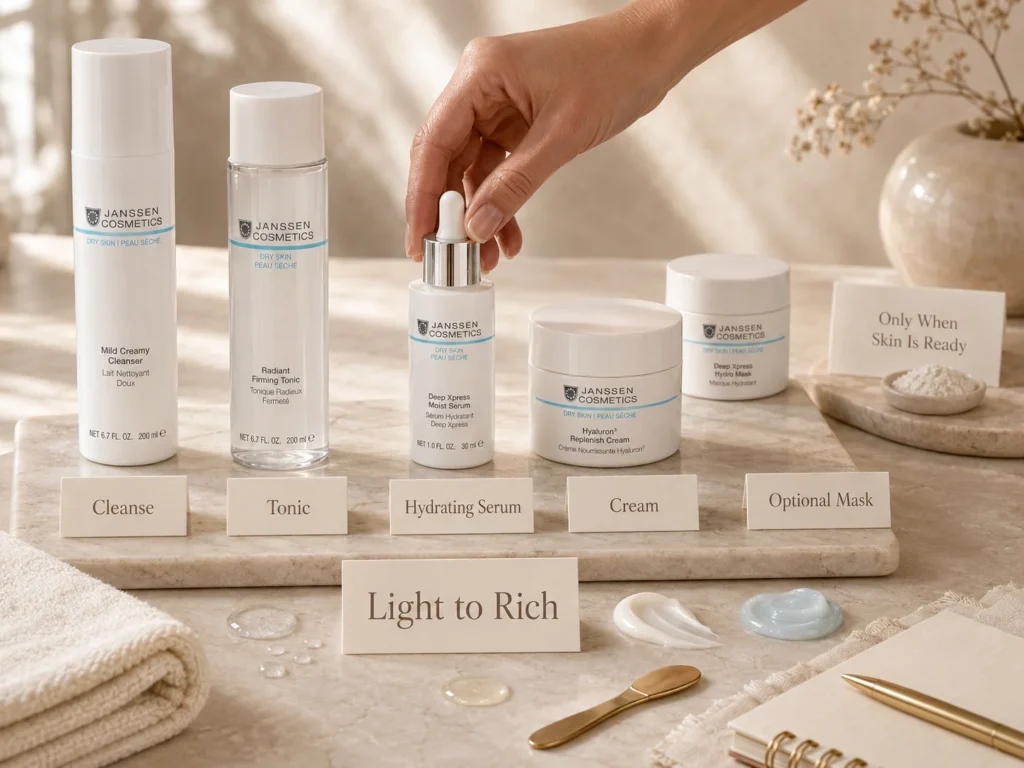
Evening
Cleanser → Tonic → Hydrating Serum → Richer Cream → Optional Mask
This structure helps the skin receive hydration first, then comfort.
Where Janssen Cosmetics Fits
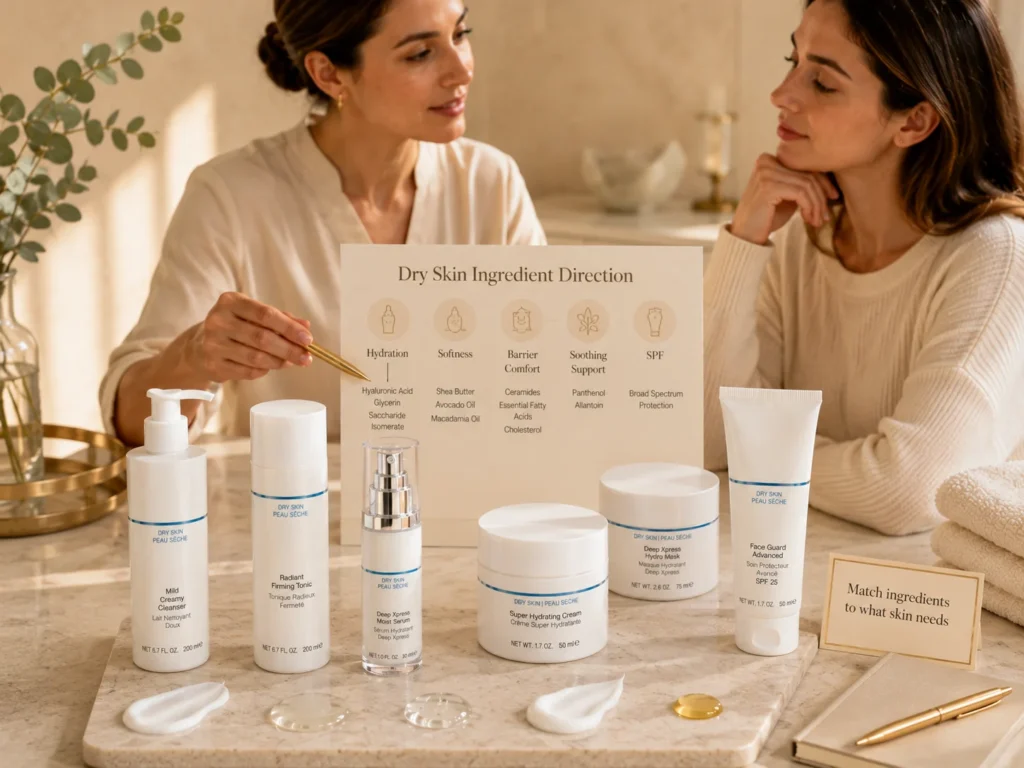
Products that may be discussed during a dry skin consultation include:
- Mild Creamy Cleanser, a creamy cleansing option for dry skin
- Radiant Firming Tonic, an alcohol-free tonic step
- Deep Xpress Moist Serum, a hydration-support serum
- Super Hydrating Cream, a moisturizer option for moisture-deficient dry skin
- Hyaluron3 Replenish Cream, a richer comfort option when appropriate
- Deep Xpress Hydro Mask, a hydration-support mask
- Aqualift Eye Gel, for dehydrated-looking eye area support
- Face Guard Advanced, for daytime protection when appropriate
A consultation helps decide which ingredients and textures match your skin best.
A personalized skincare consultation helps decide which ingredients, textures, and routine steps make sense for your skin before choosing products.
What Not to Do
Do not choose a product only because it says “hydrating.”
Do not assume thicker always means better.
Do not skip serum if your skin feels dehydrated.
Do not exfoliate aggressively to remove flakes.
Do not use too many active products when the skin feels sensitive.
Do not skip sunscreen during the day.
Frequently Asked Questions
What ingredient is best for dry skin?
There is no single best ingredient for everyone. Dry skin often benefits from a mix of hyaluronic acid, glycerin, shea butter, lipid-support ingredients, and soothing ingredients.
Is hyaluronic acid good for dry skin?
Yes, especially when the skin is dehydrated-looking. It usually works best when followed by moisturizer.
Is shea butter good for dry skin?
Shea butter can help dry skin feel softer and more comfortable, especially when the skin feels rough or undernourished.
Should dry skin use oils?
Some dry skin may benefit from oil-rich or lipid-support formulas, but the texture should match the person’s skin. A consultation can help.
Can dry skin use exfoliating ingredients?
Yes, but carefully. Gentle exfoliation may help dullness or rough texture, but harsh scrubbing can make dryness worse.
What ingredients should dry skin avoid?
Dry skin should be careful with harsh cleansers, alcohol-heavy toners, strong acids, frequent scrubs, and too many active products at once.

About the Esthetician Behind Zendevie
Zendevie is guided by Haby Diallo, a licensed esthetician with more than 20 years of professional skincare experience. Her approach is rooted in education, professional judgment, and personal care.
20+
years of experience