


Dry Skin vs. Dehydrated Skin: What’s the Difference?
Many people say, “My skin is dry,” but what they are feeling may not always be true dry skin. Sometimes the skin is dry. Sometimes it is dehydrated. And sometimes, it is both.
This difference matters because the routine your skin needs may change depending on what is missing.
Dry skin usually needs comfort, nourishment, and lipid support. Dehydrated skin usually needs water-based hydration. If you only use a heavy cream when your skin is dehydrated, your skin may still feel tight underneath. If you only use a watery serum when your skin is truly dry, your skin may still feel rough or undernourished.
At Zendevie, this is why consultation comes first. Before choosing products, it helps to understand what your skin is actually asking for.
Quick Answer
Dry skin usually means the skin lacks oil or lipid comfort. It may feel rough, tight, flaky, or undernourished.
Dehydrated skin means the skin lacks water. It may look dull, feel tight, show fine-looking dehydration lines, or feel thirsty even if it is oily on the surface.
A good routine may need both: hydration first, then a moisturizer to support comfort.
If your skin feels dry again shortly after applying cream, this full guide explains why skin still feels dry after moisturizer and how routine structure may help.
What Is Dry Skin?
Dry skin is often a skin type or skin condition where the skin does not have enough natural oil or lipid comfort. It may feel tight, rough, flaky, or uncomfortable. Some people are naturally dry, while others become dry because of weather, aging, harsh cleansing, indoor heat, or product overuse.
Dry skin often feels like it needs richer support. A lightweight lotion may not be enough, especially during winter or when the skin feels tight shortly after applying moisturizer.
Common signs of dry skin include:
- Tightness after cleansing
- Rough texture
- Flaking or peeling
- Dull-looking skin
- Makeup clinging to dry patches
- Skin feeling dry again shortly after moisturizer
- A need for richer cream
- A less comfortable skin surface
Dry skin often needs gentle cleansing, hydration, and a moisturizer that gives enough comfort.
What Is Dehydrated Skin?
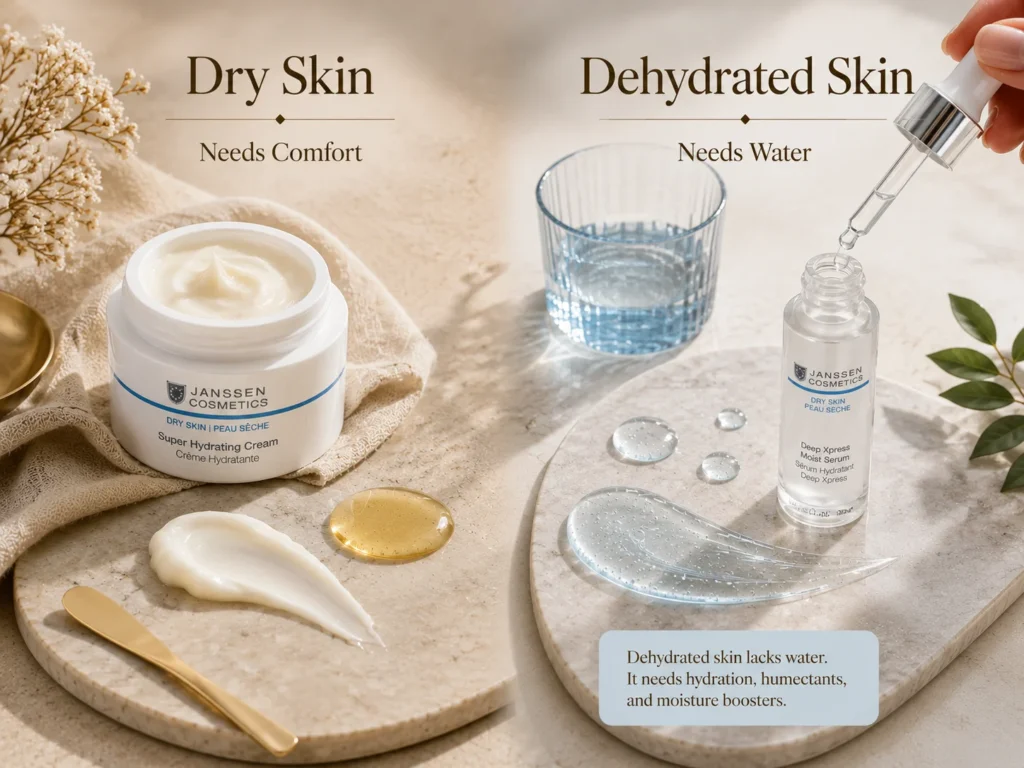
Dehydrated skin is not exactly a skin type. It is more like a temporary skin condition where the skin lacks water.
The confusing part is that any skin type can be dehydrated. Oily skin can be dehydrated. Combination skin can be dehydrated. Mature skin can be dehydrated. Even skin that looks shiny can still feel tight underneath.
Signs of dehydrated skin may include:
- Skin feeling tight but looking shiny
- Fine-looking lines from lack of water
- Dullness
- Skin that looks tired
- Moisturizer sitting on top but not making the skin feel comfortable
- Skin feeling thirsty again quickly
- Roughness without true flaking
- Makeup not blending smoothly
Dehydrated skin often needs water-binding ingredients and a routine that helps the skin hold moisture better.
How to Tell the Difference
A simple way to think about it:
If your skin feels rough, flaky, and undernourished, it may be dry.
If your skin feels tight, dull, or thirsty underneath, it may be dehydrated.
If your skin feels tight and flaky, it may be both.
Here is the practical difference:
Dry skin needs comfort.
Dehydrated skin needs water.
Dry and dehydrated skin needs both.
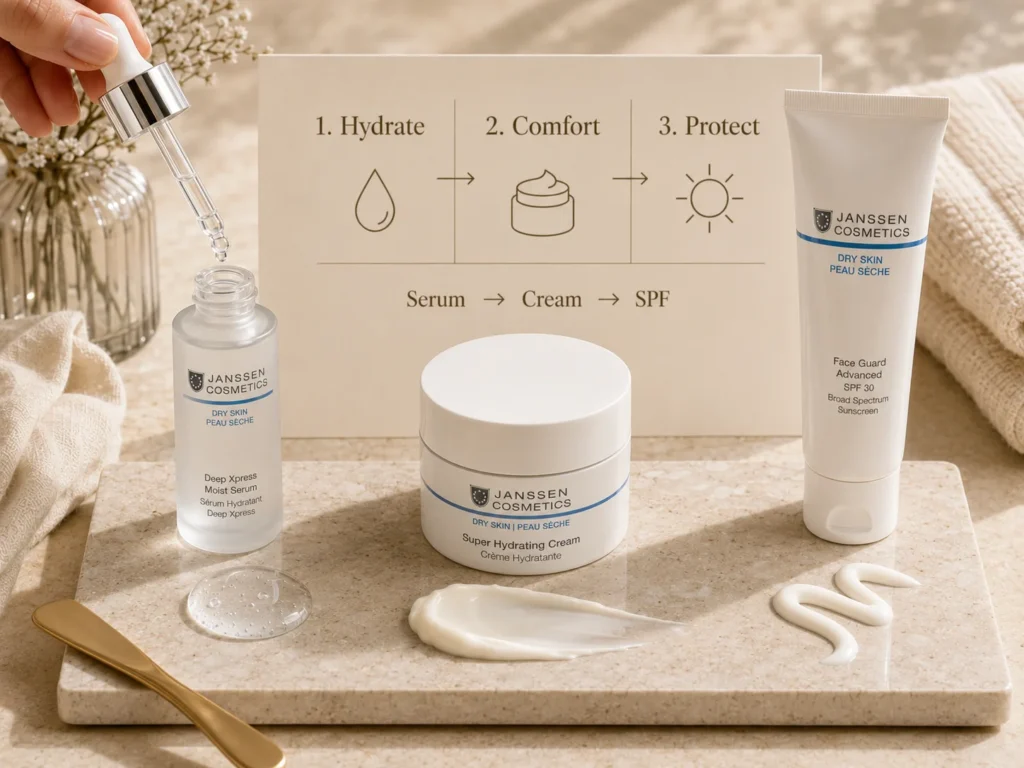
This is why layering matters. A hydrating serum can help support water content, while a cream can help comfort and seal the routine.
Why Moisturizer Alone May Not Fix Dehydrated Skin
Many people with dehydrated skin keep adding more cream, but the tightness still comes back. That can happen when the skin needs hydration before the moisturizer.
A cream can help comfort the surface, but if the skin lacks water, a hydrating serum underneath can make the routine feel more complete.
Think of it like this:
Serum helps support hydration.
Cream helps support comfort and moisture protection.
Both can be important, especially for skin that feels dry after moisturizer.
Why Dry Skin Needs More Than Hydration
On the other hand, if your skin is truly dry, a water-based serum alone may not be enough. Your skin may need richer comfort from ingredients that support softness and barrier feel.
Dry skin often benefits from nourishing textures, especially at night or during cold weather. The goal is not to make the skin greasy. The goal is to help it feel soft, smooth, and comfortable.
Best Ingredient Categories for Dry and Dehydrated Skin
For dehydrated skin, look for hydration-supporting ingredients such as:
- Hyaluronic acid
- Glycerin
- Saccharide isomerate
- Moisture-binding ingredients
- Lightweight hydrating serums
For dry skin, look for comfort-supporting ingredients such as:
- Shea butter
- Macadamia oil
- Avocado oil
- Lipid-support ingredients
- Richer cream textures
- Barrier-comfort ingredients
For dry and dehydrated skin, a combined routine may work best:
Hydrating serum → Moisturizer → SPF during the day
For a deeper look at hydration, comfort, and barrier-support ingredients, review the guide to ingredients for dry skin.
A Simple Routine for Dry and Dehydrated Skin
Morning Routine
Step 1: Gentle cleanser
Use a cleanser that does not leave your skin tight.
Step 2: Alcohol-free tonic
A gentle tonic can prepare the skin for serum and cream.
Step 3: Hydrating serum
This helps support water-based hydration.
Step 4: Moisturizer
Choose a texture that gives enough comfort.
Step 5: SPF
Daytime protection supports the skin and helps protect against environmental stress.
Evening Routine
Step 1: Gentle cleanse
Remove makeup, sunscreen, and daily buildup without stripping.
Step 2: Tonic
Refresh the skin and prepare it for the next step.
Step 3: Hydrating serum
Support moisture before cream.
Step 4: Richer cream if needed
At night, dry skin may need more comfort.
Step 5: Hydrating mask when needed
Use as an occasional add-on when the skin feels tight or thirsty.
Where Janssen Cosmetics Fits
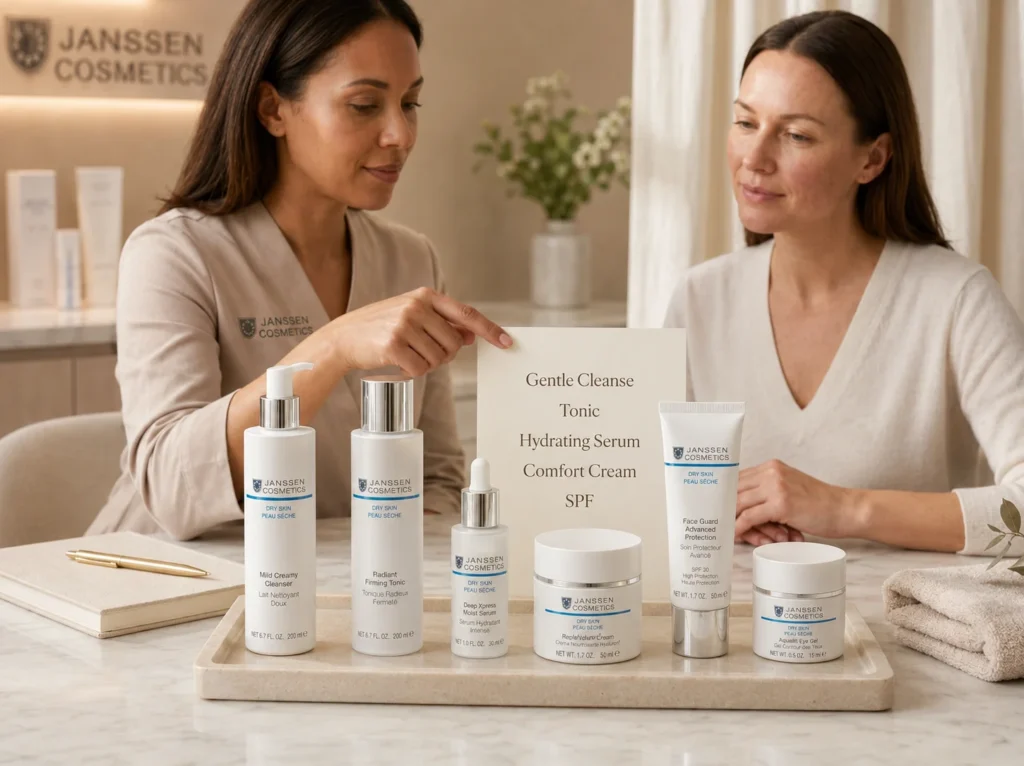
Zendevie carries Janssen Cosmetics through a consultation-first model. That means products are not recommended blindly.
Products that may be discussed during a dry or dehydrated skin consultation include:
- Mild Creamy Cleanser for gentle cleansing
- Radiant Firming Tonic as an alcohol-free tonic step
- Deep Xpress Moist Serum for hydration support
- Super Hydrating Cream for moisture-deficient dry skin
- Hyaluron3 Replenish Cream for richer comfort when appropriate
- Deep Xpress Hydro Mask as an occasional hydration-support mask
- Aqualift Eye Gel for the dehydrated-looking eye area
- Face Guard Advanced for daytime protection when appropriate
These are examples, not automatic recommendations. A consultation helps decide whether your skin needs more hydration, more comfort, or both.
What Not to Do
Do not assume every dry-feeling skin needs the richest cream.
Do not skip serum if your skin feels thirsty underneath moisturizer.
Do not use harsh cleansers that leave your skin tight.
Do not exfoliate aggressively when the skin is flaky or uncomfortable.
Do not keep changing products every few days.
Do not ignore burning, cracking, bleeding, or severe itching.
Frequently Asked Questions
Is dehydrated skin the same as dry skin?
No. Dry skin usually lacks oil or lipid comfort. Dehydrated skin lacks water. They can happen separately or together.
Can oily skin be dehydrated?
Yes. Oily skin can have excess surface oil but still lack water underneath.
Why does my skin feel tight but look shiny?
That can be a sign of dehydration. Your skin may have oil on the surface but still need water-based hydration
Should I use serum or cream first?
Use serum first, then cream. A serum supports hydration, and a cream helps comfort and seal the routine.
Can dry skin become sensitive?
Yes. When dry skin feels stressed, it may sting, burn, or react more easily.
How do I know what my skin needs?
A consultation can help identify whether your skin needs hydration, richer comfort, barrier support, or a simpler routine.

About the Esthetician Behind Zendevie
Zendevie is guided by Haby Diallo, a licensed esthetician with more than 20 years of professional skincare experience. Her approach is rooted in education, professional judgment, and personal care.
20+
years of experience