


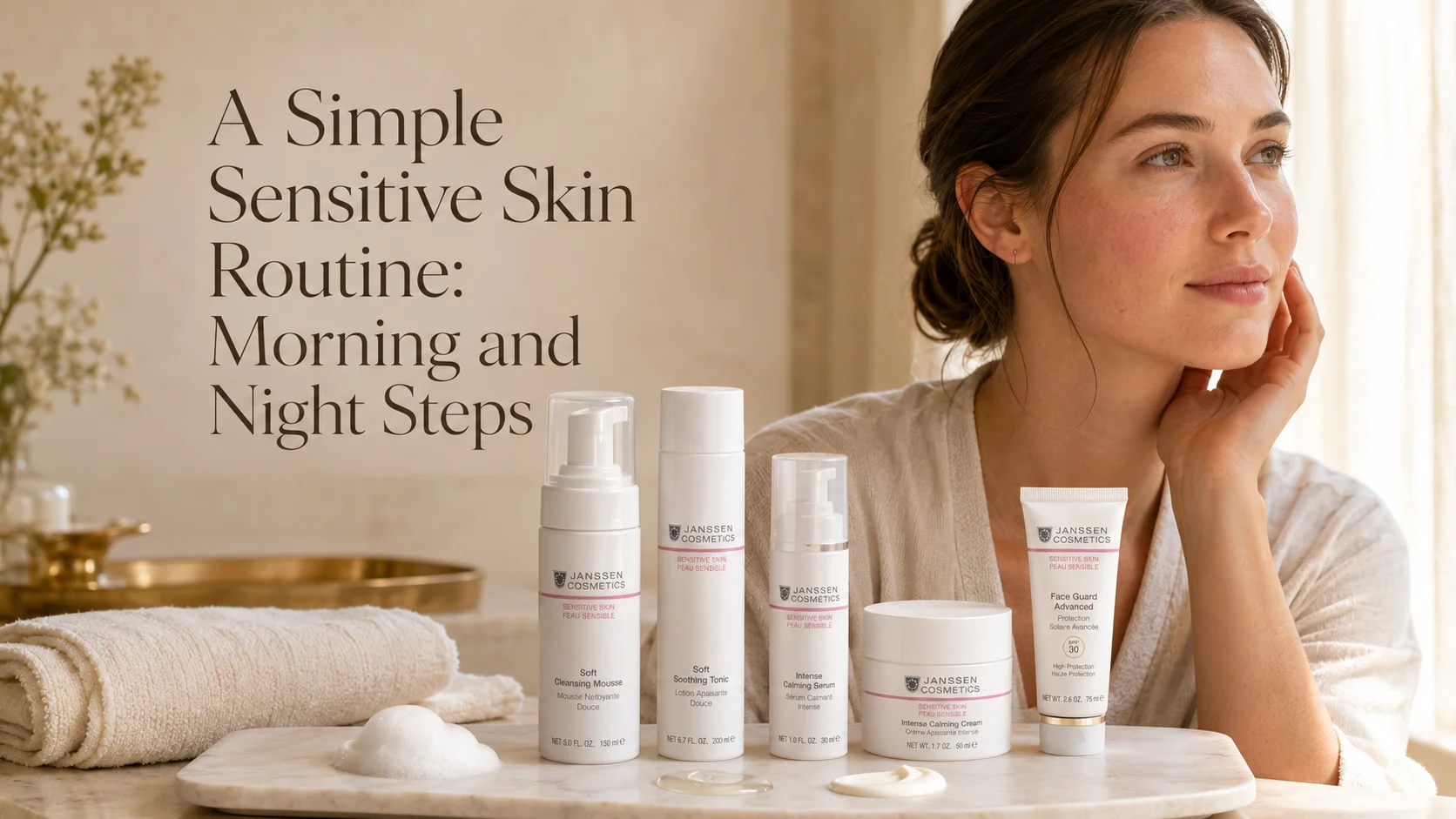
Sensitive skin usually does not need a complicated routine. In fact, when skin feels stingy, tight, red-prone, dry, or reactive, a simple routine is often the best place to start.
The goal is not to use as many products as possible. The goal is to use the right few products consistently.
At Zendevie, we guide sensitive skin gently. We do not recommend starting with strong acids, retinol, harsh scrubs, or too many serums. First, we want the skin to feel comfortable.
A simple sensitive skin routine includes:
Morning: Gentle cleanser → Soothing tonic → Calming serum if needed → Lotion or cream → SPF
Evening: Gentle cleanser → Soothing tonic → Calming serum → Comfort cream
Sensitive skin should avoid harsh cleansing, fragrance-heavy products, over-exfoliation, and too many active ingredients at once.
If you are still identifying your skin pattern, start with how to know if you have sensitive skin before changing every step in your routine.
The cleanser is the foundation of a sensitive skin routine.
If your cleanser leaves your face feeling tight, burning, or dry, it may be too strong. Sensitive skin needs cleansing that removes buildup while respecting comfort.
The skin should feel clean, soft, and calm after washing.
If your skin often stings or feels tight after cleansing, your sensitive skin barrier may need comfort before stronger products.
A soothing tonic can help complete the cleansing step and prepare the skin for serum and cream.
For sensitive skin, this step should not sting. It should feel refreshing, soft, and comfortable.
If a tonic burns every time, it may not be the right match.
A calming serum can be helpful when the skin feels reactive, dry, tight, or redness-prone.
This step is not about strong correction. It is about support.
Use a serum that feels gentle and comforting. Avoid layering multiple serums when the skin is already sensitive.
Sensitive skin can be oily, dry, mature, or combination, so texture matters.
If the skin is oily-sensitive, a lighter lotion may feel better.
If the skin is dry-sensitive, a richer cream may give more comfort.
The right moisturizer should help the skin feel supported, not heavy or irritated.
To choose calming serum, lotion, or cream more carefully, review the best ingredients for sensitive skin before adding more products.
Sensitive skin still needs daytime protection. Sun exposure, wind, heat, and outdoor stress can make sensitive-feeling skin more uncomfortable.
Choose SPF carefully, especially if your skin reacts easily. The best SPF is one your skin can tolerate and that you will use consistently.

Cleanse without stripping.
Prepare the skin gently.
Use if your skin needs extra comfort support.
Choose texture based on your skin’s dryness and comfort level.
Finish with daytime protection.
Morning structure:
Cleanser → Soothing Tonic → Calming Serum → Lotion or Cream → SPF
Remove makeup, sunscreen, oil, and daily buildup gently.
Refresh and prepare the skin.
Support sensitive-feeling skin.
Help the skin feel soft and supported overnight.
Evening structure:
Cleanser → Soothing Tonic → Calming Serum → Comfort Cream
Sensitive skin should be very careful with exfoliation.
If the skin feels warm, stingy, tight, burning, or irritated, do not exfoliate. Focus on comfort first.
Once the skin feels stable, gentle exfoliation may be considered only if appropriate. It should not be the first step when the skin is reactive.
If your sensitivity started recently after exfoliation, retinol, weather changes, or new products, review why your skin became sensitive suddenly before rebuilding the routine.

Retinol can be too much for sensitive skin if introduced too quickly.
If retinol is ever added, it should be introduced slowly, at night, and not combined blindly with acids or scrubs. Some sensitive skin may not tolerate it well at all.
Consultation helps decide whether it belongs in the routine.
Products that may be discussed during a sensitive skin consultation include:
These are examples only. A consultation helps choose the right texture and routine order.
A personalized sensitive skin consultation helps decide which steps, textures, and product options make sense before you purchase.

Do not use hot water.
Do not scrub the skin.
Do not use fragrance-heavy products if your skin reacts easily.
Do not use multiple active products together.
Do not exfoliate when the skin feels irritated.
Do not keep using a product that repeatedly burns.
Do not change your routine too often.
A simple routine with gentle cleanser, soothing tonic, calming serum if needed, moisturizer, and SPF during the day is often best.
Sensitive skin can use a tonic or toner if it is gentle, alcohol-free, and comfortable. It should not sting.
Only carefully. If the skin is irritated, tight, or burning, exfoliation should wait.
Yes, but choose calming or hydrating serums and avoid layering too many at once.
It depends on whether the skin is oily, dry, mature, or combination. Sensitive skin needs a texture it can tolerate.
Yes. SPF is important for daytime protection.
If your skin burns, stings, feels tight, becomes red-prone, or feels worse after products, your routine may be too strong.

Zendevie is guided by Haby Diallo, a licensed esthetician with more than 20 years of professional skincare experience. Her approach is rooted in education, professional judgment, and personal care.
years of experience