

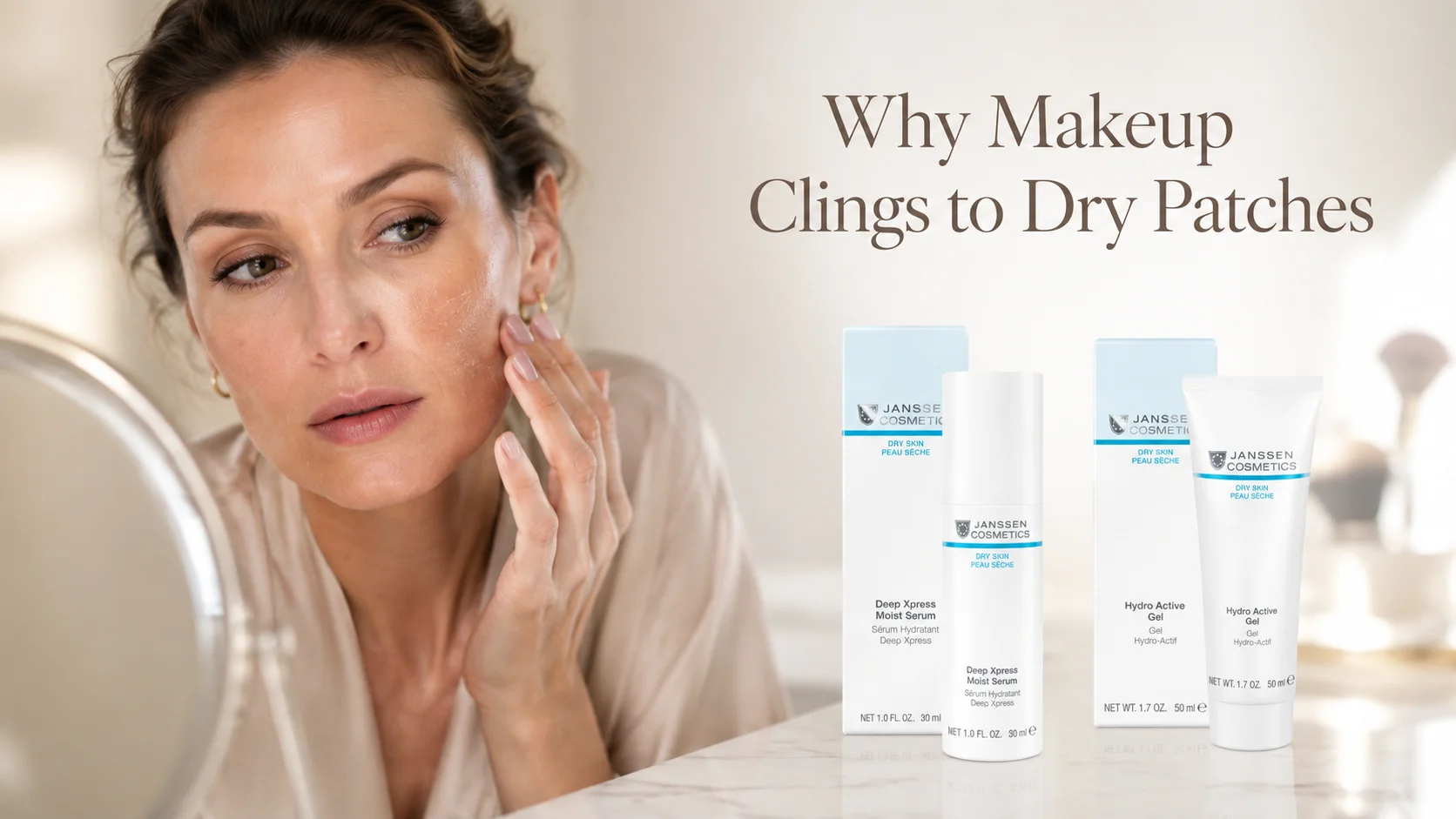
When makeup clings to dry patches, it can make the skin look rougher than it really is. Foundation may separate around the nose, collect on flaky areas, or make the cheeks look textured. Even a good makeup product can look uneven when the skin underneath feels dry, dehydrated, or unprepared.
This can feel frustrating because you may think the makeup is the problem. Sometimes it is. But often, the real issue starts before makeup — with cleansing, hydration, moisturizer texture, exfoliation habits, or a stressed skin barrier.
At Zendevie, our licensed esthetician looks at makeup behavior as a clue. If makeup keeps clinging to dry patches, the skin may need more hydration, comfort, and smoother routine preparation before coverage.
Makeup may cling to dry patches because the skin is dry, dehydrated, flaky, rough, over-cleansed, over-exfoliated, or not moisturized well before makeup.
A better approach is to prep the skin with gentle cleansing, hydration, moisturizer, SPF during the day, and careful texture choices.
If dry patches are painful, cracked, bleeding, rash-like, swollen, itchy, or not improving, they should be checked by a dermatologist or healthcare professional.
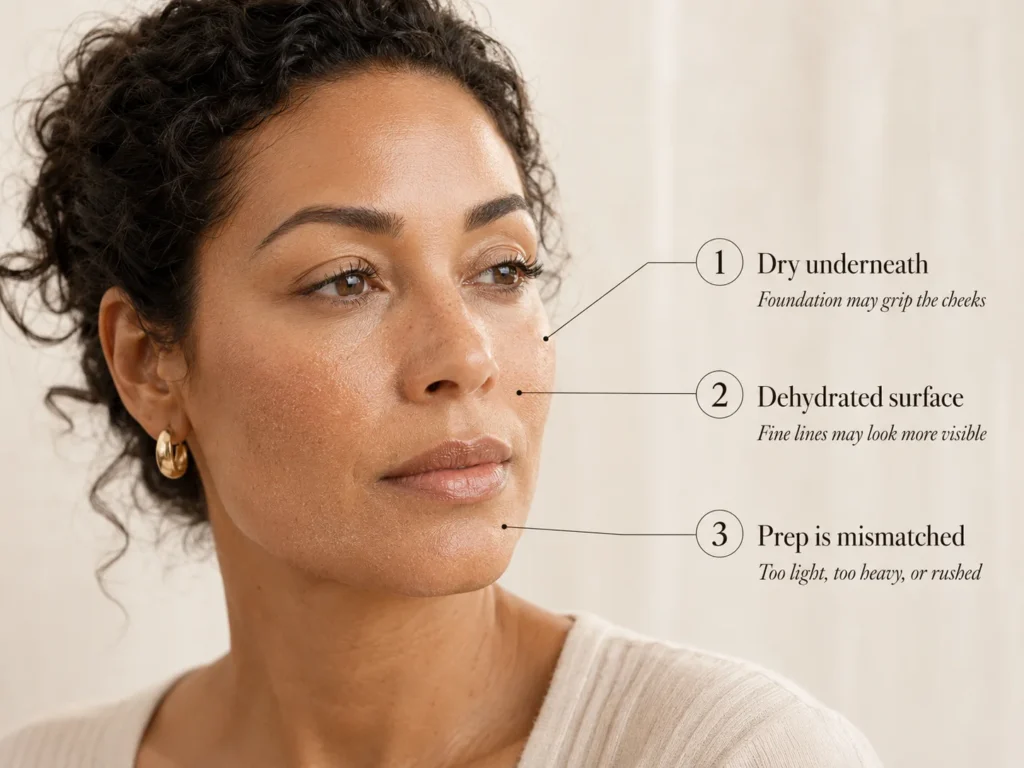
Makeup sits on top of the skin. If the surface is smooth and comfortable, makeup usually applies more evenly. If the surface is dry, rough, or flaky, makeup can grab onto those areas.
Dry patches can make foundation look:
Makeup does not always create the dryness. It often reveals what the skin surface is already showing.
Dry skin lacks oil or lipid comfort. When the skin is dry, the surface can feel rough, tight, or flaky. Foundation may cling because there is not enough softness underneath.
This can happen especially on:
If makeup clings mostly where the skin feels tight, the skin may need a richer moisturizer or better comfort support before makeup.
Dehydrated skin lacks water. It can feel tight, look dull, and show fine-looking lines more easily.
This can happen even if the skin is oily or combination. The skin may look shiny in the T-zone but still feel tight under makeup.
Signs of dehydration under makeup include:
In this case, the skin may need a hydrating serum or moisture-support step before cream.
If your cleanser leaves your skin tight, makeup may cling more easily later.
A harsh cleanser can make the skin feel stripped before the routine even begins. When the skin starts the day tight or uncomfortable, makeup has a harder time sitting smoothly.
A cleanser may be too strong if:
Clean skin should feel fresh and comfortable, not stretched.
If your moisturizer is too light, it may not give dry skin enough comfort before makeup.
Your moisturizer may be too light if:
Dry skin often needs hydration plus cream comfort. A lightweight lotion may not always be enough.
This may sound surprising, but a heavy cream can still leave makeup looking uneven.
If the cream sits on top of the skin without enough hydration underneath, makeup may slide in some areas and cling in others.
Your moisturizer may not be balanced if:
The skin may need a hydrating step before cream, not just a thicker moisturizer.
Many people exfoliate dry patches because they want makeup to look smoother. But over-exfoliation can make the skin more irritated and dry.
Over-exfoliated skin may feel:
If makeup clings and the skin also stings, burns, or feels raw, exfoliation should be paused and comfort should come first.
Sometimes dry patches are caused by surface buildup or flaky texture. If the skin is not irritated, gentle exfoliation may help smooth the look of the surface.
But this should be done carefully.
Gentle exfoliation may be considered when:
The goal is smoother-looking skin, not raw skin.
If makeup is applied immediately after moisturizer or SPF, it may not sit well.
Sometimes the skin needs a short moment for skincare to settle before applying makeup. If products are layered too quickly, foundation may pill, slide, or separate.
A better approach:
This helps the makeup sit over a more comfortable surface.
Sometimes the skincare is fine, but the makeup texture is not right for dry skin.
Matte foundations, long-wear formulas, powders, or drying primers may make dry patches look more noticeable.
Dry skin may prefer makeup textures that feel:
The makeup should work with the skin, not fight it.
Dry skin usually needs gentle preparation before makeup.
A simple prep routine may include:
Gentle Cleanser → Hydrating Tonic → Hydrating Serum → Comfort Moisturizer → SPF → Makeup
The goal is to help the skin feel comfortable before applying coverage.
Makeup should be the final step, not the step that tries to fix the whole skin surface.
Start with a cleanser that does not leave the skin tight.
Prepare the skin for moisture support.
Use if the skin feels tight, dull, or dehydrated.
Choose a texture that supports comfort without feeling greasy.
Finish skincare with daytime protection.
Apply makeup gently after skincare has settled.
Morning structure:
Cleanser → Tonic → Hydrating Serum → Moisturizer → SPF → Makeup
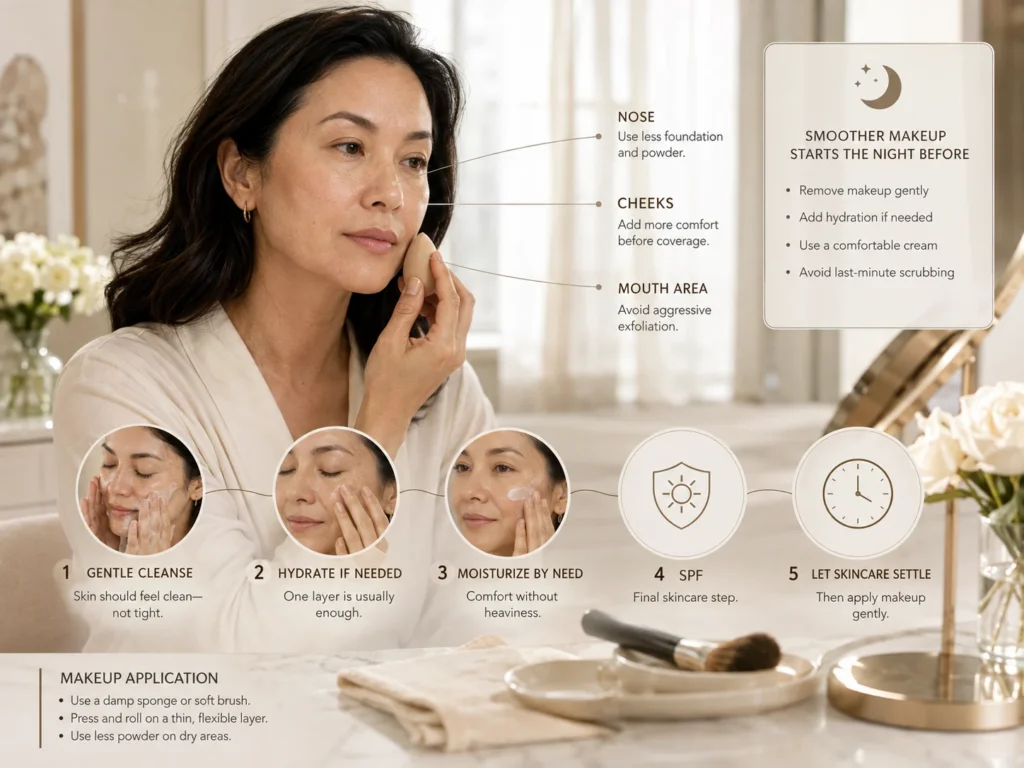
Good makeup prep starts the night before.
Remove makeup, sunscreen, oil, and buildup without stripping the skin.
Prepare the skin gently.
Support moisture if the skin feels tight or dull.
Use a moisturizer that helps the skin feel soft and supported overnight.
Evening structure:
Cleanser → Tonic → Hydrating Serum → Comfort Cream
The nose area can be tricky. Makeup may cling around the sides of the nose because of dryness, irritation, over-cleansing, frequent wiping, or product buildup.
Try:
If the area is red, painful, cracked, or rash-like, it should be checked by a dermatologist or healthcare professional.
Dry cheek patches often need more comfort.
Try:
Cheeks often show dryness because they may produce less oil than the T-zone.
The area around the mouth can become dry from weather, cleansing, talking, eating, wiping, or irritation.
Try:
If dryness around the mouth is persistent, painful, rash-like, or worsening, it should be evaluated professionally.
Be careful with exfoliating right before makeup.
If the skin is stable and not sensitive, gentle exfoliation may help when used appropriately. But if the skin is already dry, stingy, or irritated, exfoliating before makeup may make it worse.
Do not scrub dry patches right before applying foundation.
A smoother makeup look usually comes from consistent skincare, not last-minute aggressive exfoliation.
Your prep may be helping if:
Dry skin needs consistency. One perfect prep day helps, but a steady routine helps more.
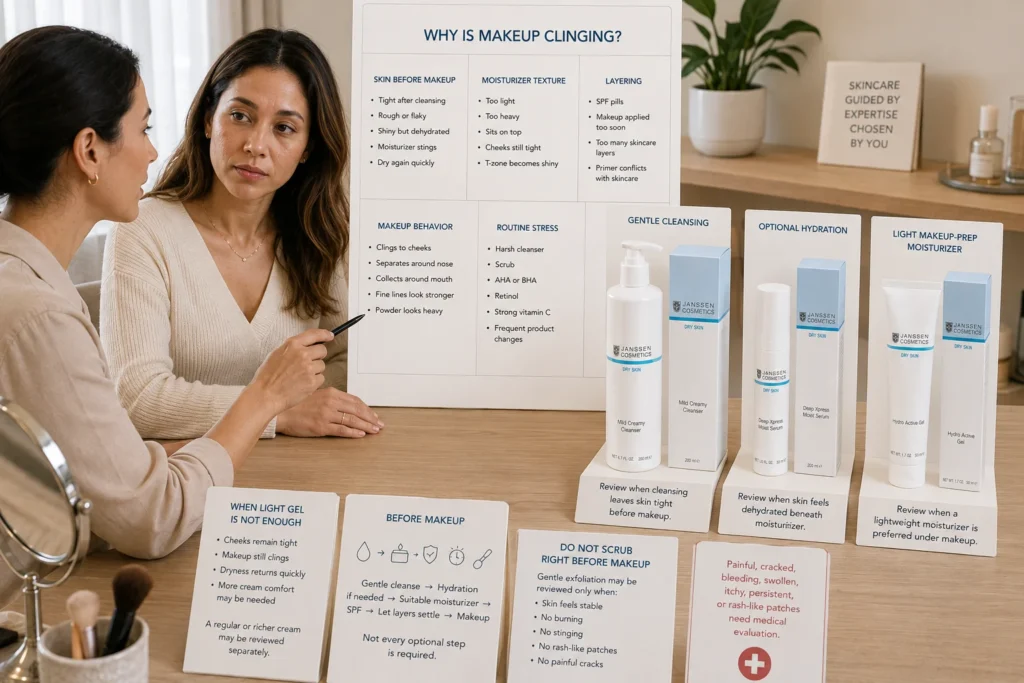
Products that may be discussed during a Zendevie consultation for dry patches under makeup include:
If the skin feels dry and sensitive, products from the sensitive skin support direction may also be discussed, such as:
These are examples only. A consultation helps decide whether your makeup is clinging because your skin needs hydration, moisturizer texture adjustment, barrier comfort, or a gentler cleansing routine.
Do not scrub dry patches aggressively before makeup.
Do not apply foundation over tight, uncomfortable skin without moisturizing.
Do not skip hydration if your skin feels tight.
Do not use heavy powder over flaky areas.
Do not keep using a cleanser that leaves skin tight.
Do not apply too many active products right before makeup.
Do not ignore painful, cracked, bleeding, swollen, or rash-like patches.
Makeup may cling because the skin is dry, dehydrated, rough, flaky, over-cleansed, over-exfoliated, or not moisturized well before makeup.
Start with gentle cleansing, hydration, moisturizer, SPF, and give skincare time to settle before applying foundation.
Be careful. If the skin is irritated or sensitive, exfoliation can make it worse. Gentle exfoliation may help only when the skin is stable.
Your skin may need hydration before moisturizer, a different moisturizer texture, less powder, or a gentler cleanser.
Yes. Dehydrated skin can feel tight and make makeup look uneven, dull, or less smooth.
Primer may help some people, but skincare prep matters first. If the skin is dry underneath, primer alone may not solve the issue.
This may happen because of dryness, texture, irritation, over-cleansing, wiping, or product buildup around the nose area.

Zendevie is guided by Haby Diallo, a licensed esthetician with more than 20 years of professional skincare experience. Her approach is rooted in education, professional judgment, and personal care.
years of experience