


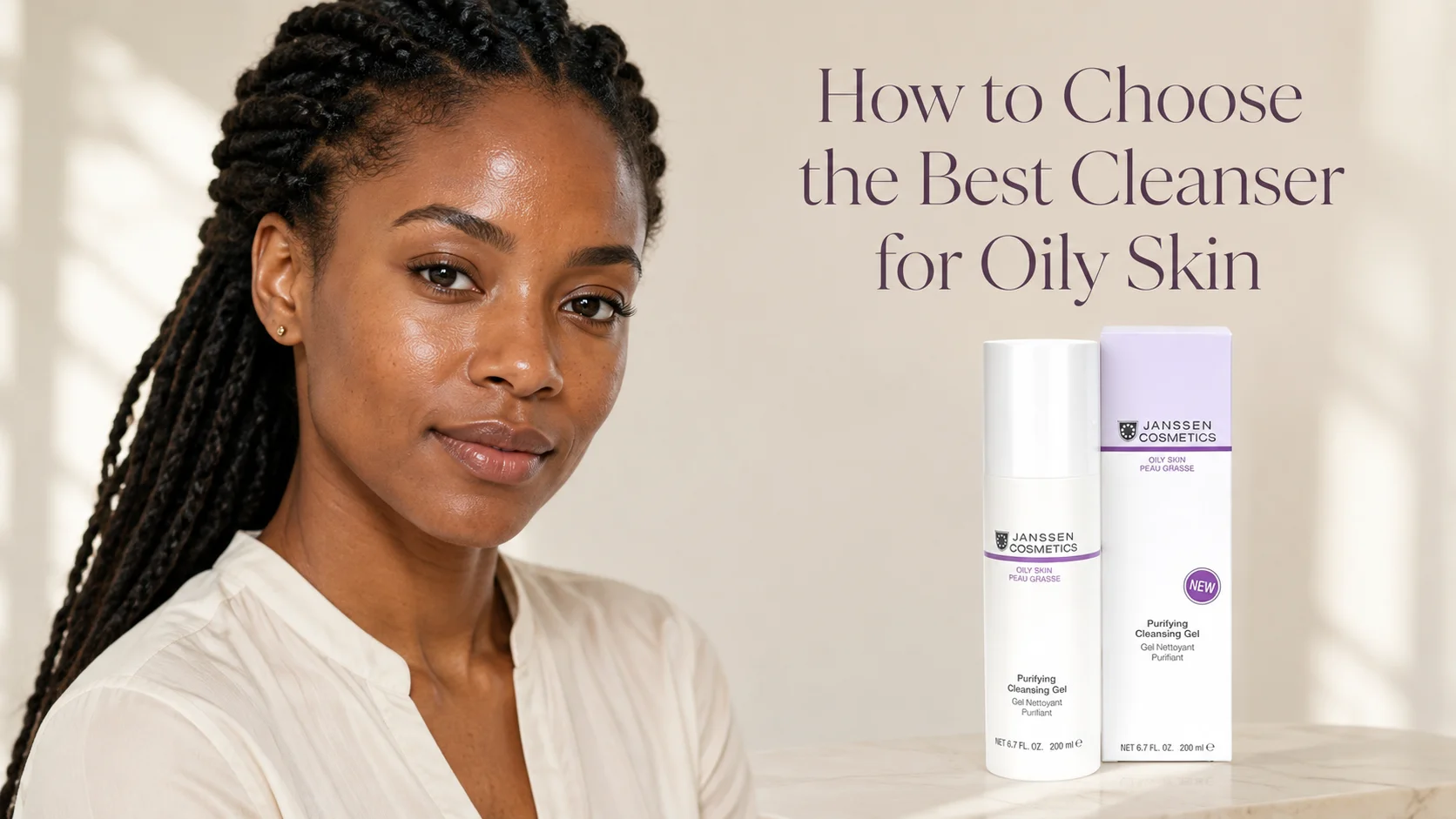
When your skin looks shiny, the first instinct is usually to choose a stronger cleanser.
That makes sense at first. Oil is visible. The forehead gets shiny. The nose feels greasy. Makeup separates in the center of the face. A stronger cleanser can make the face feel cleaner for a few minutes.
But the best cleanser for oily skin is not always the one that removes the most oil.
If your face feels tight, squeaky, dry, or irritated after washing, the cleanser may be doing too much. If shine returns quickly after that tight feeling, the skin may be oily and dehydrated, over-cleansed, or reacting to a product that is too aggressive for daily use.
In consultation, our licensed esthetician looks at what happens after cleansing. That is often where the truth shows up.
The best cleanser for oily skin should remove excess oil, sunscreen, makeup, sweat, and daily buildup without leaving the face tight, dry, or stripped.
A mild gel cleanser may be better for oily skin that also feels tight, dehydrated, mature, or sensitive.
An AHA/BHA-style cleanser may make sense when oily skin has clogged-looking pores, rough texture, blackheads, or whiteheads, but it should be used with awareness of skin tolerance.
Clean skin should feel fresh, not squeaky.
Cleansing is the first step that touches the skin every day. If that step is too harsh, the rest of the plan can feel harder.
A good moisturizer may sting after a harsh cleanser. A toner may feel sharper than it should. Makeup may cling to dry patches. Oil may return quickly, but the skin underneath still feels tight.
That is why cleanser choice is not a small detail for oily skin. It sets the tone for everything that comes after.
The cleanser should remove what does not belong on the skin, without making the skin feel bare.
Oily skin usually needs a cleanser that can remove:
But oily skin does not need to feel punished.
The right cleanser should help the face feel clean enough for toner, serum, moisturizer, and SPF, while still leaving the skin easy to tolerate.
If the face feels stretched immediately after washing, the cleanser may be too strong, used too often, or not matched to the skin’s current condition.
A squeaky-clean feeling can be misleading.
Many people with oily skin associate that feeling with a cleanser “working.” But squeaky skin often means the face has been stripped too far.
After that, a few things may happen:
That does not mean your skin is impossible. It may mean the cleanser is not the right match.
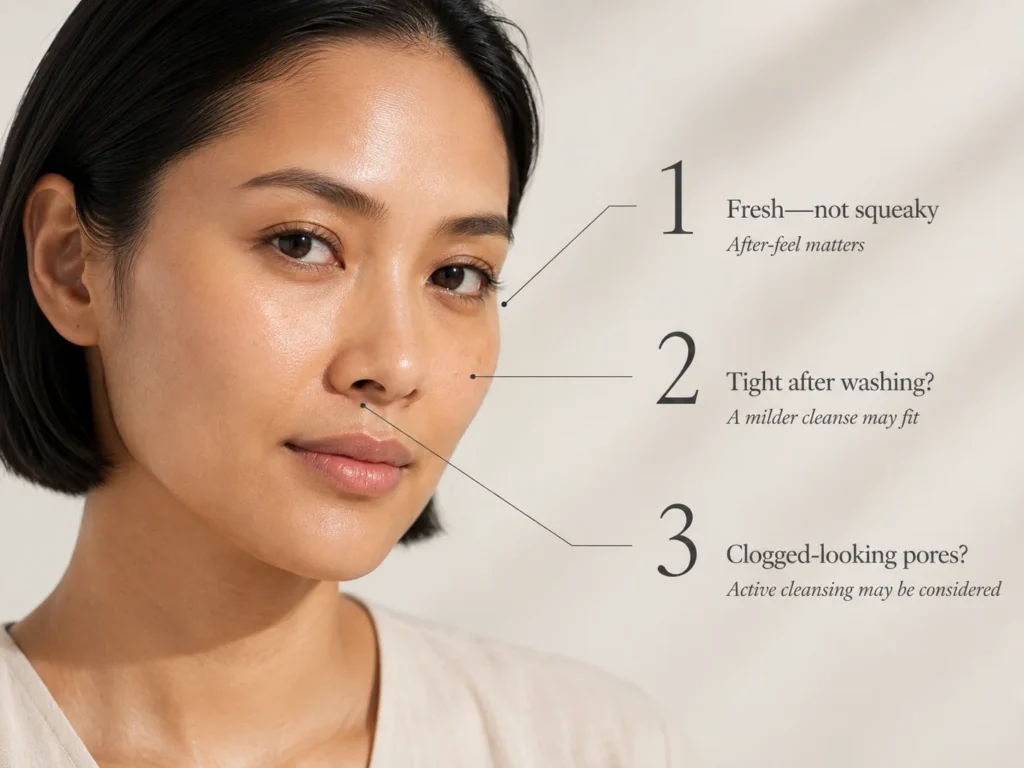
This is one of the most important signs.
If oily skin feels tight right after cleansing, the product may be too drying or the method may be too aggressive. Hot water, repeated washing, or scrubbing can make the same cleanser feel harsher than it is.
Oily skin should not feel stretched after every wash.
If tightness is your main complaint, look for a cleanser that cleans thoroughly but has a softer after-feel. You may also need lightweight moisture after washing instead of leaving the skin bare.
If shine returns quickly after cleansing, it does not always mean the cleanser was too weak.
Sometimes it means the skin was over-cleansed. The face feels dry for a short time, then oil becomes visible again.
This is why choosing the strongest cleanser can become a cycle: strip, shine, strip again.
A better approach is to use a cleanser that removes excess oil without making the skin feel exposed. Then follow with a toner, light moisturizer, and SPF that do not add a greasy finish.
Oily-dehydrated skin needs special attention.
This skin can look shiny but feel tight. It may have visible oil in the T-zone, but still look dull or rough under makeup.
A cleanser for oily-dehydrated skin should not leave the skin squeaky. It should cleanse well while respecting water-based hydration.
If your skin feels oily but tight, the best cleanser may be a mild gel cleanser rather than a very active cleanser every day.
If your oily skin has blackheads, whiteheads, or clogged-looking areas, cleanser choice may need more active thinking.
A cleanser with BHA or AHA/BHA may be considered when the skin shows:
That does not mean an active cleanser should be used aggressively. It means it may belong in the plan when the skin can tolerate it.
This is common.
The nose, forehead, and chin may need oil management, while the cheeks need a softer approach. If you choose a cleanser only for the T-zone, the cheeks may become tight or flaky.
Combination-oily skin often needs a cleanser that works for the whole face without overdrying the outer areas.
In some cases, the next steps can be zone-specific. The cleanser still needs to be tolerable everywhere.
Oily skin does not disappear for everyone after 40.
Some mature skin still gets shine, clogged-looking pores, or blemish-prone areas. But mature oily skin may also feel drier, less resilient, or more easily irritated than it did years ago.
That means a very drying cleanser may not be the right answer.
Mature oily skin often needs a cleanser that respects both sides of the concern: oil and dryness. If blemishes are present but the skin feels tight, cleanser strength should be chosen with more caution.
If toner, serum, moisturizer, or SPF stings after cleansing, the cleanser may have left the skin more vulnerable.
Stinging does not automatically mean every product is bad. It may mean the cleansing step is too strong, the skin is over-exfoliated, or too many active products are being layered.
Before adding more products, review the first step.
A cleanser should not make every product afterward feel uncomfortable.
The cleanser type matters, but the after-feel matters more.
A gel cleanser can be a good fit for oily skin when it rinses clean without leaving the face tight. It often feels fresh and works well for daily cleansing.
Some foaming cleansers work well for oily skin. Others can feel too drying. The question is not whether it foams. The question is how your skin feels five minutes later.
A cleanser with AHA, BHA, or other active ingredients may make sense for clogged-looking pores or rough texture. But it should be used based on tolerance, not because oily skin automatically needs stronger cleansing.
A mild cleanser may be the better starting point if your skin is:
This does not mean the cleanser is weak. It means the cleanser is respecting what the skin can handle.

An active cleanser may be considered when oily skin is showing more than shine.
It may fit when there is:
Even then, the cleanser should not make the face feel raw or stretched.
If the active cleanser is too much for daily use, it may be used less often or alternated with a milder cleanser after consultation.
Most oily skin does well with morning and evening cleansing.
Evening cleansing is important because the skin collects SPF, makeup, oil, sweat, and buildup during the day.
If you work out, sweat heavily, or wear heavy makeup, cleansing after that activity may make sense. But washing repeatedly throughout the day can make oily skin feel tighter and harder to manage.
More washing is not always better cleansing.
Double cleansing can be useful if you wear makeup, heavy sunscreen, or long-wear products.
But double cleansing should still feel kind to the skin. If both steps are strong, the face may end up tight or irritated.
A good double cleanse removes the day without leaving the skin feeling bare.
If your skin feels dry after double cleansing, review the product textures, how long you cleanse, and whether you are rubbing too hard.
A cleansing brush is not automatically necessary for oily skin.
Some people like the extra polish, but friction can become too much, especially if the skin already has blemishes, sensitivity, or active exfoliation in the plan.
If the skin is inflamed-looking, tender, or irritated, skip the brush.
Hands are enough for many people. A cleanser does not need aggressive pressure to work.
After washing, oily skin should feel:
If your skin feels uncomfortable immediately after cleansing, do not ignore that clue.
Your cleanser may be removing more than your skin can tolerate.
Morning care should refresh the skin and prepare it for the day.
A simple order may be:
Cleanser → Toner if appropriate → Lightweight Moisturizer → SPF
If your skin feels oily but tight, include lightweight hydration before moisturizer or choose a moisturizer that gives hydration without a heavy finish.
SPF should not be skipped because the skin is oily. The texture just needs to make sense for your face.
Evening care should remove the day properly.
A simple order may be:
Cleanser → Toner if appropriate → Targeted Serum if needed → Lightweight Moisturizer
If the skin is using an active cleanser, be careful with adding more exfoliating steps afterward. An active cleanser plus active toner plus active serum can be too much for many people.
One clear purpose at a time is often better.
Your cleanser may be a good match if:
A cleanser should make the rest of the plan easier, not harder.
Your cleanser may need to be changed if:
These signs do not always mean you need a stronger cleanser. Often, they mean the cleanser needs to be better matched.
A cleanser for oily skin may include mild cleansing agents, panthenol, glycerin, BHA, AHA, or other clarifying ingredients depending on the formula.
What matters is the role of the cleanser.
If the skin is oily but tight, panthenol or hydrating ingredients may help the cleanser feel less drying.
If the skin is clogged-looking and not sensitive, BHA or AHA/BHA may make sense.
If the skin is reactive, avoid making the cleanser too active too soon.
Be cautious with cleansers that rely on an overly harsh feel.
Watch for:
The skin should not have to recover from cleansing.
After consultation, our licensed esthetician may consider different Janssen Cosmetics cleansing options depending on what the oily skin is showing.
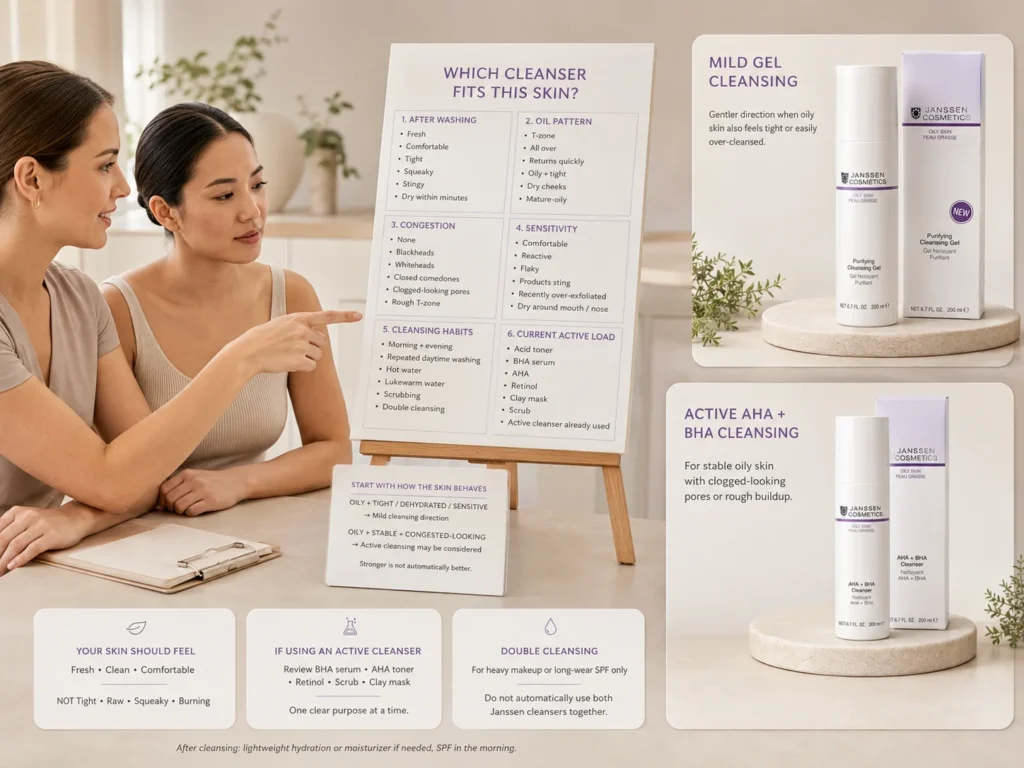
Possible options may include:
These options are not universal instructions. The right cleanser depends on whether your skin is oily, oily-dehydrated, mature-oily, sensitive, or congested.
Do not choose a cleanser only because it feels strong.
Do not chase a squeaky-clean finish.
Do not wash repeatedly because shine returns.
Do not use hot water to remove oil.
Do not scrub blemish-prone areas aggressively.
Do not use an active cleanser and several exfoliating products at the same time without a clear reason.
Do not skip moisturizer after cleansing if the skin feels tight.
Do not ignore painful, swollen, cystic-looking, infected-looking, or persistent blemishes.
The best cleanser for oily skin removes excess oil, SPF, makeup, and buildup without leaving the face tight or stripped. The right choice depends on whether your skin is oily, dehydrated, clogged-looking, sensitive, or mature.
A gel cleanser can be a good choice when it rinses clean and does not leave the skin tight. Many oily skin types like gel textures because they feel fresh without heaviness.
Not always. Some foaming cleansers work well. Others feel too drying. Judge by how your skin feels after washing, not by foam alone.
A BHA cleanser may make sense for clogged-looking pores, blackheads, whiteheads, or congested areas. If your skin feels tight or irritated, it may need to be introduced more cautiously.
Your cleanser may be too strong, your water may be too hot, you may be cleansing too often, or your skin may be dehydrated.
Most oily skin does well with morning and evening cleansing. Repeated washing throughout the day can make tightness worse.
A dermatologist should evaluate painful, deep, swollen, cystic-looking, infected-looking, scarring, suddenly worsening, or persistent blemishes.
If you are not sure whether your oily skin needs a mild cleanser or an active cleanser, a free virtual consultation can help.
At Zendevie, we look at how your skin feels after washing, how fast shine returns, where clogged-looking pores appear, and whether your current products are making the skin tight. From there, we help you choose a cleanser that makes sense for your skin instead of guessing.

Zendevie is guided by Haby Diallo, a licensed esthetician with more than 20 years of professional skincare experience. Her approach is rooted in education, professional judgment, and personal care.
years of experience